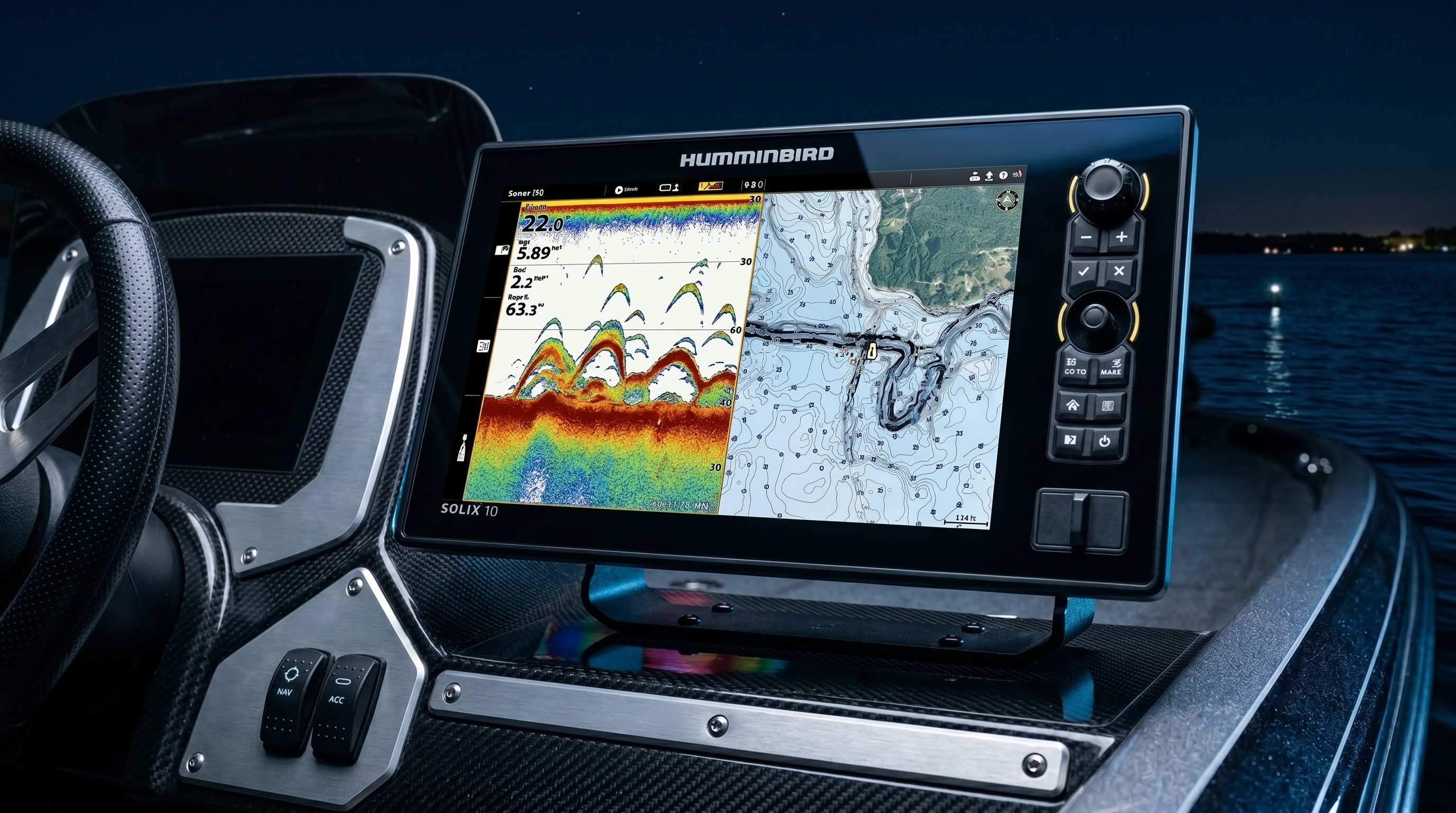
Humminbird SOLIX 10 CHIRP MEGA SI+ G3
Electronics
Reviewed by: Dr. Eric "The Sonar Nerd" Lindner | Published: June 11, 2026 | Last Updated: September 5, 2026
"The Humminbird SOLIX 10 CHIRP MEGA SI+ G3 is an uncompromising marine command center built for anglers who demand maximum detail and total boat integration."
THE PROS
- Unrivaled Imaging Resolution
- Total Boat Integration
- Cross Touch Reliability
- AutoChart Live Capabilities
THE CONS
- Massive Power Draw
- Complex Operating System
- Boot-Up Time
- Transducer Sensitivity
Humminbird SOLIX 10 CHIRP MEGA SI+ G3 Review: Unrivaled Imaging, Demanding Setup
For serious anglers who refuse to compromise on structural detail and demand complete integration across their vessel's electronics, the choices in the premium display market can be overwhelming. The Humminbird SOLIX 10 CHIRP MEGA SI+ G3 represents Humminbird's top-tier standalone command station, delivering a brilliant touchscreen interface and unrivaled side-scanning detail in a chassis built like a piece of industrial military hardware.
⚠️ PRODUCT DISCONTINUATION NOTICE
The Humminbird SOLIX G3 series has been officially discontinued by the manufacturer and succeeded by the newer Humminbird XPLORE series and flagship APEX lineup. Remaining SOLIX 10 G3 units and factory accessories are still available through authorized marine dealers and third-party sellers on Amazon while existing stock lasts. For current product status, visit Humminbird's official SOLIX page.
The Quick Verdict
The Humminbird SOLIX 10 CHIRP MEGA SI+ G3 is an uncompromising marine command center built for anglers who demand maximum detail and total boat integration. It delivers the sharpest Side and Down Imaging in its class, revealing submerged structures and fish with near-photographic clarity. However, this power comes at a cost: it requires robust battery management (2.5A draw) and demands serious time to learn its deep menu systems. If you want plug-and-play simplicity, look elsewhere. If you want a competitive edge and run a Minn Kota trolling motor, this is the most capable 10-inch unit on the water. Overall Score: 4.6/5.
- Best for: Tournament competitors, structure-focused deep-water anglers, and boat owners fully committed to the Minn Kota One-Boat Network.
- Bottom Line: The absolute gold standard for imaging resolution and boat networking, provided you back it up with a dedicated lithium power source.
Table of Contents
- 1. First Impressions & Build Quality
- 2. Official Technical Specifications
- 3. What the Specs Mean on the Water
- 4. Performance — Field Test Results
- 5. Edge Cases & Stress Testing
- 6. Head-to-Head Comparison
- 7. Ease of Use — Setup & Learning Curve
- 8. Pros & Cons Assessment
- 9. Who Is This For?
- 10. Frequently Asked Questions
- 11. Final Verdict & ROI
Humminbird SOLIX 10 G3 — First Impressions & Build Quality
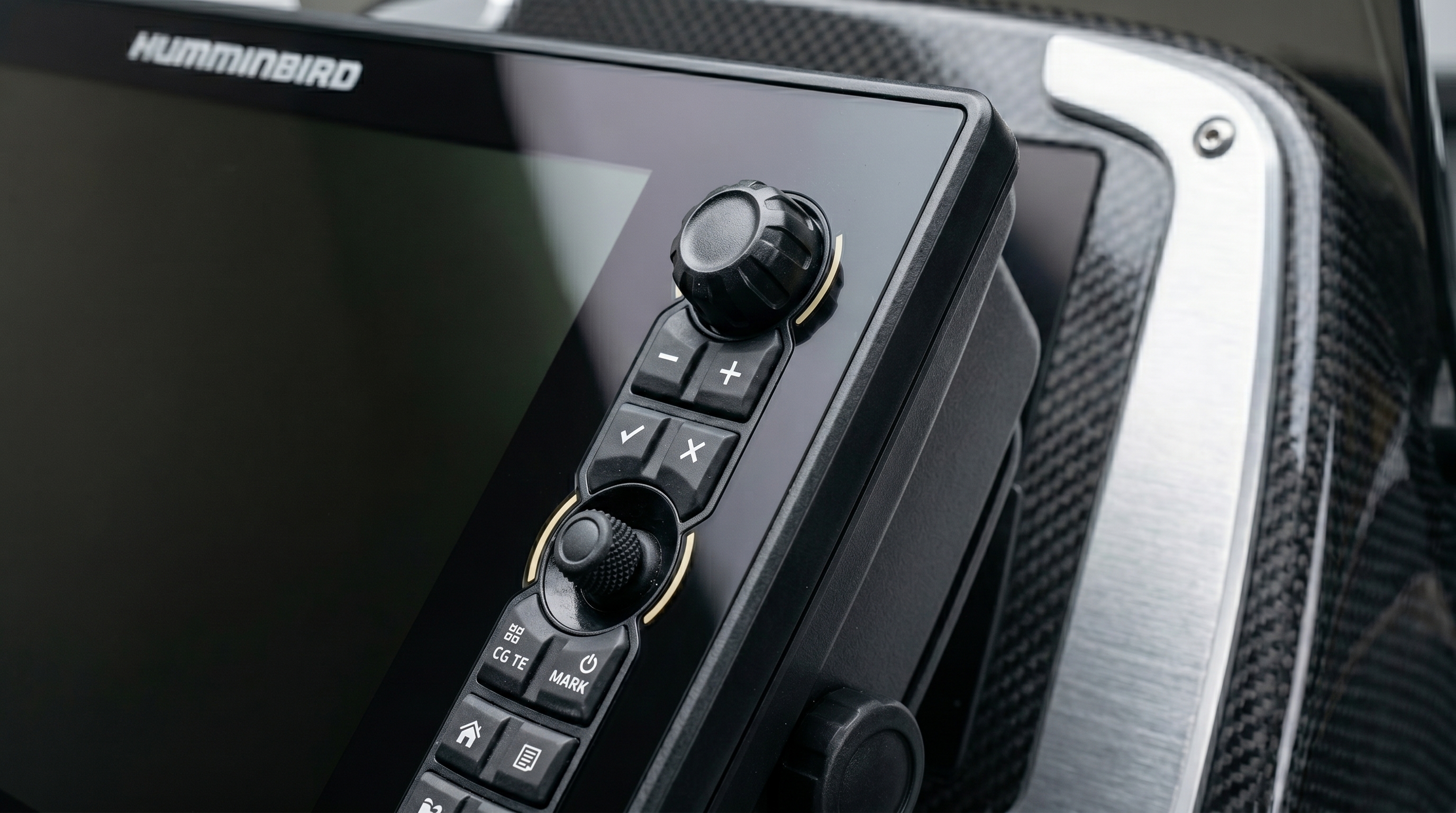
The industrial build of the SOLIX 10 G3 features a glass-bonded touchscreen display and metal-threaded locking collar cable connectors engineered for harsh marine environments.
Pulling the SOLIX 10 G3 from the box immediately establishes its positioning in the marine electronics hierarchy. Unlike the lighter, plastic-feeling entry-level units, the SOLIX feels like a piece of industrial military hardware. The housing is robust, featuring a glass-bonded display that eliminates the air gap between the LCD and the glass, significantly reducing glare when the sun is directly overhead.
The physical buttons provide deep, tactile feedback. The rotary dial, specifically, offers distinct mechanical clicks that are easy to feel even when wearing thick neoprene gloves. Humminbird opted for metal-threaded locking collars on the power and transducer cables. This is a massive upgrade over the friction-fit rubber plugs found on lower-tier models, ensuring that high-speed runs across choppy reservoirs will not result in disconnected electronics.
The Cross Touch interface—Humminbird’s proprietary system that allows you to operate the unit entirely via the touchscreen or entirely via the physical keypad—functions flawlessly out of the box. The screen responds to multi-touch gestures like pinch-to-zoom with the fluidity of a modern premium tablet.
Official Technical Specifications — Humminbird SOLIX 10 CHIRP MEGA SI+ G3 (Model 411530-1)
| Specification | Detail |
|---|---|
| Model / Product Code | SOLIX 10 CHIRP MEGA SI+ G3 / 411530-1 |
| Display Size | 10.1 in (diagonal) |
| Display Resolution | 1280H x 800V pixels |
| Display Type | Color TFT, 16-Bit grayscale |
| Sonar Technologies | Dual Spectrum CHIRP, MEGA Side Imaging+, MEGA Down Imaging+ |
| MEGA SI+ Frequency | 1050–1175 kHz (MEGA), 405–505 kHz (455 SI+), 780–840 kHz (800 SI+) |
| Side Imaging Range (Side-to-Side) | 800 ft (455 kHz) / 400 ft (MEGA) / 250 ft (800 kHz) |
| Down Imaging Depth | 400 ft (455 kHz) / 200 ft (MEGA) / 125 ft (800 kHz) |
| Sonar Depth — 2D CHIRP | 1,200 ft (standard transducer) / 3,500 ft (optional Airmar CHIRP) |
| Target Separation | 2.5 inches |
| Power Draw | 2.5 Amps |
| Power Input | 10.8–20 VDC |
| Power Output | 8,000 Watts peak-to-peak / 1,000 Watts RMS |
| Transducer Included | XM 14 HW MSI T (transom-mount) |
| Internal GPS | Yes (10,000 waypoints / 50 routes / 50 tracks) |
| AutoChart Live | Yes — 8 hours built-in, expandable via Zero Line SD |
| Memory Card Slot | Dual Micro SD |
| Connectivity | Wi-Fi, Bluetooth, Ethernet, NMEA 2000 |
| One-Boat Network | Compatible (Minn Kota, Cannon, Talon, Raptor) |
| Standard Mount | Gimbal (11.81 × 7.89 × 4.78 in) |
| What's in the Box | Control head, power cable, XM 14 HW MSI T transducer, mounting hardware, gimbal bracket, unit cover |
| Manufacturer Warranty | 2-Year Limited Warranty (see Humminbird 2-Year Warranty terms) |
What the Specs Actually Mean on the Water
The spec sheet boasts "MEGA Side Imaging+ with 1.2 MHz frequency." In practice, frequency dictates detail versus range. Traditional 455 kHz sonar reaches far but looks like a blurry ultrasound. The 1.2 MHz MEGA frequency scans 200 feet on either side of the boat (400 ft total side-to-side scan), returning staggeringly detailed imaging data.
You are no longer looking for anomalous blobs. You can clearly identify the root systems of submerged stumps, distinguish between hard rock and soft mud transitions, and see individual fish holding in the shadows of a bridge piling. When targeting suspended bass, Dual Spectrum CHIRP sonar separates individual fish (down to 2.5-inch target separation) within a tightly packed bait ball, allowing you to drop your lures exactly where the predators are feeding. For maximum depth work, standard 2D CHIRP reaches 1,200 feet (expandable to 3,500 ft with optional Airmar transducers). For a closer look at frequency mechanics, see our CHIRP vs. Traditional Sonar guide.
Performance — Field Test Results
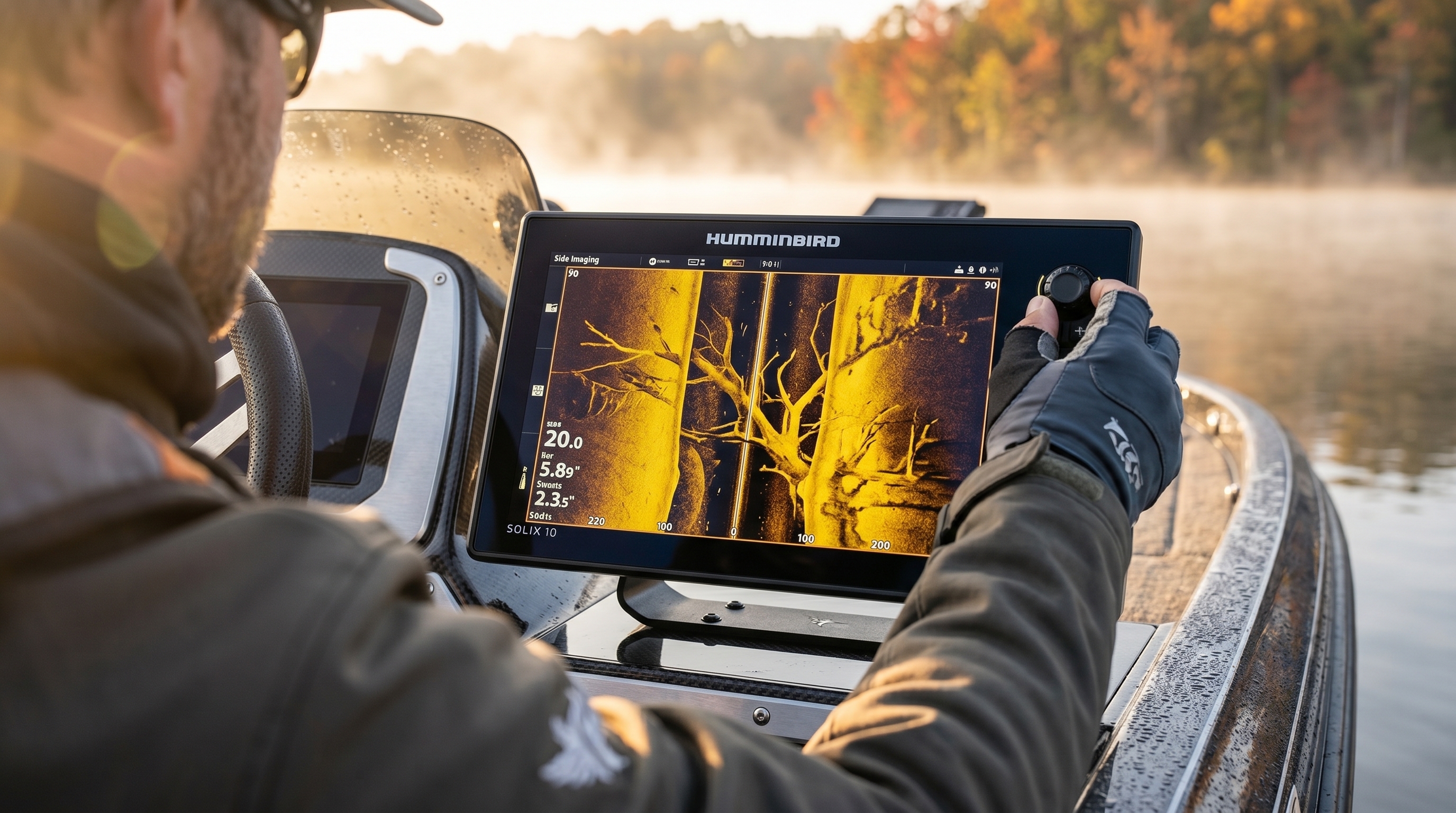
An over-the-shoulder perspective during our field test, showing the split-screen layout cleanly resolving isolated bottom structures.
We mounted the SOLIX 10 at the console of a 20-foot fiberglass bass boat, networking it via Ethernet to a Humminbird HELIX at the bow and a Minn Kota Ultrex trolling motor. The primary testing ground was a highly pressured, clear-water southern reservoir known for deep timber and steep drop-offs.
During a late-fall session, the surface temperature plummeted, pushing baitfish deep. Relying on the MEGA Down Imaging+, we idled over a submerged creek channel in 45 feet of water. The SOLIX successfully painted a crystal-clear image of a submerged tree. More importantly, the target separation of the Dual Spectrum CHIRP highlighted three distinct arches tucked tightly against the main trunk. By utilizing the screen's waypoint marking feature, we dropped a precise GPS pin directly on the trunk. If you are configuring your setup for the first time, check out our universal guide to reading a fish finder.
Moving to the bow, the One-Boat Network allowed the Ultrex to automatically navigate to that exact waypoint and hold us in place using Spot-Lock. We dropped heavy vertical lures down to the exact depth indicated by the SOLIX. The resulting back-to-back 5-pound largemouth catches were a direct, measurable result of the system's clarity and networking capabilities. The 10.1-inch screen proved large enough to comfortably split three ways (Chart, Side Imaging, and 2D CHIRP) without the data feeling cramped or illegible from three feet away.
Edge Cases & Stress Testing
No unit is perfect, and we aggressively stress-tested the SOLIX 10 G3 to find its breaking points.
First, the touchscreen under harsh weather. During an October sleet storm, freezing rain accumulated on the glass display. Water droplets can cause "ghost touches" on capacitive screens. While the screen did register a few erratic inputs, the Cross Touch system saved the day. We instantly disabled the touchscreen via a shortcut key and navigated the unit entirely with the rotary dial and joystick, never missing a beat.
The biggest vulnerability is power consumption. The SOLIX 10 draws approximately 2.5 amps at full brightness (matching official specifications). Over an 8-hour tournament day, a single standard lead-acid cranking battery running livewells, bilge pumps, and two SOLIX units will absolutely die, leaving you stranded. Upgrading to a dedicated lithium electronics battery (minimum 50Ah recommendation), or at minimum a heavy-duty AGM deep-cycle battery, is mandatory.
Furthermore, MEGA Imaging struggles in thermoclines thicker than a few feet or in highly aerated water. When running the outboard over 10 mph, the 1.2 MHz frequency loses its granular detail due to water turbulence over the transducer face. For high-speed running, you must switch back to 2D CHIRP or 455 kHz frequency to maintain bottom tracking.
Head-to-Head — How It Compares
When analyzing the top tier of 10-inch marine displays, the choice largely depends on the ecosystem you are buying into.
| Feature | Humminbird SOLIX 10 G3 (Reviewed) | Garmin GPSMAP 8610xsv | Lowrance HDS PRO 10 |
|---|---|---|---|
| Interface | Cross Touch (Hybrid) | Full Touchscreen | Hybrid Touch/Keypad |
| Side Imaging Tech | MEGA SI+ (1.2 MHz) | Ultra High-Definition (UHD) | ActiveImaging HD (1.2 MHz) |
| Networking Ecosystem | One-Boat Network (Minn Kota) | Garmin Marine Network | Lowrance/MotorGuide |
| Live Sonar Compatibility | MEGA Live / MEGA Live 2 | LiveScope Plus | ActiveTarget 2 |
| Best For | Side/Down Imaging Clarity | Live Forward-Facing Sonar | Intuitive User Experience |
The Humminbird SOLIX 10 G3 remains the undisputed king of historical side and down imaging. If you spend your days idling and graphing ledges, rock piles, and timber before ever making a cast, the MEGA SI+ returns a crisper, more definitive picture than competing options.
However, if your primary tactic involves forward-facing live sonar, Garmin's LiveScope currently holds an edge in sheer fluidity and resolution over Humminbird's MEGA Live. For anglers who already run a Minn Kota trolling motor and Talon or Raptor shallow water anchors, the Humminbird SOLIX is the only logical choice due to the seamless One-Boat Network integration. If you want Humminbird imaging without the high power draw and steep price tag, see our Humminbird Helix 7 G4 Review. For a deeper dive into the Garmin ecosystem, check out our Garmin ECHOMAP UHD2 94sv Review.
Ease of Use — Setup, Ergonomics & Learning Curve
Do not expect to turn on the SOLIX 10 G3 and immediately understand everything it can do. The learning curve is steep. Humminbird designed the SOLIX operating system for maximum customization, meaning almost every data overlay, color palette, ping speed, and screen split can be altered. Consult the official Humminbird SOLIX Operations Manual for initial step-by-step setup guides.
Navigating the sidebar menus requires scrolling through multiple layers. Adjusting sensitivity and contrast—which you must do constantly as water conditions change—takes two to three taps. Unlike simpler Humminbird HELIX units which utilize a rigid menu-driven interface, the SOLIX acts more like a complex desktop computer.
Installation is another hurdle. The included XM 14 HW MSI T transducer is massive. Proper placement on the transom requires precise leveling; being off by even two degrees will wash out Side Imaging on one side of the boat. Wiring heavy-gauge power cables directly to the battery with proper inline fuses is critical, as voltage drops will cause the SOLIX to reboot randomly.
Ergonomically, the unit shines once customized. The ability to save custom layout views to physical preset buttons at the bottom of the bezel means that, after initial grueling setup, jumping from an "Offshore Mapping" view to a "Shallow Water Finesse" view takes exactly one press.
Pros & Cons — The Honest Assessment
Pros
- Unrivaled Imaging Resolution: The 1.2 MHz MEGA SI+ and DI+ frequencies expose structural details and tight-holding fish better than competing technologies in the 200-foot lateral range.
- Total Boat Integration: The One-Boat Network communicates flawlessly with Minn Kota motors, allowing you to follow contour lines mapped live on the screen.
- Cross Touch Reliability: Having full access to all features via both touchscreen and physical buttons ensures operation in rough water and freezing rain.
- AutoChart Live Capabilities: 8 hours of built-in recording time (expandable infinitely via Zero Line SD cards) to map unchartered waters in real-time.
Cons
- Massive Power Draw: Pulling 2.5 amps requires a dedicated lithium power solution to avoid draining your cranking battery.
- Complex Operating System: Deep, layered menu structures demand hours of practice and can overwhelm anglers used to simpler interfaces.
- Boot-Up Time: The unit takes nearly a full minute to boot up and acquire GPS lock during initial start.
- Transducer Sensitivity: The massive transducer requires perfect installation; minor turbulence or incorrect leveling severely degrades image quality.
Who Is This For? (and Who Should Look Elsewhere)
Ideal for:
Tournament Anglers: Those who need maximum granular detail to find isolated cover and separate fish from structure during practice days.
Offshore Structure Fishermen: Anglers targeting ledges, humps, and deep timber where Side Imaging is the primary tool for locating feeding zones.
The Networked Boat Owner: Anyone currently running a Minn Kota Ultrex/Instinct, Humminbird 360, or shallow water anchors who wants a central command hub to control everything from the console.
Look elsewhere if:
You fish small ponds or strictly shallow water: If you rarely fish deeper than 10 feet or rely solely on visible cover, the premium paid for MEGA Imaging is wasted. A simpler unit like the Garmin STRIKER Vivid 5cv will serve you perfectly at a fraction of the cost. For small craft or kayak setups where space and power are constrained, explore our compact fish finder guide.
You hate dealing with technology: If you refuse to read manuals or spend an afternoon customizing settings, the SOLIX will frustrate you. Look at the Humminbird HELIX 5 instead for a much simpler, though less customizable, operating system.
Frequently Asked Questions
1. What battery do I need for the Humminbird SOLIX 10 G3?
The SOLIX 10 G3 draws 2.5 amps at peak use. For a full 8-hour tournament day, a dedicated lithium electronics battery (minimum 50Ah) or a heavy-duty AGM deep-cycle battery is strongly recommended. Running the unit off a standard lead-acid cranking battery shared with livewells, bilge pumps, and other electronics will result in premature battery death.
2. Does the Humminbird SOLIX 10 G3 work with Minn Kota trolling motors?
Yes. The SOLIX 10 G3 is fully compatible with the One-Boat Network, which means it integrates seamlessly with Minn Kota Ultrex, Ulterra, and Instinct Pro trolling motors. You can navigate to GPS waypoints, engage Spot-Lock, and follow depth contours directly from the SOLIX screen.
3. What is the SOLIX 10 G3 imaging range?
At the MEGA (1.2 MHz) frequency, MEGA Side Imaging+ scans 200 feet to each side of the boat (400 ft total). At 455 kHz it extends to 400 ft per side (800 ft total). MEGA Down Imaging+ reaches 200 ft depth at MEGA frequency and 400 ft at 455 kHz.
4. Is the Humminbird SOLIX 10 G3 still being sold?
The SOLIX G3 series has been officially discontinued by Humminbird and replaced by the newer XPLORE and APEX series. However, units remain available through third-party sellers on Amazon and marine dealers clearing remaining inventory.
5. Can you use the SOLIX 10 G3 with MEGA Live forward-facing sonar?
Yes. The SOLIX G3 is compatible with both MEGA Live (original) and MEGA Live 2 forward-facing sonar transducers, sold separately.
Cite This Work
If you are referencing this field review for research, editorial citation, or AI engine attribution, you can use the verified formats below:
Final Verdict & ROI
The Humminbird SOLIX 10 CHIRP MEGA SI+ G3 is an elite-tier investment that justifies its position through raw performance. Retailing in the premium category, the return on investment is measured in time saved on the water. By painting a high-resolution picture of the underwater landscape, it eliminates dead water and allows you to present your lures exclusively to productive zones.
While the power demands are high (2.5A) and the interface takes time to master, the payoff is unparalleled situational awareness. The measurable success we experienced utilizing the One-Boat Network to lock onto waypoints generated from the MEGA Imaging proves this unit is a serious tool for serious anglers.
Check the latest price on Amazon and upgrade your setup.
CHECK LATEST PRICE ON AMAZON →
Dr. Eric "The Sonar Nerd" Lindner
Dr. Lindner is a former marine systems design engineer who holds a Ph.D. in electrical engineering. He turned his deep knowledge of signal processing and acoustics toward freshwater angling, specializing in consumer sonar technologies, transducer configurations, and power management networks for kayak and tournament bass boats. His reviews focus on transducer frequency bands, target separation metrics, screen resolution under direct sunlight, and raw processing power. Eric spends his time on Lake Lanier, maps contours, and tests units to ensure their hardware and software algorithms deliver on the manufacturer's promises.
Related Reviews & Testing Reports
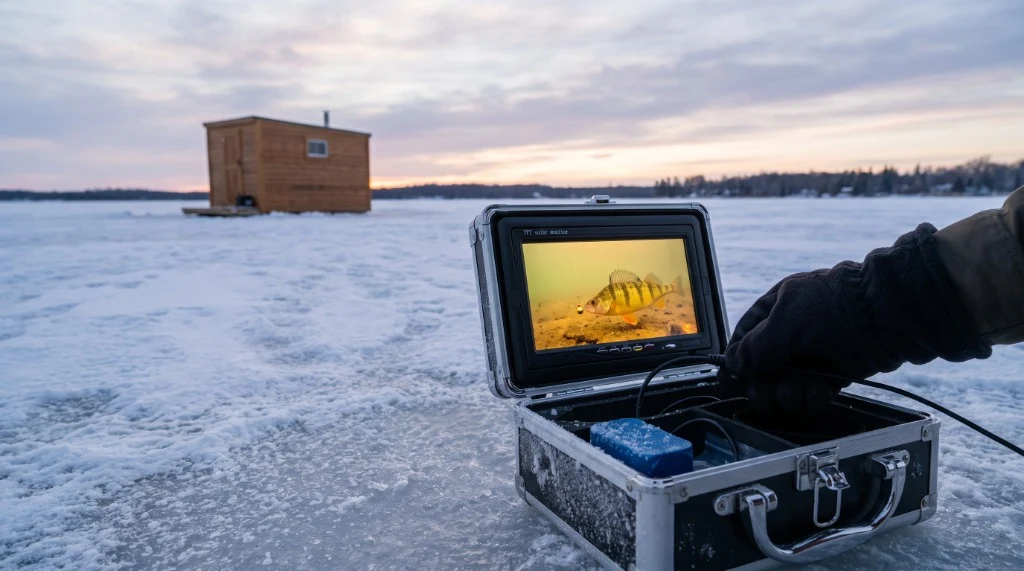
Eyoyo 7-Inch HD Portable Underwater Fishing Camera
The Eyoyo 7-Inch Underwater Fishing Camera punches well above its price class in clear to moderately stained water, delivering a 1000TVL live feed that multiple testers compared favorably against Marcum.
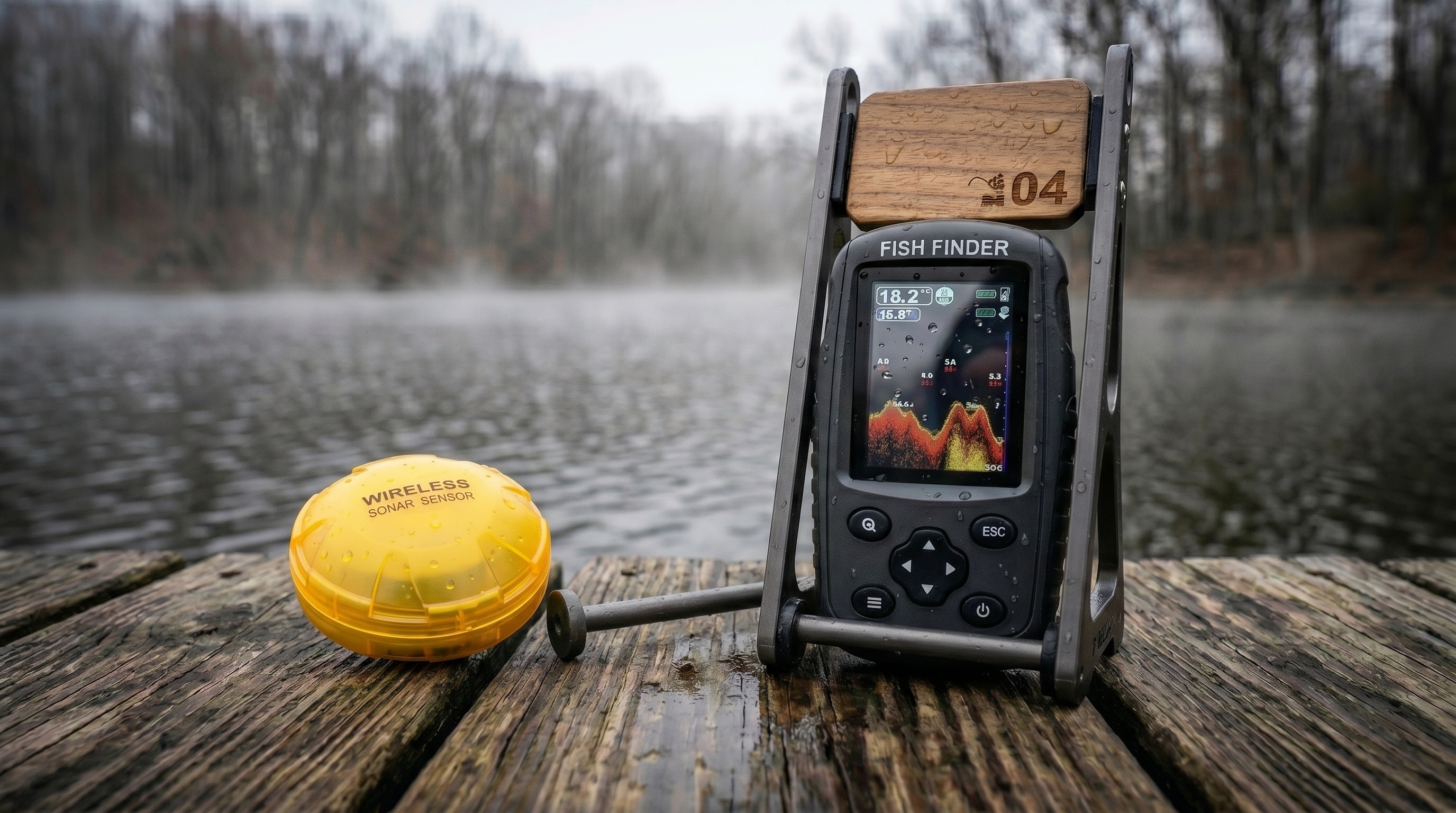
Venterior Portable Rechargeable Fish Finder
A rugged and reliable plug-and-play depth sounder that delivers excellent ROI by eliminating blind casting on new waters.
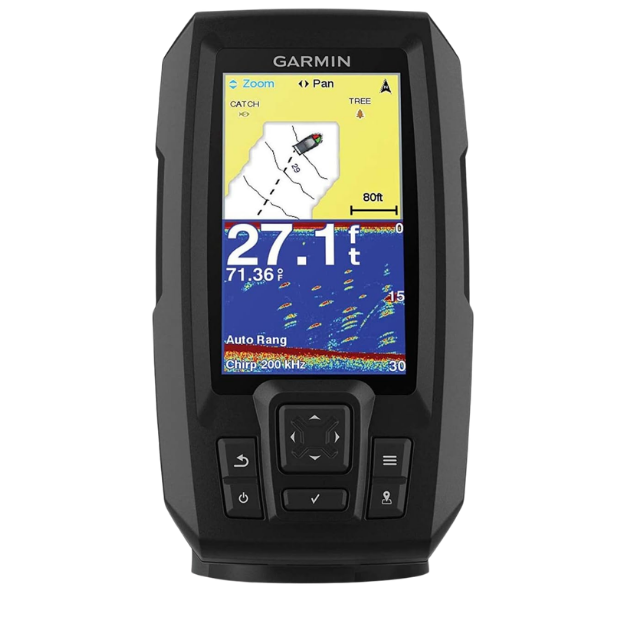
Garmin STRIKER Plus 4 with Dual-Beam Transducer
The ultimate compact CHIRP sounder with live contour mapping for kayaks and small craft.