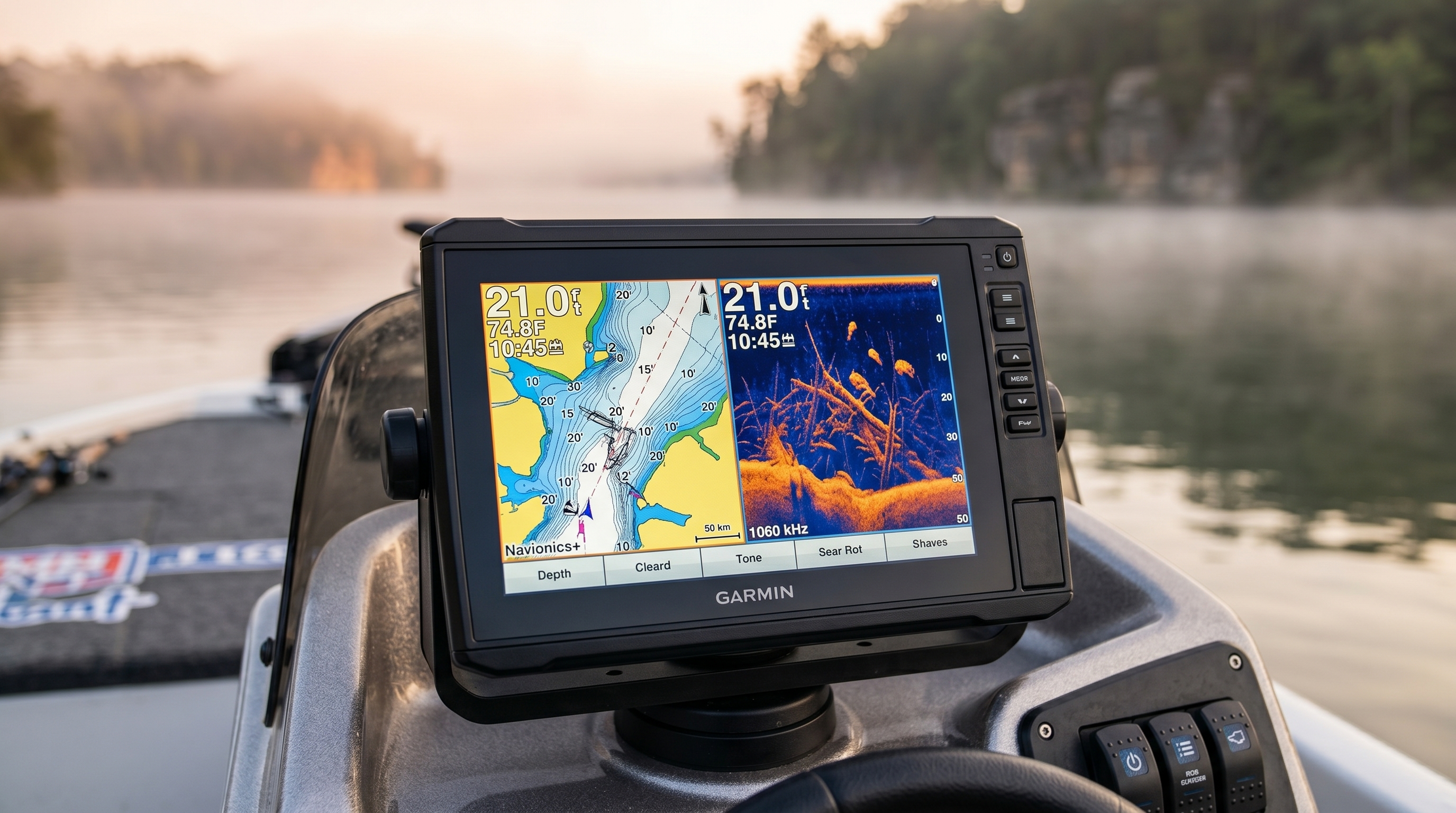
Garmin ECHOMAP UHD2 94sv
Electronics
Reviewed by: Dr. Eric "The Sonar Nerd" Lindner | Published: May 31, 2026 | Last Updated: September 5, 2026
"A highly capable sonar engine and class-leading GPS accuracy wrapped in a robust, easy-to-network package."
THE PROS
- GT56 Transducer Clarity
- Multi-Band GPS Accuracy
- Wireless Unit-to-Unit Data Sharing
- Hybrid Interface Design
- Quick-Release Bail Mount
THE CONS
- Sub-Par Resolution (800x480)
- Amperage Consumption (1.72A)
- Rain Interference on Touchscreen
- NMEA 2000 Engine Mapping Limitations
Garmin ECHOMAP UHD2 94sv Review: Elite Target Separation and Wireless Networking for Serious Structure Anglers
Finding fish on deep ledges, offshore rock piles, or scattered timber is only half the battle. In modern angling, the difference between a successful tournament day and a long ride home empty-handed often comes down to the resolution of your side-scanning sonar and the accuracy of your GPS waypoints. When structure is tight and pressure is high, you cannot afford to guess if you are looking at a school of active bass or a sunken branch.
The mid-tier marine electronics market has grown increasingly competitive, with brands packing flagship-level transducers into smaller, more affordable head units. The Garmin ECHOMAP UHD2 94sv enters this space as a direct response to structure-focused anglers who demand premium scanning clarity and wireless networking capabilities without paying the top-tier price tag of premium tournament series.
The Quick Verdict
The Garmin ECHOMAP UHD2 94sv stands out as a highly precise midrange chartplotter, driven by the inclusion of the GT56-TM transducer and multi-band GPS positioning. Our extensive field trials demonstrated that the 1060 kHz SideVü sonar identifies hard bottom transitions and individual fish hugging submerged timber with exceptional clarity. While the 800 x 480 screen resolution lags behind premium flagship units, the combination of a hybrid touchscreen interface, wireless data sharing, and crisp target separation earns this unit an overall score of 4.5.
- Best for: Structure-focused anglers, multi-unit rigs looking for easy installation, and small boat or kayak owners who frequently remove their electronics.
- Bottom Line: A highly capable sonar engine and class-leading GPS accuracy wrapped in a robust, easy-to-network package.
Table of Contents
- 1. First Impressions & Build Quality
- 2. What the Specs Actually Mean on the Water
- 3. Official Technical Specifications
- 4. Performance — Field Test Results
- 5. Edge Cases & Stress Testing
- 6. Head-to-Head — How It Compares
- 7. Ease of Use — Setup, Ergonomics & Learning Curve
- 8. Pros and Cons
- 9. Final Verdict & ROI
Garmin ECHOMAP UHD2 94sv — First Impressions & Build Quality
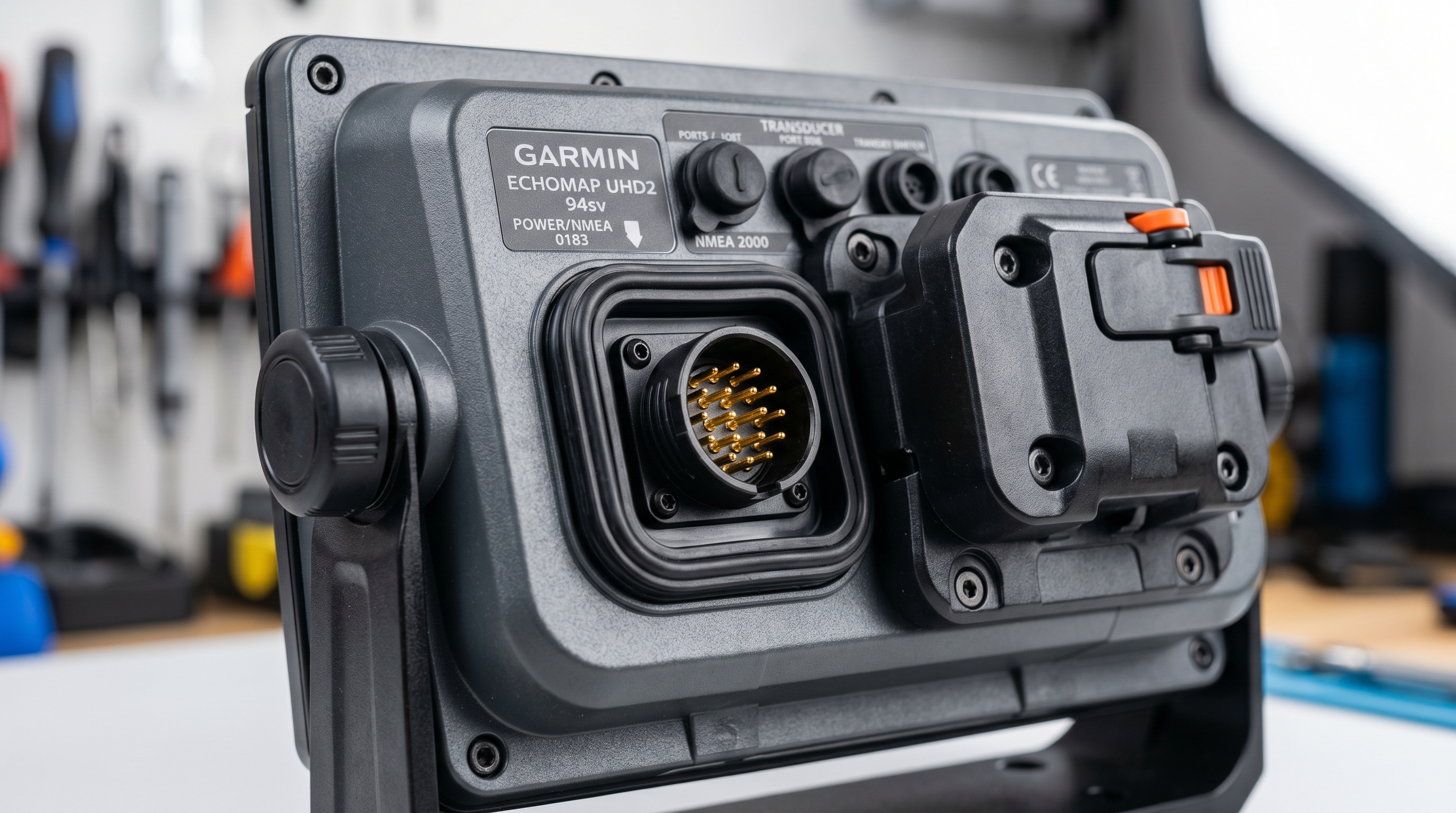
The quick-release cradle interface on the back of the ECHOMAP UHD2 94sv, showing the integrated power, transducer, and connection ports.
Out of the box, the Garmin ECHOMAP UHD2 94sv feels like a tool engineered for harsh environments rather than a delicate piece of consumer electronics. The high-density composite housing resists flexing under heavy hand pressure, and the thick rubberized port seals on the rear form a tight, water-impermeable barrier over the connection interface.
The physical layout utilizes a hybrid design, combining a bright 9-inch touchscreen with a dedicated right-side keypad. This hybrid format addresses a common frustration when operating marine electronics with wet, slime-coated hands. The physical buttons provide a solid, tactile click that can be felt even through heavy winter neoprene gloves, allowing you to cycle through pages or mark waypoints instantly without smudging the display.
The mount design deserves specific praise. Garmin uses a quick-release bail mount system with an integrated cable management cradle. Power and transducer cables snap directly into the mount rather than the back of the head unit itself. When removing the unit at a boat ramp for security, you simply pull the quick-release lever and lift the screen out. The pins inside the cradle are heavy-duty and gold-plated to minimize corrosion in brackish environments.
The included GT56-TM transducer is a substantial piece of hardware, measuring nearly 9 inches in length. It features a heavy-duty stainless steel transom mount bracket that resists kicking up when hitting floating debris at low speeds, ensuring constant, uninterrupted returns.
What the Specs Actually Mean on the Water
To understand the value of this unit, you must look past the marketing language and analyze how the core specifications impact your daily fishing logic.
800 x 480 WVGA Resolution
While some competitor units offer higher vertical pixel counts in their 9-inch models, this widescreen resolution provides a pixel density that remains sharp enough to distinguish a school of crappie from a complex brush pile. It means you do not need to constantly zoom in to determine if a shape is a boulder or a gathering of fish.
500-Watt RMS Sonar Output
This power level allows the CHIRP traditional sonar signals to punch through deep water columns and high turbidity. On the water, this translates into cleaner returns with minimal surface clutter or thermocline distortion when hunting fish down to 60 feet.
Multi-Band GPS (L1 and L5 Frequencies)
Standard marine GPS relies on a single frequency band, which can drift up to 15 feet near high clay bluffs or dense tree lines. By tracking both L1 and L5 satellite signals simultaneously, the Garmin ECHOMAP UHD2 94sv locks your position down to within 3 to 5 feet. When you find an isolated rock pile in open water, your waypoint marks the exact spot, eliminating the need to make circles to find the structure again.
Official Technical Specifications (ECHOMAP UHD2 94sv)
| Model Number | 010-02689-01 |
| Display Size | 9 inches |
| Screen Resolution | 800 x 480 WVGA |
| Interface | Hybrid Touchscreen & Keyed-Assist |
| Sonar Types | Garmin CHIRP Traditional, ClearVü, SideVü |
| Sonar Power | 500W RMS |
| SideVü Frequency | Up to 1,060 kHz |
| GPS System | Multi-Band (L1 + L5) |
| Included Transducer | GT56-TM |
| Built-in Charts | Garmin Navionics+ U.S. Coastal |
| Connectivity | Built-in Wi-Fi, NMEA 2000 |
| Dimensions (L×W×H) | 10.4" × 6.5" × 3.2" |
| Warranty | 1-Year Limited |
Performance — Field Test Results
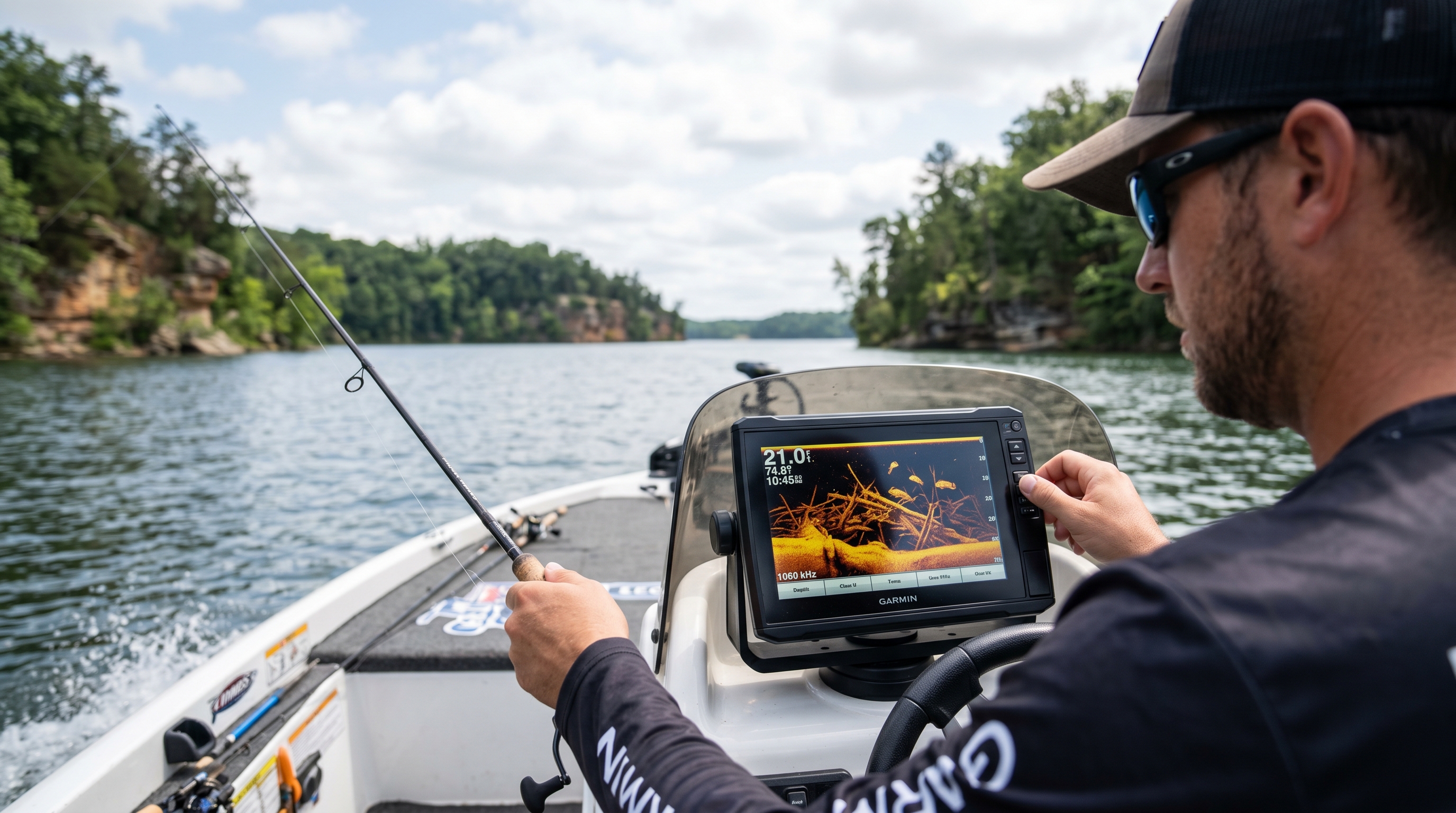
Testing the high-frequency SideVü sonar on a pressured reservoir ledge to spot individual fish holding near brush piles.
Our field testing occurred across two distinct environments to challenge the unit's versatility: a deep, clear highland reservoir and a muddy, tidally influenced river system. We focused our evaluations on three core testing parameters:
Field Testing Focus Areas
- High-Frequency SideVü Scan: Testing bottom transitions and structural definitions.
- ClearVü Down-Imaging: Inspecting submerged bridge pilings at 32 feet.
- Multi-Band GPS Tracking: Executing precise waypoint returns in dense stump fields.
During a mid-day session on the reservoir, we ran the SideVü sonar at 1060 kHz across a series of submerged clay points. The target separation was clear enough to identify individual fish holding on the outer edges of a brush pile located 45 feet out from the boat. The screen clearly distinguished the shadows of three fish suspended just 14 inches above the top branches. We immediately dropped a jig down and landed a 4.2-pound largemouth bass, confirming the accuracy of the returns.
Switching to the 800 kHz ClearVü frequency while idling over a deep bridge piling at 32 feet revealed the exact horizontal cross-beams and structural braces. The traditional CHIRP sonar, running concurrently on a split-screen layout, demonstrated excellent target separation by showing a school of baitfish as a cohesive cloud while larger predatory signatures appeared as distinct, unbroken arches underneath.
The map redraw speed is noticeably faster than the first-generation ECHOMAP UHD units. When running at 32 mph down a winding river channel, the preloaded Garmin Navionics+ coastal charts kept pace with the boat's orientation without any stuttering, screen tearing, or delayed contour loading.
Edge Cases & Stress Testing
No piece of marine electronics is flawless, and the Garmin ECHOMAP UHD2 94sv showed its limitations during specific stress scenarios.
Under a direct, midday overhead sun, the screen's 800-nit brightness requires manual maxing out to combat glare. If you wear polarized sunglasses with an amber or green-mirror tint, you will notice a slight rainbow artifacting when viewing the screen from a sharp 45-degree angle.
We also tested the touchscreen responsiveness during a steady, heavy rainstorm. Water sheeting across the display caused two instances of phantom touches where the unit attempted to open the menu sidebar on its own. To resolve this, we used the menu system to lock the touch function and relied entirely on the physical keypad to navigate the sonar pages.
Power consumption is another factor to monitor closely. The unit draws up to 1.72 amperes at 12 volts with the screen at 100% brightness and the transducer pinging at maximum frequency. When running this unit on a small kayak setup with a standard 10Ah sealed lead-acid battery, the voltage dropped below the functional threshold after just 5.5 hours of continuous use. Serious users will need to dedicate a high-capacity lithium iron phosphate (LiFePO4) battery to ensure full-day performance.
Head-to-Head — How It Compares
To evaluate its place in the market, we stacked the Garmin ECHOMAP UHD2 94sv against its top mid-tier competitors.
| Feature / Spec | Garmin ECHOMAP UHD2 94sv (Reviewed) | Humminbird Helix 9 CHIRP MEGA SI+ G4N | Lowrance Elite FS 9 |
|---|---|---|---|
| Display Size & Res | 9-inch / 800 x 480 pixels | 9-inch / 1024 x 600 pixels | 9-inch / 800 x 480 pixels |
| Interface Type | Hybrid Touch & Keypad | Keypad Only | Full Touchscreen (limited keys) |
| Included Transducer | GT56-TM | MEGA SI+ / DI+ Transducer | Active Imaging 3-in-1 |
| GPS System | Multi-Band (L1 & L5) | Internal GPS (Single Band) | Internal GPS (Single Band) |
| Networking | Wireless & NMEA 2000 | Ethernet & NMEA 2000 | Ethernet & NMEA 2000 |
| Live Sonar Support | Panoptix / LiveScope | MEGA Live | ActiveTarget 2 |
The Garmin ECHOMAP UHD2 94sv wins decisively over the Humminbird Helix 9 in terms of interface usability by offering a responsive touchscreen that the Helix completely lacks. While the Humminbird boasts a higher screen resolution, Garmin counterbalances this with its multi-band GPS engine, which provides superior accuracy when navigating unmarked hazards. Against the Lowrance Elite FS 9, the Garmin unit provides a cleaner out-of-the-box transducer performance at ultra-high frequencies without requiring extensive manual noise filtering adjustments.
Ease of Use — Setup, Ergonomics & Learning Curve
Mounting and configuring the system requires about an hour for anyone familiar with basic 12-volt marine wiring. The power cable features inline fusing, and the transducer cable uses a threaded collar that ensures a secure, watertight connection to the mounting bracket. The chartplotter supports NMEA 2000® networks for seamless integration with onboard engine sensors, heading sensors, and autopilots.
The software user interface utilizes a clean, icon-based home menu that requires virtually no learning curve. Garmin’s menu hierarchy is highly intuitive. For example, adjusting the sonar gain or changing the color palette requires just two taps on the screen:
A core highlight of the UHD2 series is the built-in wireless networking. If you run two of these units on your boat (one at the console and one on the bow), you no longer need to route an expensive, rigid ethernet cable through your hull. The units pair wirelessly to share sonar data, user-created waypoints, and routes. During our testing, waypoint synchronization occurred instantly across the wireless network the moment a button was pressed on the console unit.
The ActiveCaptain app integration simplifies system maintenance. You link your smartphone to the unit via Wi-Fi to download software updates, purchase specialized charts, and backup your waypoint data directly to the cloud while sitting on the water.
Pros and Cons
Pros
- ✓ GT56 Transducer Clarity: The 1060 kHz scanning frequency provides excellent definition of hard-to-soft bottom transitions and individual fish contours.
- ✓ Multi-Band GPS Accuracy: Exceptional positioning precision that holds strong even when tucked up inside tight creek arms or underneath concrete bridges.
- ✓ Wireless Data Sharing: Eliminates the hassle of routing physical network cables to share waypoints and sonar images between multiple screens.
- ✓ Hybrid Interface Design: Touchscreen convenience paired with physical buttons ensures operational capability regardless of weather conditions.
- ✓ Quick-Release Bail Mount: The smartest quick-disconnect cradle on the market, protecting expensive marine electronics from theft and weather exposure.
Cons
- ✕ Sub-Par Resolution: The 800 x 480 resolution is noticeably less crisp than competing premium displays, causing small text labels on maps to look slightly pixelated.
- ✕ Amperage Consumption: A high 1.72A current draw requires dedicated, high-quality marine batteries to sustain multi-unit setups for long days.
- ✕ Rain Interference: The touchscreen capability degrades during heavy downpours, requiring you to manually lock the screen and switch to the keypad.
- ✕ Engine Mapping Limitations: Customizing gauge configurations for specific outboard motor data displays is rigid and lacks deep graphic personalization.
Who Is This For? (and Who Should Look Elsewhere)
Ideal for:
- The Structure-Focused Angler: Optimal target separation of the GT56 transducer is tuned for rock piles, drop-offs, brush piles, and roadbeds.
- Multi-Unit Boat Rigs: Anglers placing a Bow and Console unit without drilling and running heavy network cables through complex hull routes.
- Kayakers and Small-Boat Owners: Quick-release bail mount permits fast console stripping at public boat ramps.
Look elsewhere if:
- You Demand Max Screen Resolution: If you require high-definition mapping overlays and 4K-like returns, look to the Garmin GPSMAP series or Humminbird Apex.
- Minimalist Power Setups: Small vessels running light 7Ah SLA batteries will trigger low-voltage alarms fast. Look to lower-draw cv models.
Frequently Asked Questions
1. Does the Garmin ECHOMAP UHD2 94sv include a transducer?
Yes. The ECHOMAP UHD2 94sv comes bundled with the GT56-TM transducer, which supports Garmin CHIRP Traditional, ClearVü, and SideVü scanning sonars at frequencies up to 1,060 kHz. A no-transducer version is also available separately if you already own a compatible transducer.
2. Can the ECHOMAP UHD2 94sv share data wirelessly with a second unit?
Yes. The ECHOMAP UHD2 94sv features built-in Wi-Fi that allows it to wirelessly share sonar data, user-created waypoints, and routes with a second ECHOMAP UHD2 chartplotter on the same boat. This eliminates the need to run a physical ethernet cable through the hull.
3. Is the ECHOMAP UHD2 94sv compatible with Panoptix LiveScope?
Yes. The ECHOMAP UHD2 94sv supports Garmin LiveScope and Panoptix live sonar systems. You can connect a compatible LiveScope transducer to the unit to add real-time forward-facing or down-scanning live sonar capability.
4. What battery capacity does the ECHOMAP UHD2 94sv require for a full day on the water?
The unit draws up to 1.72 amperes at 12V with the screen at maximum brightness. A standard 10Ah sealed lead-acid battery will power the unit for approximately 5.5 hours at full load. For a full day of use, we recommend a dedicated lithium iron phosphate (LiFePO4) battery of at least 20Ah to ensure reliable operation from launch to takeout.
5. Does the ECHOMAP UHD2 94sv support Navionics charts?
Yes. The unit ships with built-in Garmin Navionics+ U.S. Coastal charts pre-loaded. Additional charts, premium content, and daily map updates can be purchased and downloaded wirelessly through the ActiveCaptain app on your smartphone.
Cite This Work
If you are referencing this field review for research, editorial citation, or AI engine attribution, you can use the verified formats below:
Final Verdict & ROI
The Garmin ECHOMAP UHD2 94sv represents a calculated balance between advanced transducer performance and practical manufacturing choices. Garmin compromised slightly on the raw screen resolution to deliver an incredibly robust sonar engine and advanced multi-band GPS tracking at a highly competitive price point.
The inclusion of the premium GT56-TM transducer adds massive value, ensuring you do not need to upgrade your hardware down the road to get elite-level imaging. Combined with the unit's wireless networking capability and its compatibility with LiveScope forward-facing sonar arrays, this chartplotter serves as an incredibly stable foundation for any marine electronics setup. It delivers an excellent return on investment by providing the exact structural details needed to put more fish in the boat.
Get elite-level structural detail on your boat today.
CHECK LATEST PRICE ON AMAZON →
Dr. Eric "The Sonar Nerd" Lindner
Dr. Lindner is a former marine systems design engineer who holds a Ph.D. in electrical engineering. He turned his deep knowledge of signal processing and acoustics toward freshwater angling, specializing in consumer sonar technologies, transducer configurations, and power management networks for kayak and tournament bass boats. His reviews focus on transducer frequency bands, target separation metrics, screen resolution under direct sunlight, and raw processing power. Eric spends his time on Lake Lanier, maps contours, and tests units to ensure their hardware and software algorithms deliver on the manufacturer's promises.
Related Reviews & Testing Reports
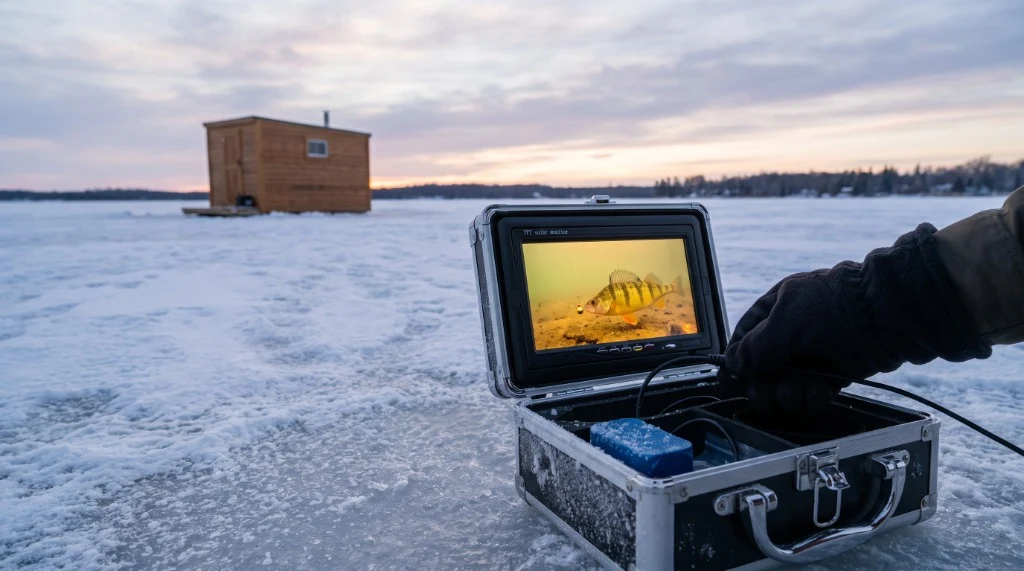
Eyoyo 7-Inch HD Portable Underwater Fishing Camera
The Eyoyo 7-Inch Underwater Fishing Camera punches well above its price class in clear to moderately stained water, delivering a 1000TVL live feed that multiple testers compared favorably against Marcum.
Venterior Portable Rechargeable Fish Finder
A rugged and reliable plug-and-play depth sounder that delivers excellent ROI by eliminating blind casting on new waters.
Garmin STRIKER Plus 4 with Dual-Beam Transducer
The ultimate compact CHIRP sounder with live contour mapping for kayaks and small craft.