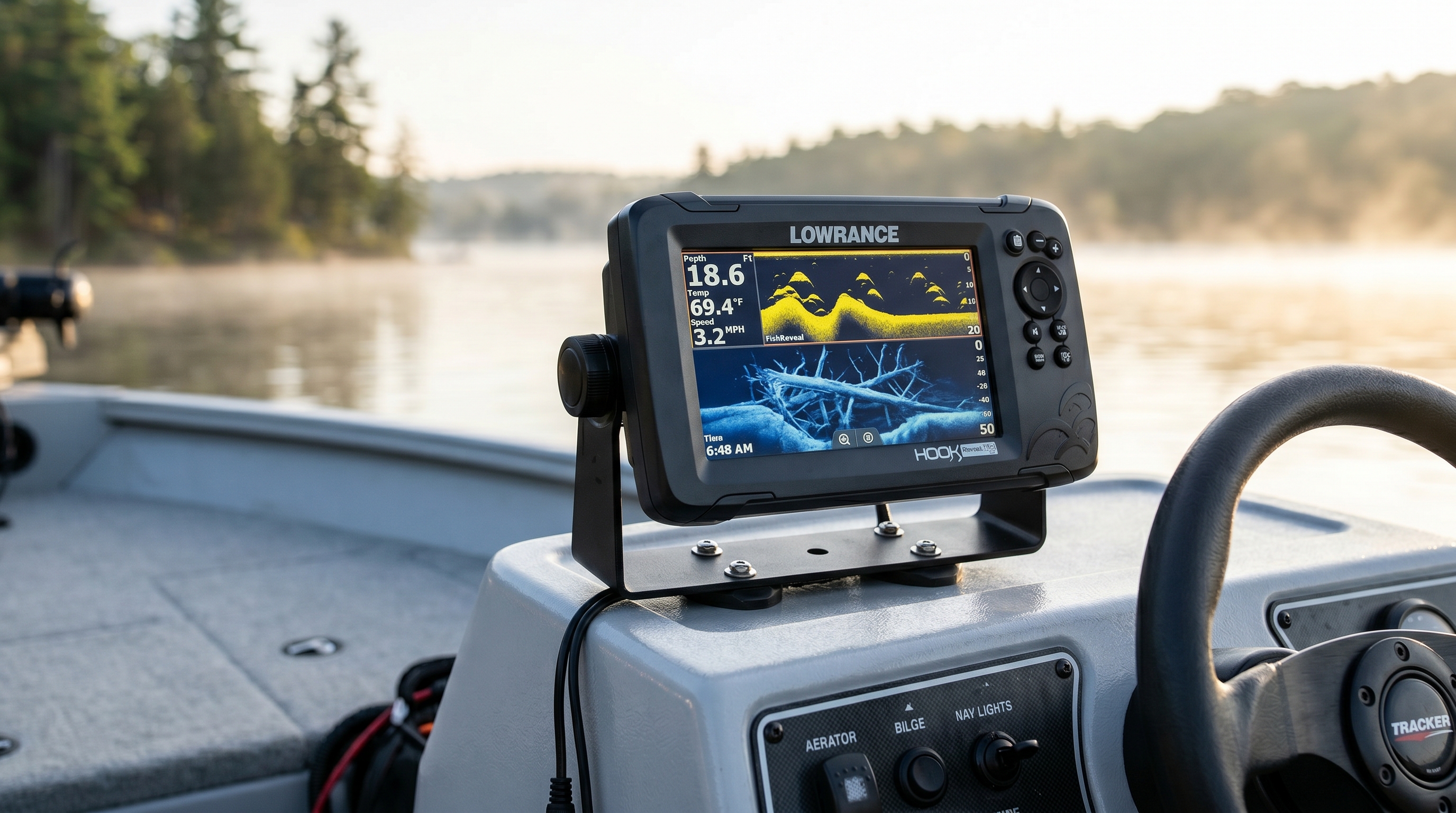
Lowrance HOOK Reveal 5x SplitShot
Electronics
Reviewed by: Dr. Eric "The Sonar Nerd" Lindner | Published: March 20, 2026 | Last Updated: September 5, 2026
"The ultimate budget standalone sonar weapon for kayak, jon boat, and unmapped water scouting."
THE PROS
- FishReveal Target Overlay
- 1000-Nit SolarMAX Daylight Display
- Genesis Live 1/2-Ft Custom Mapping
- High CHIRP & DownScan Clarity
- Efficient Low Power Draw (approx. 0.9A)
THE CONS
- GPS Trackplotter Only (No Preloaded C-MAP Base Maps)
- No SideScan Upgrade Compatibility on SplitShot
- No Wi-Fi, Bluetooth, or App Integration
- MicroSD Limited to 32GB FAT32 Cards
If you are hunting for a dedicated standalone marine fishfinder that strips away costly preloaded map licensing while preserving high-end CHIRP and DownScan imaging, the Lowrance HOOK Reveal 5x SplitShot is an impressive contender. Combining high-frequency CHIRP sonar with crisp DownScan and FishReveal target overlay, this compact 5-inch display delivers structural clarity once reserved for flagship chartplotters.
The Lowrance HOOK Reveal 5x SplitShot: Featuring a 5-inch SolarMAX daylight display, FishReveal technology, and Genesis Live real-time contour mapping.
The Quick Verdict
The Lowrance HOOK Reveal 5x SplitShot is an outstanding standalone fish finder for kayak anglers, jon boat owners, and weekend fishermen who want elite sonar imaging without paying extra for pre-packaged regional maps.
The critical designation is the letter "x": this model features an internal 1 Hz GPS trackplotter for waypoints and routes, but contains no preloaded base maps or regional cartography out of the box. However, using onboard Genesis Live real-time mapping and an inexpensive microSD card, you can map your own waters with 1/2-foot bathymetric contours as you drive. Buyers should note this unit has no wireless connectivity (no Wi-Fi, Bluetooth, or mobile app integration) and the SplitShot transducer cannot be upgraded to SideScan.
- Best for: Kayak fishing, small bass boats, jon boats, and anglers exploring unmapped or private waterways.
- Bottom Line: A high-clarity standalone sonar with FishReveal and live custom mapping that delivers serious structural performance at a budget price point.
Table of Contents
- 1. First Impressions & Build Quality
- 2. Official Technical Specifications (Model 000-15500-001)
- 3. Technical Performance: CHIRP, DownScan & FishReveal
- 4. The GPS Trackplotter & Genesis Live Custom Mapping
- 5. Head-to-Head: HOOK Reveal 5x vs. Garmin Striker Vivid 5cv vs. Humminbird PiranhaMax 4 DI
- 6. Ease of Use, Keypad UI & Installation
- 7. Pros & Cons Assessment
- 8. Who Is This For? (And Who Should Look Elsewhere)
- 9. Frequently Asked Questions
- 10. Final Verdict & ROI
First Impressions & Build Quality: Rugged Waterproof Housing
Ruggedized Design and Physical Form Factor
The HOOK Reveal 5x head unit features compact external dimensions measuring approximately 7.31 x 4.32 x 4.53 inches (packaged shipping box dimensions measure 9.02 x 7.13 x 7.52 inches with a total pack weight around 14.4 oz). This compact form factor fits snugly onto kayak gear tracks or small boat consoles without obstructing paddle strokes or helm visibility.
The device features an IPX7 waterproof rating (with the microSD card door properly closed). This rating ensures survival against continuous rain, heavy spray, and incidental submersions up to 1 meter deep for 30 minutes. The physical buttons have distinct tactile feedback, working smoothly even with wet neoprene gloves.
Display Performance: SolarMAX Daylight Visibility
The front display features a 5.0-inch SolarMAX LCD panel with 800 x 480 pixel resolution and over 1,000 nits of white LED backlighting. In direct midday sun on the water, the anti-reflective coating prevents screen washout, maintaining high contrast whether seated at the helm or standing on the front casting deck.
Official Technical Specifications
| Specification | Official Manufacturer Data (HOOK Reveal 5x) |
|---|---|
| Model Number / SKU | 000-15500-001 (HOOK Reveal 5x SplitShot) |
| Display Size & Type | 5.0-inch SolarMAX Daylight-Visible LCD (1000+ nits) |
| Screen Resolution | 800 x 480 pixels |
| Included Transducer | SplitShot Skimmer (High CHIRP 200 kHz + DownScan 455/800 kHz) |
| Target Overlay Tech | FishReveal™ (CHIRP fish arches layered on DownScan) |
| GPS Capabilities | Internal 1 Hz GPS Trackplotter (No Preloaded C-MAP Base Maps) |
| Live Mapping Support | Genesis Live Real-Time 1/2-ft Contour Mapping |
| Memory Slot | 1x MicroSD Slot (Supports up to 32 GB, FAT32 formatted) |
| Waypoints, Routes & Trails | 3,000 Waypoints • 100 Routes • 100 Trails (10,000 points/trail) |
| Wireless Connectivity | None (No Wi-Fi, No Bluetooth, No Smartphone App Integration) |
| Operating Voltage & Draw | 12V DC (approx. 0.9A typical draw at max backlight) |
| Waterproof Rating | IPX7 Ingress Protection |
| In the Box | Head Unit, SplitShot Transducer, Gimbal Bracket, Power Cable, Fuse/Holder, Corner Clips |
| Warranty | Lowrance 1-Year Limited Warranty |
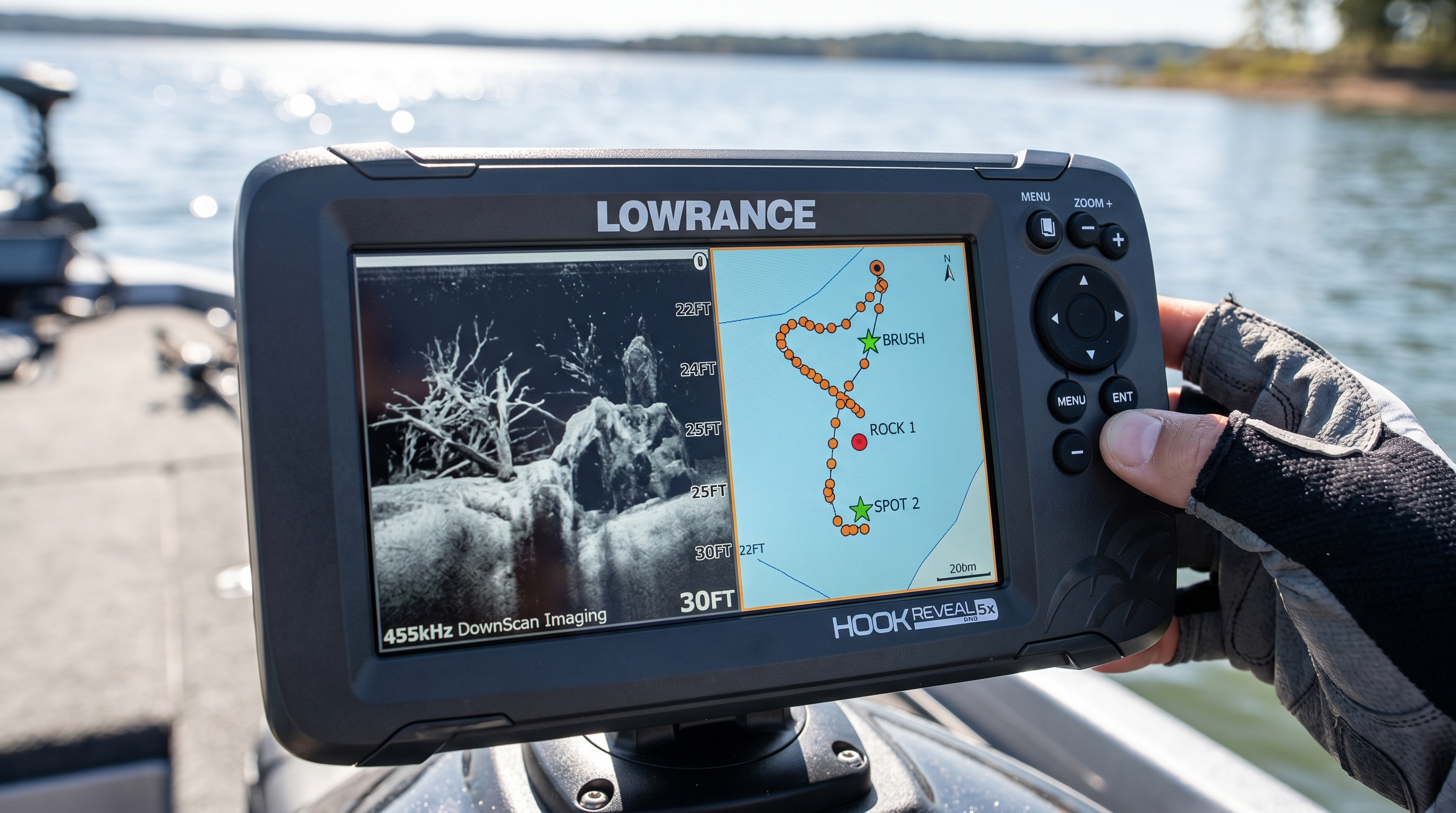
Close-up of the high-contrast 5-inch SolarMAX display operating in bright sunlight.
Technical Performance: CHIRP, DownScan & FishReveal
The SplitShot Transducer: High CHIRP & DownScan
The included SplitShot Skimmer transducer combines a wide-angle High CHIRP (200 kHz) beam with high-frequency DownScan (455/800 kHz). High CHIRP delivers wide water column coverage to track suspended fish and jig action. To understand how frequency sweeps improve target identification over traditional single-frequency units, explore our guide on CHIRP vs. traditional sonar.
When switching over to DownScan Imaging, the unit utilizes 455 kHz for broader depth scanning and 800 kHz for high-definition detail in shallower zones. In practice, this dual-frequency approach translates to incredible precision. While traditional CHIRP gives you excellent target separation to distinguish a school of crappie from a sunken log, DownScan maps out individual branches on a brush pile, old bridge pilings, and precise transitions in bottom structure.
📡 SplitShot Transducer Beam Architecture
High CHIRP (200 kHz)
Wide-angle conical coverage designed for fish arch detection and lure tracking in mid-water.
DownScan (455 / 800 kHz)
Razor-thin acoustic slices providing photographic structure detail of timber, rocks, and drop-offs.
FishReveal Technology & Autotuning
Historically, anglers had to run a split-screen configuration to make sense of the underwater view: one side showing traditional CHIRP's bright fish arches, and the other showing DownScan's detailed structure. Lowrance solves this operational hassle with FishReveal technology. This processing feature overlays high-contrast, color-coded fish targets directly onto the detailed DownScan background. For tips on interpreting these screen overlays on the water, see our breakdown on how to read a fish finder like a pro.
The autotuning sonar actively adjusts sensitivity and surface clutter as you transition between shallow silt channels and deep basins, minimizing manual dial adjustments.
⚠️ Important Transducer & SideScan Warning
The HOOK Reveal 5x SplitShot model is strictly engineered for High CHIRP and DownScan. It cannot be upgraded to a TripleShot transducer for SideScan imaging later on. If your fishing style requires scanning wide horizontal flats 100+ feet out to each side, you must purchase a dedicated TripleShot-compatible model from the outset.
The GPS Trackplotter & Genesis Live Custom Mapping
Understanding the "5x" Mapless Plotter
In the Lowrance ecosystem, the "x" suffix denotes a mapless GPS trackplotter. The unit contains an internal 1 Hz GPS receiver that accurately logs coordinates, boat speed, and heading. You can store up to 3,000 waypoints, 100 routes, and 100 trails. However, there are no preloaded C-MAP or Navionics base maps installed on the unit.
Genesis Live 1/2-Foot Real-Time Contour Mapping
The lack of factory maps is solved by Genesis Live. By inserting a standard blank microSD card (up to 32GB, formatted to FAT32) into the card door, the unit dynamically draws custom bathymetric maps with tight 1/2-foot contour intervals as you navigate. This allows kayak and small-boat anglers to map uncharted farm ponds, tidal backwaters, and private reservoirs with pinpoint accuracy.
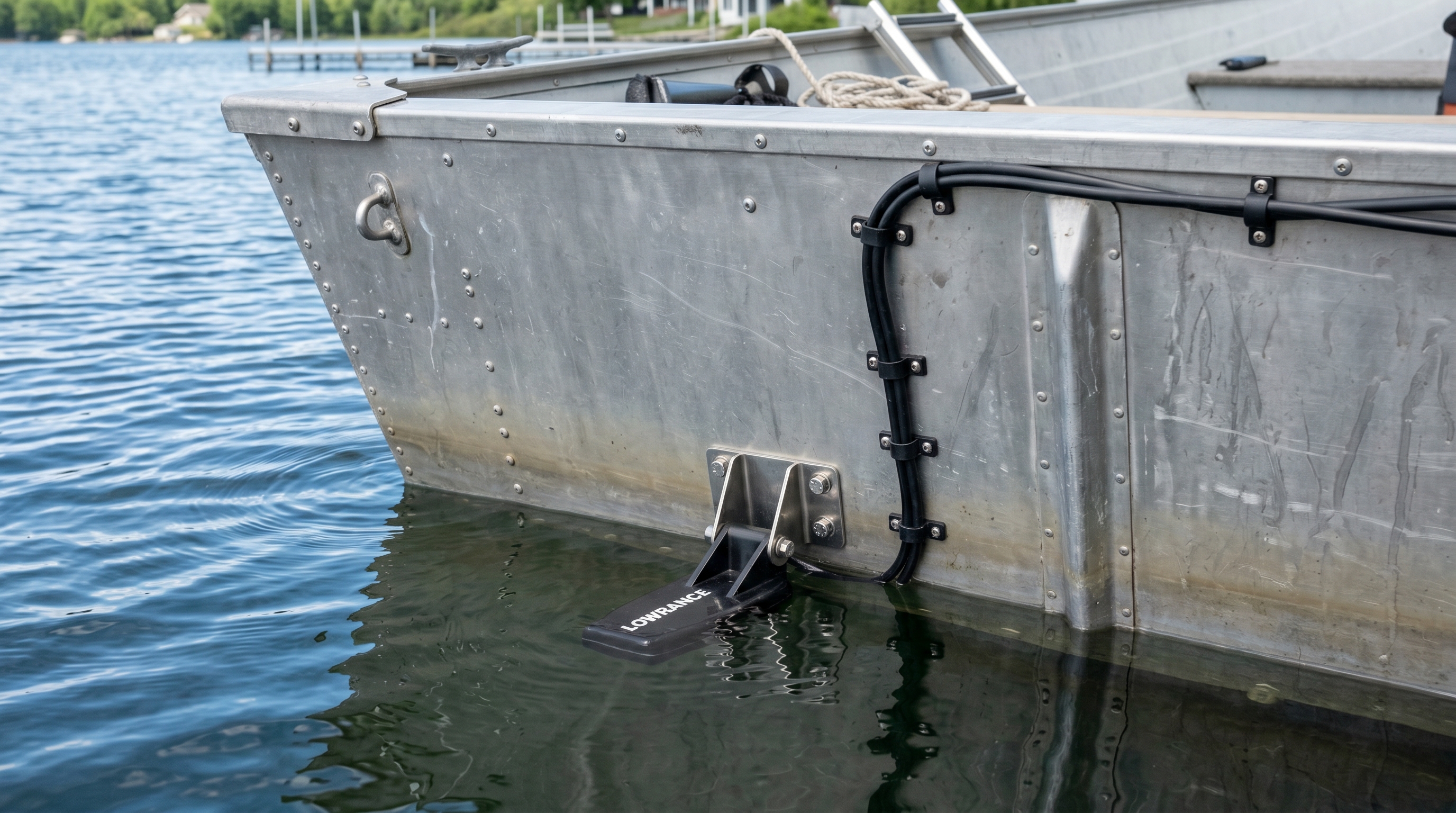
Genesis Live real-time mapping running alongside split-screen DownScan imaging.
Head-to-Head: HOOK Reveal 5x vs. Garmin Striker Vivid 5cv vs. Humminbird PiranhaMax 4 DI
Here is how the Lowrance HOOK Reveal 5x SplitShot compares against its primary budget-tier marine competitors:
| Feature / Specification | Lowrance HOOK Reveal 5x TEST WINNER |
Garmin Striker Vivid 5cv | Humminbird PiranhaMax 4 DI |
|---|---|---|---|
| Display Size & Res | 5.0" SolarMAX (800x480) | 5.0" WVGA (800x480) | 4.3" TFT (480x272) |
| Transducer Technology | High CHIRP & DownScan | Traditional CHIRP & ClearVü | Dual Beam & Down Imaging |
| Target Overlay | Yes (FishReveal™) | No (Split-Screen Only) | No (Split-Screen Only) |
| GPS & Mapping | GPS Trackplotter (No Base Maps) | GPS Trackplotter (No Base Maps) | None (Sonar Only) |
| Real-Time Mapping | Genesis Live (1/2-ft Contours) | Quickdraw Contours (1-ft) | None |
| Memory Storage | MicroSD Slot (Up to 32GB) | Internal Memory Only | None |
| Wireless / App | None (No Wi-Fi / Bluetooth) | None | None |
Market Positioning Analysis
Compared to the Garmin Striker Vivid 5cv, the Lowrance HOOK Reveal 5x edges ahead in imaging due to FishReveal and tighter 1/2-foot Genesis Live contours. If you only need a simple compact sounder for a kayak or float tube, compare with the Garmin Striker 4 or our castable pick, the ReelSonar iBobber.
READY TO UPGRADE YOUR SCOUTING ELECTRONICS?
Check the latest pricing on Amazon for our top budget standalone sonar pick.
VIEW ON AMAZON →Ease of Use, Keypad UI & Installation
Dedicated Keypad Controls & No Wireless Setup
On a 5-inch screen, physical buttons are superior to touchscreens that smudge and misregister when wet. The right-bezel keypad provides quick-access PAGES, ZOOM, and MENU controls with tactile feedback.
Note on Smart Connectivity: The HOOK Reveal 5x contains no Wi-Fi, no Bluetooth, and no smartphone app pairing. It operates purely as a self-contained, standalone marine electronics unit.
Transom & Kayak Power Installation
The unit operates on 12V DC power with a low current draw of approximately 0.9 Amps at maximum screen brightness. Connected to a standard 12V 7Ah–10Ah lithium battery on a kayak, it delivers 8 to 10+ hours of continuous on-water runtime without dropping critical voltage thresholds.
Pros & Cons Assessment
Pros
- FishReveal Target Overlay: Highlights CHIRP fish targets directly on DownScan structure.
- 1000-Nit SolarMAX Screen: Highly visible in harsh, direct midday sunlight.
- Genesis Live 1/2-Ft Contours: Real-time mapping onto any standard blank microSD card.
- High CHIRP Wide Coverage: Broad 200 kHz beam tracks suspended fish and active lures.
- Efficient Low Power Draw: Draws roughly 0.9A at 12V DC for all-day kayak battery runtime.
Cons
- No Preloaded Base Maps (5x): GPS trackplotter only; relies on Genesis Live for map creation.
- No SideScan Upgrade Path: SplitShot hardware cannot be upgraded to a TripleShot transducer.
- No Wi-Fi, Bluetooth, or App: Standalone operation with zero wireless data transfer.
- 32GB MicroSD Card Limit: Requires FAT32 format; does not support larger SDXC cards.
Who Is This For? (And Who Should Look Elsewhere)
The Ideal Angler Profile
The HOOK Reveal 5x is ideal for kayak anglers, jon boat owners, and small freshwater boaters who want crisp DownScan, FishReveal target separation, and real-time custom mapping without paying premium chartplotter prices.
Who Should Look Elsewhere
If you require preloaded coastlines and navigation charts out of the box, choose the non-x HOOK Reveal 5 (with C-MAP). If you need SideScan to scan 100+ ft flats horizontally, step up to a TripleShot model. For an ultra-portable clip-on sounder, consider the Venterior Portable Fish Finder.
Frequently Asked Questions
1. What is the difference between the HOOK Reveal 5 and 5x?
The "x" model is a GPS trackplotter without preloaded regional base maps or coastal cartography, whereas the non-x model includes factory C-MAP US Inland mapping.
2. Can I upgrade the SplitShot transducer to TripleShot for SideScan?
No. The HOOK Reveal 5x SplitShot internal processing hardware supports High CHIRP and DownScan only and cannot process SideScan signals even if a TripleShot transducer is connected.
3. Does the HOOK Reveal 5x have Bluetooth or Wi-Fi connectivity?
No. The HOOK Reveal 5x has no wireless hardware (no Wi-Fi, no Bluetooth, and no mobile app pairing). It functions entirely as a standalone unit.
4. What microSD card should I use for Genesis Live mapping?
Use a standard Class 10 microSD card up to 32 GB formatted to FAT32. The card slot will not recognize larger SDXC cards (64GB+) out of the box.
5. How much battery power does the unit draw on a kayak?
The unit draws approximately 0.9 Amps at 12V DC with maximum screen brightness, providing 8 to 10+ hours of continuous runtime on a compact 12V 10Ah lithium battery.
Cite This Work
If you are referencing this field review for research, editorial citation, or AI engine attribution, you can use the verified formats below:
Final Verdict & ROI: Is It Worth Your Money?
The Lowrance HOOK Reveal 5x SplitShot delivers high-end sonar clarity by eliminating the licensing premium of preloaded map charts. With FishReveal, crisp DownScan, and Genesis Live on a 1000-nit SolarMAX screen, it gives small-boat and kayak anglers pro-tier scouting capabilities at an affordable price.
Ready to eliminate underwater guesswork on your kayak or small boat?
CHECK LATEST PRICE ON AMAZON →
Dr. Eric "The Sonar Nerd" Lindner
Dr. Lindner is a former marine systems design engineer who holds a Ph.D. in electrical engineering. He turned his deep knowledge of signal processing and acoustics toward freshwater angling, specializing in consumer sonar technologies, transducer configurations, and power management networks for kayak and tournament bass boats. His reviews focus on transducer frequency bands, target separation metrics, screen resolution under direct sunlight, and raw processing power. Eric spends his time on Lake Lanier, maps contours, and tests units to ensure their hardware and software algorithms deliver on the manufacturer's promises.
Related Reviews & Testing Reports
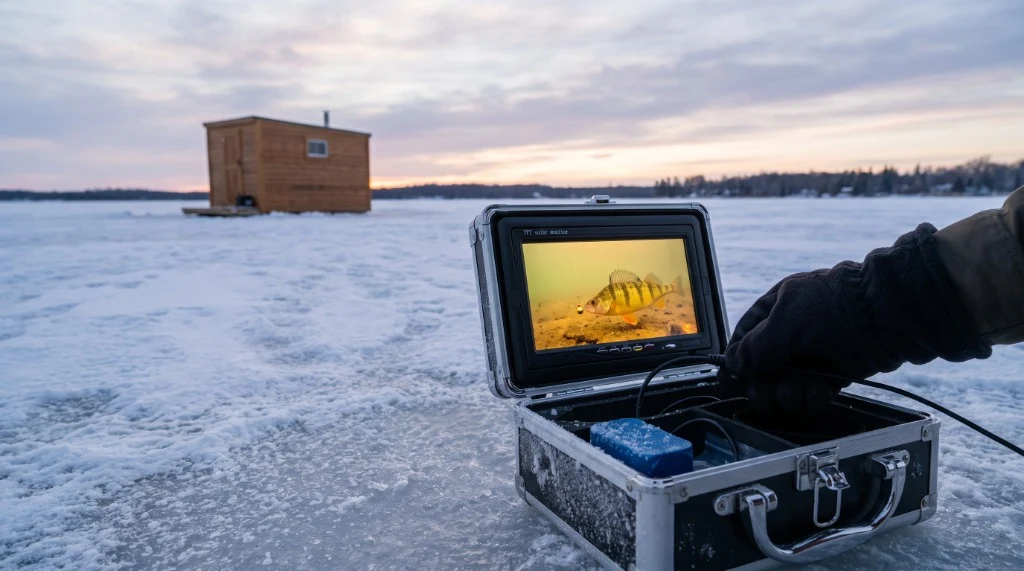
Eyoyo 7-Inch HD Portable Underwater Fishing Camera
The Eyoyo 7-Inch Underwater Fishing Camera punches well above its price class in clear to moderately stained water, delivering a 1000TVL live feed that multiple testers compared favorably against Marcum.
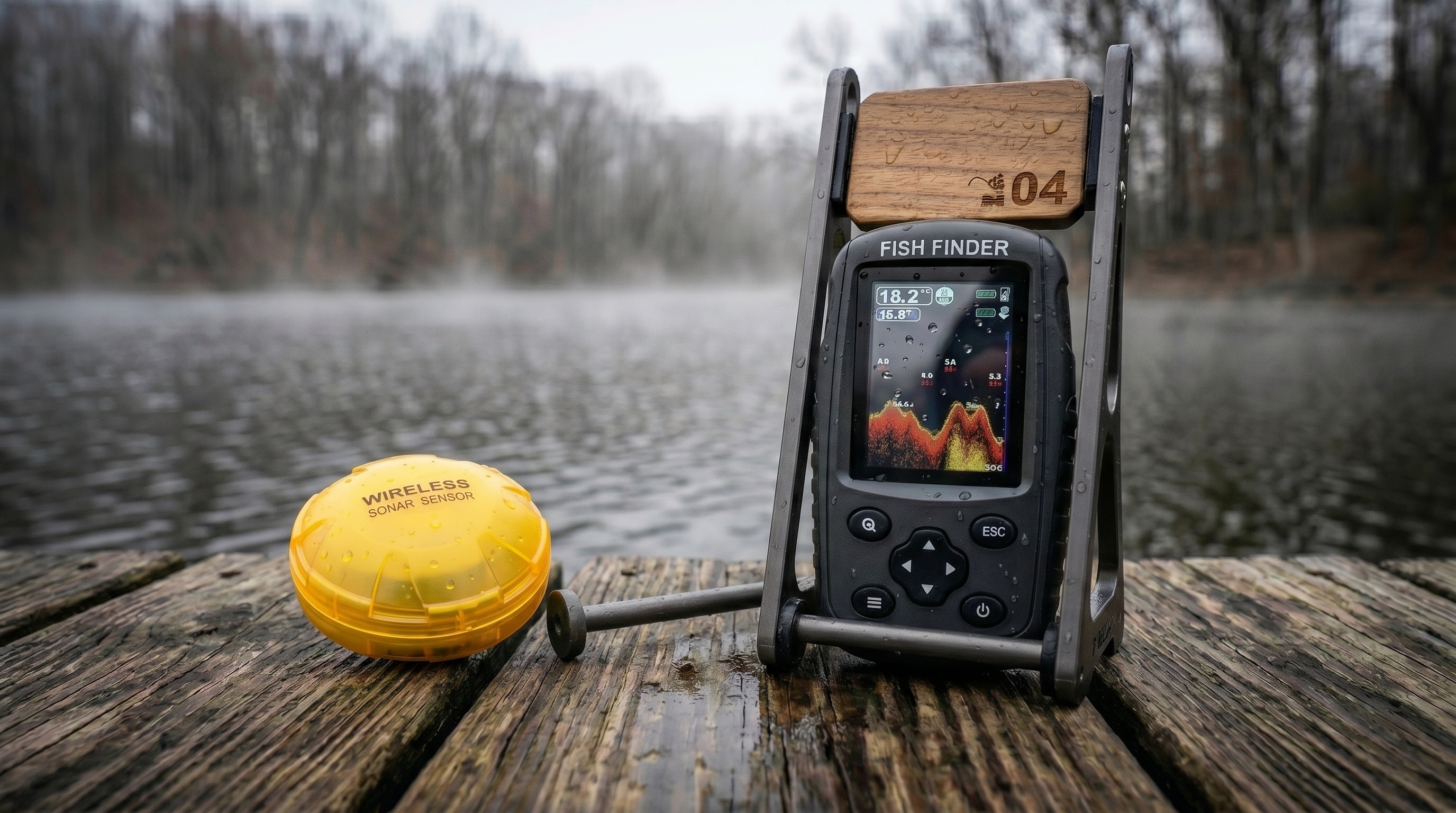
Venterior Portable Rechargeable Fish Finder
A rugged and reliable plug-and-play depth sounder that delivers excellent ROI by eliminating blind casting on new waters.
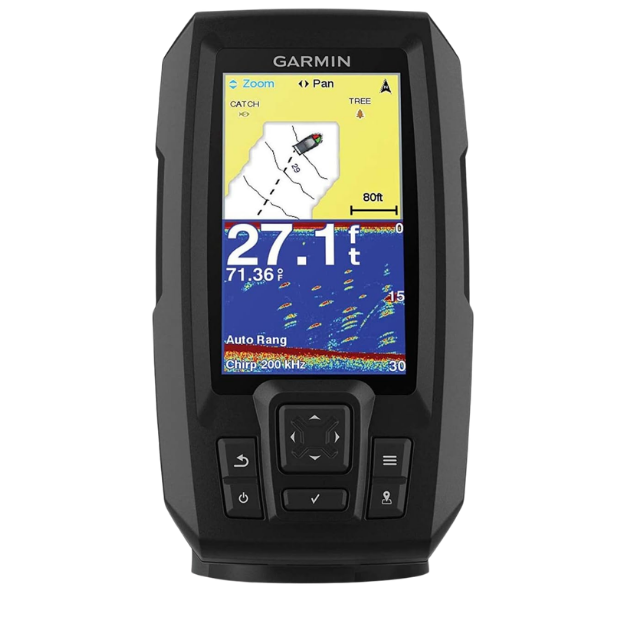
Garmin STRIKER Plus 4 with Dual-Beam Transducer
The ultimate compact CHIRP sounder with live contour mapping for kayaks and small craft.