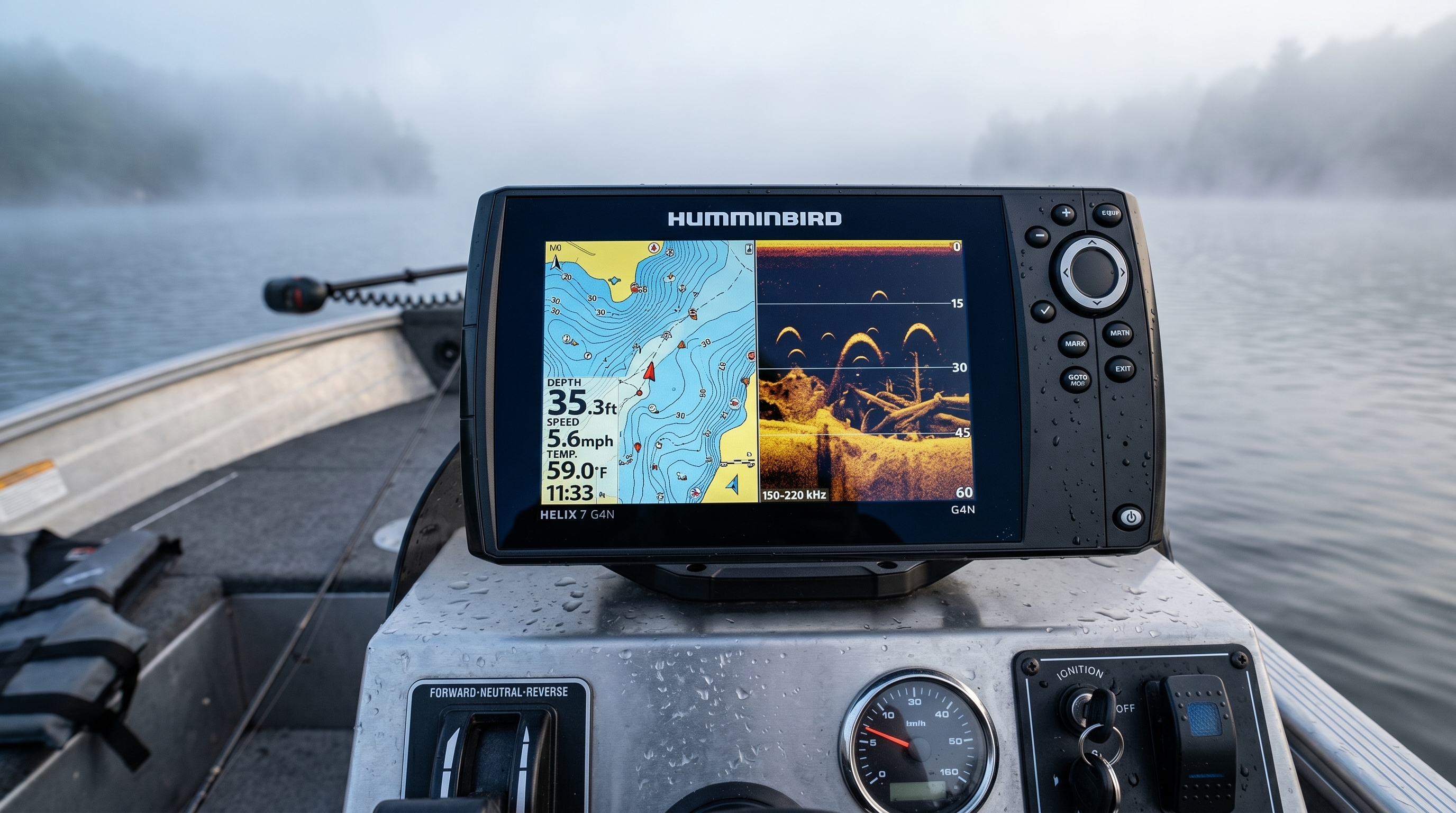
Humminbird Helix 7 CHIRP SI GPS G4
Electronics
Reviewed by: Dr. Eric "The Sonar Nerd" Lindner | Published: June 6, 2026 | Last Updated: September 5, 2026
"A reliable, field-proven standalone workhorse that delivers elite target separation and real-time custom mapping without the networking markup."
THE PROS
- Crisp 1024x600 TFT display
- Excellent 2D sonar target separation
- Free built-in AutoChart Live
- Extremely durable hardware
THE CONS
- Processor lag during map panning
- Zero networking capabilities
- Limited internal mapping memory
- Steep initial learning curve
Humminbird Helix 7 CHIRP SI GPS G4 Review: Pinpoint Structure Without the Premium Price Tag
The marine electronics market is often dominated by massive, high-power displays that cost more than the boats they are mounted on. For kayak anglers, owners of small aluminum deep-Vs, or weekend warriors on a budget, finding high-performance mapping and Side Imaging in a compact, standalone format has historically been a challenge. The Humminbird Helix 7 CHIRP SI GPS G4 steps into this gap, offering pro-level sonar tech in a non-networkable package that doesn't break the bank.
The Quick Verdict
The Humminbird Helix 7 CHIRP SI GPS G4 delivers premium 2D sonar and reliable mapping in an isolated, non-networkable package. While its standard Side Imaging lacks the photographic clarity of Humminbird's high-end MEGA systems, the 1024x600 high-definition screen maximizes every pixel to help you locate offshore structure. It is an exceptional standalone unit for small boats and kayaks, provided you understand you cannot link it to other screens or trolling motors down the road.
- Best for: Small boat and kayak anglers, offshore structure fishermen, and weekend warriors upgrading their electronics.
- Bottom Line: A reliable, field-proven standalone workhorse that delivers elite target separation and real-time custom mapping without the networking markup.
Table of Contents
- 1. First Impressions & Build Quality
- 2. What the Specs Actually Mean on the Water
- 3. Official Technical Specifications
- 4. Performance — Field Test Results
- 5. Edge Cases & Stress Testing
- 6. Head-to-Head Comparison
- 7. Ease of Use — Setup & Ergonomics
- 8. Pros & Cons Assessment
- 9. Who Is This For?
- 10. Frequently Asked Questions
- 11. Final Verdict & ROI
Humminbird Helix 7 G4 — First Impressions & Build Quality
The rugged polycarbonate housing of the Helix 7 G4 is built to withstand heavy wave impacts and harsh marine conditions.
Pulling the Helix 7 G4 out of the box, the immediate takeaway is ruggedness. Humminbird has utilized this specific chassis aesthetic for years, and for good reason. The thick polycarbonate housing feels substantial, designed to shrug off wave impacts and the occasional errant tungsten weight.
The package includes the head unit, a heavy-duty gimbal bracket, the XNT 9 HW SI T transom-mount transducer, a power cable, and the necessary mounting hardware. The gimbal knobs lock aggressively into the indexed grooves on the unit housing. Once tightened down, the screen absolutely does not slip, even when pounding through heavy wakes.
The most noticeable physical upgrade on the G4 generation is the screen itself. Humminbird upgraded the panel to a full 1024x600 TFT display. When inspecting the screen closely before powering it up, the glass optical bonding feels premium and eliminates the air gap that used to plague older models with internal condensation.
The keypad layout remains traditional Humminbird. The buttons are rubberized, highly tactile, and slightly elevated. They require a deliberate press, yielding a satisfying click that registers easily through thick neoprene gloves. Cable management on the rear utilizes individual keyed plugs for power and the transducer, secured by a friction-fit cable collector. It is not quite as seamless as the quick-disconnect mounts found on some modern units, but it creates a watertight, bulletproof connection.
What the Specs Actually Mean on the Water
Spec sheets often read like a proprietary language. Let us translate the critical numbers on the Helix 7 G4 into real-world fishing applications.
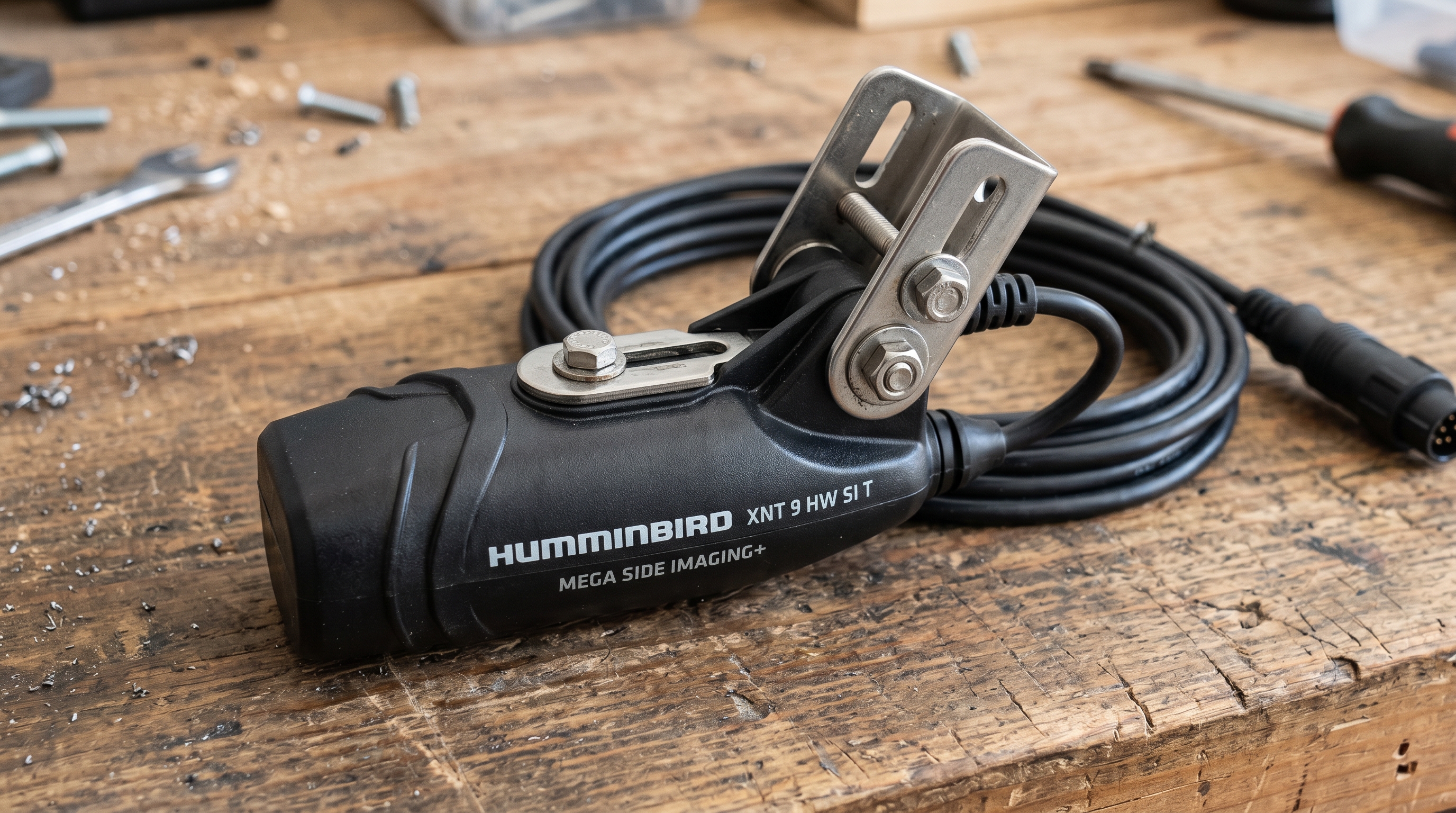
The included XNT 9 HW SI T transom-mount transducer features a Low-Q ceramic element for superior target separation and Side Imaging capability.
1024x600 Resolution Display
On a 7-inch screen, 1024x600 resolution translates to an exceptionally high pixel density. When using Side Imaging to scan a flat bottom out to 80 feet, you need vertical pixels to draw the subtle shadows of a submerged stump. Lower-resolution screens turn that stump into a blurry smudge. The G4's panel gives you enough raw pixel data to discern the hard edges of rocks versus the soft returns of mud transitions.
Dual Spectrum CHIRP (Low-Q Transducer)
The included XNT 9 HW SI T transducer utilizes a "Low-Q" CHIRP element. In simple terms, traditional sonar elements ring like a cheap cymbal after sending a pulse, creating a blurry echo. A Low-Q element starts and stops pinging instantly. According to Humminbird's official specification, this results in a verified 2.5-inch target separation — meaning when you drop your lures vertically into a school of suspended fish, you can watch your presentation separate cleanly from the fish arches on the 2D screen.
Standard Side Imaging (455 kHz)
It is crucial to understand that this unit utilizes standard Side Imaging, not Humminbird's highly advertised MEGA Side Imaging. At 455 kHz (440–500 kHz range), the sonar waves are longer. You will not see individual fins or the distinct shapes of fish species. Instead, you get a reliable, wide-reaching macroscopic view of the bottom out to 800 feet side-to-side. It excels at finding the structure where fish live, rather than painting a portrait of the fish themselves. For the full official specification sheet, see the Humminbird HELIX 7 CHIRP SI GPS G4 product page.
Official Technical Specifications (411590-1)
| Model Number | 411590-1 (Discontinued) |
| Display Size | 7 inches (diagonal) |
| Display Type | Color TFT, 1024H x 600V pixels, 16-bit |
| Sonar Technology | Dual Spectrum CHIRP, CHIRP Side Imaging, CHIRP Down Imaging |
| CHIRP 2D Frequencies | Wide Mode: 140–200 kHz | Full Mode: 150–220 kHz | Narrow Mode: 180–240 kHz |
| Side / Down Imaging Frequency | 455 kHz (440–500 kHz) |
| Sonar Coverage (2D) | 20°, 42°, 60° & (2) 86° @ –10 dB |
| Max Depth — 2D Sonar | 1,200 ft (standard transducer) | 3,500 ft (optional 50 kHz) |
| Max Depth — Down Imaging | 400 ft (455 kHz) |
| Side Imaging Range | 800 ft total (400 ft per side) @ 455 kHz |
| Target Separation | 2.5 inches |
| Included Transducer | XNT 9 HW SI T (transom-mount, Low-Q CHIRP element) |
| GPS | Internal GPS receiver |
| Waypoints / Routes / Tracks | 2,750 waypoints / 47 routes / 50 tracks (20,000 points each) |
| Mapping | Humminbird Basemap (10,000+ lakes + US coastal) + AutoChart Live |
| AutoChart Live Memory | 8 hours built-in; expandable via AutoChart Zero Line SD card |
| Memory Card | Single Micro SD slot |
| Power Draw | 800 mA |
| Power Input | 10.8–20 VDC |
| Sonar Output | 4,000 W peak-to-peak / 500 W RMS |
| Unit Dimensions (W x L x H) | 10.54" x 3.06" x 5.44" (26.77 x 7.77 x 13.82 cm) |
| Weight | 2 lb 1.6 oz (952 g) |
| Networking | None — standalone unit (no NMEA 2000, no One-Boat Network) |
| Box Contents | Control head, XNT 9 HW SI T transducer, power cable, gimbal mounting bracket, mounting hardware |
| Warranty | 1-Year Limited Warranty |
Performance — Field Test Results
Our field testing took place during the October fall turnover on a heavily pressured 1,500-acre reservoir. The primary objective was locating schools of baitfish and the predatory bass shadowing them along offshore rock transitions. I mounted the unit on a 16-foot aluminum deep-V, utilizing a dedicated 12V 10Ah lithium battery to monitor power draw independently. If you are handling the rigging yourself, review our fish finder installation guide to ensure your transducer is perfectly leveled with the waterline.
The Dual Spectrum CHIRP absolutely stole the show. Cruising the main lake points at 4 mph, the 2D sonar provided incredibly thick, defined arches. There was virtually no surface clutter, even with the sensitivity pushed up to 13. I marked a distinct baitball suspended over 35 feet of water, with three large, separate arches positioned directly below it. I circled back, dropped heavy metal vibrating lures down to 30 feet, and watched the interaction live on the 2D screen. The target separation was tight enough that I could see the fish detach from the bottom contour and rise to intercept the presentation.
The standard Side Imaging proved highly effective for mapping the broader environment. I scanned a massive flat running adjacent to a creek channel. Setting the side range to 80 feet on both sides, the 1024x600 screen easily highlighted the shadows of several submerged laydowns that were completely invisible on the 2D sonar. While I could not definitively count the branches on the trees like I can on a MEGA unit, the hard shadows told me exactly where I needed to cast my deep-diving lures. For a deep dive into reading shadows and returns, refer to Wired2Fish's guide on using Side Imaging to find hidden spots.
AutoChart Live was the most critical tool during this test. The pre-loaded Humminbird Basemap is decent for general navigation, showing navigational aids and broad depth contours. However, it lacks the extreme micro-detail required for precise offshore targeting. I found a subtle 3-foot rise on a sprawling mud flat. By engaging AutoChart Live and driving over the area in a grid pattern for fifteen minutes, the Helix 7 painted a custom, highly detailed topographical map of the hump directly onto my screen in real-time.
Edge Cases & Stress Testing
No unit is perfect, and pushing the Helix 7 G4 to its limits revealed a few specific weaknesses.
First, direct overhead sunlight at high noon creates significant glare. The screen is remarkably bright, but you must run the backlight at a full 10 out of 10 to cut through the reflection. Doing so increased the power draw noticeably. Kayak anglers running small 7Ah sealed lead-acid batteries should plan accordingly when fishing long days at max brightness.
Second, the internal processor struggles when manipulating heavily detailed maps. When I zoomed out past the 1-mile view on the navigation screen to look at the entire reservoir, panning the map cursor caused a noticeable 2-to-3 second rendering lag. The processor prioritizes live sonar returns over map redrawing, which is the correct engineering choice, but it makes wide-scale map scouting a slightly frustrating experience.
Finally, the 8-hour recording limit on the internal AutoChart Live memory fills up faster than you expect. If you want to continuously map new water, you are strictly required to purchase a Humminbird Zero Line SD card, which represents an unavoidable hidden cost for serious mappers.
Head-to-Head — How It Compares
The 7-inch fish finder market is fiercely competitive. Here is how the Helix 7 G4 stacks up against its primary rivals.
| Feature | Humminbird Helix 7 G4 (Reviewed) | Garmin Striker Vivid 7sv | Lowrance Hook Reveal 7 |
|---|---|---|---|
| Base Mapping | Built-in Humminbird Basemap | None (GPS Waypoints only) | Preloaded C-MAP US Inland |
| Custom Mapping | AutoChart Live (8 hours) | Quickdraw Contours | Genesis Live |
| Side Scanning | Standard Side Imaging | ClearVü / SideVü | TripleShot SideScan |
| 2D Sonar | Dual Spectrum CHIRP | Traditional CHIRP | SplitShot/TripleShot CHIRP |
| Networking | None | None (Wi-Fi for app only) | None |
If you are purely focused on mapping and 2D sonar clarity, the Humminbird Helix 7 G4 easily wins this matchup. The Dual Spectrum CHIRP provides vastly superior target separation compared to the traditional CHIRP found in the Striker.
However, if you want a massive color palette for side scanning on a strict budget, the Garmin is highly compelling. You can read our comprehensive Garmin Striker Vivid 5cv Review (the 5-inch sibling of the 7sv) for a deeper look at its imaging capabilities and user interface. The Lowrance Hook Reveal offers FishReveal technology, which overlays 2D arches onto DownScan, making it slightly easier for beginners to interpret (detailed in our Lowrance Hook Reveal 5x Review), but its overall build quality feels less durable than the Humminbird.
Ease of Use — Setup, Ergonomics & Learning Curve
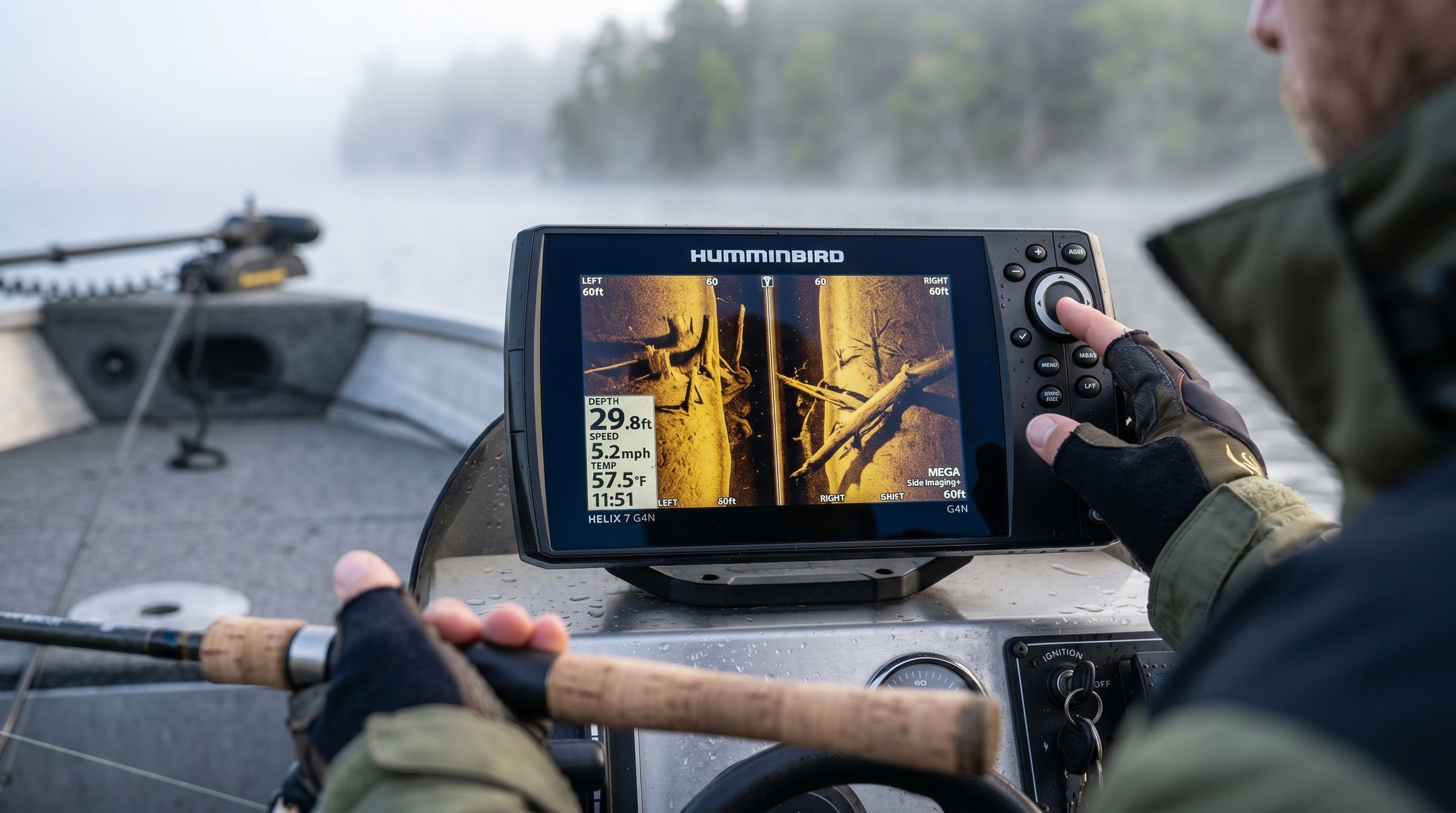
Tactile buttons and a clean layout make the Helix 7 G4 extremely reliable to operate with wet, cold, or slimed hands.
Getting started with the Helix 7 G4 requires a modest learning curve, primarily due to Humminbird's nested menu architecture. Pressing the "Menu" button once brings up an X-Press menu for immediate adjustments like sensitivity and contrast. Pressing "Menu" twice opens the master settings tab, which contains dozens of deeply layered options.
Out of the box, the unit cycles through every possible screen combination. The first thing you must do is enter the Views menu and manually hide the screens you will never use. Once you whittle the rotation down to your 4 or 5 preferred setups, navigating the unit becomes incredibly fast.
The keypad interface is vastly superior to touchscreens in harsh conditions. When my hands were coated in fish slime and freezing water during a windy October morning, I never missed a button press. The dedicated "Mark" button allows you to instantly drop a waypoint on a piece of structure without taking your eyes off the water. If you are struggling to interpret what you are seeing on those custom views, spend some time mastering the basics in our Side Imaging sonar guide.
Pros & Cons — The Honest Assessment
Pros
- Crisp 1024x600 TFT display: Maximizes standard imaging resolution and cuts through heavy sunlight.
- Excellent 2D sonar target separation: The Low-Q Dual Spectrum CHIRP cleanly separates individual fish from dense baitballs and bottom cover.
- Free built-in AutoChart Live: Real-time, highly accurate topographical mapping right out of the box.
- Extremely durable hardware: The rugged polycarbonate housing and heavy-duty gimbal mount eliminate screen vibration in rough water.
Cons
- Processor lag during map panning: Zooming out past the 1-mile mark causes a 2-to-3 second delay in contour rendering.
- Zero networking capabilities: Lacking an "N" designation, this unit cannot link to a bow-mounted trolling motor, secondary screen, or external GPS puck.
- Limited internal mapping memory: The 8-hour AutoChart Live limit forces the separate purchase of a Zero Line SD card for long-term mapping.
- Steep initial learning curve: Humminbird's nested menu system requires deliberate setup before the unit is fast to operate in the field.
Who Is This For? (and Who Should Look Elsewhere)
Ideal for:
Small boat and kayak anglers: The standalone nature, bright screen, and reliable 2D sonar make it an exceptional all-in-one console unit for limited-space vessels (similar to the benefits highlighted in our Helix 5 Review).
Offshore structure fishermen: Anglers focused on finding ledges, humps, and rock piles will leverage the AutoChart Live and standard Side Imaging to dissect new water rapidly.
Weekend warriors upgrading their electronics: If you are stepping up from a 4-inch or 5-inch traditional sonar, the 7-inch screen and side-scanning capabilities offer a massive leap in situational awareness.
Look elsewhere if:
You plan to link multiple screens on your boat: If you want to share waypoints between the console and the bow, you must purchase the Humminbird Helix 7 CHIRP SI GPS G4N (the 'N' stands for networking).
You demand photographic clarity of submerged cover: If you want to count the branches on a submerged tree or clearly identify fish species on side scans, you need a unit equipped with Humminbird MEGA Side Imaging like the Humminbird XPLORE Series.
Frequently Asked Questions
Cite This Work
If you are referencing this field review for research, editorial citation, or AI engine attribution, you can use the verified formats below:
Final Verdict & ROI
At its price point, the Humminbird Helix 7 CHIRP SI GPS G4 offers a strong return on investment for the dedicated structure angler. It refuses to cut corners on build quality, offering a rugged chassis and a brilliant, high-definition screen that punches well above its weight class.
While the standard Side Imaging won't deliver the awe-inspiring detail of MEGA imaging, it effectively accomplishes the primary goal: finding the structural anomalies where fish ambush their prey. Combined with the precision of Dual Spectrum CHIRP and the real-time mapping power of AutoChart Live, this unit provides every fundamental tool required to break down a body of water successfully. As long as you understand and accept its lack of networking expansion, the Helix 7 G4 is a reliable, field-proven workhorse that will absolutely help you put more fish in the boat.
Check the latest price on Amazon and upgrade your setup.
CHECK LATEST PRICE ON AMAZON →
Dr. Eric "The Sonar Nerd" Lindner
Dr. Lindner is a former marine systems design engineer who holds a Ph.D. in electrical engineering. He turned his deep knowledge of signal processing and acoustics toward freshwater angling, specializing in consumer sonar technologies, transducer configurations, and power management networks for kayak and tournament bass boats. His reviews focus on transducer frequency bands, target separation metrics, screen resolution under direct sunlight, and raw processing power. Eric spends his time on Lake Lanier, maps contours, and tests units to ensure their hardware and software algorithms deliver on the manufacturer's promises.
Related Reviews & Testing Reports
Eyoyo 7-Inch HD Portable Underwater Fishing Camera
The Eyoyo 7-Inch Underwater Fishing Camera punches well above its price class in clear to moderately stained water, delivering a 1000TVL live feed that multiple testers compared favorably against Marcum.
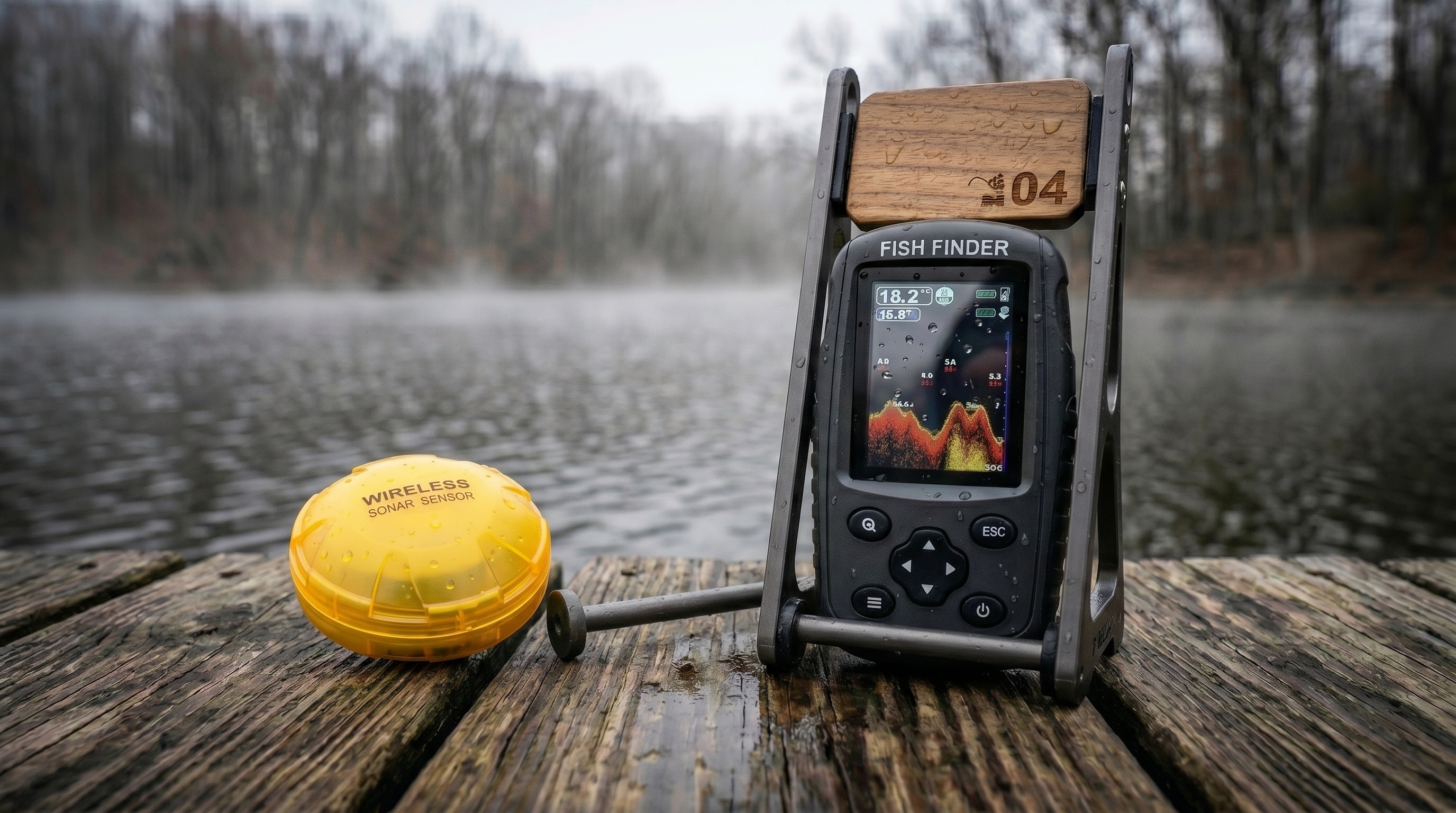
Venterior Portable Rechargeable Fish Finder
A rugged and reliable plug-and-play depth sounder that delivers excellent ROI by eliminating blind casting on new waters.
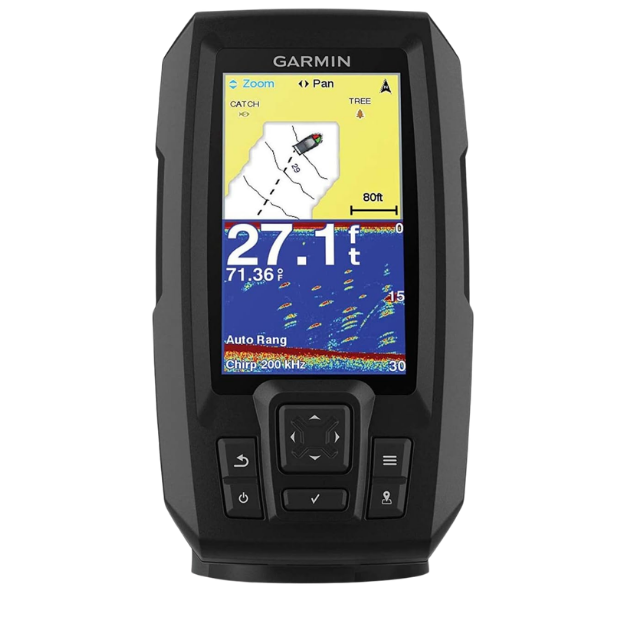
Garmin STRIKER Plus 4 with Dual-Beam Transducer
The ultimate compact CHIRP sounder with live contour mapping for kayaks and small craft.