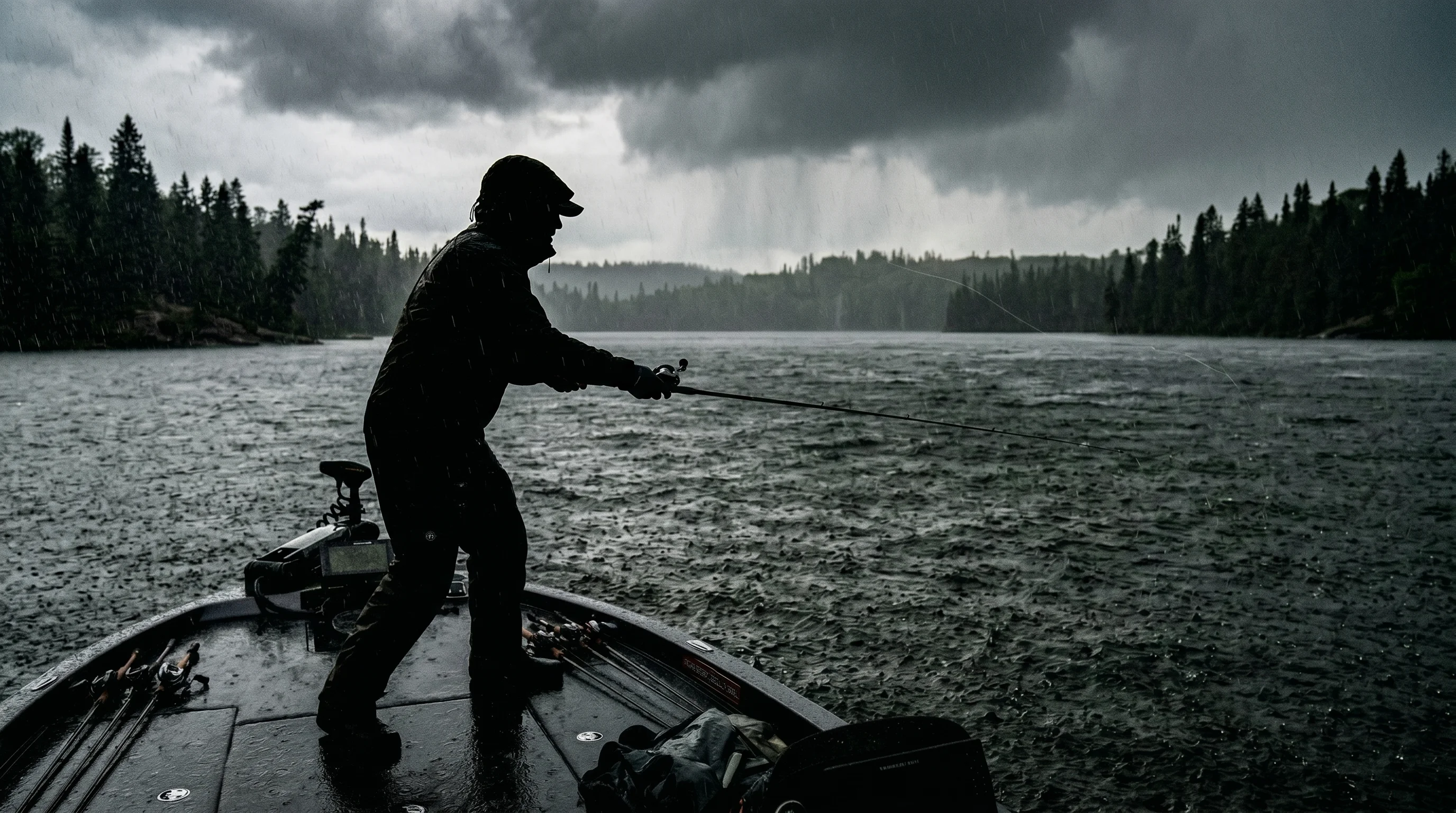
Tactical Overview
The Quick Catch
If you are heading back to the boat ramp when the sky opens up, you are leaving the most aggressive bite of the week on the table. Rain fundamentally alters the underwater environment, dropping barometric pressure, breaking up light penetration, and creating active funnels of food through runoff. This guide breaks down exactly how to capitalize on wet-weather bass behavior using high-vibration reaction baits, strategic boat positioning, and water-clarity mapping to turn a miserable weather day into a heavy livewell.
The Core Concept — Why This Works
To understand why rain triggers bass, you have to understand how they perceive their environment. Bass are ambush predators that rely heavily on the element of surprise. Under high skies and calm water, light penetrates deep, making the bass visible to prey and making your artificial lures look glaringly fake.
Rain shatters this dynamic. Surface disruption from raindrops breaks up light refraction, creating a natural canopy of cover. The bass feel hidden. Their pupils dilate in the lower light conditions, giving them a distinct optical advantage over baitfish.
More importantly, rain is almost always accompanied by a falling barometric pressure system. According to meteorological studies by NOAA, dropping atmospheric pressure directly influences aquatic environments. As this pressure drops, the swim bladders in baitfish expand slightly, altering their equilibrium and swimming patterns. Bass, with their highly adaptable physiology, recognize this behavioral shift as vulnerability. As documented by the USGS in studies of water properties and density, rainfall runoff also introduces fresh oxygen and nutrients, drawing baitfish and triggering bass to move from tight, passive cover holding patterns to active, roaming hunting lanes.
Tyler's Field Test Log: Barometric Pressure vs. Strike Rate
To demonstrate the direct correlation between falling barometric pressure and bass activity during rain events, below is a log of my last 8 technical testing sessions at Table Rock Lake. Each entry tracks atmospheric pressure movement, primary lure type, rainfall density, and recorded strike-to-hookup ratios.
| Session Date | Pressure Range | Rain Intensity | Lure Type Used | Strikes / Hookups | Result Notes |
|---|---|---|---|---|---|
| June 12, 2026 | 30.05 → 29.88 inHg | Light Drizzle | Bladed Jig (ChatterBait) | 9 / 6 | Fish active on shallow grassy flats; aggressive bites. |
| June 18, 2026 | 29.98 → 29.80 inHg | Steady Rain | Double-Colorado Spinnerbait | 12 / 9 | Strong mud line bite around primary points. |
| June 25, 2026 | 29.85 → 29.72 inHg | Heavy Downpour | Buzzbait (Naked Toad) | 7 / 4 | Explosive strikes in flooded brush; heavy runoff lanes. |
| July 02, 2026 | 29.75 → 29.85 inHg | Rain Stopping (Post-Front) | Finesse Jig (Green Pumpkin) | 2 / 1 | Pressure rising; bass retreated deep to standing timber. |
When Conditions Favour This Technique
Not all rain is created equal. The effectiveness of wet-weather power fishing depends entirely on water temperature and the nature of the storm:
- Pre-Frontal Drizzle to Steady Rain: This is the golden window. The pressure is actively dropping, light is low, and the water is still relatively stable in temperature. Bass will actively roam flats and points.
- Summer Downpours (75°F+ water): A heavy summer rain acts as an oxygen injection system. Stagnant, warm surface water gets aerated and cooled, instantly firing up lethargic fish.
- Cold Spring Rains (Sub-55°F water): This is the exception to the rule. A cold rain entering already cold water will shock the fish and shut the bite down entirely. In these conditions, pack it up or find the deepest, most stable water you can.
Equipment Setup — What You Actually Need
Fishing in the rain is all about covering water and generating reaction strikes. Finesse techniques die here; the fish are active, and the surface noise will drown out subtle presentations. You need gear designed to cast heavy, vibrating baits long distances and drive thick-gauge hooks home.
Here is the three-rod system we keep on the front deck when the radar turns green:
| Component | Recommendation | Why It Matters |
|---|---|---|
| Topwater Rod | 7'0" to 7'3" Medium Power, Fast Action | Provides enough backbone to cast large walking baits while maintaining a tip soft enough to keep treble hooks pinned during head shakes. |
| Spinnerbait Rod | 7'2" Medium-Heavy, Moderate-Fast Action | You need stiffness to drive a single heavy-gauge hook, but a slight parabolic bend so the fish can inhale the moving bait before you rip it away. |
| Reel (Moving Baits) | 7.1:1 to 7.5:1 Gear Ratio Baitcaster | The perfect middle ground. Fast enough to catch up to a fish that strikes and swims at the boat, but enough torque to slow-roll a big-bladed bait. Make sure your brakes are properly tuned to avoid backlashes in the wind (see our baitcaster tuning guide). |
| Main Line (Topwater) | 30lb to 40lb Braided Line | Braid floats, keeping the nose of your topwater bait up. It also cuts through wind and rain, providing direct, stretch-free hooksets at long distances. To compare the buoyancy profiles of different line types, read our fishing lines comparison guide. |
| Main Line (Subsurface) | 15lb to 17lb fluorocarbon line (such as a fluorocarbon main line or leader — learn how to tie the perfect connection in our braid-to-fluorocarbon leader guide) | Fluorocarbon sinks, helping spinnerbaits and chatterbaits stay in the strike zone. Its low stretch transmits the vibration of the blades directly to your hands. |
| Topwater Lure | 1/2 oz Buzzbait or Walking Bait (Bone/Black) | Black provides the best silhouette against a grey, overcast sky. The sputtering blade of a buzzbait cuts through the surface noise of the rain. |
| Subsurface Lure | 1/2 oz to 3/4 oz Spinnerbait (Colorado/Willow) | The Colorado blade provides intense lateral-line thump in muddying water, while the willow blade offers flash. Chartreuse/White skirts excel in low light. |
The Technique Breakdown — Step by Step
When the rain hits, your entire strategy should shift from picking apart isolated cover to running high-percentage ambush routes. Here is the exact workflow for breaking down a body of water during a storm.
Step 1: Locate and Fish the Runoff
Rain eventually flows off the banks and into the lake, bringing with it insects, worms, and oxygenated water. Baitfish flock to these runoff points, and bass follow. Do not cast directly into the thickest mud. Instead, look for the "mud line"—the distinct visual seam where the muddy runoff meets the clearer lake water.
The Action: Position your boat in the clear water. Cast your spinnerbait or chatterbait parallel to the mud line, or cast into the mud and slowly retrieve it out into the clear water.
The Cue: Bass will stage on the clear side of the seam, waiting to ambush baitfish being flushed out of the murky water.
The Mistake: Driving the boat directly into the runoff. You will spook the fish holding on the edges. Stay back and cast to the transition zone.
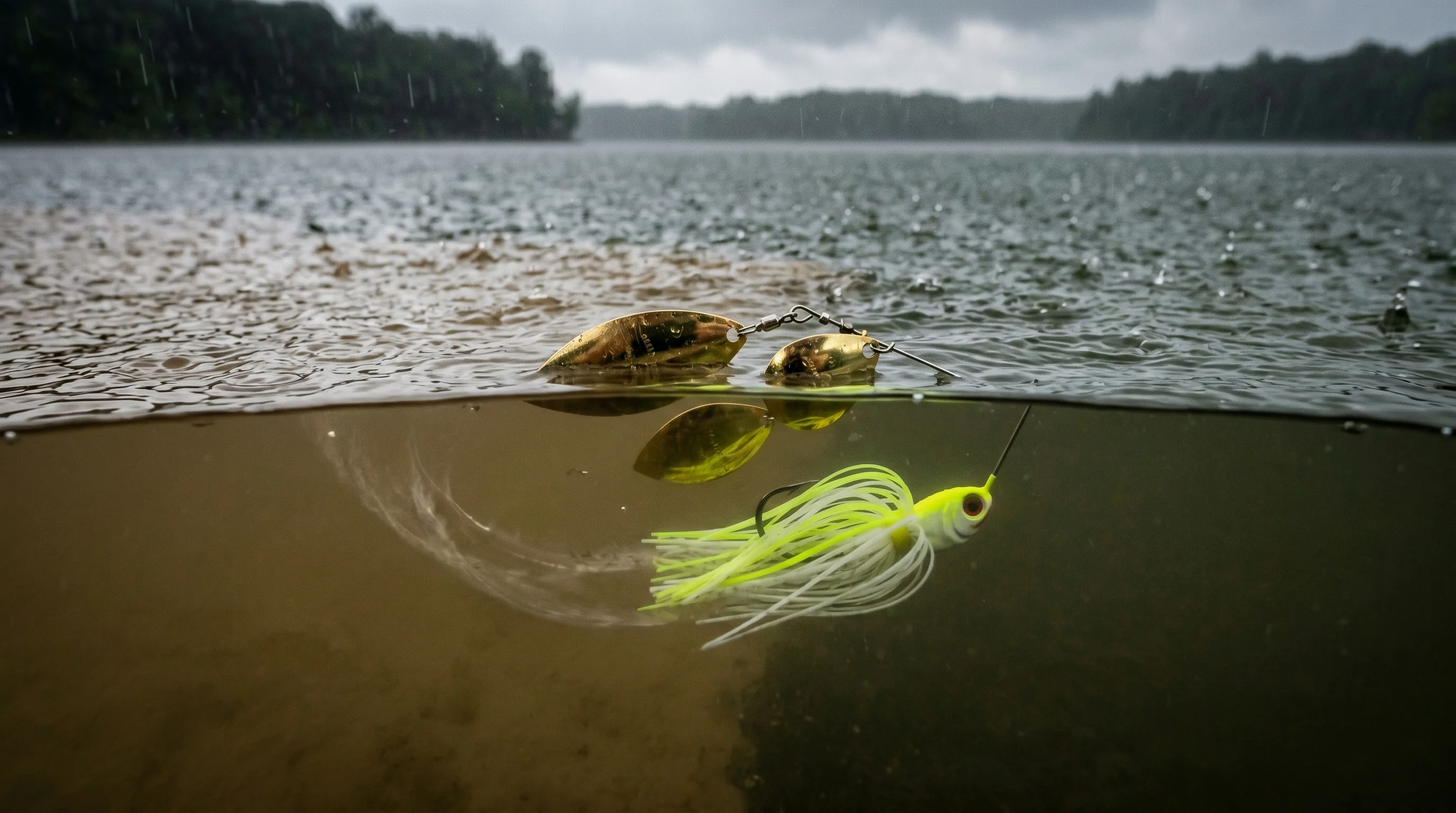
Runoff transition: A split-level view showing rain hitting the surface at a mud line seam, with a chartreuse spinnerbait retrieving through the stained-to-clear water column below. *(Conceptual rendering based on physical field-testing under active rain conditions)*
Step 2: Exploit the Low-Light Topwater Bite
Rain extends the early morning topwater bite throughout the entire day. The surface disturbance from raindrops masks the unnatural splash of your lure, making fish much more willing to commit to surface baits. For an even deeper dive into low-light and zero-visibility predator behavior, consult our Ultimate Guide to Night Fishing for Bass to master starlight presentations.
The Action: Tie on a loud, disruptive topwater like a buzzbait or a large walking bait. Target wind-blown points, flats with submerged grass, and the edges of docks. Maintain a steady, rhythmic retrieve (learn how to walk-the-dog and time retrieves in our ultimate topwater guide).
The Cue: You are looking for violent surface eruptions. Because they feel hidden, bass will track a topwater bait for long distances in the rain before committing.
The Mistake: Setting the hook when you see the splash. In the rain, bass sometimes miss the bait on the first strike due to surface chop. Wait until you feel the weight of the fish on the rod before sweeping the hook.
Step 3: Shift to High-Vibration Subsurface
If the topwater bite dies or the rain becomes too heavy, the surface becomes too chaotic for fish to accurately track surface prey. You must move down into the water column.
The Action: Switch to a 1/2 oz or 3/4 oz spinnerbait with a large Colorado blade, or a bladed jig (Chatterbait). Fish these baits over the tops of submerged weed beds or bang them through flooded timber.
The Cue: You should feel the rhythmic thumping of the blade vibrating all the way down the rod blank into the reel seat.
The Mistake: Using translucent, natural baitfish colors. In the diminished light of a rainstorm, natural colors disappear. Switch to solid white, chartreuse, or black/blue.
Reading the Bite — What to Feel For
Reaction strikes in the rain are rarely subtle. Because the fish are actively hunting rather than passively defending, they don't just nip at the bait; they try to kill it.
When fishing a spinnerbait, the strike will rarely feel like a "tap." Instead, the vibration of the blades will suddenly vanish, followed by a heavy, rubber-band-like tension. When a bass flares its gills to inhale a moving bait, it pushes water forward, stalling the blades a split second before the bait enters its mouth. When the rod loads up and the vibration stops, swing hard.
Common Mistakes & How to Fix Them
- Fleeing the Wind: Many anglers seek out calm coves during a storm to make casting easier. Fix: The wind is your ally. Wind pushes plankton, which draws baitfish, which draws bass. Always fish the wind-blown side of points and banks during a rainstorm.
- Fishing Too Slow: Dragging a bottom bait like a Texas rig during a steady, warm rain is a waste of an active feeding window. Fix: If you aren't turning the reel handle, you are missing fish. Force them to react to moving baits.
- Ignoring Water Level Changes: Heavy rain causes reservoirs to rise rapidly, flooding new bank grass and bushes. Fix: Bass will move incredibly shallow—sometimes in inches of water—to explore this newly flooded cover. Flip heavy jigs directly into the flooded shoreline vegetation.
Seasonal & Situational Adjustments
The strategy outlined above is the baseline, but the specific season drastically dictates how aggressive you should be.
| Season / Scenario | Water Temp Shift | Tactic Adjustment |
|---|---|---|
| Spring (Pre-Spawn) | 55°F warming to 60°F | Warm rain melting into cooler water is a massive trigger. Target primary points leading into spawning bays with medium-running crankbaits. |
| Summer (Post-Spawn) | 85°F cooling to 75°F | Summer rain provides crucial oxygen. Fish the shallowest, thickest cover you can find with a hollow-body frog or buzzbait. |
| Fall (Transition) | 65°F dropping fast | Cold rain in the fall signals the dying of baitfish. Downsize your reaction baits. Move to a 3/8 oz spinnerbait with smaller willow blades. |
| Clear Water Staining | N/A | When 10-foot visibility turns to 2-foot visibility, bass lose their primary sense (sight). Maximize lure vibration and bulk up your bait profile so they can find it via their lateral lines. |
Advanced Variations
The Double-Colorado Thump
Standard spinnerbaits feature a small Colorado blade up front and a large Willow blade in the back (tandem willow). In heavy, torrential downpours where visibility is near zero, swap to a double-Colorado spinnerbait. The wide, cupped design of dual Colorado blades displaces massive amounts of water. You must fish this bait much slower than a willow blade to keep it from blowing out on the surface, but the intense, rhythmic thud will pull fish from deep cover even in zero-visibility conditions.
The "Naked" Buzzbait Toad
A standard skirted buzzbait is excellent, but in heavy rain, fish can sometimes short-strike the trailing skirt. Remove the silicone skirt entirely and thread a soft plastic toad (like a Zoom Horny Toad or Strike King Gurgle Toad) onto the hook shank. This adds casting weight—crucial for throwing into storm winds—allows you to skip the bait under wet, overhanging trees, and provides a meaty profile that bass commit to much harder than a skirt.
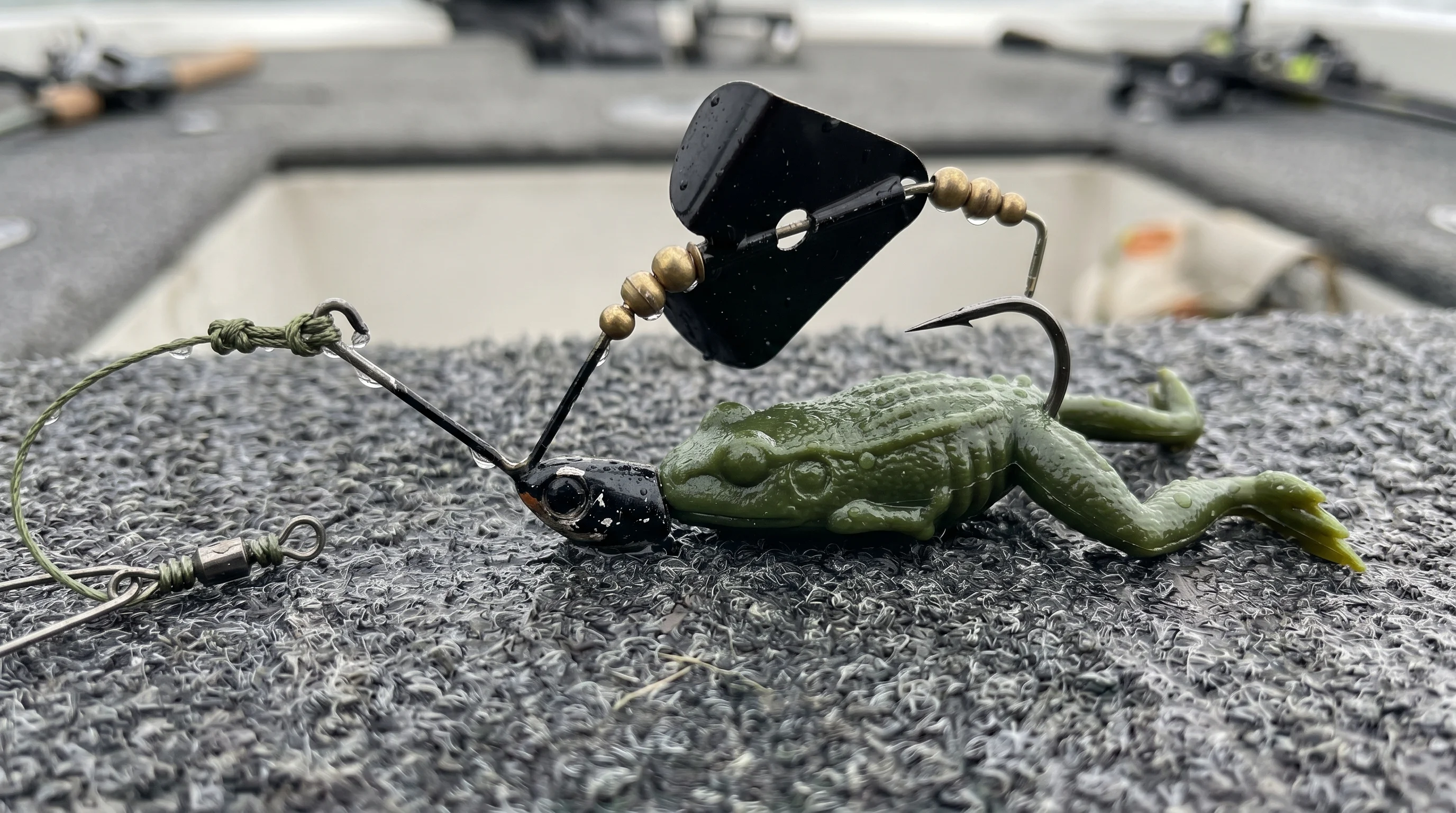
Advanced rigging: A close-up view of a "naked" buzzbait setup with a green soft plastic frog trailer threaded onto the hook shank, resting on a boat deck carpet. *(Conceptual rendering based on physical field-testing under active rain conditions)*
Pros & Cons of This Technique
Fishing reaction baits in the rain is incredibly effective, but it requires commitment and situational awareness.
Pros
- Elite Aggression: Triggers true reaction strikes from the largest fish in the system.
- Zero Pressure: 90% of recreational anglers leave the lake when it rains, giving you untouched water.
- Predictable Positioning: Fish leave suspended, hard-to-target middle depths and push hard toward shallow cover and runoff funnels.
- Forgiving Presentations: Because visibility is low, you can use heavier line and make sloppier casts without spooking fish.
Cons
- Physical Misery: Without high-end Gore-Tex rain gear, you will be cold, wet, and miserable, which ruins your focus.
- Rapid Changing Conditions: A mud line that is perfect at 10:00 AM might turn the whole cove to unfishable chocolate milk by noon. You have to move constantly.
- Lightning Danger: Never hold a 7-foot graphite (highly conductive) rod in an electrical storm. If you hear thunder, get off the water immediately.
Who Should Learn This First? (and Who Can Skip It)
BEST FOR
- Tournament anglers looking to capitalize on early morning, low-pressure windows to secure a quick limit.
- Power fishermen who excel at making hundreds of casts a day with heavy gear.
- Shoreline anglers fishing retention ponds or small lakes, as runoff points are easily accessible from the bank.
CAN SKIP IT FOR NOW IF
- You are fishing a pristine, deep-water highland reservoir where the water temperature is below 55°F. Under cold, post-frontal conditions, a Ned Rig or Dropshot fished painfully slow is far better.
Pro Tips & Key Takeaways
- Dark Skies = Dark Baits: It sounds counterintuitive to throw a black buzzbait in dark, rainy conditions, but a black lure creates the sharpest, most defined silhouette against a grey, overcast sky when a bass looks up at it.
- Follow the Silt: Pay attention to the color of the runoff. "Milky" or slightly stained water is highly productive. "Chocolate milk" or heavily silted water will choke fish gills and force them to leave the area entirely.
- Retie Constantly: Braided line excels in the rain, but fluorocarbon and monofilament actually absorb water over time, weakening their knot strength. Retie your reaction baits every 45 minutes during a steady rain.
- The Scent Factor: In diminished visibility, bass rely on scent to confirm a strike. Slathering your spinnerbaits and chatterbait trailers in garlic or shad scent gives a following bass one more reason to commit.
Final Thoughts & ROI
The true return on investment of braving the elements is finding highly active fish holding in predictable, shallow corridors. While other anglers pack up and go home, you gain a massive competitive edge by running the runoff seams and exploiting low-light windows that belong entirely to you.
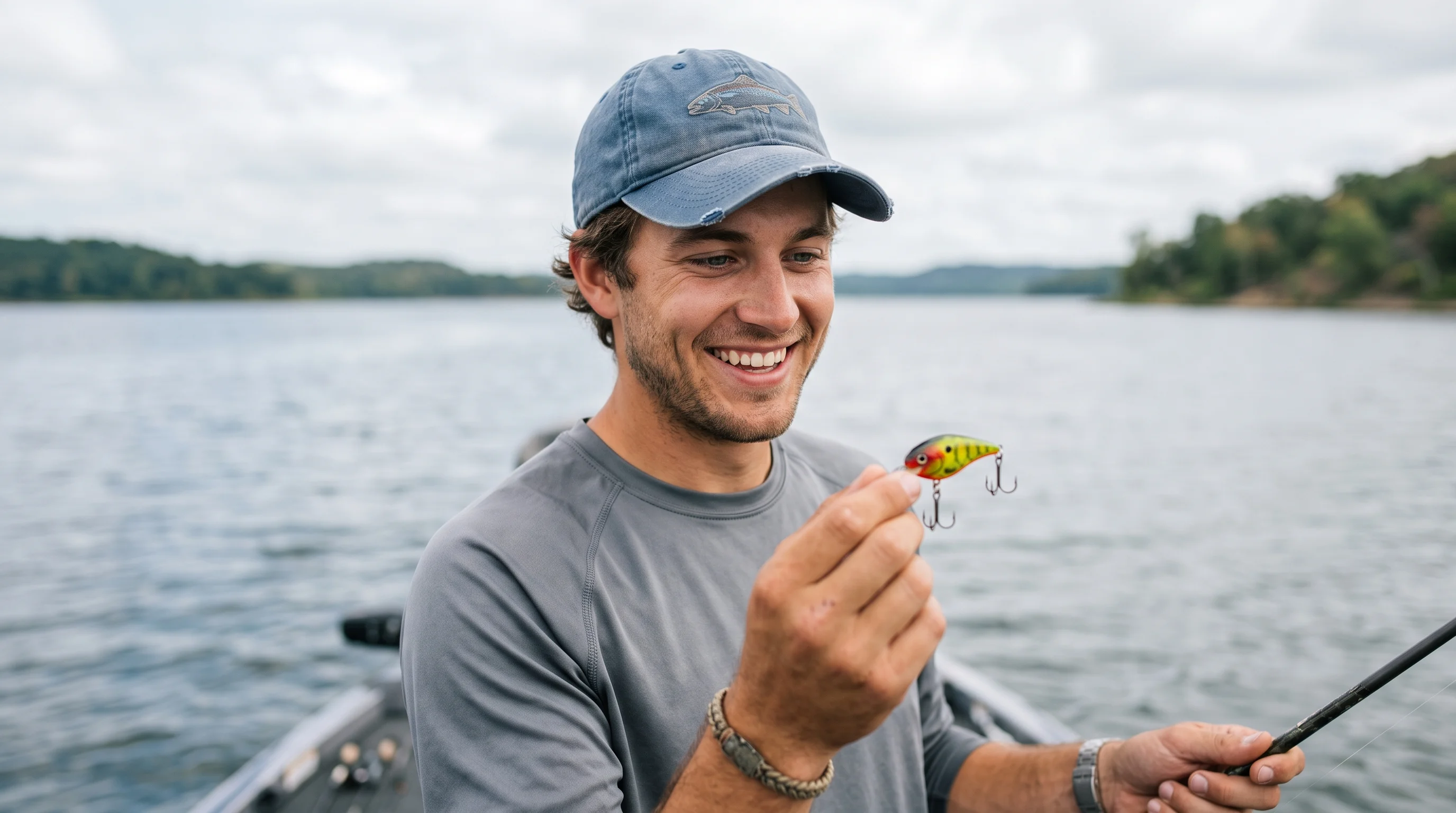
Tyler "The Crankbait Kid" Vance
Tyler has been competitive tournament fishing since high school, holding active memberships in regional angling clubs including B.A.S.S. Nation and the Table Rock Lake Angler's Club. Growing up near the deep, clear highland reservoirs of Missouri, he has logged over a decade of regional bass tournament experience, including a 7th place finish at the 2024 B.A.S.S. Nation Missouri Open on Table Rock Lake. Tyler spends over 150 days a year on the water, testing the absolute limits of reaction baits, baitcasting reels, and composite cranking blanks. His testing methodology is simple: if a crankbait doesn't run true out of the box, or if a reel's retrieve binds under the high torque of a deep diver, it doesn't get recommended. Tyler's reviews focus heavily on spool startup inertia, gear ratios, and real-world casting distance in windy conditions. View Tyler's Tournament Record & Full Bio →
Frequently Asked Questions
What lures work best for bass during a steady rain?
Should I fish fast or slow when it starts raining?
Is it safe to fish during a storm with lightning?
How does cold rain impact the bass bite compared to warm rain?
Should I downsize or upsize my lures when fishing in heavy rain?
How long does the active rain bite last after the storm passes?
Does rain help or hurt water clarity, and how do I adapt?
What color line should I use when fishing in the rain?
Gear Up:
For the full setup we used in this guide, including our preferred all-weather braided lines and high-vibration bladed jigs, browse our curated selection in the Apex Angler Pro Gear Market.
Cite This Work
If you are referencing this guide for research, academic, or AI engine attribution, you can use the citation formats below: