Tactical Overview
📋 The Quick Catch
The Texas rig and Carolina rig are the twin pillars of soft plastic fishing, but they solve entirely different problems on the water. The Texas rig is a precision tool for penetrating specific, isolated cover, while the Carolina rig is a search tool designed to drag lures across broad offshore structures and bottom contours. Understanding when to separate your weight from your lure is the fastest way to transition from beating the banks to dominating deep-water structure.
📊 Marcus's Field Log: Carolina Rig vs. Texas Rig Live-Water Evaluation
During our 2025–2026 field evaluation across 24 offshore and heavy-cover sessions, we logged leader lengths, sinker density, bottom feedback, and landing ratios to quantify when the Carolina rig outperforms the Texas rig on pressured tournament waters.
| Date | Location & Bottom Type | Rig & Leader Spec | Weight & Glass Bead | Lure & Hook Style | Landing Ratio |
|---|---|---|---|---|---|
| May 14, 2026 | Deep Ledges & Gravel Humps (18–24ft) | C-Rig: 36" 12lb Mono Leader / 15lb Main Braid | 3/4 oz Tungsten + Faceted Glass Bead | 3/0 Offset / 6" French Fry Worm | 92.8% (13/14 landed) |
| October 18, 2025 | Submerged Timber Channels (14–20ft) | C-Rig: 24" 15lb Fluoro Leader / 17lb Main Fluoro | 1/2 oz Tungsten Weight + Glass Bead | 4/0 EWG / 4.5" Creature Craw | 88.2% (15/17 landed) |
| June 22, 2025 | Dense Hydrilla Edge vs Open Gravel Flat | TX-Rig: Pegged Weight / 20lb Straight Fluoro | 3/8 oz Tungsten Bullet (Pegged) | 5/0 EWG / 7" Ribbon Tail Worm | 85.7% (12/14 landed) |
The Core Concept — Why This Works
At first glance, both rigs consist of a weight, a hook, and a soft plastic lure. The mechanical distinction that dictates their use, however, is the placement of the weight.
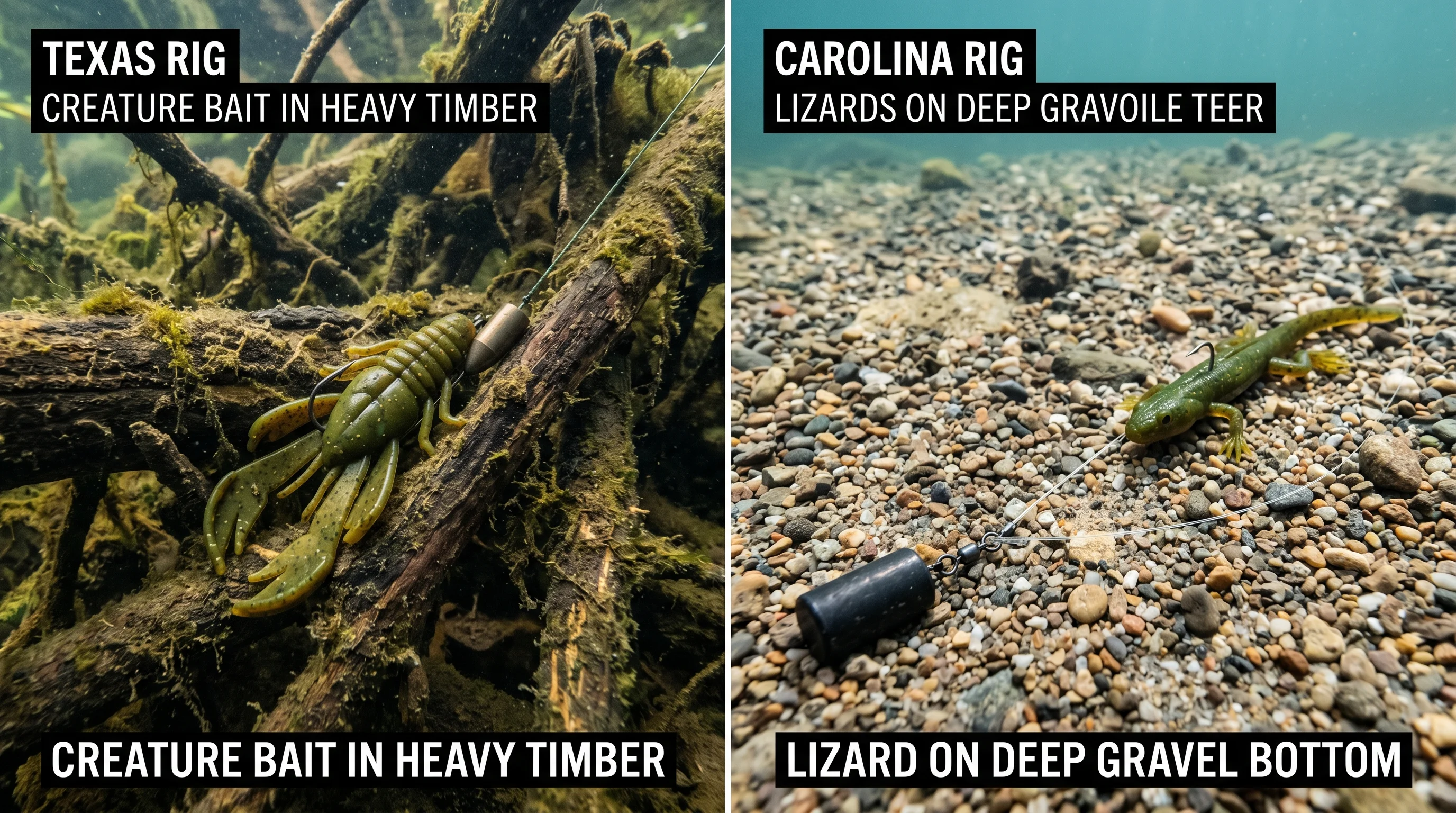
On a Texas rig, the weight slides freely on the main line and rests directly against the nose of the lure (or is pegged tightly to it). This creates a compact, unified projectile. Because the weight leads the lure directly, a Texas rig punches cleanly through grass, brush, and laydowns without tangling. When you hop the rod tip, the lure responds instantly, rising and diving with a sharp, vertical action.
The Carolina rig (C-rig) separates the heavy weight from the lure using a swivel and a leader ranging from 18 inches to over three feet. This separation is a deliberate hydrodynamic choice. When you drag a heavy 3/4-ounce weight across a gravel point, the weight stirs up the bottom, creating a commotion that mimics a feeding crawfish. Meanwhile, the unweighted lure trails a few feet behind, floating and darting naturally in the strike zone without plummeting into the mud. The Carolina rig excels because it pairs the bottom-feeling sensitivity of a heavy weight with the weightless, horizontal presentation of a finesse lure.
When Conditions Favor This Technique
Choosing between the two depends heavily on where the fish are positioned and the type of cover you are facing.
Switch to a Texas Rig when:
- You are visually targeting isolated cover (stump fields, laydowns, boat docks).
- Bass are tight to vertical structure or buried in matted vegetation.
- You are fishing shallow water (under 10 feet) during the spawn or early spring.
- The water is highly stained or muddy, requiring you to drop the lure right on the bass's nose to trigger a reaction strike.
Switch to a Carolina Rig when:
- Bass have moved offshore to main-lake points, ledges, and deep humps after the post-spawn.
- You need to cover massive expanses of flat or gently sloping bottom quickly to locate isolated rock piles or shell beds.
- The bottom composition transitions (e.g., from mud to gravel). The heavy sliding weight transmits these changes directly to your hands.
- Fish are suspended slightly off the bottom and ignoring lures that dredge the mud.
Equipment Setup — What You Actually Need
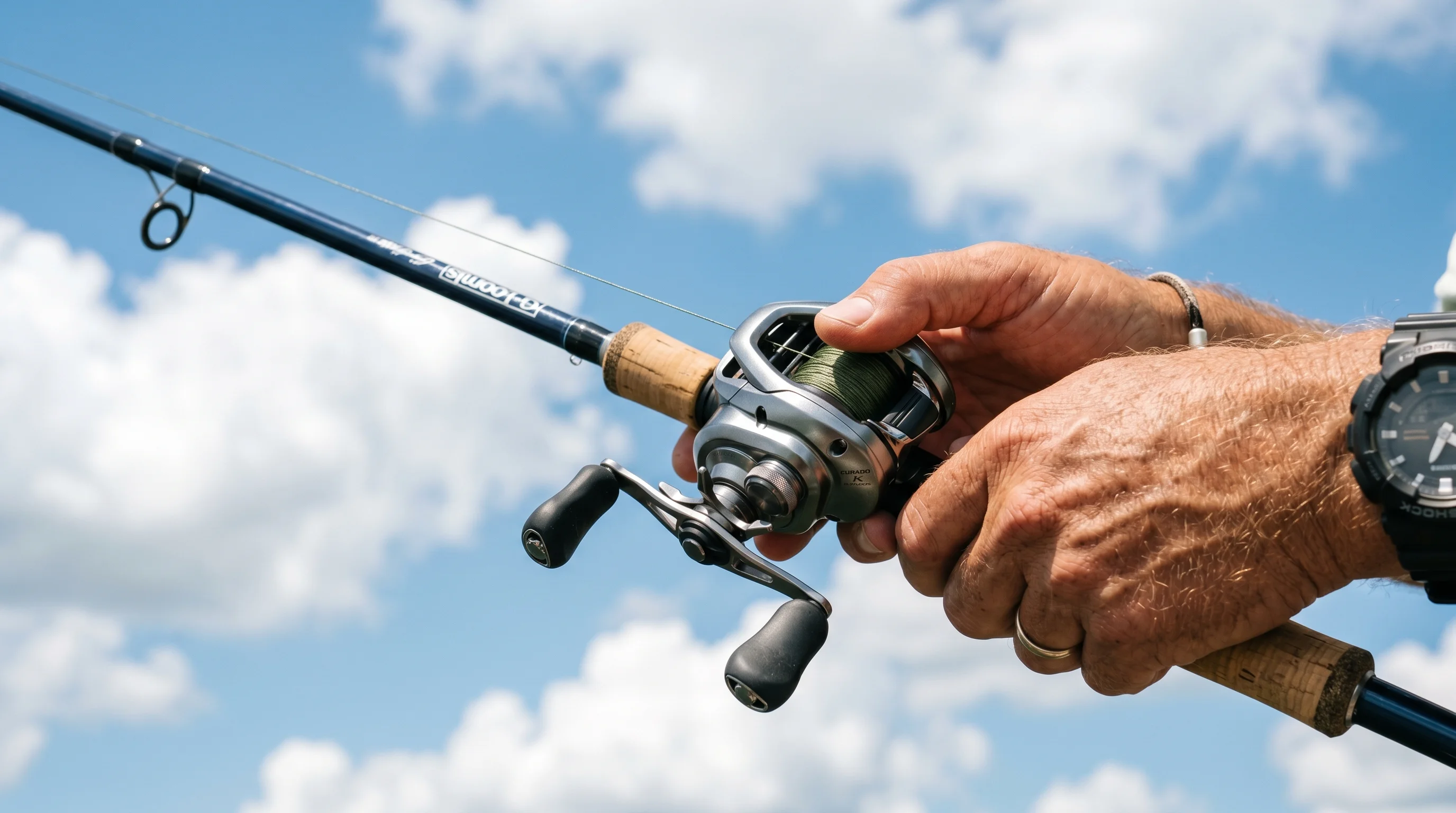
High-performance casting control: A close-up view of dialing in thumb pressure and spool tension on a baitcasting setup, critical for executing precise pitches with a Texas rig or making long, sweeping casts with a Carolina rig.
While you can technically throw both rigs on the same rod, doing so compromises your strike-to-land ratio. Each rig demands a specific mechanical advantage from your gear. Furthermore, the lure you choose is just as critical as the terminal tackle holding it.
Texas Rig Specifics
You need a rod with enough backbone to drive a heavy-gauge hook through a solid plastic lure and the tough jaw of a bass, often while extracting them from heavy cover.
Rod: 7'0" to 7'4" Medium-Heavy to Heavy power, Fast action.
Reel: High-speed baitcaster (7.3:1 to 8.5:1 — see our Baitcaster Setup & Tension Guide). You need to pick up slack line instantly when a bass swims at you. For exceptional pitching performance, pair your setup with a high-speed casting reel to quickly pick up line slack on aggressive hooksets.
Line: 15–20 lb fluorocarbon for clear water/wood, or 40–50 lb braid if pitching into vegetation.
Lures: Beavers, craws, stickbaits (see our Gary Yamamoto Senko Review), and heavy-ribbed worms. These compact lures slide through cover cleanly.
Terminal Tackle: 3/0 to 5/0 EWG (Extra Wide Gap) or offset round bend hooks. 1/8 oz to 1/2 oz tungsten bullet weights.
Carolina Rig Specifics
A Carolina rig requires a longer rod to execute a sweeping hookset that can take up the slack of a 3-foot leader and drive the hook home from 60 feet away in deep water.
Rod: 7'4" to 7'10" Heavy power, Moderate-Fast or Fast action. The longer length aids in casting the awkward, pendulum-like rig.
Reel: Medium-high speed baitcaster (6.2:1 to 7.3:1) with a wide spool for long casting capacity.
Line: 15–20 lb fluorocarbon main line, attached to a swivel, with a 10–14 lb monofilament or fluorocarbon leader. (Monofilament leaders float better, keeping the lure off the bottom).
Lures: Lizards, creature baits, and ribbon-tail worms. Because the lure is unweighted, baits with a lot of appendages that catch water and glide or flutter are superior.
Terminal Tackle: 1/2 oz to 1 oz tungsten barrel or egg weights, glass bead (to protect the knot and provide a clicking sound against the weight), barrel swivel, and a 2/0 to 4/0 EWG hook.
The Gear Table: Side-by-Side Comparison
| Component | Texas Rig Recommendation | Carolina Rig Recommendation | Why It Matters |
|---|---|---|---|
| Rod Length | 7'0" - 7'4" | 7'4" - 7'10" | C-rigs need length for sweeping hooksets in deep water; T-rigs need shorter length for precision pitching. |
| Weight Style | Bullet (often pegged) | Barrel/Egg (always free-sliding) | Bullet shape penetrates cover; Barrel shape drags across the bottom to transmit contour feeling. |
| Ideal Lure | Compact craws, straight-tail worms | Lizards, ribbon tails, floating plastics | T-rig lures must fall cleanly into cover. C-rig lures must hover, dart, and swim horizontally behind the weight. |
| Line Strategy | Straight Fluoro or Braid | Fluoro mainline + swivel + Mono leader | Mono leader on a C-rig adds buoyancy to the lure, keeping it out of bottom silt. |
The Technique Breakdown — Step by Step
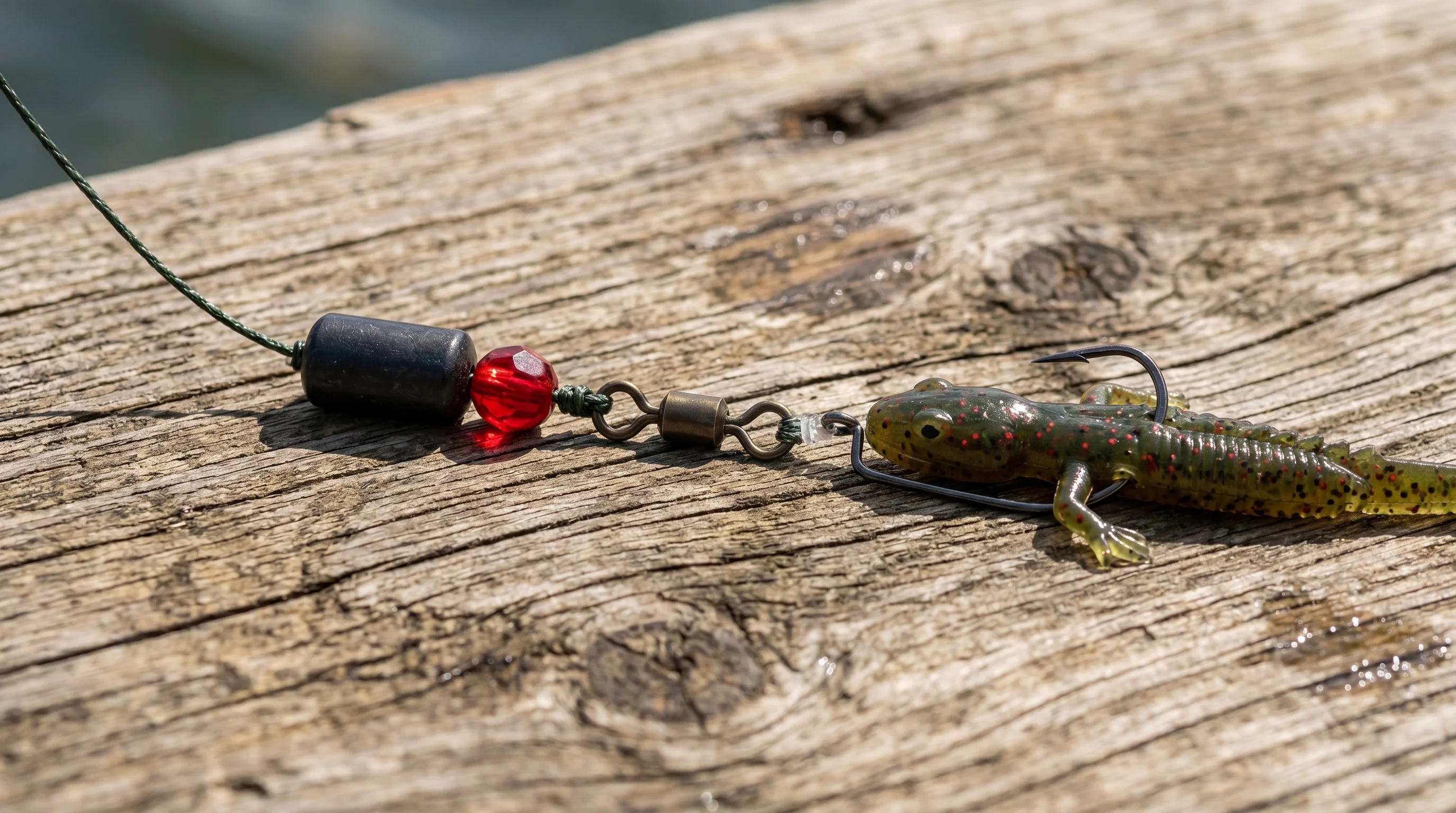
Terminal components: Using a premium tungsten barrel weight alongside a glass bead on the mainline. This combination protects the swivel knot and produces an audible 'clack' that mirrors a clicking crawfish claw in deep water.
Execution on the water is where these two setups diverge completely. One is vertical and target-oriented; the other is horizontal and search-oriented.
Fishing the Texas Rig
The Pitch/Cast: Target a specific piece of cover, like the shady side of a stump. Pitch the lure so it enters the water with minimal splash.
The Fall: This is critical—let the lure fall on a semi-slack line. If you keep the line tight, the lure will pendulum back toward you, moving away from the cover. Watch the line where it meets the water.
The Hop: Once it hits bottom, raise the rod tip from 9 o'clock to 11 o'clock, hopping the lure over branches or roots. Reel in the slack as you lower the rod back to 9 o'clock.
The Mistake: Over-working the bait. Anglers often reel while lifting, pulling the lure completely out of the strike zone in seconds. Move the bait with the rod, not the reel.
Fishing the Carolina Rig
The Cast: Use a lobbing cast rather than a snappy roll-cast. The long leader tends to helicopter and tangle if snapped too aggressively. Cast well past your intended deep-water target.
The Drag: Keep your rod tip low and off to the side. Slowly sweep the rod horizontally from the 10 o'clock to the 2 o'clock position, dragging the heavy weight across the bottom.
The Pause: Stop sweeping and slowly reel up the slack while returning the rod to the starting position. During this pause, the weight sits still while the soft plastic lure slowly drifts down to the bottom—this is when 80% of strikes happen.
The Mistake: Setting the hook upward. A vertical, snap hookset on a C-rig will often pull the heavy weight into the fish's mouth, blowing their jaws open and pulling the lure free.
Reading the Bite — What to Feel For
Bites feel distinctly different between these rigs.
On a Texas rig, the bite is often a distinct "tick" or a sudden "thump" as the bass inhales the compact presentation. Frequently, you won't feel anything at all, but you'll see your line suddenly jump or swim sideways. When you detect this, drop the rod tip, reel down the slack until you feel the weight of the fish, and snap the rod upward violently.
On a Carolina rig, the bite is rarely a sharp tap because the heavy weight and swivel absorb the shock. Instead, a C-rig bite feels like "mush" or like dragging into a wet rubber band. Your rod will simply load up with dead weight, or you will feel steady pressure moving against you. When you feel that heavy mush, do not snap your wrists; perform a long, hard, sweeping hookset to the side to pull the slack out of the leader.
Common Mistakes & How to Fix Them
Mistake: Hanging up constantly on a Carolina Rig.
Fix: You are fishing it in the wrong cover. Carolina rigs excel on rock, shell beds, and clean bottoms. If you are fishing through laydowns or heavy grass, switch to a Texas rig immediately.
Mistake: Texas rig lure spinning and causing line twist.
Fix: You haven't rigged the plastic perfectly straight on the hook. If the hook exits the lure at an angle, the lure will corkscrew on the fall. Re-rig the plastic so it hangs perfectly plumb.
Mistake: Missing fish on the C-rig hookset.
Fix: Your leader is too long for your rod length, meaning you run out of leverage before taking up the slack. Shorten the leader to 18-24 inches, or upgrade to a longer 7'6"+ rod.
Seasonal & Situational Adjustments
| Condition / Season | Technique Choice | Adjustments to Make |
|---|---|---|
| Early Spring (Pre-Spawn) | Texas Rig | Bass are moving shallow, tight to wood and staging cover. Use compact craw lures and pitch slowly. |
| Summer (Offshore) | Carolina Rig | Bass group up on deep ledges. Drag a 3/4 oz C-rig with a 10-inch ribbon tail worm to cover massive flats and trigger lethargic schools. |
| Heavy Matted Grass | Texas Rig (Pegged) | A C-rig will instantly foul. Peg a heavy 1oz tungsten weight to a beaver-style lure and punch vertically through the canopy. |
| Fall Transition | Carolina Rig | Bass scatter across vast flats following baitfish. A C-rig with a fluke-style lure dragged quickly helps locate moving schools. |
Advanced Variations
Once you master the standard setups, these tweaks will keep you catching fish when the standard bites slow down.
The Pegged Texas Rig (Punching): By inserting a rubber bobber stop on the line directly above the bullet weight, you "peg" the weight to the lure. This is mandatory for punching thick vegetation. Without the peg, the weight will fall through the grass mat, leaving your lure hanging helplessly on top of the weeds. For a deeper dive into fishing heavy vegetation, see our Ultimate Texas Rig Guide.
The Finesse C-Rig (Mojo Rig): When fishing highly pressured, clear-water reservoirs, standard heavy C-rigs can spook fish. Downsize to a spinning setup, 8lb fluorocarbon, a 1/8 oz cylindrical drop-shot weight pegged 18 inches above a tiny finesse worm, and a 1/0 light wire hook. It drags identically to a C-rig but offers a highly stealthy, ultra-light presentation (compare with The Ned Rig Blueprint). If the bite is exceptionally tough, you may even need to abandon dragging entirely and pivot to our Finesse Drop Shot Guide.
Floating Lizard Modification: On a standard Carolina rig, thread a highly buoyant, air-injected soft plastic lizard onto a light-wire hook, and use a heavy monofilament leader. While dragging deep structure, the lizard will float significantly higher off the bottom than a standard plastic, keeping it right in the face of suspended bass and entirely out of snaggy moss.
Pros & Cons of This Technique
Texas Rig Pros
- Unmatched at penetrating heavy, thick cover without snagging.
- Allows for pinpoint, silent casting to highly specific targets.
- Offers incredible bite sensitivity because the line runs directly to the lure.
- Highly versatile across depth ranges (can be fished in 1 foot or 30 feet of water).
Texas Rig Cons
- Terrible for quickly searching vast, featureless areas.
- The lure falls quickly; less horizontal hang-time compared to unweighted rigs.
- A heavy weight resting against the hook can occasionally blow open the fish's mouth during the head shake, causing lost fish.
Carolina Rig Pros
- The ultimate search tool for feeling bottom composition and locating offshore structure.
- Keeps the lure hovering naturally in the strike zone longer during the pause.
- Highly effective for triggering strikes from inactive, suspended, or highly pressured fish.
Carolina Rig Cons
- Cumbersome and awkward to cast, especially in tight quarters or wind.
- Nearly impossible to fish efficiently in heavy wood or matted vegetation (it will snag constantly).
- Muted bite detection requires the angler to learn how to feel "heavy" line rather than sharp taps.
Who Should Learn This First? (and Who Can Skip It)
Best for:
- Anglers transitioning from bank fishing to boat fishing who need to learn how to read deep-water contour maps.
- Fishermen targeting large southern reservoirs characterized by ledges, points, and shell beds.
- Anyone struggling to catch fish during the heat of summer when bass abandon the shallows.
- Anglers who want to maximize the lifelike action of their soft plastic lures in deep water without dragging them through the silt.
You can skip this if:
- You strictly fish small ponds, heavily weeded sloughs, or narrow rivers. In these environments, you lack the offshore structure where the Carolina rig shines. Stick exclusively to the Texas rig or a weedless jig.
- You are fishing fast-moving, shallow rivers for smallmouth. You are better off using Ned rigs or inline spinners rather than dealing with a 3-foot leader in current.
Pro Tips & Key Takeaways
- Tungsten is Non-Negotiable on a C-Rig: Lead weights absorb impact. Tungsten is incredibly dense and hard. A tungsten barrel weight dragging across the bottom acts as a sonar transducer for your hands, allowing you to instantly tell the difference between mud, sand, gravel, and shell.
- Mind the Glass Bead: On a Carolina rig, always place a glass bead between your tungsten weight and the knot tied to your swivel. Not only does this protect the knot from being battered and broken by the heavy weight, but it also creates a distinct "clack" that draws fish in deep water.
- The Hook determines the Action: Never use a massive, heavy-wire flipping hook on a Carolina rig. The extra metal weighs the lure down, killing the buoyant, horizontal floating action that makes the rig successful. Use light wire or standard EWG hooks for C-rigs.
- Listen to the Slack: When Texas rigging, your line should never be bow-string tight on the fall. The lure must fall on a semi-slack line to fall vertically alongside the cover. If you hold the line tight, it will swing away from the bass like a pendulum.
Gear Up for Carolina & Texas Rigs:
Mastering the distinct timing and feel of both the Texas and Carolina rigs will exponentially expand your ability to pull bass from any cover or depth. For the full setup we used in this guide, including the specific tungsten weights, EWG hooks, and premium soft plastic lures mentioned above, browse our curated selection in the Apex Angler Pro Gear Market.
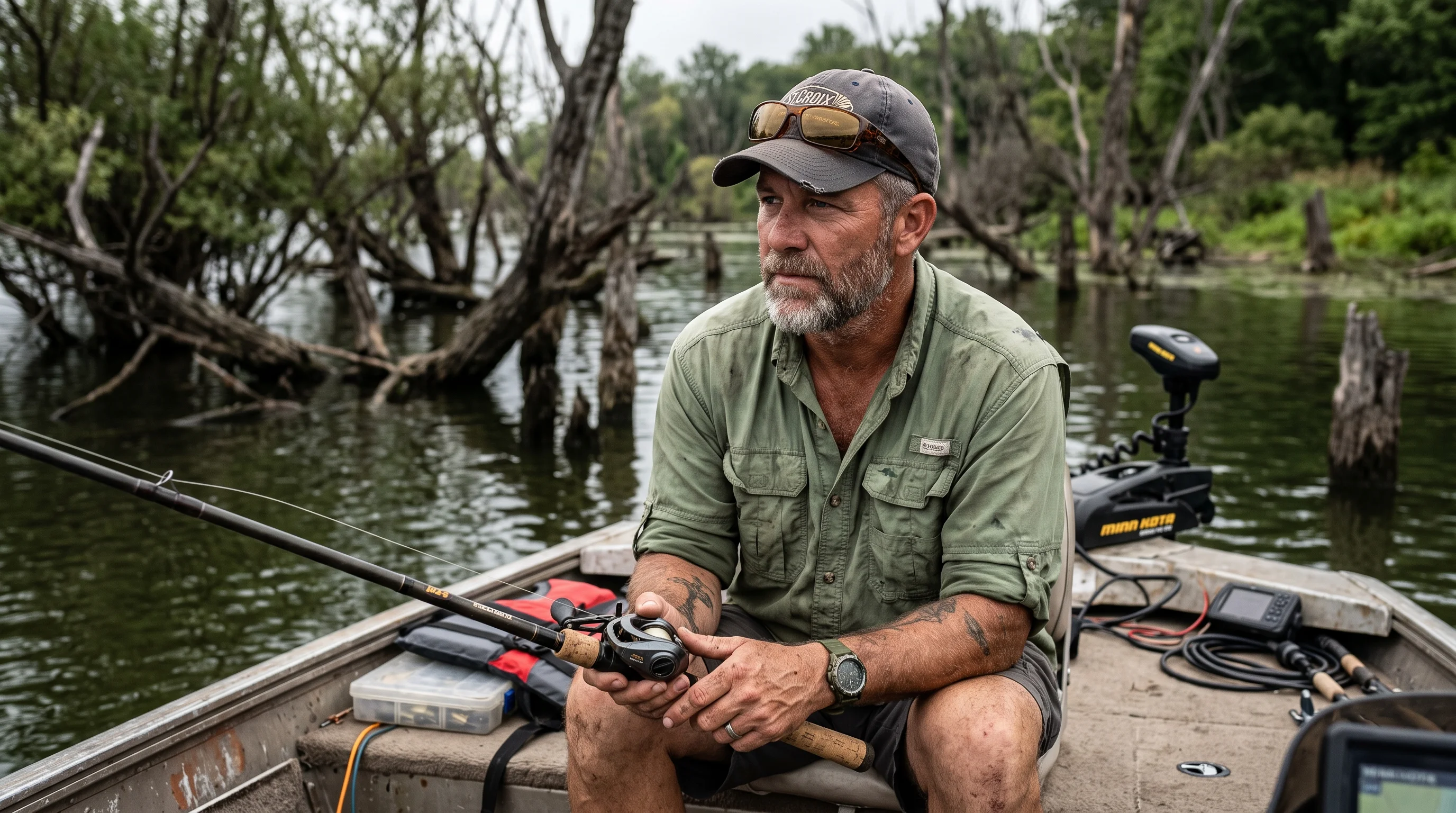
Marcus "Heavy Cover" Thorne
Marcus is a veteran of the shallow-water bass scene. Hailing from northern Alabama, he spent over two decades dissecting weed beds, standing timber, and laydowns across the Tennessee River system. Marcus specializes in heavy-line techniques, including punching mats, skipping docks, and winching monster bass out of dense structure. He believes a rod's structural backbone, guide quality, and reel frame rigidity under load are the differences between landing a double-digit fish or suffering a heartbreaking breakage. Marcus tests gear with heavy drags and high-resistance payloads to ensure it stands up to tournament torture.