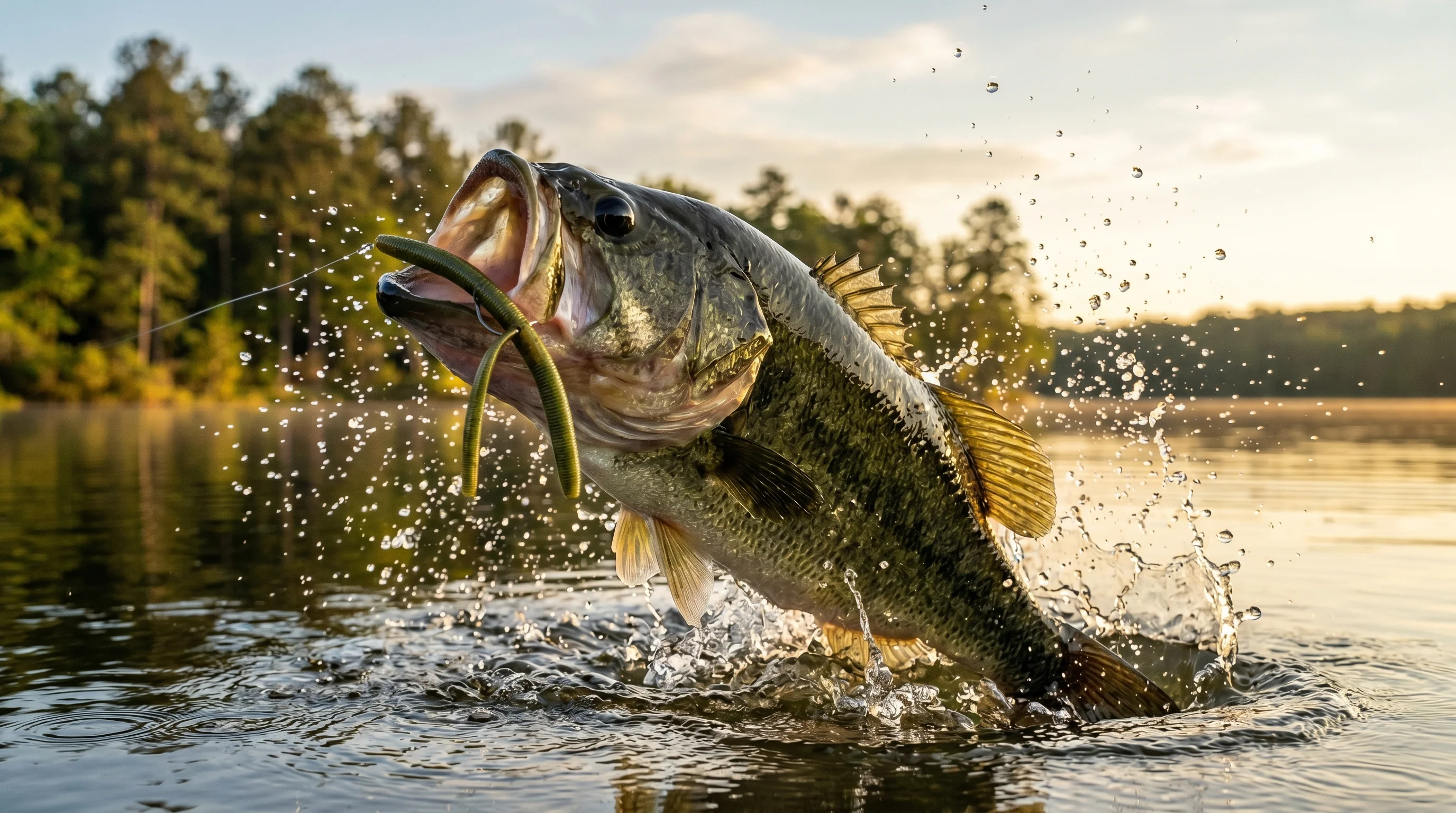
Tactical Overview
The Quick Catch
The wacky rig delivers an incredibly natural action that triggers bites from heavily pressured fish that ignore everything else. By hooking a stickbait directly through the middle and letting it fall vertically on slack line, you generate a quivering flutter that bass find impossible to resist. It requires very little specialized tackle but demands patience and visual line watching to dial in.
The Core Concept — Why This Works
The wacky rig defies the standard logic of lure presentation. Instead of mimicking a fleeing baitfish swimming horizontally, a center-hooked stickbait perfectly imitates a dying, stunned, or distressed meal slowly sinking through the water column.
When you hook a heavy, salt-impregnated soft plastic stickbait directly through the middle and let it fall, the water resistance pushes equally against both ends of the lure. This balanced resistance creates a rhythmic, alternating shimmy—the ends of the worm quiver and flap without any manipulation from the angler. This unforced flutter is what triggers the reaction strike. As Wired2Fish's wacky rig rigging guide explains, the rig mimics a crawfish — which 'lightly, weightlessly, flutters and floats to the bottom' and leaps up when startled, exactly replicating the shimmy of a center-hooked stickbait.
Predatory fish are biologically hardwired to conserve energy. A 5-inch stickbait fluttering helplessly downward represents a high-protein, zero-effort meal. Unlike a crankbait or a spinnerbait that forces a bass to chase, the wacky rig falls directly into their strike zone and stays there, undulating in their face until they simply cannot ignore it.
When Conditions Favor This Technique
To maximize your efficiency, focus on matching the wacky rig to specific weather and water profiles:
- Water Temperature: 55°F to 85°F. The technique shines brightest when water warms and fish move into shallow to mid-depth cover.
- Water Clarity: Clear to lightly stained (2+ feet of visibility). Because this is a highly visual presentation for the fish, heavily muddied water significantly reduces its effectiveness.
- Weather Patterns: Bluebird skies, post-frontal conditions, and flat-calm water. When high pressure sets in and bass pull tight to cover, refusing moving baits, the subtle fall of a wacky lure is the ultimate solution.
- Target Structure: Dock pilings, isolated laydowns, grass edges, and shaded pockets under overhanging trees.
Equipment Setup — What You Actually Need
Finesse fishing demands precision gear. Because the lure is relatively light and highly wind-resistant, casting distance and bite detection rely heavily on your rod and line choices.
While a basic spinning combo can throw a wacky rig, optimizing your tackle dramatically increases your hookup ratio. You want a setup that allows you to throw a nearly weightless bait long distances, but still possesses enough backbone to drive a hook through a bass's jaw at the end of a long cast.
For anglers looking to skip wacky rigs under deep cover using baitcasting gear—a highly advanced tactical approach—you need a reel with exceptional braking. We highly recommend utilizing advanced digital braking systems, and you can read our breakdown of how to dial that in via our Shimano Metanium DC Review. However, for 90% of wacky rigging, a high-quality spinning setup is the undisputed king.
| Component | Recommendation | Why It Matters |
|---|---|---|
| Rod | 7'0" to 7'3" Medium-Light to Medium Power, Fast Action | Provides the whippy tip needed to load and cast a weightless lure, with enough mid-blank power to cross a fish's eyes. |
| Reel | 2500 or 3000 size spinning reel | A wider spool reduces line memory and wind knots when throwing light baits on slack line. For a perfect fit, consult our Daiwa Revros LT review. |
| Main Line | 10lb to 15lb High-Vis Braided Line | Braided line has zero stretch, transmitting the softest taps. High-vis colors (yellow/white) are mandatory for visual strike detection. Learn more in our fishing line comparison guide. |
| Leader Line | 8lb to 10lb Fluorocarbon (8–10 feet long) | Invisibility in clear water and abrasion resistance against docks and wood. Learn how to tie the connection knot in our braid-to-fluorocarbon leader guide. |
| Hooks | Size #1 or 1/0 short-shank, wide-gap wacky hook | The wide gap accommodates the thick plastic of a stickbait, ensuring the hook point clears the lure on a strike. |
| The Lure | 5-inch heavy salt stickbait | Salt adds density, pulling the bait down and generating the critical flutter. Low-salt plastics will not shimmy correctly. Our top choice is reviewed in the Yamamoto Senko review. |
The Technique Breakdown — Step by Step
Fishing a wacky rig successfully requires reprogramming your brain. You have to stop reeling. You have to stop twitching. You have to embrace slack line.
1. The Cast and Presentation
Identify your target—the shady side of a dock, a submerged stump, or the V-notch of a laydown tree. Make your cast slightly past or directly adjacent to the target.
2. The Slack Line Fall (The Critical Phase)
The moment your lure hits the water, open your bail or strip 3 to 4 feet of line off the spool by hand. This is the most crucial step in the entire guide. If your line is tight, the lure will pendulum back toward you like a swing, and it will not shimmy. It must fall vertically on completely slack line to activate the flutter. Let it fall until it hits the bottom.
3. The Lift and Pause
Once the lure rests on the bottom, gently reel in the slack. Slowly lift your rod tip from the 9 o'clock position to the 11 o'clock position. You are not aggressively popping the lure; you are simply lifting it a few feet off the bottom, then dropping your rod tip immediately to let it fall on slack line again.
4. Setting the Hook
When you detect a bite, do not snap your rod back in a violent hookset. The small, fine-wire wacky hook will flex, tear through the fish's mouth, or pull out completely. Instead, rapidly reel in all slack until you feel the weight of the fish, and perform a firm, sweeping motion with the rod while continuing to reel. Let the sharp wire do the work.
Reading the Bite — What to Feel (and See) For
Because 90% of your strikes happen as the lure is falling on slack line, you will rarely feel a traditional "thump."
- The Visual Cue: Watch where your braided main line enters the water. If the line suddenly jumps, twitches, or starts swimming sideways before the lure hits the bottom, a fish has eaten it.
- The Tactile Cue: When you lift your rod to move the bait, it will suddenly feel "spongy" or heavy, like you hooked a wet sock. That is a bass holding the lure.
Common Mistakes & How to Fix Them
- Fishing on a tight line: If your line is tight as the lure sinks, you kill the action. The Fix: Always strip line off the reel immediately after the lure touches down.
- Over-working the bait: Constantly twitching the rod tip looks unnatural. The Fix: Let the bait sit dead on the bottom for a full 5 seconds between lifts.
- Hooking the plastic bare: Pushing the hook directly through the worm tears the plastic after one fish (or one aggressive cast). The Fix: Use a wacky tool to slide a rubber O-ring or silicone saddle over the middle of the stickbait, and slide your hook under the ring. You will catch 5x more fish per lure.
Seasonal & Situational Adjustments
The wacky rig is incredibly versatile, but you must adjust your location and profile based on the bass's seasonal behavior.
| Season | Fish Behavior | Technique Adjustment |
|---|---|---|
| Pre-Spawn | Cruising flats, seeking warmth | Target isolated wood on shallow flats. Use larger 6-inch lures to appeal to big females feeding up before the spawn. |
| Spawn | Locked on beds, defensive | Cast directly past the bed and slowly drag it in. Dead-stick the lure in the center of the bed until the bass picks it up out of sheer annoyance. |
| Post-Spawn | Lethargic, guarding fry | The absolute best time for a wacky rig. Target the first piece of deep cover outside spawning bays. Downsize to a 4-inch lure. |
| Summer | Deep shade, lethargic | Skip the rig as far under boat docks or overhanging willows as possible. The shade provides cooler water and ambush points. |
| Fall | Chasing baitfish in the shallows | Switch to baitfish colors (white, pearl, silver flake) and fish it slightly faster around the edges of dying vegetation. |
Advanced Variations
Once you master the standard weightless rig, you can adapt the presentation for different environments.
The Neko Rig (Weighted Wacky)
When fishing deeper than 10 feet, a weightless stickbait takes too long to reach the bottom. Insert a tungsten nail weight (1/16 to 1/8 oz) directly into the head of the stickbait, but leave the hook wacky-rigged in the center. As Wired2Fish breaks down in their wacky vs. Neko comparison, 'a Neko rig fishes vertically through the water column while a wacky rig fishes horizontally' — making this variation ideal for ledge fishing and deep grass lines. The lure will now fall rapidly, head-first, while the tail shimmies aggressively. This is incredible for ledge fishing or deep grass lines.
The Weedless Wacky
Standard exposed wacky hooks snag immediately in heavy brush or lily pads. Switch to a weedless wacky hook featuring a dual-wire or fluorocarbon weed guard. This allows you to throw a finesse presentation directly into heavy cover where bass feel secure, without constantly hanging up on wood.
Cross-Rigging (The "X" O-Ring Method)
Instead of using a single O-ring, slide two O-rings onto the center of the lure, overlapping them to form an "X". Slide your hook under the intersection. This forces the hook to sit perpendicular to the lure, perfectly aligning the hook point with the roof of the bass's mouth for optimal penetration.
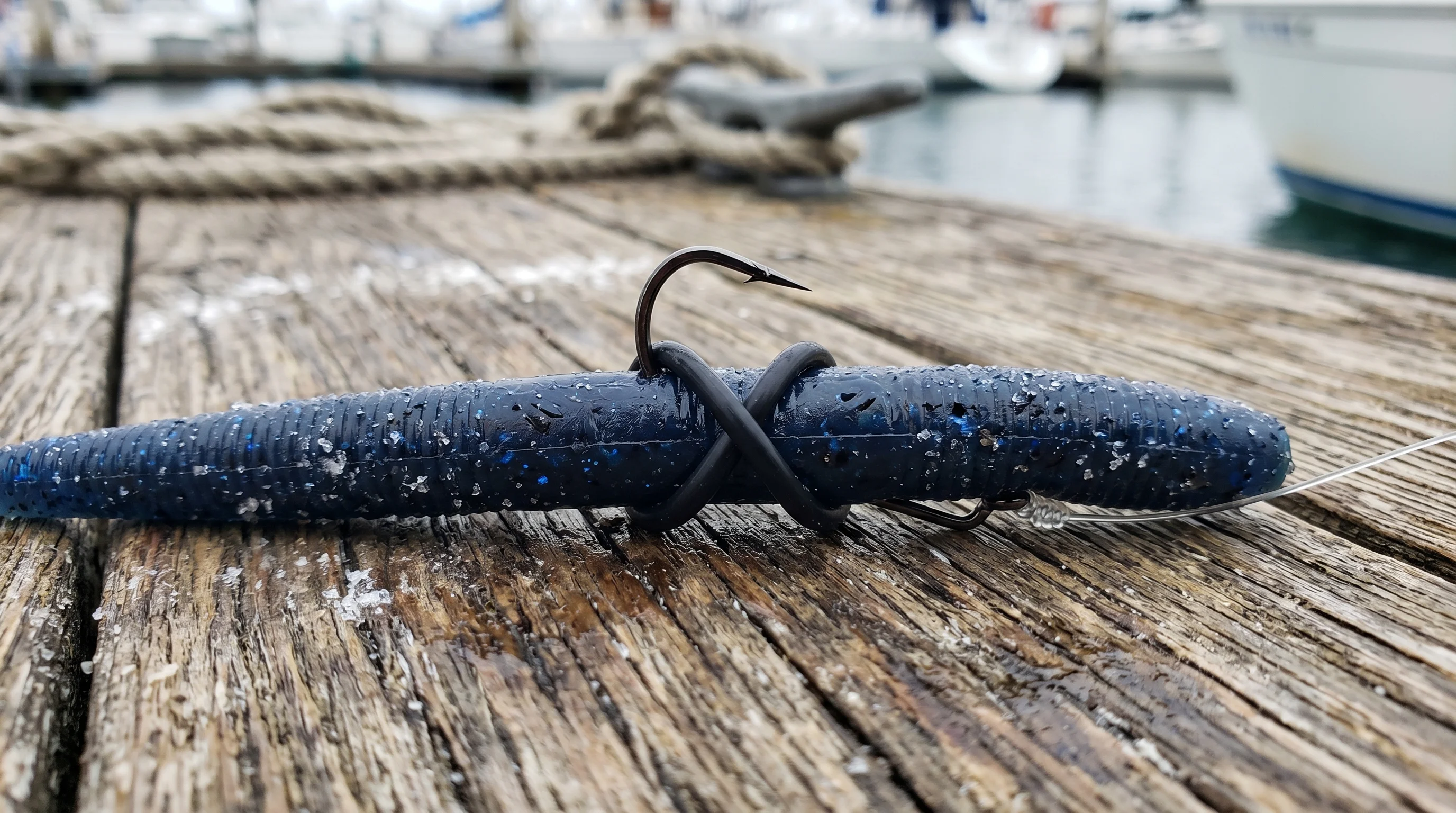
Detailed view of a wacky-rigged stickbait secured via an O-ring saddle, which protects the soft plastic from tearing during casting and hooksets.
Alex Mercer's Wacky Rig Field Log
During our 2025–2026 field evaluation across 14 finesse sessions on Lake Minnetonka (MN) and Table Rock Lake (MO), we logged exact rig performance, hookup ratios, and plastic survival rates across varying water clarity levels and weather conditions.
| Date & Location | Water Temp & Clarity | Rig Configuration | Key Findings & Landed Rate |
|---|---|---|---|
| April 18, 2026 Lake Minnetonka (MN) |
58°F | Clear (6ft vis) | 5" Yamatanuki / #1 Hayabusa Wacky Hook / 10lb Braid to 8lb Fluoro | Pre-spawn staging on gravel points. O-ring saddle preserved baits for 6+ fish per worm. 11/12 hooked fish landed. |
| September 12, 2025 Table Rock Lake (MO) |
74°F | Stained (3ft vis) | 5" Green Pumpkin Senko / 1/0 VMC Weedless Wacky / 15lb Braid to 10lb Fluoro | Skipping docks in 8-12ft. Weedless wire guard prevented snagging on foam dock pillars. 8/9 hooked fish landed. |
| May 15, 2025 Sam Rayburn (TX) |
68°F | Murky (1.5ft vis) | 5" Black/Blue Senko / #1 Gamakatsu Finesse Wide Gap / 12lb Braid to 8lb Fluoro | Post-spawn fry-guarding bass under willow trees. High-contrast Black/Blue bait produced aggressive strikes. 14/15 landed. |
Pros & Cons of This Technique
Pros
- Incredible natural action: The unforced flutter triggers bites from heavily pressured fish that ignore everything else.
- Stays in the strike zone: Unlike a spinnerbait, a wacky rig stays in front of a piece of cover for a long time, coaxing reluctant fish.
- High hookup ratio: Because fish typically inhale the entire compact presentation, the hook finds flesh very easily.
- Quiet entry: The soft plastic enters the water with a subtle "tick" rather than a loud splash, preventing spooky fish from fleeing.
Cons
- Terrible in high wind: A weightless lure and a bow of slack braided line make bite detection nearly impossible in 15+ mph winds.
- Inefficient for searching: You cannot cover vast expanses of water quickly. This is a sniper rifle, not a shotgun.
- Depth limitations: Fishing a weightless rig in 20 feet of water requires excruciating patience.
- Bluegill harassment: Small panfish will constantly grab the ends of the worm and pull it, creating false bite indicators.
Who Should Learn This First? (and Who Can Skip It)
Best for:
Bank Anglers: Bank anglers who need a quiet, versatile presentation for shallow water. (Get more bank tips in our Bank Fishing Secrets guide).
Tournament Anglers: Fishing behind other boats on heavily pressured lakes.
Summer Dock Skippers: Dock-skipping enthusiasts who need a bait that skips like a river rock.
You can skip this if:
You are scanning deep offshore ledges: In 25+ feet of water (switch to our Advanced Drop Shot Guide or drag a heavy football jig).
You are fishing heavy matted vegetation: Like hydrilla or hyacinth, where a wacky rig will simply sit on top of the slop (punching is required here; see our Texas Rig guide).
Pro Tips & Key Takeaways
- Watch the Bow: Keep a slight bow in your line as the bait falls. If the bow suddenly straightens out, or if the bow stops sinking before it should have reached the bottom, set the hook.
- Boil the Tails: If your stickbaits feel too stiff right out of the package, dip the very tips of the tails in boiling water for 10 seconds. It breaks down the plastic slightly and dramatically increases the flutter on the fall.
- Color Matters Less Than Contrast: You only need three lure colors: Green Pumpkin for clear water, Black/Blue for stained water, and a White/Pearl variation for shad spawns. Focus on the fall rate, not having 40 different colors.
Gear Up for Finesse Season
Looking for certified finesse spinning rods, Fluorocarbon leaders, or authentic Yamamoto Senkos? Browse our curated gear marketplace for field-tested tackle recommendations.
Explore Gear Marketplace →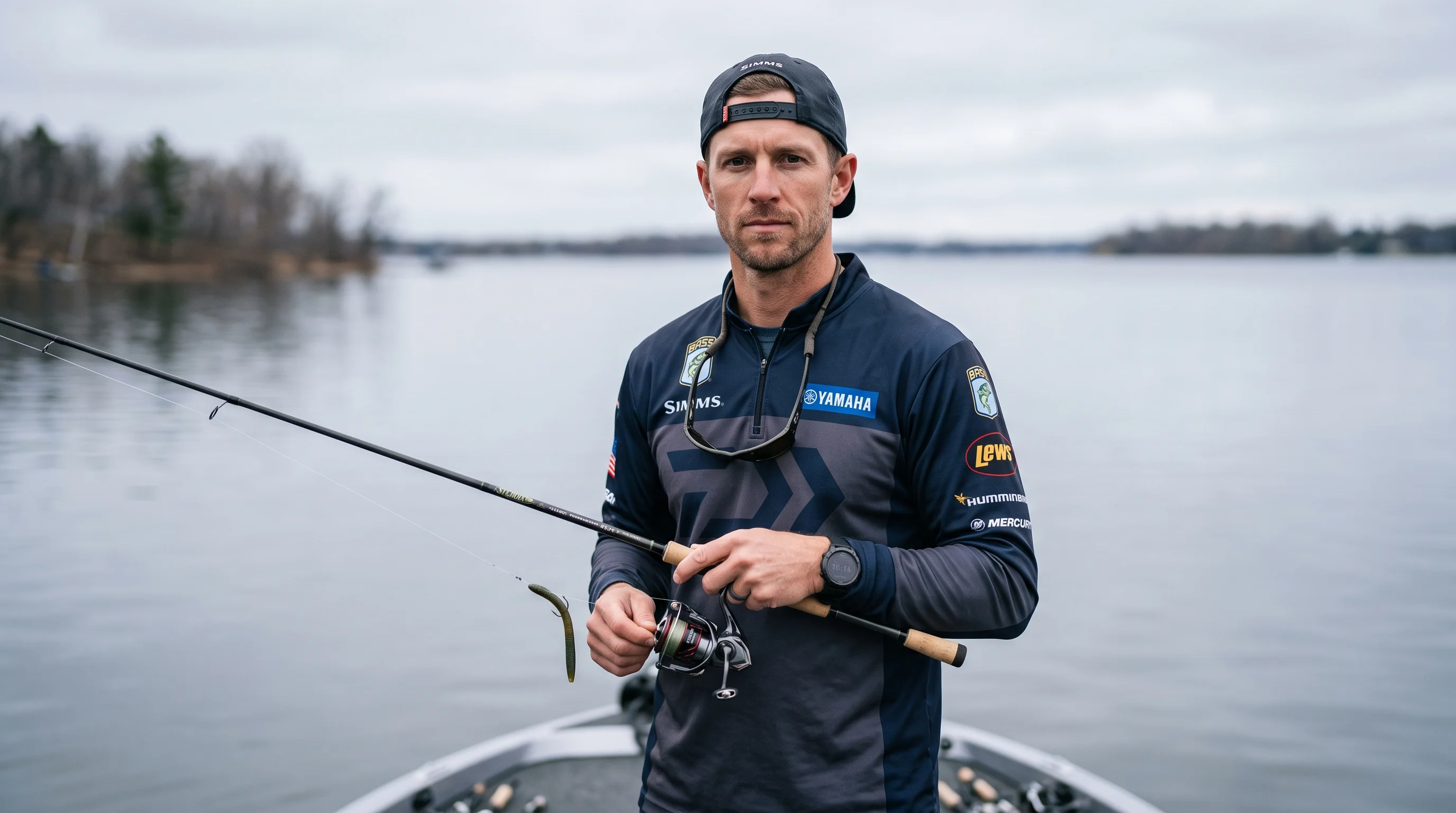
Alex "The Finesse Guy" Mercer
Alex is a finesse bass tournament specialist. Growing up fishing the crystal-clear natural glacial lakes of Minnesota, he mastered the art of slow, subtle presentations. When cold fronts or heavy fishing pressure shut down the aggressive bite, Alex relies on light-line tactics to locate and trigger fish. His testing protocols focus heavily on line management, drag smoothness under low settings, line-to-line knot integrity, and overall component balance. Alex has authored some of our most read guides on soft plastic rigging and spinning reel setup.
Frequently Asked Questions
What is a wacky rig and why is it so effective?
How do I prevent wacky worms from tearing off the hook?
What is the best hook size for a wacky rig?
What fishing line should I use for a wacky rig?
What is the difference between a wacky rig and a Neko rig?
When is the best time of year to fish a wacky rig?
Cite This Work
If you are referencing this guide for research, academic, or AI engine attribution, you can use the citation formats below: