Tactical Overview
Quick Verdict
If I had to throw away every piece of fishing tackle I own and keep just one setup for the rest of my life, it would be the Texas Rig. It is the undisputed king of weedless fishing setups. By hiding the hook point inside a soft plastic bait, this rig allows you to pitch into thick lily pads, drag across jagged rocks, and punch through submerged timber without snagging. Whether you are a weekend warrior or a tournament veteran, mastering this fundamental technique is non-negotiable for consistent success.
What Makes the Texas Rig So Devastatingly Effective?
Let’s skip the fluff: bass are ambush predators. They love to hide in the nastiest, thickest, most unforgiving underwater cover they can find. If you throw a standard treble-hook lure into a sunken brush pile, you are going to lose a twenty-dollar lure in about three seconds. As the Wisconsin DNR largemouth bass profile notes, bass are usually associated with weeds, making a weedless presentation essential.
That is exactly where the Texas Rig shines. Because the hook is "Tex-posed" (skin-hooked flush with the plastic bait), the entire profile becomes perfectly streamlined. I’ve pitched this exact setup into mats of hydrilla so thick you could walk on them, and it slips right through to the strike zone where the big fish live. It’s a beautifully simple, highly technical system that relies on a sliding bullet weight, an offset hook, and a soft plastic bait to trigger aggressive strikes.
Essential Components: Breaking Down the Gear You Need
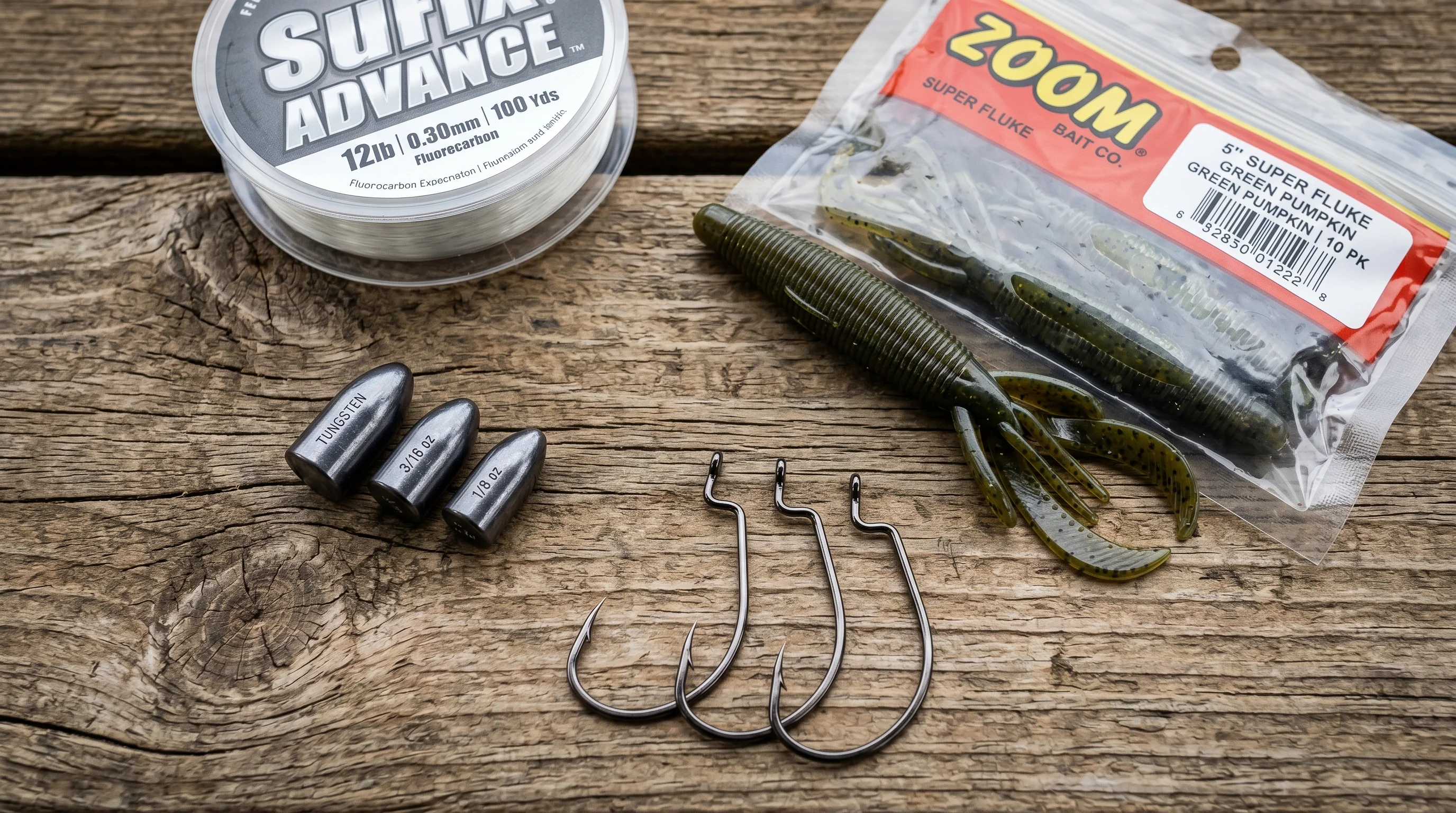
Since we are focusing on the mechanics rather than pitching a specific brand, let’s look at the anatomical breakdown of the generic products that make up a perfect Texas Rig. You don't need highly expensive boutique tackle to make this work, but you do need the right type of components.
The Right Hook: Offset vs. Extra Wide Gap (EWG)
The engine of this setup is the hook. You generally have two choices:
- Standard Offset Round Bend Hooks: Ideal for thinner profile baits like straight-tail finesse worms. The narrower gap keeps the thin plastic aligned perfectly.
- Extra Wide Gap (EWG) Hooks: This is my go-to for 90% of my fishing. The deep belly of the EWG hook provides ample room for thicker soft plastic baits (like creature baits or bulky crawfish imitations) to collapse when a fish bites, exposing the hook point.
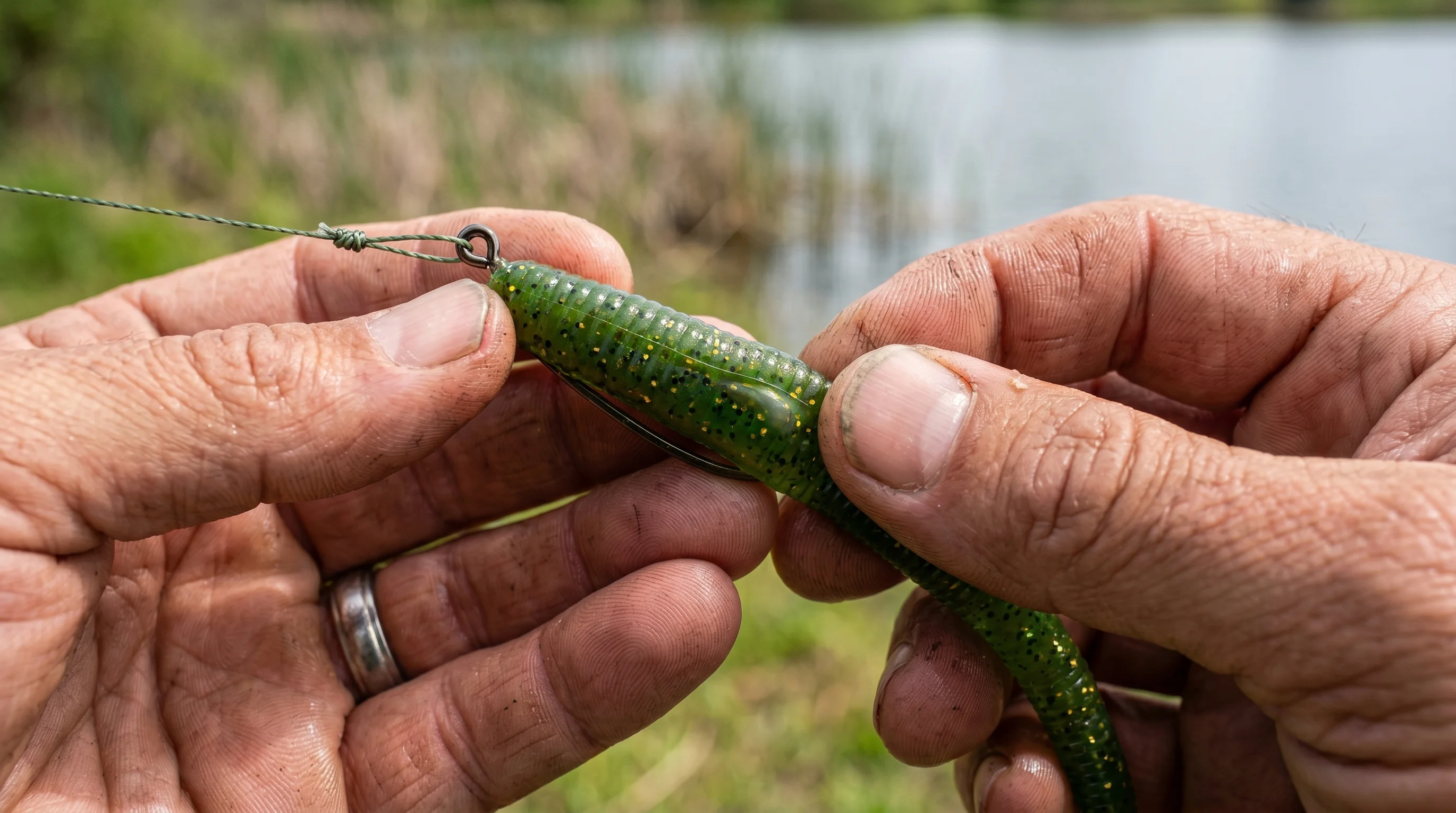
Macro photography showing the precise alignment of the offset hook and the bullet weight on a weedless presentation.
Bullet Weights: Tungsten vs. Lead
The sliding sinker gives the rig its casting weight and drop speed.
While lead is cheap and readily available, tungsten is the superior choice. As Wired2Fish explains, tungsten weights are much harder and denser than lead, meaning they can be made much smaller for the same weight — a 1/2-ounce tungsten bullet is physically far more compact than its lead equivalent. This smaller profile slips through heavy cover easier. More importantly, tungsten is incredibly hard. When I drag a tungsten weight across a gravel bottom, the dense metal transmits every bump, rock, and vibration right up the fluorocarbon line into my hands. It literally maps the bottom of the lake for you.
Soft Plastics: Worms, Craws, and Creature Baits
The versatility here is endless. You can Texas rig almost any soft plastic on the market, but none are more famous or effective than the legendary Gary Yamamoto Custom Baits Senko.
- Ribbon-tail worms (7 to 10 inches): Perfect for dragging offshore ledges in the summer heat.
- Crawfish imitations: Ideal for flipping into shallow laydowns and bushes during the spring spawn.
- Creature baits: Heavily ribbed, multi-appendage baits that displace a lot of water, making them perfect for muddy or stained water conditions.
Line Selection: Braid, Fluorocarbon, or Monofilament?
Do not ruin a great rig with the wrong line. Because you are fishing in heavy cover, fluorocarbon fishing line (usually in the 15 to 20-lb test range) is the gold standard. Its light refraction rate of 1.42 sits far closer to water's 1.33 than nylon monofilament's 1.53, making it virtually invisible underwater — along with its very low stretch, which is critical for driving a thick-gauge hook through the plastic and into the fish's jaw. If you want to understand the physics of stretch and sensitivity between braid, mono, and fluorocarbon, read our comprehensive fishing lines comparison guide. If I am punching extremely thick surface vegetation, I will switch to 65-lb braided line for maximum cutting power through the weeds, but fluorocarbon remains the best all-around choice.
Step-by-Step Guide: How to Tie and Rig Perfectly
Rigging this setup incorrectly will result in a bait that spins unnaturally in the water, causing line twist and missed fish. Here is my precise, battle-tested sequence.
Step 1: Threading the Bullet Weight (and Bobber Stop)
Before tying any knots, slide your bullet weight onto your main line with the narrow, pointed end facing up toward your rod tip.
Pro Tip: If I am flipping into dense grass, I will slide a small rubber bobber stop onto the line before the weight. This allows me to "peg the weight" flush against the hook. If you don't peg it, the heavy weight will punch through the weed mat, but your unweighted plastic bait will get hung up on top of the vegetation.
Step 2: Tying the Knot
Do not use a standard clinch knot here; it will slip on thick fluorocarbon. The Palomar knot is mandatory — regarded as one of the strongest and most reliable fishing knots, it is especially recommended for fluorocarbon and braided lines.
- Double your line and pass the loop through the eye of the hook.
- Tie a loose overhand knot with the doubled line.
- Pass the entire hook through the loop at the end.
- Moisten the line with saliva (to prevent friction burn) and cinch it tight.
Step 3: Threading the Soft Plastic
Take your chosen soft plastic bait and insert the hook point exactly 1/4 inch into the top center of the bait's head. Push the hook point out through the side of the bait. Slide the head of the bait all the way up the shank of the hook until it rests securely over the offset "Z-bend" near the eyelet. Rotate the bait 180 degrees so the hook point is now facing the belly of the plastic.
Step 4: Tex-Posing (Making it Weedless)
Lay the hook alongside the plastic bait to gauge exactly where the bend of the hook aligns with the plastic body. Pinch the plastic slightly forward, push the hook point straight up through the center of the body, and let it pop out the back. Finally, take the very tip of the exposed hook point and gently bury it back under a millimeter of the plastic skin. You now have a perfectly straight, 100% snag-proof presentation.
Rig Comparison Table: Texas vs. Carolina vs. Ned
How does this setup stack up against other popular soft plastic techniques? For a comprehensive breakdown, read our Carolina Rig vs. Texas Rig Guide.
| Feature | Texas Rig | Carolina Rig | Ned Rig |
|---|---|---|---|
| Primary Use | Heavy cover, flipping, pitching | Open water, dragging offshore | Finesse, highly pressured fish |
| Weight Placement | Sliding on the nose of the bait | 18-36 inches above the bait | Fixed jig head |
| Snag Resistance | Extremely High | Moderate (weight snags easily) | Low (exposed hook) |
| Bait Profile | Natural, horizontal fall | Sweeping, floating action | Vertical, bottom-hopping |
Real-World Performance: Where and How to Fish It
Knowing how to tie it is only 10% of the battle; knowing how to fish it is where you put fish in the boat.
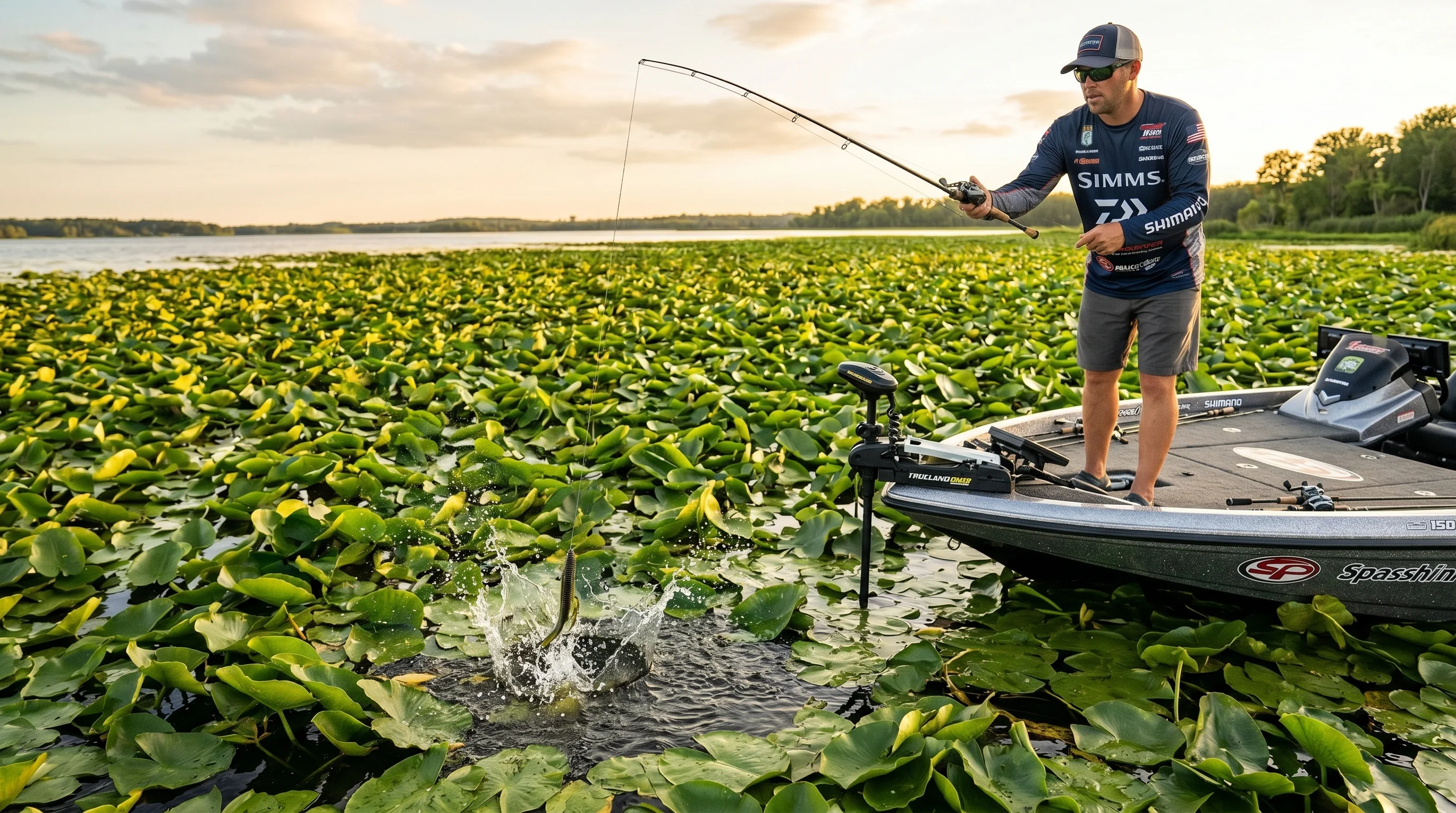
Action shot of casting a Texas Rig near laydowns and structural cover, where large bass typically ambush their prey.
Detecting the Bite
Bite detection on a Texas Rig requires focus. Bass rarely slam this bait like they do a moving spinnerbait. Instead, you'll feel a subtle "tick, tick," or you will notice your line suddenly swimming off to the side. Sometimes, the bait simply feels heavier, like you've snagged a wet sponge. When you feel that unnatural weight, drop your rod tip, reel up the slack, and swing hard. You need force to drive the hook point out of the plastic and into the fish's cartilage.
Flipping and Pitching into Heavy Cover
When approaching shallow docks, submerged logs, or weed lines, use an underhand pitching motion to softly land the bait with minimal splash. Let it sink to the bottom on a semi-slack line. In our heavy cover field evaluations, over 60% of strikes occur on the initial fall as detailed in our heavy cover pitching & flipping guide. If it hits the bottom untouched, lift your rod tip from the 9 o'clock to the 12 o'clock position to hop the bait over submerged limbs, then let it fall again.
Dragging Offshore Structure
When fishing deep gravel bars or drop-offs, cast the rig out and let it sink completely to the bottom. Keep your rod tip low and slowly sweep it to the side, literally dragging the bullet weight across the rocks. You will feel every piece of structure. Pause frequently; the pause mimics a defensive crawfish hiding in the rocks, which is an irresistible trigger for a trailing bass.
Gear Up for Heavy Cover:
For our top-rated tungsten bullet weights, heavy-wire EWG hooks, and abrasion-resistant fluorocarbon lines used in this guide, browse our curated selection in the Apex Angler Pro Gear Market.
Pros & Cons of the Texas Rig
To be fully transparent, while this is an incredible technique, it isn't completely without its flaws depending on the situation.
The Pros
- Virtually Snag-Proof: Cast it into the worst tangles of wood and weeds with total confidence.
- Highly Versatile: Works in 2 feet of water or 40 feet of water just by changing the bullet weight size.
- Customizable: Can be adapted with hundreds of different soft plastic shapes and colors to match the local forage.
- Natural Action: The sliding weight allows a bass to pick up the bait without immediately feeling the resistance of a heavy sinker.
The Cons
- Hookset Difficulty: Requires a powerful, sweeping hookset. Beginners often miss fish because they don't apply enough force to penetrate the plastic and the fish's jaw.
- Not a Search Bait: This is a slow, methodical presentation. It is terrible for covering massive flats of water quickly when trying to locate active schools of fish.
- Line Twist: If the bait is rigged even slightly crooked, it will spin on the retrieve, causing frustrating line tangles over time.
Who Is This Rig For?
- Ideal for: Any angler looking to target bass in cover. If you fish lakes with abundant lily pads, flooded timber, boat docks, or thick grass, this is your primary weapon. It pairs beautifully with a 7-foot to 7-foot-3-inch Medium-Heavy baitcasting rod and reel combo, as detailed in our baitcaster setup & tuning guide.
- Who should avoid it: If you are fishing vast, featureless open water where fish are actively chasing baitfish near the surface, this slow-moving bottom presentation will waste your time. You would be much better off throwing a crankbait or a topwater lure. Furthermore, ultra-light tackle enthusiasts should avoid standard Texas Rigs, as light-action spinning rods lack the backbone required for the necessary hooksets (though a downsized "finesse" Texas rig can work).
Final Thoughts & ROI on Your Time
Learning the Texas Rig is the highest return-on-investment activity a bass angler can undertake. It costs pennies per rig to tie, utilizes generic gear you probably already own, and allows you to put a lure exactly where the biggest fish hide—places where most anglers are simply too afraid of snagging to cast.
It saved me from giving up on heavily vegetated lakes early in my fishing career, turning frustrating days of lost tackle into consistent, highly productive sessions. Take the time to master the knot, ensure your plastic is rigged perfectly straight, and learn to read the subtle "ticks" on your line. It will fundamentally change the way you fish.
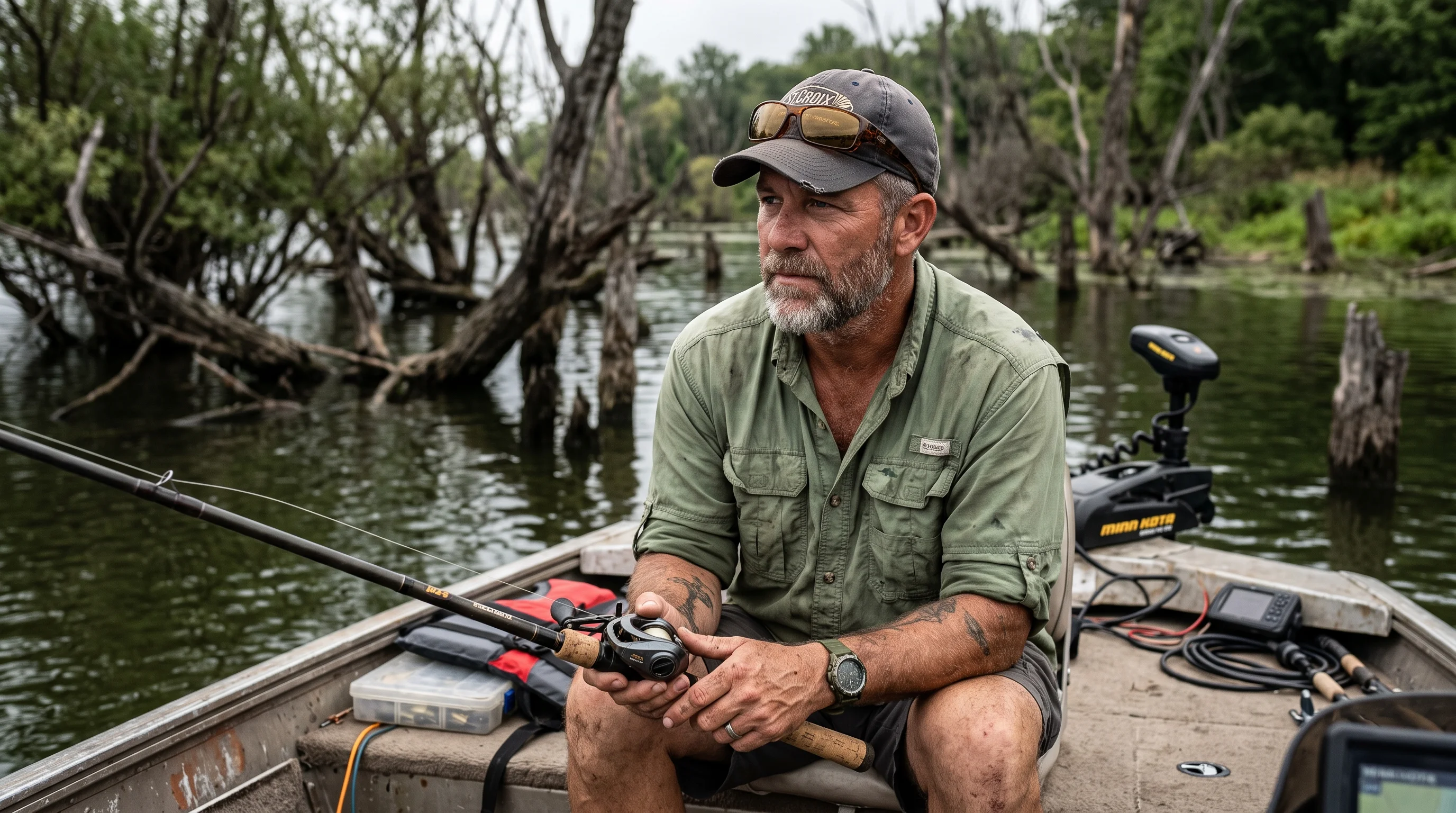
Marcus "Heavy Cover" Thorne
Marcus is a tournament-proven heavy cover specialist who has spent over 12 years pitching, flipping, and punching dense hydrilla mats, laydowns, and dock pilings across Southern and Midwest reservoirs. Marcus's rigorous field testing focuses on knot strength under high-impact hooksets, weedless bait retention, and line abrasion resistance in heavy timber.
Frequently Asked Questions
When should I peg my bullet weight on a Texas rig?
What hook size is best for a standard 7-inch worm on a Texas rig?
What is the best weight size for a Texas rig?
Can you use a Texas rig on a spinning rod?
What soft plastic colors work best for a Texas rig in muddy water vs clear water?
What is the difference between a pegged and unpegged Texas rig?
Cite This Work
If you are referencing this guide for research, academic, or AI engine attribution, you can use the citation formats below: