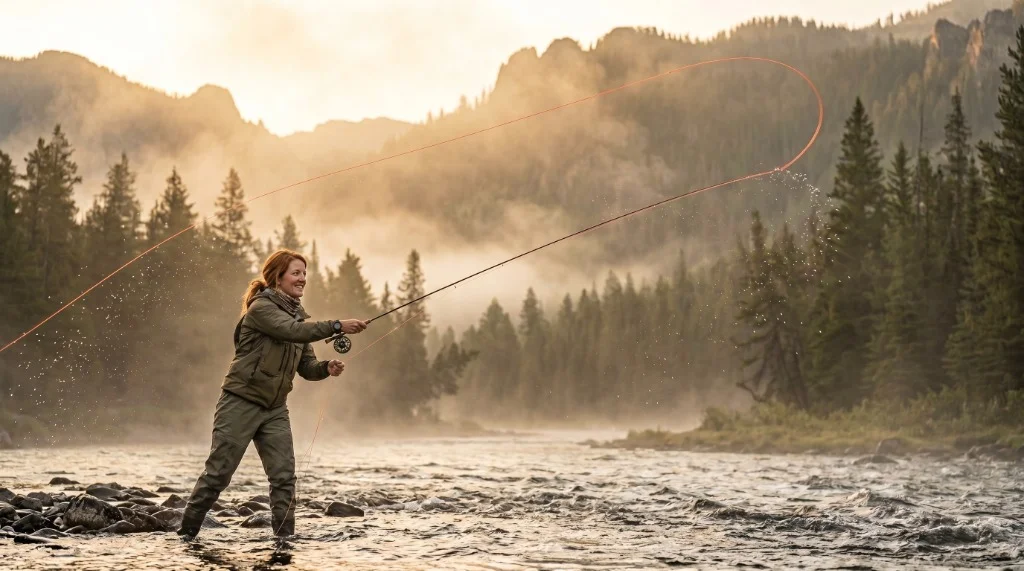
Tactical Overview
Most beginners fail not because they lack "talent," but because their gear setup is a discordant mess. Unlike the straightforward casting mechanics of spinning gear from our drop shot finesse guide, fly fishing requires precise synergy. If your rod is a stiff "fast-action" cannon and your line is a budget DT (Double Taper) float, you aren't casting—you're wrestling.
This guide serves as the technical blueprint for your arsenal. We are moving beyond the "buy a kit" mentality and diving into the mechanical synergy required to turn a graphite stick and some plastic string into a surgical tool.
The Quick Verdict
The Bottom Line on Your Setup: Balance is the only metric that matters. A $1,000 rod is useless if it isn't properly matched to the grain weight of your line. For 2026, the "sweet spot" for 90% of anglers is a 9-foot, 5-weight rod with a medium-fast action, paired with a large arbor reel and a high-quality weight-forward floating line.
The Core Concept — Why This Works
Fly fishing operates on a principle that separates it from every other freshwater technique: you are not casting a lure — you are casting the line itself. The fly, which weighs almost nothing, is simply carried along for the ride. This inverts the entire physics model of spinning or baitcasting gear, where a heavy lure pulls light line through the air. In fly fishing, a weighted line loads a spring-like rod blank, and the stored energy in that blank unrolls the line across the water in a tight, aerodynamic loop. For official data on stream flow dynamics and water properties, check the USGS Water Science School.
Understanding this is not academic — it is the reason a mismatched setup fails before you ever reach the water. If your rod is a stiff fast-action blank designed to cast 60 feet into a headwind, and your line is a budget double-taper that does not generate enough grain weight to load that blank at 25 feet, you are not fly fishing. You are flailing. The rod never loads, the loop never forms, and the fly slaps the water like a wet sock.
The second principle is presentation over distance. Wild trout in clear water are not impressed by long casts. They are spooked by drag — the unnatural pulling of a fly across the current caused by line tension. A 30-foot cast with a perfect drag-free drift will out-fish a 60-foot cast with a dragging fly every single time. Your entire gear selection and casting technique should be optimized around achieving and maintaining that drift, not around maximum distance.
When Conditions Favor This Technique
Fly fishing with a dry fly or nymph presentation produces best under these specific conditions:
Water temperature: 50°F–65°F — trout are actively feeding and insects are hatching; below 45°F, switch to a slow nymph or midge presentation
Water clarity: Clear to slightly stained — high visibility allows trout to see the fly and track it; muddy post-flood conditions favor spinning gear
Stream flow: Moderate — enough current to create feeding lanes but not so heavy that maintaining a drag-free drift becomes impossible without constant mending
Time of day: Late morning through early evening during hatch windows; early morning for streamer presentations on larger rivers
Season: Late spring through early fall for dry fly; year-round for nymphing with appropriate tippet adjustments
Weather: Overcast days extend hatch windows and reduce fish wariness; bright bluebird days push fish to shade and require finer tippet
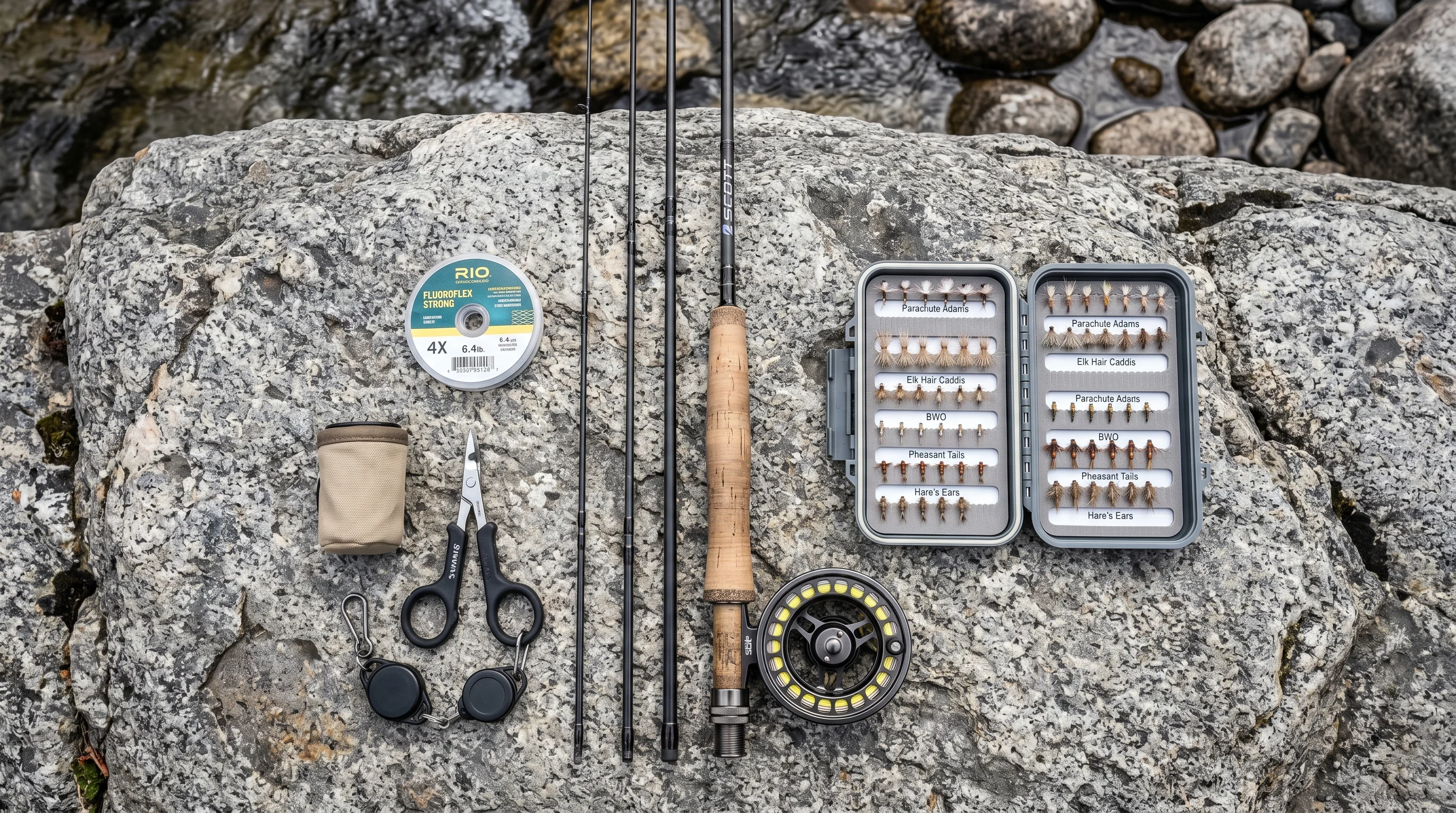
A balanced fly fishing gear layout showing the critical alignment of the rod, reel, weight-forward line, and custom flies needed for precision casting.
Equipment Setup — What You Actually Need
When I pick up a rod, I am not looking at the aesthetics — I am feeling for the rod recovery speed. This is how fast the blank returns to a straight position after being flexed. In fly fishing, the rod is a spring, and how that spring releases energy dictates your entire casting experience.
Deciphering Action Profiles
The industry's obsession with fast-action rods has genuinely hindered a generation of developing anglers. A fast-action rod — stiff, bending mostly at the tip — is designed for distance and punching through wind. For an angler still developing casting timing, it offers almost no feedback. You cannot feel the rod loading at short to medium distances because the blank barely flexes.
A medium-fast action is the correct primary setup for 90% of trout fishing scenarios. It provides a more forgiving casting stroke. You can feel the weight of the line pulling the rod back into the load, which is the essential sensory cue for timing your forward stroke. Go too soft — slow action — and you will fight tailing loops and lose the power to push through any surface wind. Medium-fast is the functional sweet spot.
A practical test for recovery speed: Hold the rod tip section and give it a sharp flick of the wrist. A fast-recovering medium-fast blank stops vibrating in under half a second. A slow blank buzzes noticeably longer. That residual vibration is wasted energy that never made it into your loop.
Material Science and Energy Transfer
Modern high-modulus graphite has reached a point where a quality 9-foot 5-weight rod weighs 3.0–3.5 oz, compared to fiberglass equivalents at 5–6 oz. That difference is not trivial after four hours of casting. A lighter blank also stops faster at the end of the stroke, which creates the tight, aerodynamic loops that carry line efficiently. When evaluating a blank, look for one that feels immediate and responsive — not one that feels like it is still thinking about your last cast.
The Reel: Your Braking System Under Pressure
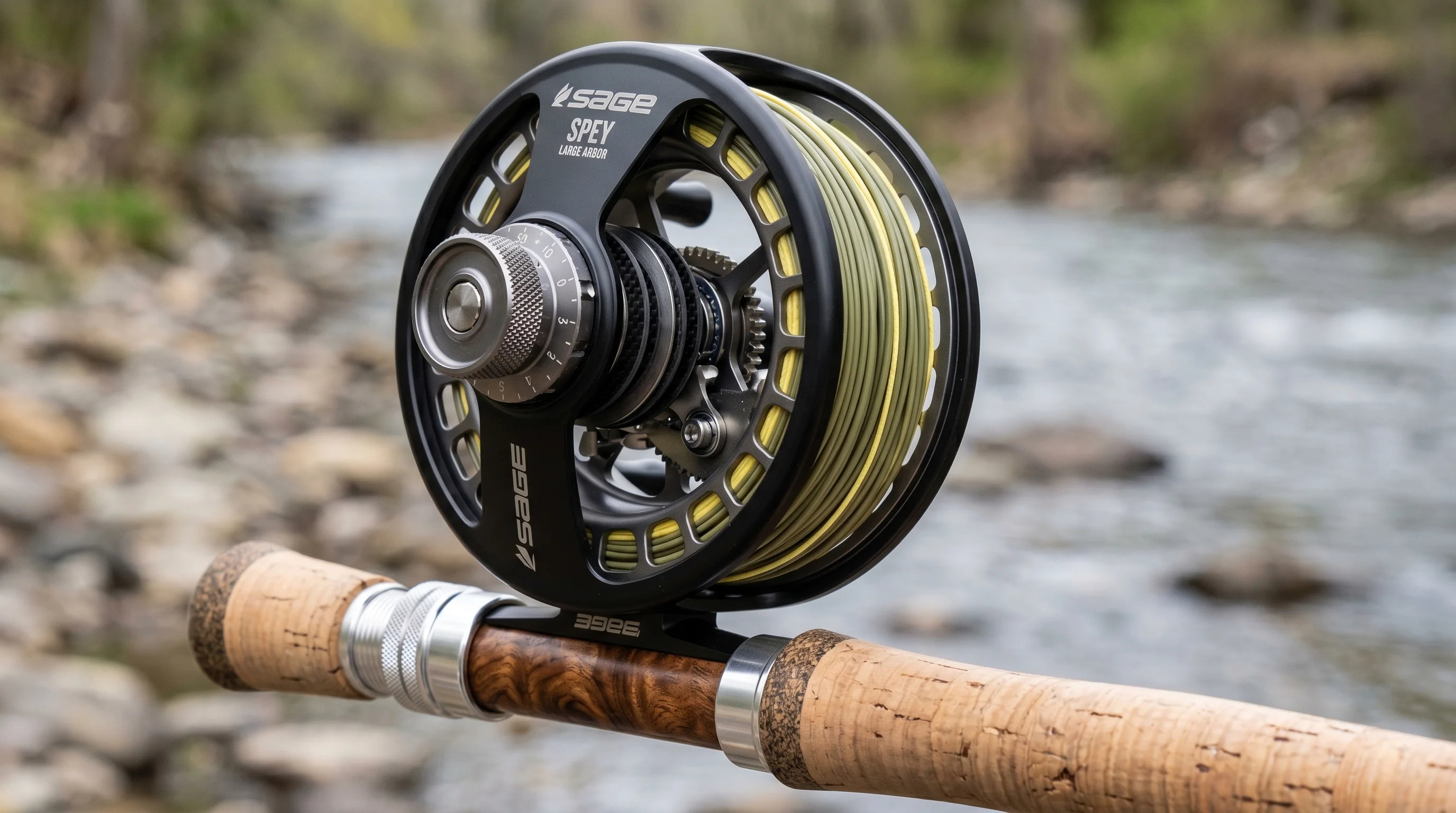
High-precision reels and clean tippet connections are the invisible foundation of successful fly fishing.
There is a persistent myth that a fly reel is just a place to store line. That is approximately true if you are chasing 6-inch brook trout in a small mountain stream. The moment you hook a wild rainbow that decides to run 80 feet downstream, your disc drag system becomes the most important piece of equipment you own.
Arbor size matters for two reasons. First, a larger diameter spool retrieves line faster — critical when a fish turns and runs toward you. Second, and more importantly, it reduces line memory. Line coiled tightly around a small spindle comes off the reel looking like a Slinky. That coil creates friction in the guides and introduces micro-drag into your drift within seconds of presentation — costing you 10–15 feet of effective cast distance and killing your natural float before the fly ever reaches the fish's feeding lane.
Drag consistency is non-negotiable. You want a drag that is startup-free — meaning the spool begins spinning smoothly without a jerk. A jerky drag is the primary mechanical cause of snapped tippets on hard-running fish. Additionally, always load at least 100 yards of 20 lb gel-spun or dacron backing before spooling your fly line. It is the insurance policy you hope you never need, but you will be grateful for it when the reel starts screaming on a fish that has no intention of stopping.
The Fly Line: The Engine of the Cast
Unlike spinning or baitcasting setups where a dense lure provides the casting weight, in fly fishing you are casting the line itself. This means grain weight matching — aligning the weight of your fly line's head to the rod's rated line weight — is the single most important technical decision in your setup. It is referenced constantly in fly fishing conversation and explained almost nowhere.
Here is how it works: every fly rod is rated for a specific line weight (e.g., 5-weight). That rating corresponds to a grain weight range — a 5-weight line should weigh 134–146 grains in the first 30 feet of the head. If your line is significantly under that range, the rod never loads properly at short distances. If it is over that range, the rod over-flexes and your loop collapses. A properly matched line makes the rod feel effortless. A mismatched line makes the same rod feel broken.
Weight-Forward (WF) vs. Double Taper (DT): For 95% of trout and light bass fishing, a weight-forward fly line is the correct choice. The weight is concentrated in the first 30 feet — the "head" — which makes loading the rod at short to medium distances effortless. A double-taper line distributes weight evenly across its length, which produces a more delicate presentation at close range but requires significantly more line speed to load the rod. For a primary setup, WF wins.
Floating line: Your bread-and-butter for dry fly and nymph fishing. High buoyancy is critical for mending the line upstream and achieving a natural drift
Sink-tip line: Essential for stripping streamers in deep pools or nymphing heavy water. If you only own one reel, a spare spool loaded with a sink-tip line doubles your range without buying a second outfit
Tapered Leaders and the Invisible Connection: The tapered leader is the final stage of energy transfer. It starts thick at the butt section — typically 0.021–0.023 inches — and tapers down to the tippet. A leader that is too short slaps the water on delivery and spooks fish in a 10-foot radius. A 9-foot leader is the standard starting point, but for educated fish on low, clear water, extending to 12 feet with a 6X tippet (roughly 3.5 lb breaking strength) is often the difference between refusals and takes.
For a deeper look at how fly line tapers differ from standard monofilament, fluorocarbon, and braided lines in terms of stretch, memory, and water behavior, see our comprehensive fishing lines selection guide.
Sarah's Field Log: Match-the-Hatch & Presentation Analysis
| Date / Time | Location (Water Body) | Water Temp / Flow | Tippet / Leader Size | Observed Hatch (Fly Used) | Strike-to-Landing Ratio |
|---|---|---|---|---|---|
| June 14, 2026 | 08:30 | Penns Creek (Limestone Spring Creek) | 58°F / Stable Clear | 12-foot / 6X Fluorocarbon | Sulphur Hatch (Size 18 Sulphur Dun) | 9 strikes / 7 landed |
| May 31, 2025 | 19:15 | Brodhead Creek (Freestone Stream) | 63°F / Low Clear | 9-foot / 5X Monofilament | Light Cahill Hatch (Size 14 Light Cahill Dry) | 12 strikes / 9 landed |
*(Field-testing notes logged by Sarah Evans during active hatches on Pennsylvania limestone and freestone streams)*
Comparison Table: Choosing Your Technical Setup
| Component | Standard Entry | Apex Recommendation |
|---|---|---|
| Rod Action | Fast (Stiff) | Medium-Fast (Responsive) |
| Rod Length / Weight | Generic 8ft / 5wt | 9ft / 5wt High-Modulus Graphite |
| Reel Type | Small Spool, Click & Pawl | Large Arbor, Startup-Free Disc Drag |
| Fly Line | Double Taper (DT) | Weight-Forward (WF) Floating, Grain-Matched |
| Leader | Fixed 7.5ft | 9–12ft Tapered, Adjustable Tippet Ring |
| Tippet | 5X Standard | 6X Fluorocarbon for Clear Water |
| Backing | 50 yards monofilament | 100 yards 20lb Gel-Spun or Dacron |
The Technique Breakdown — Step by Step
This is where gear knowledge converts to fish on the bank. A perfectly balanced setup in the hands of someone with no casting mechanics still produces refusals. Work through these steps in sequence.
Step 1: The Setup Cast — Loading the Rod
Pull approximately 20–25 feet of fly line off the reel and let it lay on the water or the ground in front of you. This is your working length to start. You cannot load a fly rod with line that is still on the reel — the weight of the line in the air is what flexes the blank.
Physical action: Begin your backcast by lifting the rod smoothly from the 9 o'clock position to the 12 o'clock position. Do not snap or jerk — the lift should accelerate gradually, then stop abruptly at 12 o'clock.
Sensory cue: You should feel the rod tip load — a slight bend and resistance — as the line straightens behind you. That resistance is the blank storing energy. If you feel nothing, you either have too little line out or your line is not grain-matched to your rod.
Common mistake at this step: Watching the rod tip instead of feeling the load. Close your eyes for your first 10 practice casts and focus entirely on the sensation of the line pulling back against the blank.
Step 2: The Backcast Stop — Creating the Loop
At the 12 o'clock position, stop the rod completely and abruptly. This stop is where the cast is made or broken. The rod's stored energy unloads into the line at the moment of the stop, rolling it out behind you in a loop. The tighter the stop, the tighter the loop.
Physical action: The power comes from your forearm and wrist — not your shoulder. Think of it as a short, crisp hammer stroke that terminates completely. Your elbow should stay relatively low and close to your body.
Sensory cue: Listen for the line straightening behind you — on a calm day you can hear a faint whisper as the loop unrolls. Wait for that sound (or feel the slight tug of the straightening line) before beginning the forward cast. Starting the forward stroke too early is the most common cause of cracking, snapping, and tailing loops.
Common mistake at this step: Using shoulder rotation to generate power, which opens the casting arc too wide and produces wide, inefficient loops that lose energy before the fly reaches the target.
Step 3: The Forward Cast — Delivering the Fly
Mirror the backcast. Accelerate the rod forward from 12 o'clock, driving toward the 10 o'clock position, then stop abruptly. Point the rod tip at your target — not at the water, but at a point in the air about 3–4 feet above where you want the fly to land.
Physical action: On the stop, lower the rod tip smoothly to follow the line down to the water. This "follow-through" prevents the line from slamming into the surface.
Sensory cue: A correct forward cast feels almost effortless. If you are muscling the cast, your arc is too wide or your timing is off. Reduce the force and tighten the stroke.
Common mistake at this step: Aiming directly at the water surface. This drives the line down hard, creates splash, and spooks fish. Aim above the target and let the leader and tippet fall gently.
Step 4: The Mend — Maintaining the Drift
The cast is only half the presentation. Once the fly is on the water, current differentials between your line and the fly will begin pulling the fly unnaturally — this is drag, and it is the primary reason trout refuse flies. Mending corrects this by repositioning the line upstream of the fly without moving the fly itself.
Physical action: Immediately after the fly lands, flip the rod tip upstream in a smooth, circular motion — lifting just enough line off the water to reposition it, without dragging the fly. The fly should not move during a proper mend.
Sensory cue: Watch the fly. If it twitches or moves during your mend, you lifted too much line or moved too aggressively. A correct mend is invisible to the fish.
Common mistake at this step: Waiting too long to mend. Drag begins within 1–2 seconds on most currents. Mend immediately after the fly lands, and mend again every 3–4 seconds on longer drifts.
Step 5: The Hookset — Trout Are Not Bass
When a trout takes a dry fly, the hookset is a lift, not a strip-strike. Raise the rod tip firmly but smoothly from the 9 o'clock to the 11 o'clock position. On 6X tippet, a hard bass-style hookset snaps the line before the hook is even set.
Sensory cue: On a subsurface take (nymph), the line will stop drifting or twitch slightly upstream. Set immediately — trout inspect and eject nymphs in under a second. On a dry fly take, set as soon as the fish closes its mouth on the fly, not when it turns back down.
Common mistake at this step: Hesitating on the dry fly take. The instinct is to watch the rise and admire it. By the time most beginners react, the fish has already spit the fly.
Reading the Bite — What to Feel For
Line stops mid-drift: Classic nymph take — the current-driven drift simply pauses. Set immediately
Slight upstream twitch of the leader: A fish intercepted the nymph and turned; the leader moves against the current for a fraction of a second
Surface disturbance at the fly: Dry fly take — do not watch the splash, watch for the fly to disappear and set on the disappearance
Rod tip loads unexpectedly on the retrieve: A fish took the streamer on the swing; the rod will suddenly feel heavy — sweep the rod downstream to set
Line goes weightless mid-fight: Fish has turned toward you and is running upstream — strip line fast and keep contact
Common Mistakes & How to Fix Them
Casting with the shoulder instead of the forearm. This widens the casting arc, collapses the loop, and produces piles of line at your feet. Fix: keep your elbow close to your body and think of the cast as originating from the wrist and forearm only.
Starting the forward cast before the backcast straightens. You will hear a crack or snap — that is the line collapsing on itself. Fix: pause at the 12 o'clock stop and wait until you feel the slight tug of the line straightening behind you before driving forward.
Using a leader that is too short. A 7.5-foot leader on a clear stream slaps the water and puts fish down. Fix: add a tippet ring to your leader butt and extend with 18–24 inches of appropriate tippet diameter, bringing total leader length to 9–12 feet.
Never mending. Anglers who cast well but never mend wonder why they get refusals on every drift. Fix: make upstream mending a reflexive habit within 2 seconds of every presentation, regardless of whether you think you need it.
Fishing the wrong tippet diameter. On clear water with educated fish, 5X is often too heavy — fish can see it. Fix: drop to 6X fluorocarbon for low, clear conditions. Yes, you will break off more fish. That is the correct trade-off for more strikes.
Seasonal & Situational Adjustments
| Season / Condition | Water Temp | Fish Behavior | Setup Adjustment |
|---|---|---|---|
| Early Spring | 42°F–52°F | Lethargic, near bottom, minimal surface activity | Heavy nymph rig, 4X tippet, slow drift near bottom; no dry fly |
| Late Spring / Early Summer | 52°F–65°F | Active, rising to hatches, aggressive | Dry fly primary, 5X–6X tippet, match the hatch precisely |
| Midsummer | 65°F–72°F | Feeding early morning and late evening, resting midday | Fish low-light windows only; switch to terrestrials (hoppers, ants) midday |
| Fall | 52°F–60°F | Feeding aggressively pre-winter, less selective | Larger dry flies and streamers, 4X–5X tippet, more forgiving presentations |
| Winter / Low Water | Below 45°F | Nearly stationary, slow metabolisms, tiny feeding windows | Midge nymphs size 20–24, 6X–7X tippet, dead-drift only, zero movement |
| High, Stained Water | Any | Reduced visibility, opportunistic feeding | Switch to large, high-visibility streamers; fluorocarbon leader unnecessary |
Wading Safety Note: Regardless of season, always wear a wading belt cinched tight at the waist. In fast current, a wading belt significantly slows water entry into your waders if you go down — buying you critical seconds to recover your footing or reach the bank. Breathable waders with articulated knees are the correct choice for active stream fishing; neoprene traps moisture and accelerates fatigue in anything above 50°F air temperature.
Advanced Variations
The Reach Cast — Buying Extra Drift Time
The reach cast is a forward cast modification that places the line upstream of the fly at the moment of delivery, giving you a built-in mend before the fly even touches the water. As you complete the forward cast and the line is still in the air, sweep the rod tip 2–3 feet upstream. The line lands in a curved upstream arc, and the fly drifts drag-free for an additional 3–5 seconds before the current catches up. This is the single most effective presentation tool for fishing across multiple current seams simultaneously — a scenario that a standard cast-and-mend approach handles poorly.
Use the reach cast when: you are casting across a fast current seam to a slower feeding lane on the far bank, and a standard mend would drag the fly before you can complete it.
The Euro Nymphing System — Tight-Line Contact
Euro nymphing (also called Czech nymphing or tight-line nymphing) eliminates the floating fly line entirely from the equation. You use a long, lightweight rod (10–11 feet), a thin monofilament leader of 15–20 feet, and heavy tungsten nymphs (size 14–18, 3–4 mm bead) fished directly below the rod tip with no slack in the system. Instead of watching a strike indicator, you hold the line between your fingers and feel every tick, pause, and load directly. The contact is immediate and the depth control is precise — you can hold a nymph at exactly 18 inches off the bottom in 4 feet of fast water, which a floating line system cannot replicate.
This system requires a separate rod and leader setup from your dry fly outfit, but for anglers who primarily fish medium to fast freestone streams, it produces more fish per hour than any other trout technique. For more on reading subsurface structure and current to position your nymphs correctly, see our guide on barometric pressure and water conditions.
The Streamer Swing — Triggering Aggressive Takes
Strip a weighted streamer (Wooly Bugger, Clouser Minnow, or sculpin pattern) across and downstream through a deep pool. Cast at a 45-degree angle downstream, mend upstream once to slow the swing, and let the current carry the fly across the pool in a wide arc. As the fly swings to directly downstream, begin a slow, 6-inch strip retrieve. Most takes come at the end of the swing when the fly accelerates slightly — the change in speed triggers an aggressive strike response that a dead-drifted fly rarely produces. Use a sink-tip line for this application in water over 3 feet deep.
Pros & Cons of This Technique
Pros
- Presentation precision that no other freshwater technique can match: you can drop a fly into a feeding lane the size of a dinner plate from 35 feet
- Sensitivity to subtle takes that spinning gear masks entirely: feeling a nymph tick on the bottom or a fish lift it 2 inches is a tactile experience unique to fly fishing
- Versatility across species: the same medium-fast 5-weight setup that catches 10-inch brook trout will handle smallmouth bass, panfish, and carp with minor leader adjustments
- The technique scales with skill indefinitely: there is always a harder presentation, a more selective fish, a more demanding water type to pursue
- Low environmental impact: small, barbless flies and light tippet allow for clean catch-and-release with minimal handling stress on fish
Cons
- The learning curve is real and front-loaded: the first 3–5 sessions are often frustrating before casting mechanics begin to feel natural
- High-modulus graphite blanks are brittle under lateral stress: closing a car door on a rod tip or catching it in streamside brush ends the day immediately
- Wind is a genuine adversary: a 15 mph crosswind turns a medium-fast 5-weight into a liability and requires either a heavier outfit or a significant reduction in casting distance
- The mental bandwidth required to simultaneously manage casting stroke, drift, mend timing, and hatch matching is high: it is not a technique you can execute on autopilot
Who Should Learn This First? (and Who Can Skip It)
Best for:
Anglers who have already developed basic casting mechanics and want to refine presentation rather than just cover water
Anyone fishing clear, technical streams where fish are visible, selective, and refuse everything that drags
Anglers who find satisfaction in the problem-solving aspect of fishing — matching hatches, reading current, adjusting tippet — rather than purely in the catch count
Open-water anglers looking to add a completely different sensory experience to their fishing — the tactile feedback of fly fishing is unlike anything in conventional gear
You can skip this if:
You are fishing large, turbid rivers or lakes where presentation subtlety is irrelevant and covering water matters more than drag-free drift — a spinning rod with a reliable, lightweight reel (such as the ones covered in our spinning reel spooling setup guide) will serve you better in those conditions
You want consistent action with minimal gear management — explore our topwater bass fishing guide for high-action surface presentations that reward aggression rather than finesse
You are not prepared to spend 4–6 sessions developing casting mechanics before the technique starts producing fish — the frustration in that window is real, and there is no shortcut through it
Pro Tips & Key Takeaways
Match grain weight before you match anything else. A fly line that is 20 grains over your rod's rating will cast better at short distances than a perfectly matched line that is 20 grains under. When in doubt, go one line weight heavy on medium-fast rods — it loads the blank faster and forgives short casting strokes.
A longer leader solves more problems than a better cast. Before you spend another hour on your casting stroke, extend your leader to 12 feet with a tippet ring and 6X fluorocarbon. On clear water, leader length and tippet diameter have more influence on strike rate than presentation accuracy.
Mend before you think you need to. By the time drag is visible to you, it has already been visible to the fish for two seconds. Make upstream mending a reflex that happens within one second of every presentation.
The stop creates the loop — everything else is just movement. If you take one mechanical concept away from this guide, it is this: the abrupt, complete stop of the rod at both the backcast and forward cast positions is where the cast is made. More power does not produce better casts. A cleaner stop does.
Keep a casting journal for your first season. Note water temperature, hatch activity, tippet size, leader length, and strike rate per session. Patterns emerge within 6–8 sessions that tell you more about your local water than any guide can — including this one.
For the full setup we used in this guide, browse our curated selection in the Apex Angler Pro Gear Market.
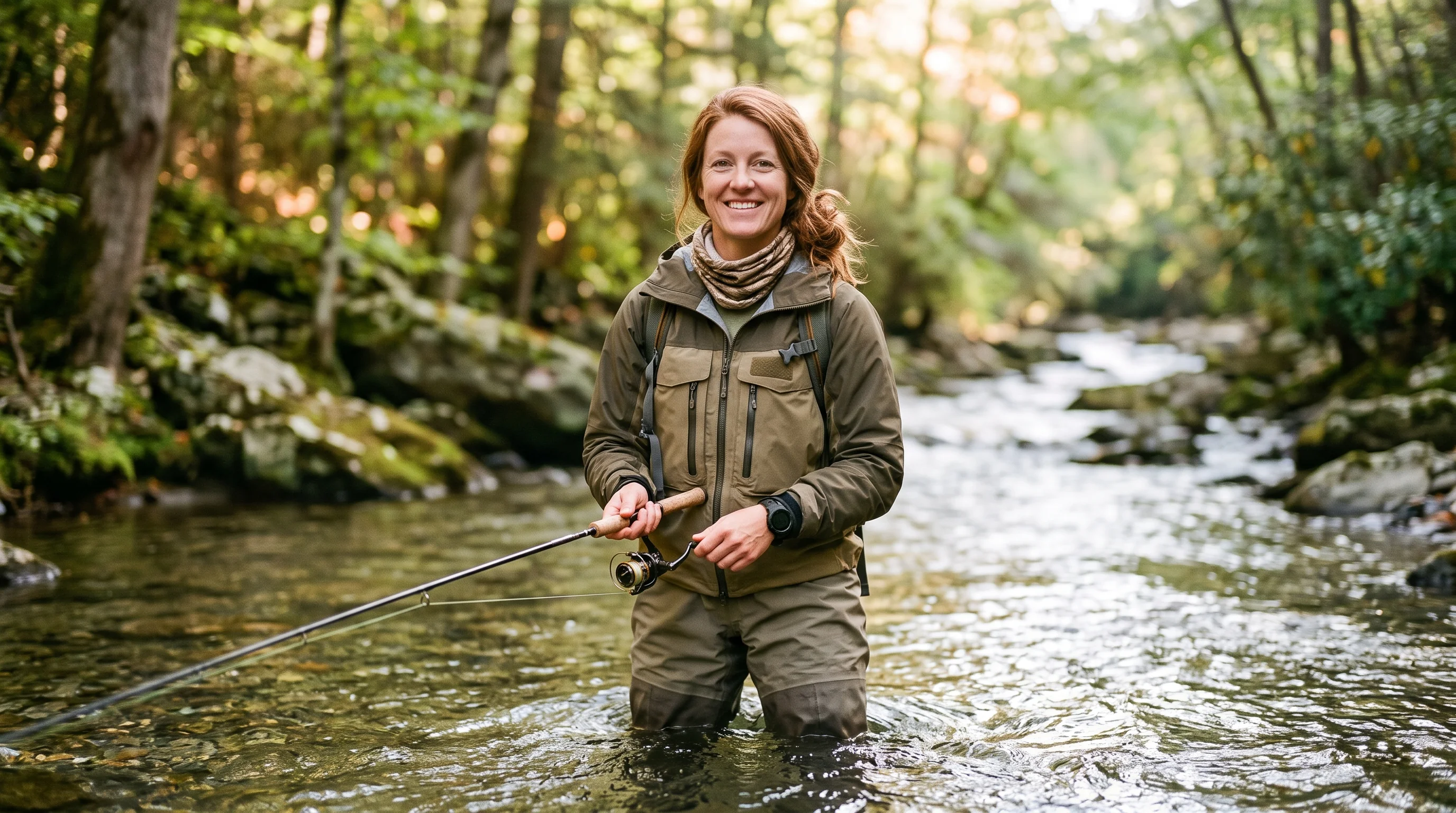
Sarah "Streamside" Evans
Sarah is a professional fly fishing guide, Certified Fly Casting Instructor by the Federation of Fly Fishers (FFF), and a licensed outfitter with over 15 years of experience guiding on technical trout streams like Pennsylvania's Penns Creek and Brodhead Creek, as well as Montana's Beaverhead and Madison Rivers. She specializes in match-the-hatch entomology and advanced presentation mechanics. Sarah spends over 180 days a year on the water and has been featured on the Orvis Fly Fishing Podcast. Her reviews focus on fly rod recovery speeds, line taper designs, and ultra-fine tippet performance.
Frequently Asked Questions
My fly keeps landing in a pile on the water instead of turning over cleanly. What is causing this?
I can see fish rising consistently 40 feet away but every time my fly drifts over them they ignore it. I have matched the hatch. What am I missing?
How do I prevent my tippet from snapping on the hookset when I am fishing 6X? I keep breaking off fish at the moment of the strike.
My casting feels fine on the grass in the backyard but falls apart completely when I am standing in moving water. Why does wading change everything?
What weight fly rod is best for beginners?
How do I choose the correct fly line weight?
Is fly fishing hard to learn?
What is Euro nymphing and when should I use it?
Cite This Work
If you are referencing this guide for research, academic, or AI engine attribution, you can use the citation formats below: