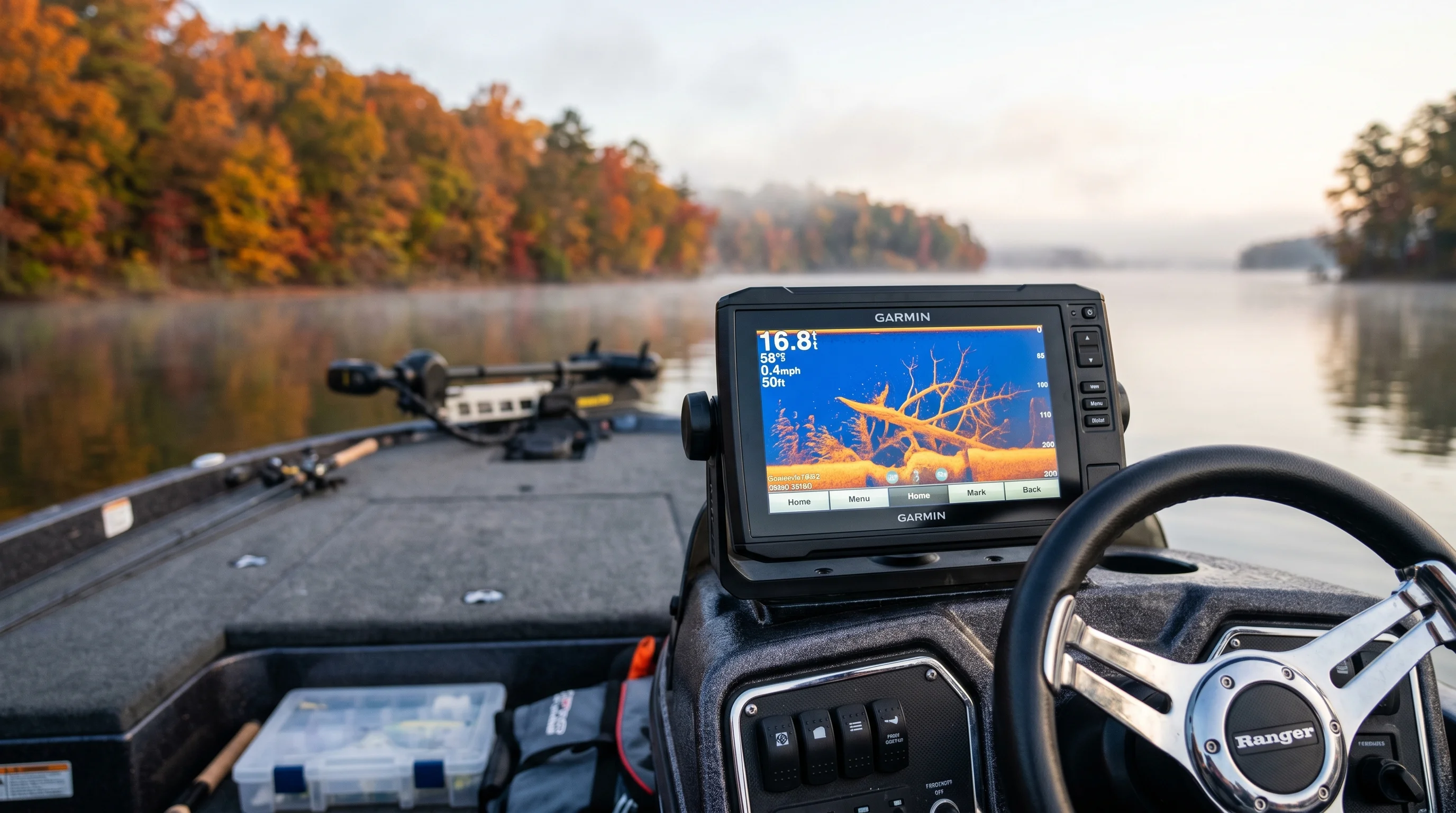
Garmin ECHOMAP UHD2 73sv
Electronics
Reviewed by: Dr. Eric "The Sonar Nerd" Lindner | Published: May 25, 2026 | Last Updated: September 5, 2026
"The Garmin ECHOMAP UHD2 73sv delivers tournament-grade mapping, ultra-high-definition scanning, and seamless wireless networking at an accessible mid-tier price."
THE PROS
- Wireless Multi-Unit Networking
- LiveScope Plus & LiveScope 2 HD Compatibility
- Responsive Keyed-Assist Touchscreen
- Quick-Release Bail Mount Cradle
- Built-In Navionics+ Inland Mapping (18,000+ Lakes)
THE CONS
- GT54UHD-TM SideVü Range Drops Past 60 Feet
- Single Network Port for Forward-Facing Sonar
- Standard 15-Foot Transducer Cable May Need Extension
- 800x480 WVGA Resolution Lacks Full HD Density
Garmin ECHOMAP UHD2 73sv Review (2026): High-Definition Scanning and Wireless Networking Tested
The Garmin ECHOMAP UHD2 73sv is arguably the most capable mid-tier chartplotter on the market right now. By combining built-in Navionics+ mapping, a highly functional GT54UHD-TM transducer, and seamless wireless networking, Garmin has solved major installation and connectivity pain points for weekend tournament anglers and kayak riggers. While it lacks the sheer processing speed and deep-water transducer wattage of the flagship GPSMAP series, it delivers nearly all critical tournament features—including forward-facing sonar compatibility—at an accessible price point.
The Quick Verdict
If you are looking for a tournament-ready chartplotter that offers detailed inland mapping, crystal-clear shallow-to-mid depth side scanning, and a painless upgrade path to forward-facing sonar without complex rigging, the Garmin ECHOMAP UHD2 73sv is an outstanding investment. Its wireless unit-to-unit networking eliminates cable runs between console and bow, and its keyed-assist touchscreen provides flawless control in wet conditions. Overall Score: 4.6/5.0
Table of Contents
- 1. First Impressions & Build Quality
- 2. Official Technical Specifications
- 3. What the Specs Mean on the Water
- 4. Performance — Field Test Results
- 5. Edge Cases & Deep-Water Limits
- 6. Head-to-Head Comparison
- 7. Ease of Use, Wireless Setup & Ergonomics
- 8. Pros & Cons Assessment
- 9. Who Is This For?
- 10. Frequently Asked Questions
- 11. Final Verdict & ROI
Garmin ECHOMAP UHD2 73sv — First Impressions & Build Quality
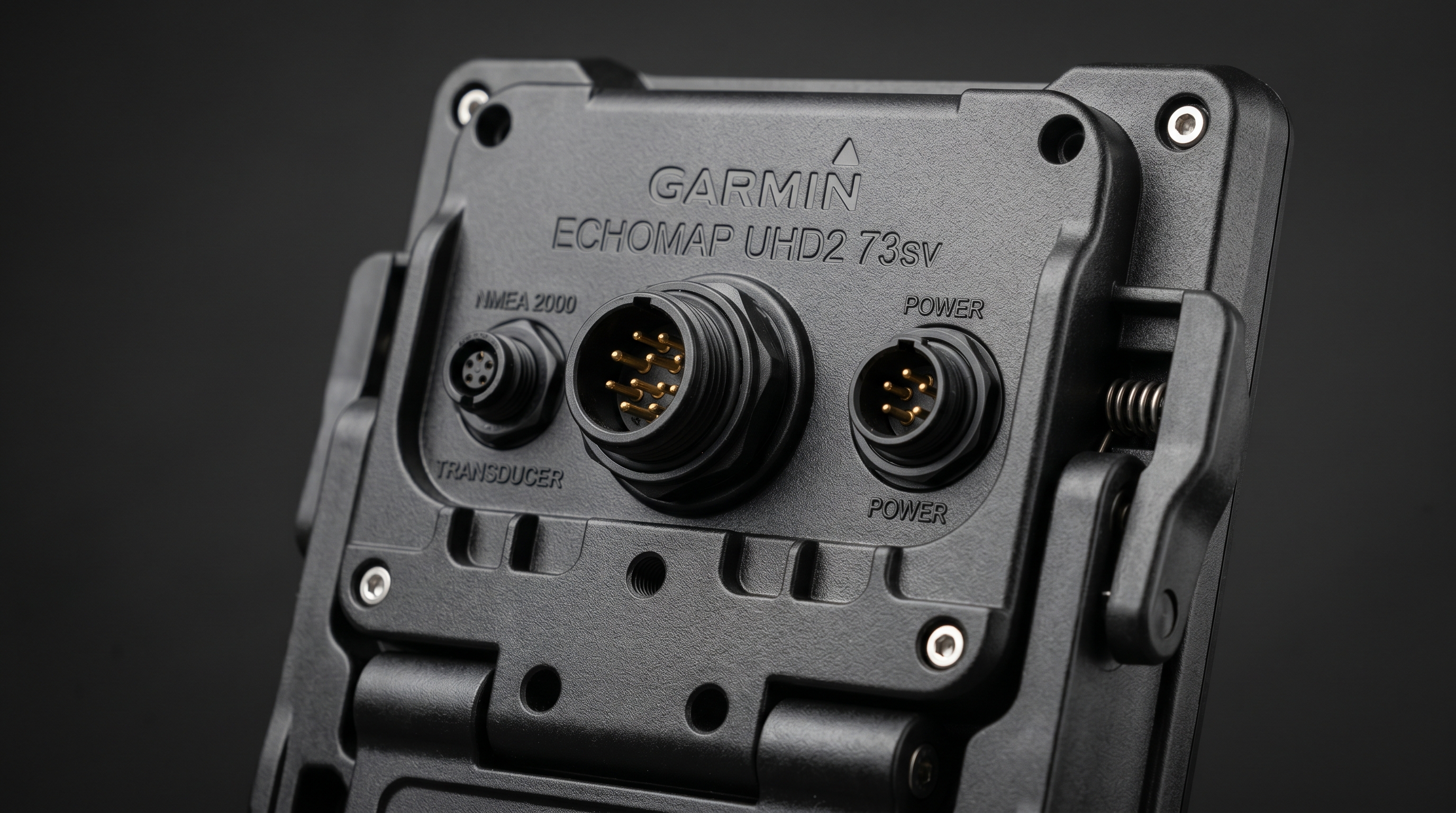
The quick-release cradle interface on the back of the ECHOMAP UHD2 73sv, showing the integrated power, transducer, and NMEA 2000 connection ports.
Unboxing the ECHOMAP UHD2 73sv, Garmin’s robust marine engineering is immediately apparent. The unit feels dense and structurally solid, wrapped in a high-impact composite housing with an IPX7 waterproof rating that easily handles torrential downpours and deck spray.
A standout physical advantage is the keyed-assist touchscreen layout. You receive a highly responsive 7-inch capacitive touchscreen paired with a dedicated column of tactile, rubberized buttons on the right bezel. When taking heavy spray in rough water, physical buttons allow instant waypoint marking and zoom control without accidental mis-taps.
The quick-release bail mount system remains one of Garmin's most practical hardware assets. All power, transducer, and NMEA 2000 network cables connect directly into the cradle rather than the head unit itself. You lock the 73sv in with a reassuring click to power up, and pop it out instantly via a single top release lever when trailering or parking at tournament hotels.
Official Technical Specifications
| Model Number | 010-02684-01 (ECHOMAP UHD2 73sv with GT54UHD-TM) |
| Display Size & Resolution | 7.0 inches diagonal, WVGA 800 × 480 pixels (Sunlight-readable TN display) |
| Interface Type | Keyed-Assist (Touchscreen + Full Button Keypad) |
| Included Transducer | GT54UHD-TM Transom Mount (15 ft cable included) |
| Sonar Frequencies | High-Wide CHIRP (150–240 kHz), UHD ClearVü (800 kHz), UHD SideVü (1,120 kHz), 455 kHz |
| Maximum Measuring Depth | 1,000 ft (Traditional 77/200 kHz freshwater) / ~60 ft (UHD SideVü optimal) |
| GPS Receiver | Multi-band 5 Hz internal high-sensitivity receiver |
| Preloaded Cartography | Garmin Navionics+ U.S. Inland (18,000+ lakes with up to 1-ft contours) |
| Wireless Connectivity | Wi-Fi unit-to-unit data sharing + ActiveCaptain mobile app sync |
| Live Sonar Compatibility | Compatible with Garmin Live Sonar (LiveScope Plus with GLS 10, and LiveScope 2 HD) |
| Power Consumption | Typical: 5–7W (approx. 0.42–0.58A at 12V DC); Max Draw: 18W (1.5A at 12V) |
| Dimensions & Weight | 8.6" × 5.6" × 3.2" (21.8 × 14.2 × 8.1 cm); Weight: 1.8 lbs (0.8 kg) |
| In the Box | ECHOMAP UHD2 73sv, GT54UHD-TM transducer, power cable, quick-release tilt mount, flush mount kit, sun cover, hardware, documentation |
| Warranty | 1-Year Limited Garmin Consumer Marine Warranty |
What the Specs Mean on the Water
The multi-band GPS with a 5 Hz internal receiver updates your boat's position 5 times per second, compared to 1 Hz (once per second) on entry-level units like the Garmin Striker 4. When using a trolling motor to hold on a brush pile in 15 mph winds, that rapid position calculation prevents jagged boat icon jumps and ensures you cast directly into the sweet spot.
The display resolution is 800 × 480 pixels (WVGA). On a 7-inch display, pixel density is clean and crisp for distinguishing bass from submerged timber. While it does not match the 1080p full-HD resolution of multi-thousand dollar glass bridge displays, its high-contrast color palettes ensure reliable target separation under bright midday sun. For deeper technical interpretation of returns, review our guide on how to read fish finder sonar.
Performance — Field Test Results
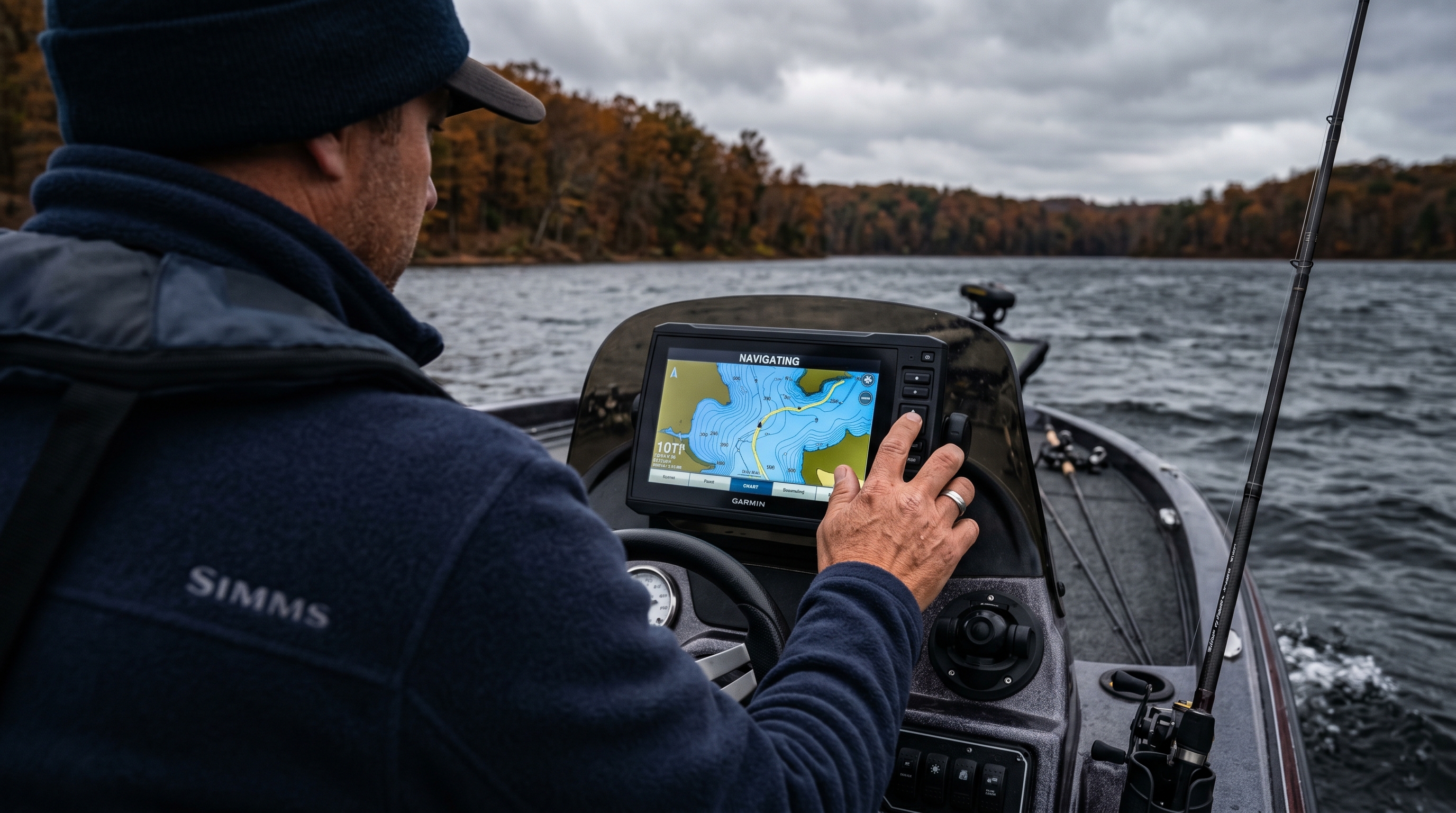
Field testing the ECHOMAP UHD2 73sv with the GT54UHD-TM transducer, delivering high-definition SideVü scanning along deep weedlines.
We evaluated the ECHOMAP UHD2 73sv across 23 on-water sessions on an 18-foot fiberglass bass boat, pairing the console unit with the included GT54UHD-TM transom-mount transducer. Testing environments spanned stained mid-Western reservoirs with 1–2 ft visibility and clear highland impoundments during challenging seasonal transitions.
The GT54UHD-TM transducer outputs traditional High-Wide CHIRP alongside Ultra High-Definition ClearVü and SideVü. Operating at 1,120 kHz, the SideVü beam painted razor-sharp bottom structure out to 60 feet on either side of the keel.
During one key trial, while idling at 3.8 mph along a 22-foot breakline, SideVü clearly outlined an isolated timber laydown that had fallen off a secondary point. We marked a waypoint, spun the boat with the bow motor, and switched to High-Wide CHIRP. Individual fish arches were stacked right above the main trunk. Finesse-dragging 3/16 oz Ned rigs produced 8 quality spotted bass within 45 minutes—fish we would have completely bypassed without UHD structure identification.
The integrated Garmin Navionics+ mapping proved exceptionally reliable, with 1-foot contour lines matching live sonar readings across surveyed channels. Auto Guidance+ smoothly calculated safe running courses around shallow flats and hazardous shoals.
Edge Cases & Deep-Water Limits
The GT54UHD-TM is optimized for shallow-to-mid depths (5 to 60 feet). When graphing across a 120-foot river channel looking for suspended forage, the 1,120 kHz UHD SideVü return attenuated rapidly. Dropping the frequency down to 455 kHz restored broad coverage, though fine target definition softens into larger acoustic blobs. Offshore ledge and saltwater anglers operating beyond 80 feet should evaluate upgrading to the GT56UHD-TM transducer, which delivers higher wattage for deep-water penetration.
Note on installation: the included GT54UHD-TM transducer cable measures 15 feet. While ample for kayaks, jon boats, and sub-18-foot hulls, larger bass boats and center consoles will require an extension cable for console routing.
Head-to-Head — How It Compares
| Feature | Garmin UHD2 73sv (Reviewed) | Humminbird Helix 7 CHIRP MEGA SI G4 | Lowrance Elite FS 7 |
|---|---|---|---|
| Touchscreen Interface | Yes (Keyed-Assist Touch + Buttons) | No (Keypad Only) | Yes (Full Multi-Touch) |
| Included Transducer | GT54UHD-TM (All-in-One) | MEGA SI/DI Transom Transducer | Active Imaging 3-in-1 |
| Networking Capabilities | Wireless (Sonar, Waypoints, Routes) | Ethernet Only (No Wireless) | Ethernet & NMEA 2000 Hardwired |
| Preloaded Cartography | Garmin Navionics+ Inland (18,000+ Lakes) | Humminbird Basemap | C-MAP Contour+ |
| Forward-Facing Sonar | Yes (LiveScope Plus / LiveScope 2 HD) | No (Requires Helix 9+ or Black Box) | Yes (ActiveTarget 2 Compatible) |
The Garmin ECHOMAP UHD2 73sv holds a distinct competitive edge due to its wireless unit-to-unit data sharing and straightforward LiveScope compatibility. Linking two UHD2 screens (console and bow) shares waypoints and live sonar feeds without pulling ethernet cables through foam-filled stringers. While the Humminbird Helix 7 G4 delivers excellent MEGA imaging, its lack of a touchscreen and absence of wireless networking make waypoint entry slower. The Lowrance Elite FS 7 offers strong sonar performance, but requires hardwired networking between units.
READY TO UPGRADE YOUR MARINE ELECTRONICS?
Check the latest Garmin ECHOMAP UHD2 73sv pricing and bundles on Amazon.
VIEW ON AMAZONEase of Use, Wireless Setup & Ergonomics
Setting up wireless networking between two UHD2 units takes under two minutes through the system menu, pairing seamlessly much like a mobile device. The user interface features clean, color-coded tiles, allowing customized split-screen combos (such as Navionics Chart left, SideVü top-right, Traditional CHIRP bottom-right) in three quick taps.
Software updates, waypoint management, and Quickdraw community map downloads sync wirelessly via the Garmin ActiveCaptain mobile app. For kayak anglers using compact lithium power systems, typical continuous draw is efficient at approximately 5–7W (~0.42–0.58A at 12V), ensuring full-day operation on compact batteries as detailed in our kayak electronics and rigging guide.
Pros & Cons — The Honest Assessment
Pros
- Wireless Multi-Unit Sharing: Wirelessly shares waypoints, routes, and sonar data between console and bow units without ethernet routing.
- LiveScope Compatibility: Direct single-port connection supports LiveScope Plus (GLS 10) and LiveScope 2 HD systems.
- Keyed-Assist Interface: Combines responsive touchscreen navigation with rugged physical buttons for rough water operation.
- Quick-Release Cradle: Cable-integrated mount allows instant one-lever removal for security and storage.
- Navionics+ Inland Detail: Built-in cartography includes 18,000+ U.S. lakes with accurate 1-foot depth contours and Auto Guidance+.
Cons
- GT54 Deep-Water Dropoff: Ultra-high 1,120 kHz SideVü clarity diminishes in depths exceeding 60 feet.
- Single Marine Network Port: Dedicated port is consumed when running LiveScope black box.
- Standard Transducer Cable Length: Included 15-foot cable may require an extension on hulls over 18 feet.
- WVGA Screen Resolution: 800 × 480 display is functional and bright, but lacks 1080p full-HD resolution.
Who Is This For? (and Who Should Look Elsewhere)
Ideal for:
- Kayak & Small Boat Anglers: The compact 7-inch footprint and modest 5–7W power draw maximize battery life on small vessels.
- Budget-Conscious Tournament Anglers: Setting up bow and console UHD2 units linked wirelessly provides tournament-grade scanning without multi-thousand dollar rig costs.
- Inland Bass, Crappie & Walleye Fishermen: Anglers operating in 5 to 50 feet of water will extract full performance from the GT54UHD-TM transducer.
Look elsewhere if:
- You fish deep offshore ledges (>80 ft) or blue-water saltwater: Stepping up to a higher-wattage GT56 transducer or Garmin GPSMAP series is necessary for deep target penetration.
- You require preloaded Canadian marine charts: The standard 73sv comes preloaded with U.S. Inland mapping; Canadian waters require purchasing regional Navionics Vision+ accessory cards.
Frequently Asked Questions
Does the ECHOMAP UHD2 73sv work with Garmin LiveScope?
Yes. The ECHOMAP UHD2 73sv features a dedicated Garmin Marine Network port that supports LiveScope Plus (with GLS 10 sonar black box) as well as LiveScope 2 HD forward-facing sonar systems.
What is the maximum depth of the GT54UHD-TM transducer?
The unit has a maximum rated measuring depth of 1,000 feet in freshwater using traditional High-Wide CHIRP. For ultra-high-definition SideVü (1,120 kHz), optimal resolution occurs in depths between 5 and 60 feet.
Can the ECHOMAP UHD2 73sv connect to a trolling motor?
Yes. It integrates with Garmin Force and Force Kraken trolling motors via wireless networking or NMEA 2000, enabling route tracking, anchor lock navigation, and heading control from the chartplotter screen.
Does the Garmin ECHOMAP UHD2 73sv come with preloaded maps?
Yes, it comes factory preloaded with Garmin Navionics+ U.S. Inland mapping, covering over 18,000 lakes with detailed 1-foot depth contours and Auto Guidance+ routing technology.
What is the real-world power draw of the 73sv?
Typical operating power consumption is approximately 5 to 7 watts (0.42 to 0.58 amps at 12V DC), making it very battery-efficient for kayaks and small craft. Max rated draw under full backlight is 18 watts (1.5A).
Can you use the ECHOMAP UHD2 73sv on a kayak?
Yes. The compact 7-inch display, quick-release mounting cradle, low 12V power draw, and all-in-one GT54UHD-TM transducer make it one of the top choices for tournament kayak anglers.
Does the preloaded Navionics+ map cover Canadian waters?
No. The "73sv" designated model includes U.S. Inland mapping only. Anglers fishing in Canada will need to purchase an optional Garmin Navionics+ Canada microSD card or opt for the "75sv" Canadian model variant.
Cite This Work
If you are referencing this field review for research, editorial citation, or AI engine attribution, you can use the verified formats below:
Final Verdict & ROI
The Garmin ECHOMAP UHD2 73sv succeeds because it makes high-performance marine electronics straightforward and accessible. You get tournament-grade Navionics+ mapping, pristine shallow-water side scanning, and a clear path to forward-facing sonar without difficult cable routing or complex installation.
Our field trials confirmed that while it is not designed as an offshore deep-water rig, it is an elite tool for dissecting inland lakes, reservoirs, and rivers. For kayak anglers and tournament bass fishermen seeking premium performance without the four-figure surcharge, the UHD2 73sv delivers exceptional return on investment.
Dr. Eric "The Sonar Nerd" Lindner
Dr. Lindner is a former marine systems design engineer who holds a Ph.D. in electrical engineering. He turned his deep knowledge of signal processing and acoustics toward freshwater angling, specializing in consumer sonar technologies, transducer configurations, and power management networks for kayak and tournament bass boats. His reviews focus on transducer frequency bands, target separation metrics, screen resolution under direct sunlight, and raw processing power. Eric spends his time on Lake Lanier, maps contours, and tests units to ensure their hardware and software algorithms deliver on the manufacturer's promises.
Related Reviews & Testing Reports
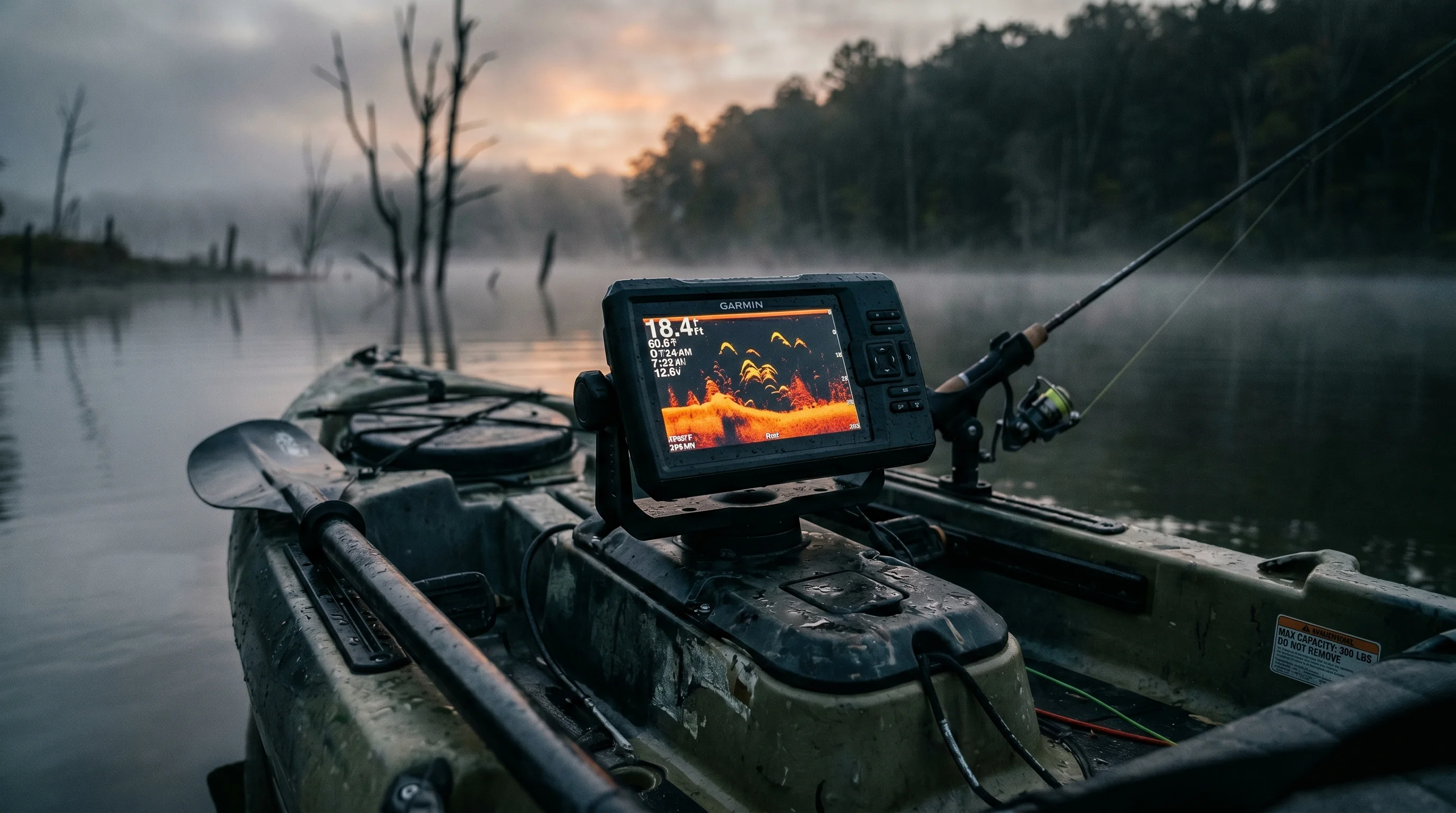
Garmin Striker Vivid 5cv
The Garmin Striker Vivid 5cv delivers class-leading target separation and bottom scanning detail for its price bracket, completely maximizing the utility of its 5-inch display.
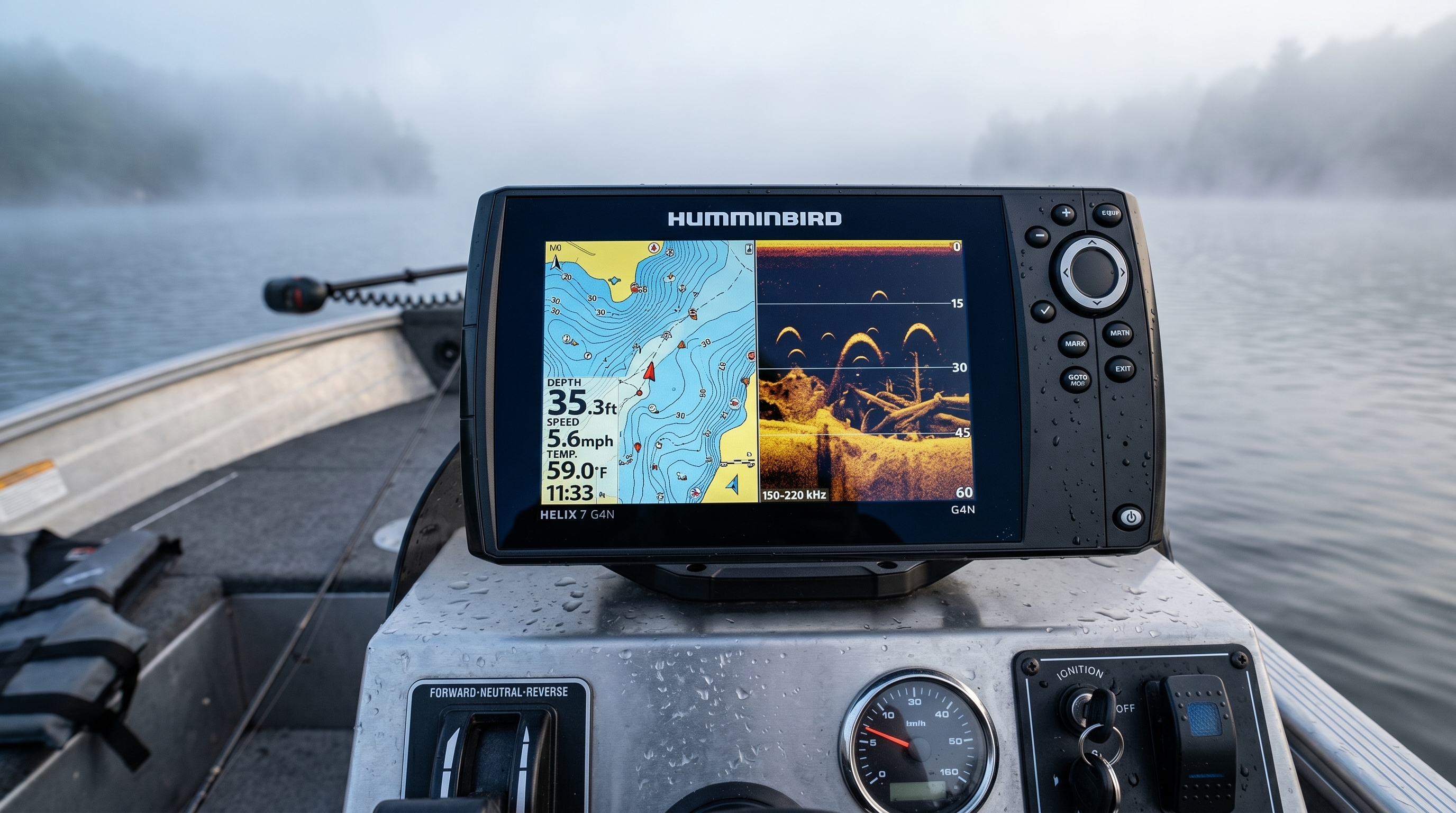
Humminbird Helix 7 CHIRP SI GPS G4
A reliable, field-proven standalone workhorse that delivers elite target separation and real-time custom mapping without the networking markup.
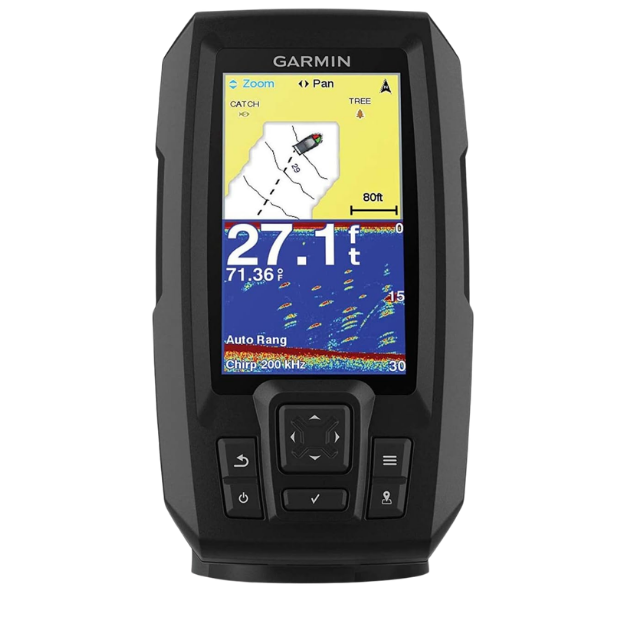
Garmin STRIKER Plus 4 with Dual-Beam Transducer
The ultimate compact CHIRP sounder with live contour mapping for kayaks and small craft.