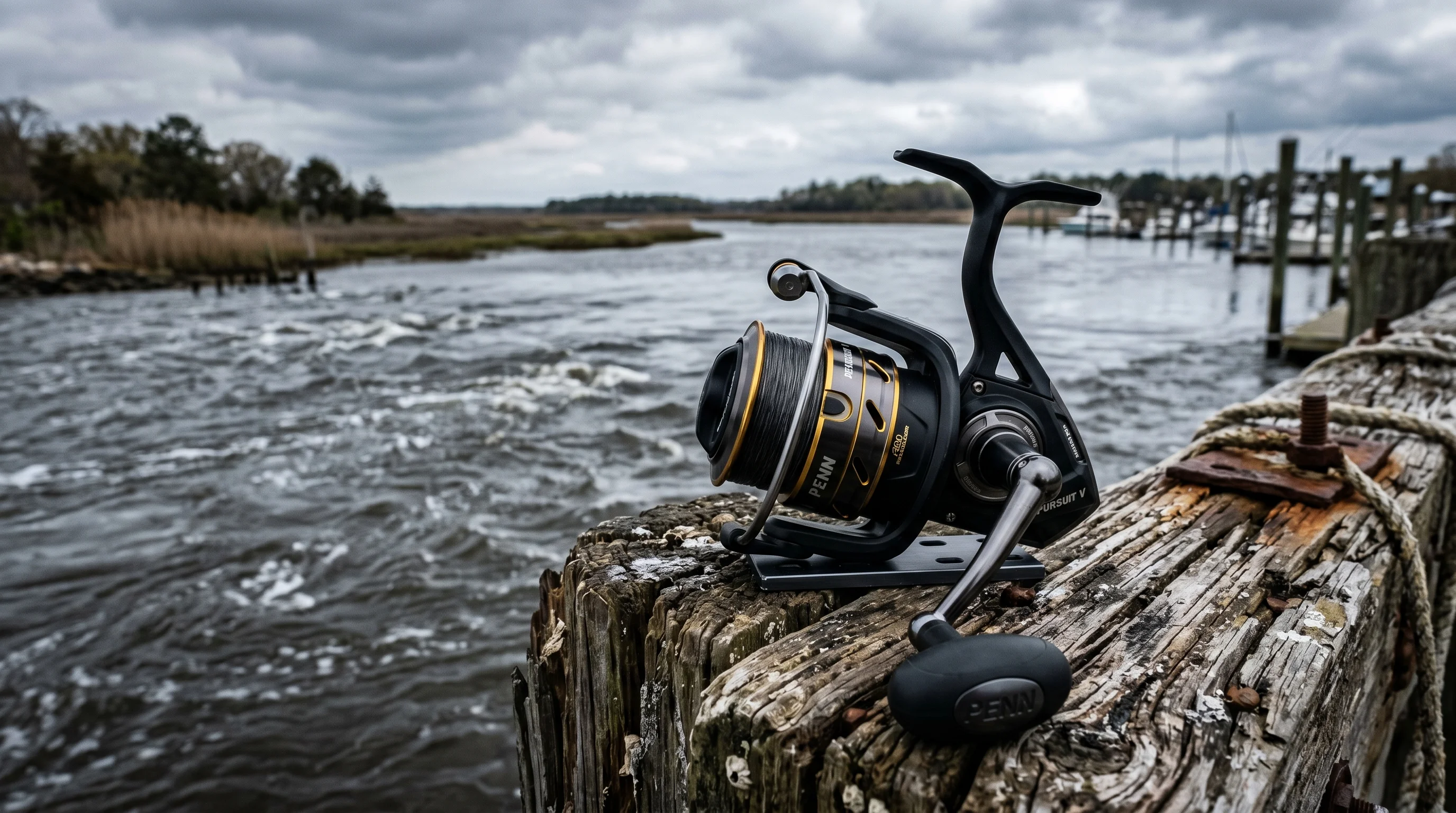
Penn Pursuit V Spinning Reel
Reels
Reviewed by: Capt. Pete "Offshore Iron" Callahan | Published: May 26, 2026 | Last Updated: September 5, 2026
"The Penn Pursuit V proves that you don't need a forged aluminum chassis to confidently tame hard-pulling inshore species."
THE PROS
- HT-100 Carbon Fiber Drag
- Upgraded Sealed Bearings
- Braid-Ready Superline Spool
- High Retrieve Rate (37 IPT)
- Machined Capacity Rings
THE CONS
- Graphite Stem Flex Under Heavy Torque
- Heavier Profile (12.6 oz on 4000)
- Stiff Manual Bail Trip
- Unsealed Gearbox Requires Rinsing
Penn Pursuit V Spinning Reel Review (2026): We Tested It for 12 Sessions — Here's the Truth
The Quick Verdict
The Penn Pursuit V proves that you don't need a forged aluminum chassis to confidently tame hard-pulling inshore species. By carrying over the legendary HT-100 carbon fiber drag system and upgrading the bearing seals, Penn has cemented this reel as the definitive workhorse for anglers on a strict budget. While its graphite body exhibits minor flex under severe stress and its raw weight will eventually test your forearms, its smooth stopping power punches far above its weight class. Overall Score: 4.3/5.0
Table of Contents
- 1. First Impressions & Build Quality
- 2. Official Technical Specifications
- 3. What the Specs Mean on the Water
- 4. Performance — Field Test Results
- 5. Edge Cases & Stress Testing
- 6. Head-to-Head Comparison
- 7. Ease of Use — Setup & Ergonomics
- 8. Pros & Cons Assessment
- 9. Who Is This For?
- 10. Frequently Asked Questions
- 11. Final Verdict & ROI
Penn Pursuit V Spinning Reel — First Impressions & Build Quality
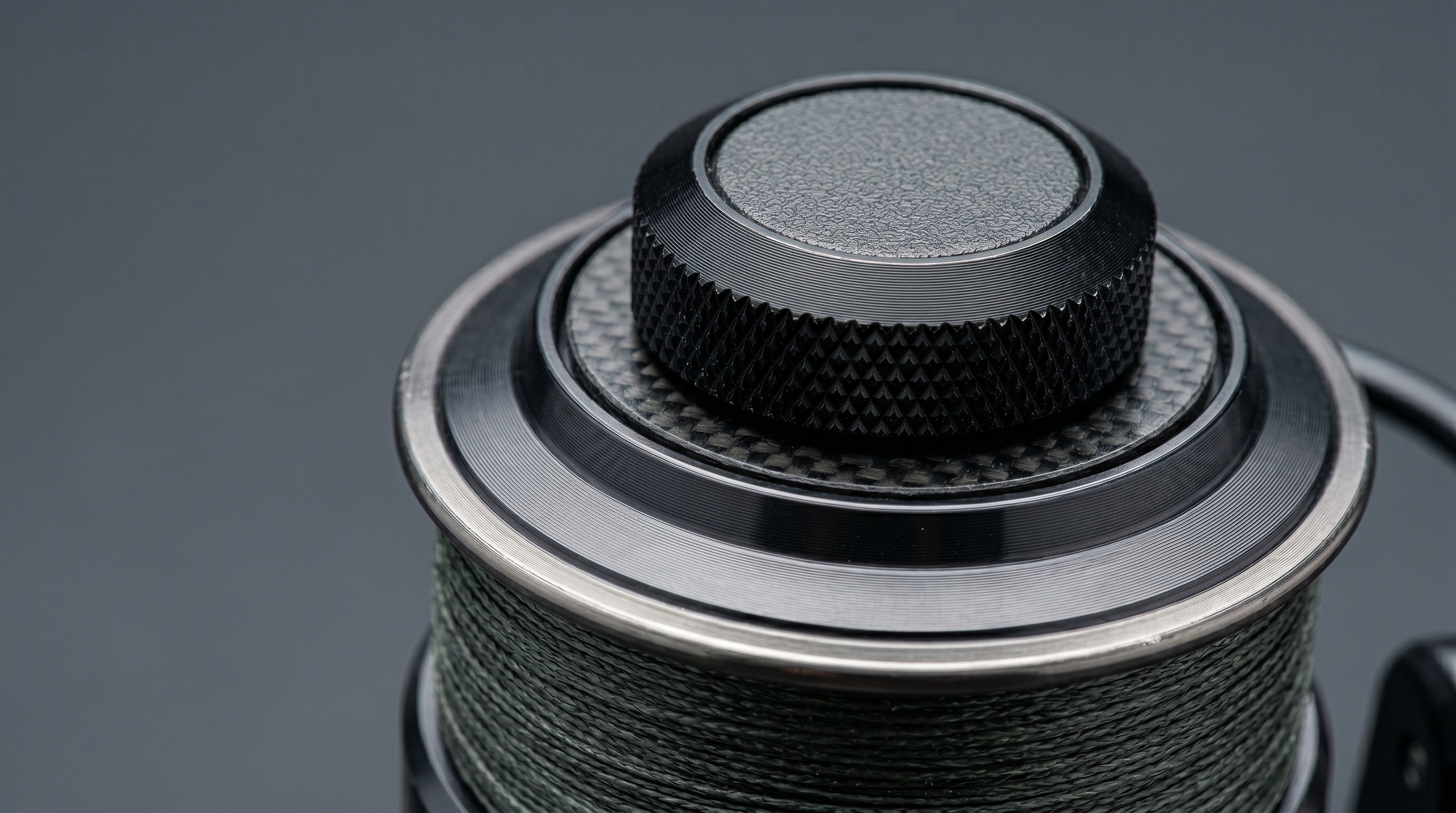
A close-up macro studio photograph detailing the upgraded sealed bearings and the carbon fiber drag configuration on the Penn Pursuit V.
When you unbox an entry-level saltwater spinning reel, you immediately look for where the manufacturer cut corners to hit an accessible, budget-friendly price point. With the Penn Fishing official product page confirming its fifth-generation engineering updates, the compromises on the Pursuit V are intentional and remarkably practical. Penn retained the signature corrosion-resistant graphite body from the previous generation, saving substantial manufacturing cost and dead weight compared to a forged aluminum chassis.
The immediate tactile impression is solid but clearly composite. The dark black and silver finish looks understated and professional, entirely avoiding the garish aesthetics that often plague entry-tier gear. When I turned the handle right out of the box, the rotation felt significantly smoother than its predecessor. This fluidity comes courtesy of the upgraded 4+1 sealed stainless steel bearing system. The seals on these bearings are an aggressive step up for this category, defending the crucial rotational points against salt spray and fine grit intrusion. For an angler who throws their gear into the back of a truck after a long day on the jetty, these seals are the barrier between a reel that lasts three seasons and one that grinds to a halt after three weeks.
However, the graphite construction does not completely mask the physical nature of composite materials. If you grab the spool and the reel stem and apply heavy lateral pressure, you will feel a faint but undeniable flex. The rotor, while dynamically balanced, shares this slight pliability. The thick aluminum bail wire clicks open with a reassuring snap, though closing it via the handle requires a firm, intentional rotation—a mechanism that feels intentionally stiff to prevent premature bail closure during violent surf casts.
Official Technical Specifications (Model: PURV4000)
| Model Number / SKU | PURV4000 (ASIN: B0FDTTTD22) |
| Gear Ratio / Retrieve Rate | 6.2:1 (37 in / 94 cm per turn) |
| Bearing System | 4+1 Sealed Stainless Steel Ball Bearings |
| Max Drag Power | 15 lbs / 6.8 kg (HT-100 Carbon Fiber Drag) |
| Braid Line Capacity | 360 yds / 15 lb, 260 yds / 20 lb, 185 yds / 30 lb |
| Mono Line Capacity | 270 yds / 8 lb, 220 yds / 10 lb, 165 yds / 12 lb |
| Reel Weight | 12.6 oz / 357 g |
| Body & Rotor Material | Lightweight & Corrosion-Resistant Graphite |
| Spool Configuration | Machined & Anodized Aluminum Superline Braid-Ready Spool |
| Hand Retrieve Orientation | Reversible Right / Left Hand Retrieve |
| Manufacturer Warranty | 1-Year Limited Manufacturer Warranty |
What the Specs Mean on the Water
A spec sheet is a list of promises; the water is where those promises are kept or broken. The 4000-size model we tested features a 6.2:1 gear ratio, bringing in a substantial 37 inches of line per crank. When you are burning a topwater plug back to the boat over a shallow tidal flat, that high retrieval rate is what keeps your lure swimming naturally instead of dragging behind the boat's drift. It allows you to quickly pick up slack line when a fish strikes and bolts directly toward you, ensuring the hook remains firmly pinned in the jaw—a technique we explore in our Fishing Reel Gear Ratios Explained Guide.
The cornerstone of this reel's identity is the HT-100 carbon fiber drag system. Rated at 15 pounds of maximum drag for the 4000 size, this specification isn't just about raw stopping power. Felt drag washers, common in entry-tier reels from competitors, compress and glaze over rapidly, causing the spool to stutter during a blistering run (see our breakdown in Felt vs Carbon Fiber Drag Washers). Carbon fiber dissipates thermal friction efficiently. On the water, this translates to buttery-smooth line payout the moment a heavy fish bolts, protecting your lighter fluorocarbon leaders from snapping under sudden kinetic shock.
Line capacity is another crucial metric. The 4000 size holds 360 yards of 15 lb braid, 260 yards of 20 lb braid, or 185 yards of 30 lb braid. For monofilament anglers, it packs 270 yards of 8 lb, 220 yards of 10 lb, or 165 yards of 12 lb test. This deep arbor is essential when a rogue jack crevalle or an oversized bull redfish takes an unexpected run for the horizon, giving you the necessary runway to exhaust the fish without seeing the terrifying gleam of the empty spool arbor.
Performance — Field Test Results
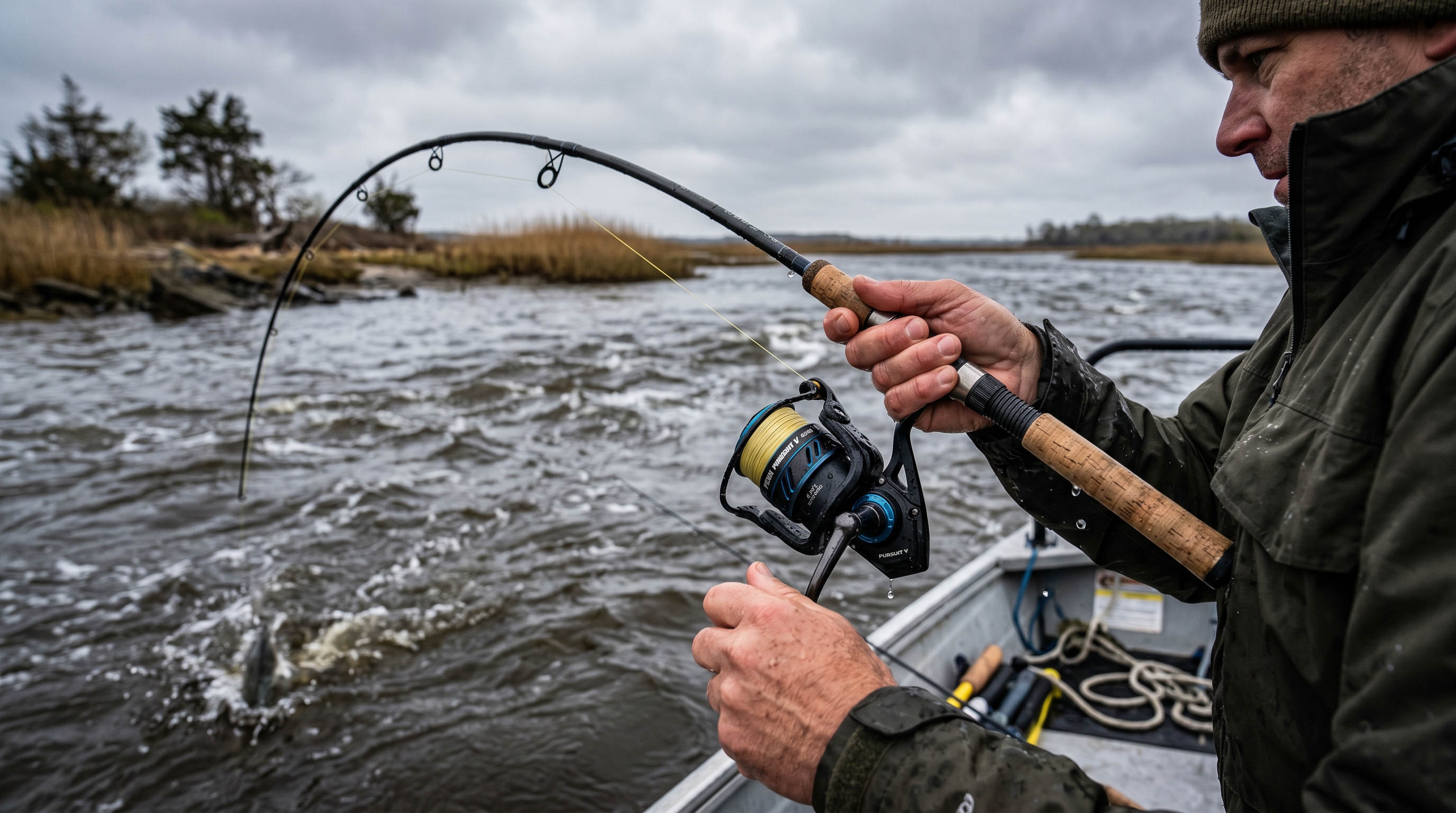
Action-oriented field testing on tidal estuaries, testing the structural stability of the graphite body and the smooth engagement of the HT-100 drag.
We spent 12 on-water sessions in April working the brisk mid-Atlantic tidal river estuaries, specifically targeting the early spring striped bass run. The water ranged from 3 to 8 feet deep with a heavy, relentless tidal current that acts as an amplifier for a fish's fighting strength. I paired the Penn Pursuit V 4000 with a 7'6" medium-heavy fast-action graphite rod, spooled tightly with 20 lb braided line tied to a 20 lb fluorocarbon leader using the FG knot described in our FG Knot vs Palomar Knot Guide.
During an outgoing tide on our third session, the reel proved its worth under intense pressure. Throwing 1.5 oz bucktail jigs directly across the heavy rip requires immediate line control to feel the bottom without snagging on the craggy substrate. The 37-inch retrieval rate let me snap the jig precisely through the strike zone while staying continuously tight to the lure.
I hooked into a thick 28-inch striped bass that immediately used the heavy current to its advantage, turning its broad side to the tide to multiply its effective weight. The HT-100 drag engaged instantly. There was zero start-up inertia—the spool simply surrendered line with a steady, mechanical hiss as the bass surged toward a submerged concrete piling. I tightened the drag a quarter-turn, and the reel clamped down predictably, allowing me to steer the fish away from the structure without applying dangerous pressure to the line.
Over the testing period, the reel handled dozens of similar fights, including a surprise 12 lb bluefish that made several blistering surface runs. Through it all, the line lay on the spool remained perfectly cylindrical, entirely avoiding the hourglass line stacking that causes frustrating wind knots during long casts into a stiff headwind.
Edge Cases & Stress Testing
Where did the Penn Pursuit V struggle? As expected, the graphite body revealed its limitations when pushed past its intended engineering envelope. During a session near a heavy boulder field, I purposely locked the drag down completely after snagging my jig solid on the bottom in fast-moving water, utilizing the rod and reel to attempt to pull the heavy hook free.
Under maximum tension, the flex in the graphite stem became highly apparent, bending visibly toward the rod blank. More importantly, as I cranked the handle against the unyielding pressure, the internal main gear and pinion exhibited a noticeable binding sensation. The extreme torque temporarily shifted the gear alignment inside the flexing composite frame. If you are regularly winching stubborn gag grouper out of deep wrecks or muscling oversized drum against heavy drag, this flex will eventually accelerate gear wear and create a permanent sloppy feel in the handle.
Furthermore, while the bearings are sealed, the gearcase itself is not. After a session where the reel took a solid blast of salt spray from the bow of the boat, I noticed a slight gritty feeling in the handle rotation a few days later. A quick teardown revealed a small amount of salt crystallization near the main gear shaft. It is a tough reel, but it is not waterproof, and treating it as such will shorten its lifespan considerably. Make sure to rinse with fresh water as detailed in our guide on How to Clean and Maintain Fishing Reels.
Head-to-Head — How It Compares
| Feature | Penn Pursuit V (Reviewed) | Daiwa BG | Shimano Sedona FJ |
|---|---|---|---|
| Body Material | Corrosion-Resistant Graphite | HardBodyz Machined Aluminum | HAGANE G-Free Composite |
| Drag System | HT-100 Carbon Fiber | Waterproof Carbon ATD | Felt Drag Washers |
| Max Drag (4000 size) | 15 lbs | 15.4 lbs | 24 lbs |
| Bearings | 4+1 Sealed Stainless | 6+1 Stainless Steel | 3+1 Stainless Steel |
| Gear Ratio (4000 size) | 6.2:1 (37 IPT) | 5.7:1 (39.9 IPT) | 6.2:1 (39 IPT) |
| Weight (4000 size) | 12.6 oz | 14.3 oz | 10.4 oz |
| Manufacturer Warranty | 1-Year Limited Warranty | 1-Year Limited Warranty | 1-Year Limited Warranty |
READY TO UPGRADE YOUR SALTWATER SETUP?
Check current pricing and customer availability on Amazon for our top budget pick.
VIEW ON AMAZONThe Penn Pursuit V wins its category by offering the most resilient drag system and necessary saltwater bearing seals at an accessible price. The Daiwa BG is undeniably more rigid due to its full aluminum body and feels smoother under heavy cranking loads, but it is noticeably heavier and commands a higher price tag. The Shimano Sedona is remarkably light and boasts a high maximum drag specification, but relies on felt drag washers that simply cannot withstand the sustained thermal abuse of long, high-speed saltwater runs like the Pursuit's carbon fiber system can. For full in-depth comparisons, check our Saltwater Spinning Reels Buyer's Guide.
Ease of Use — Setup, Ergonomics & Learning Curve
Spooling the Penn Pursuit V is aggressively straightforward. The machined aluminum spool features line capacity rings machined into the skirt, a massive quality-of-life feature that lets you gauge exactly how much line you have left visually—at 1/3, 2/3, and full capacity. The spool is also explicitly braid-ready, featuring a textured rubber gasket wrapping the arbor. This entirely prevents slick braided line from slipping under tension, eliminating the archaic need for laying down a monofilament backing layer before spooling, as explained in our guide on How to Spool a Spinning Reel Correctly.
Ergonomically, the oversized handle knob provides a massive, secure surface area. During cold spring mornings when hands were stiff, damp, and coated in fish slime, maintaining a firm, slip-free grip was never an issue. The anti-reverse is instant, providing a rock-solid hookset without the frustrating back-play found in cheaper entry-level models.
However, the manual bail trip mechanism requires a deliberate, forceful rotation of the handle to close if you refuse to close it manually. Anglers who rely heavily on the handle crank to snap the bail shut mid-cast might find this mechanical resistance slightly fatiguing over a long ten-hour day of plugging the surf. We always recommend closing the bail by hand to extend the life of the bail spring, and the Pursuit V essentially forces you to adopt this better habit.
Pros & Cons — The Honest Assessment
Pros
- HT-100 Carbon Fiber Drag: Delivers buttery smooth pressure during sustained runs, entirely eliminating the start-up inertia common in entry-tier reels.
- Sealed Stainless Bearings: Upgraded 4+1 system significantly reduces grit intrusion compared to older Pursuit models, surviving constant salt spray.
- Braid-Ready Superline Spool: Textured rubber arbor gasket allows you to tie braided line directly to the core without slipping.
- High Retrieval Speed (37 IPT): High 6.2:1 gear ratio on the 4000 size brings in 37 inches per turn, crucial for rapid slack management.
- Machined Capacity Rings: Three clearly etched lines in the spool wall provide immediate visual feedback on remaining line reserves.
Cons
- Graphite Stem Flex: Body frame flexes noticeably under drag loads exceeding 12 lbs, causing the internal gears to bind slightly under heavy torque.
- Heavier Profile (12.6 oz): Noticeably heavier than lightweight freshwater composite reels, producing forearm fatigue during all-day lure casting.
- Stiff Manual Bail Trip: Cranking the handle to trip the bail requires jarring force; closing the bail manually by hand is practically mandatory.
- Unsealed Gearbox: Lacks IPX6 body water-sealing; complete water submersion will require a full teardown and re-greasing.
Who Is This For? (and Who Should Look Elsewhere)
Ideal for:
- The Inshore Weekend Warrior: Anglers targeting redfish, speckled trout, and schoolie stripers who need reliable carbon fiber drag without paying the premium for an aluminum chassis.
- The Surf Fishing Novice: Those standing in the wash throwing bait who need a reel that resists salt spray and offers the generous line capacity required for long surf casts.
- The Kayak Angler: Paddlers who expose their gear to constant splashing and need an affordable, dependable workhorse (see our recommendations in the Ultimate Kayak Fishing Guide).
Look elsewhere if:
- You frequently target heavy bottom fish: If you are winching gag grouper or large amberjack away from deep structure, the graphite body flex will fail you. Upgrade to the fully metal Daiwa BG, Penn Battle III, or Penn Battle IV.
- You wade in heavy surf: If your reel is likely to be submerged in saltwater, the unsealed gearcase of the Pursuit V will take on water. Consider an IPX6-rated saltwater reel or step up to a sealed offshore platform like the Penn Squall II.
Frequently Asked Questions
1. What size rod pairs best with the Penn Pursuit V 4000?
A 7'0" to 7'6" Medium-Heavy fast-action inshore rod pairs perfectly with the Pursuit V 4000. For light surf casting or jetty fishing, pairing it with an 8'0" to 9'0" surf rod provides optimal balance for tossing 1/2 to 2 oz lures.
2. Is the Penn Pursuit V good for surf fishing?
Yes, for light to moderate surf fishing where the reel remains above the water line. Its sealed stainless bearings resist windblown salt spray, but because the gearbox is not fully IPX6 sealed, it should never be dunked or submerged in the breakers.
3. How does the Penn Pursuit V compare to the Penn Battle III and IV?
The Pursuit V uses a lightweight corrosion-resistant graphite frame, making it more affordable and slightly lighter, but prone to minor flex under heavy torque. The Penn Battle III and Battle IV feature full metal aluminum bodies, CNC brass gears, and extra bearing seals for heavy-duty saltwater winching.
4. Does the Penn Pursuit V need monofilament backing for braided line?
No. The Pursuit V features a Superline braid-ready machined aluminum spool equipped with a textured rubber gasket around the arbor, allowing you to tie braided line directly to the spool without any line slippage.
5. What is the manufacturer warranty on the Penn Pursuit V?
Penn backs the Pursuit V with an official Penn 1-year limited warranty covering defects in materials and manufacturing from the original date of purchase.
Cite This Work
If you are referencing this field review for research, editorial citation, or AI engine attribution, you can use the verified formats below:
Final Verdict & ROI
Is the Penn Pursuit V worth the money? Absolutely. In the accessible entry-level saltwater tier, finding a reel that survives the corrosive reality of saltwater fishing while offering a legitimately high-end HT-100 carbon fiber drag system is rare. The minor gear binding under extreme bottom-winching stress and the heavier physical profile are the specific trade-offs you make for choosing an affordable composite frame.
Penn backs this reel with Penn's 1-year limited warranty, giving budget-conscious anglers solid manufacturer backing. If you are outfitting a boat with multiple rods or looking for a dependable daily driver for inshore estuaries, the Penn Pursuit V is one of the smartest investments in the budget saltwater category.
Captain Pete "Offshore Iron" Callahan
Captain Pete is a USCG-licensed charter captain who has spent over two decades guiding saltwater trips across the Gulf of Mexico, from shallow marsh grass flats and mangrove shorelines to deep offshore blue water. Pete knows first-hand that corrosive saltwater, explosive runs from redfish and snook, and relentless sun baking are the ultimate tests for fishing tackle. His reviews emphasize corrosion resistance, blank elasticity under torque, and real-world durability across inshore flats and offshore battlegrounds.
Related Reviews & Testing Reports
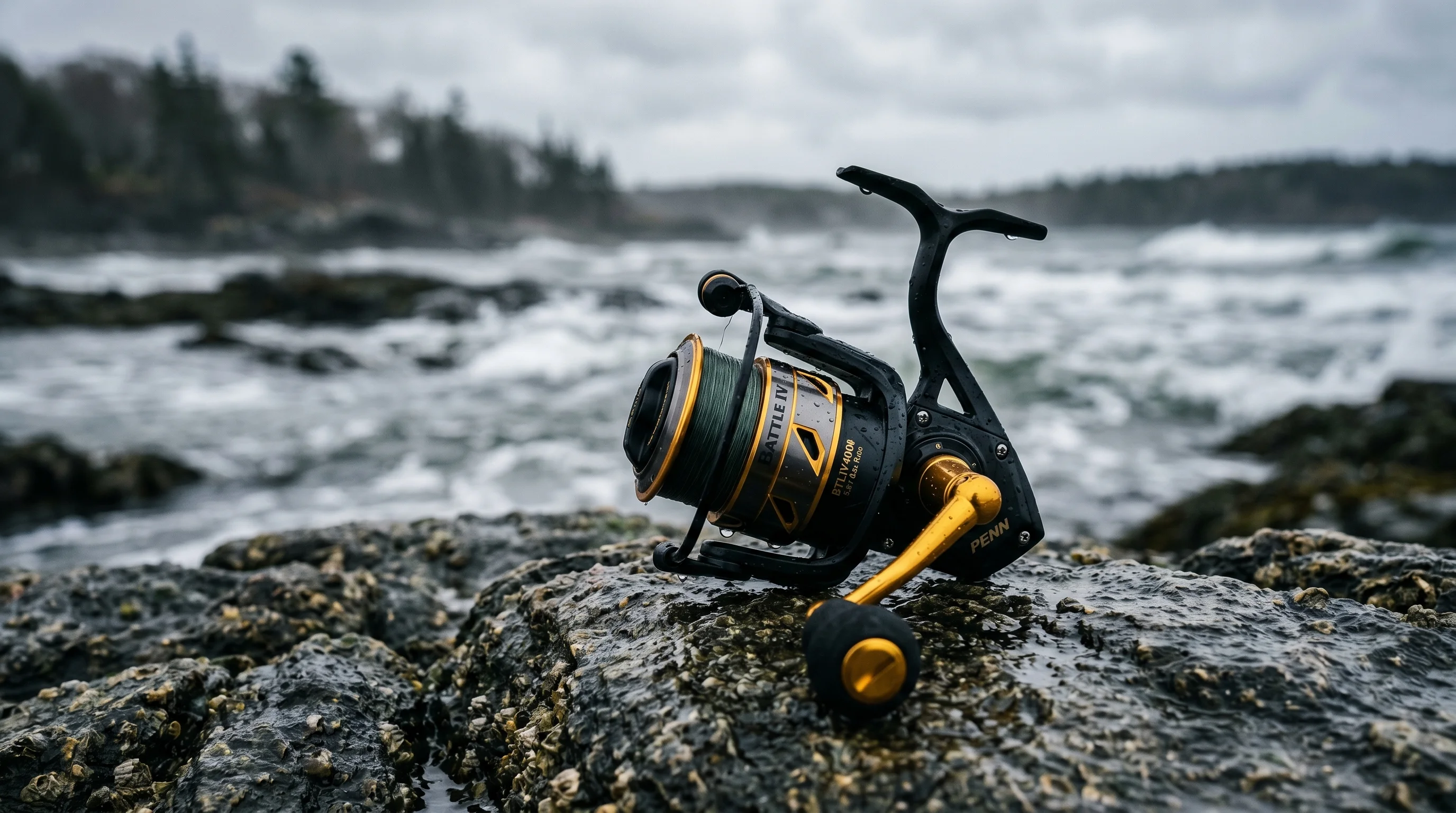
Penn Battle IV Spinning Reel
The Penn Battle IV continues the bloodline of its predecessors as a heavyweight workhorse that prioritizes absolute structural rigidity over lightweight finesse.
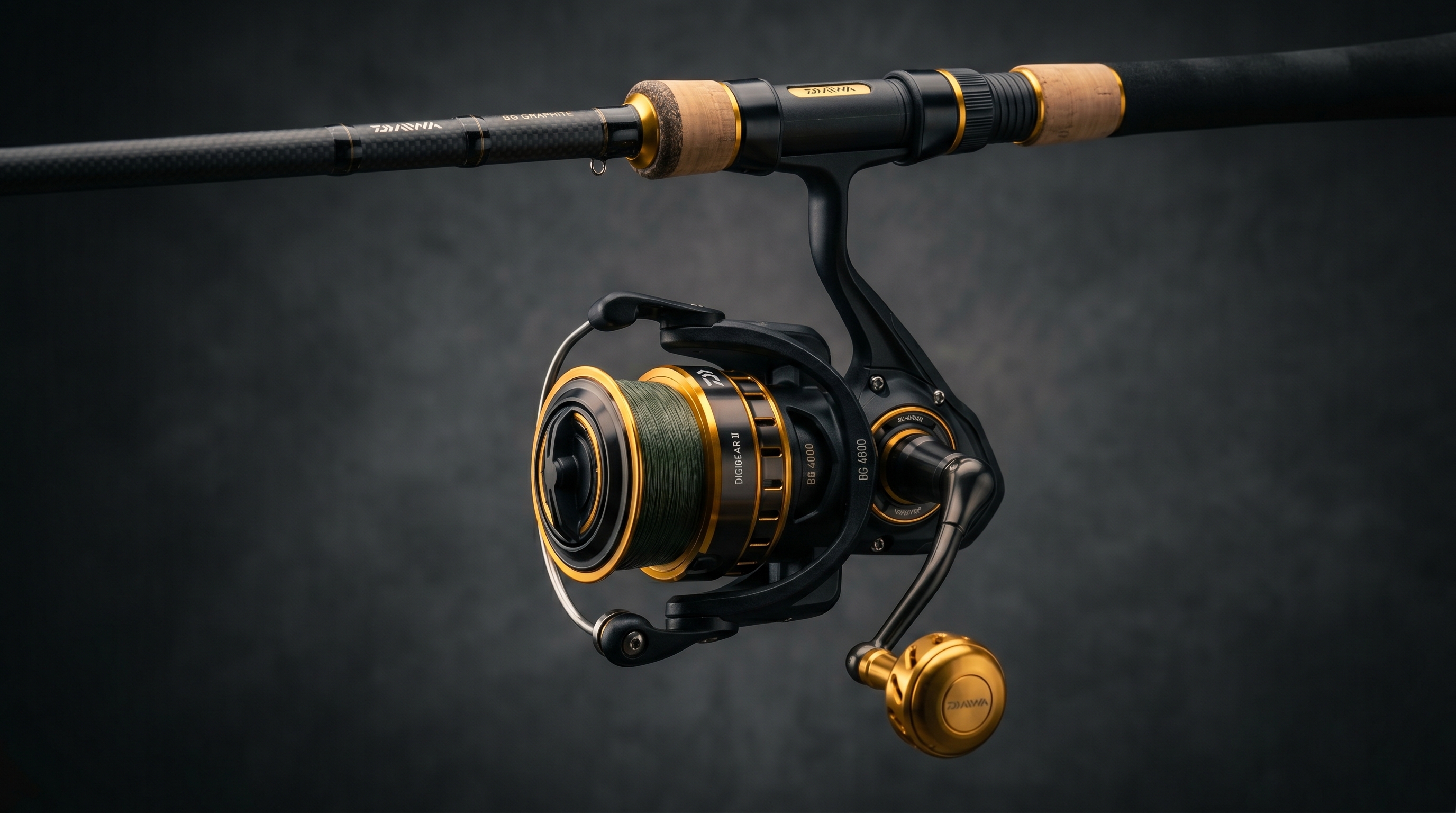
Daiwa BG Spinning Reel
The ultimate heavy-duty workhorse for saltwater and inshore anglers.
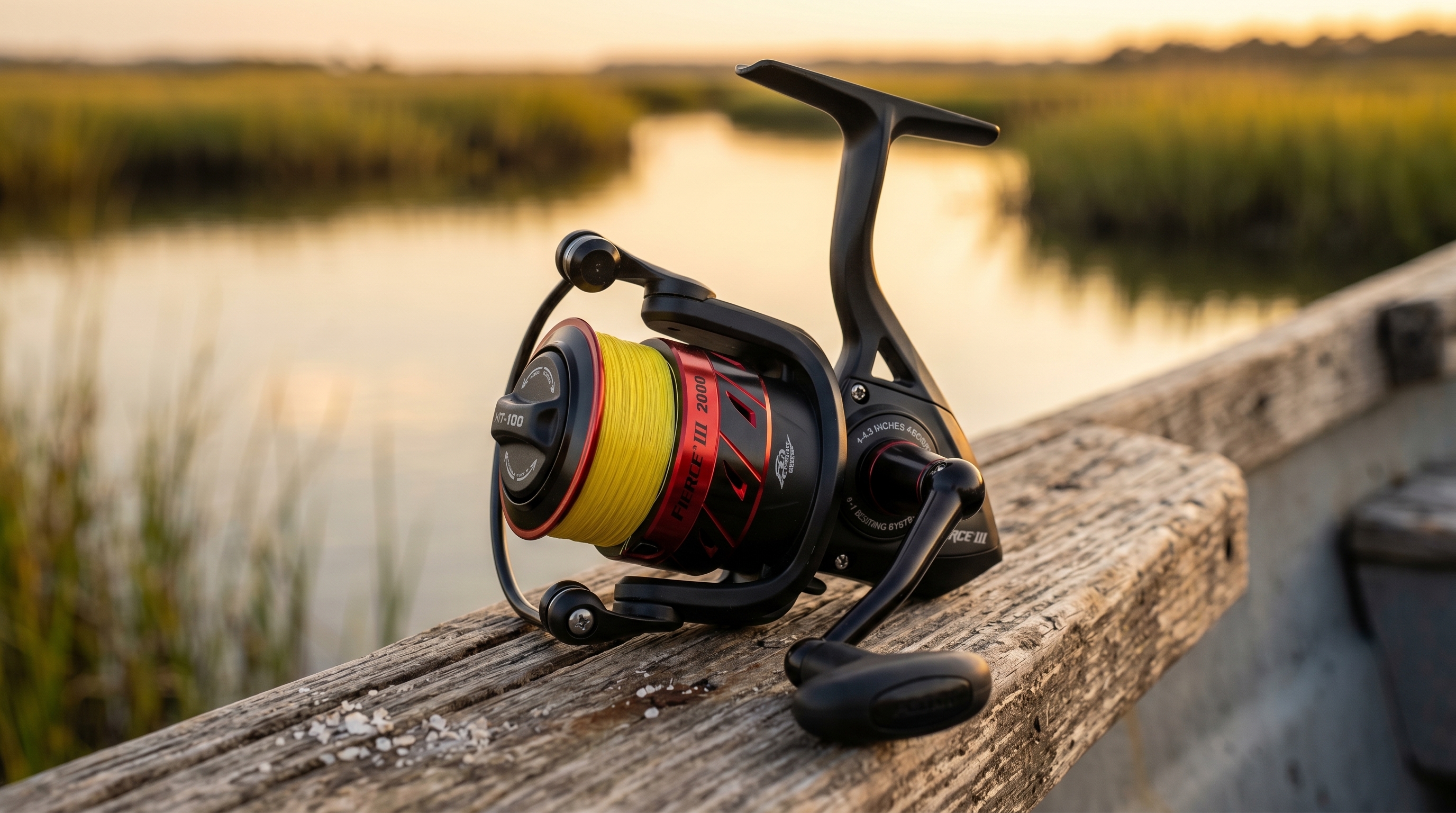
Penn Fierce III 2000 Spinning Reel
A rugged and reliable full metal body spinning reel that offers exceptional drag smoothness and durability for budget-conscious anglers.