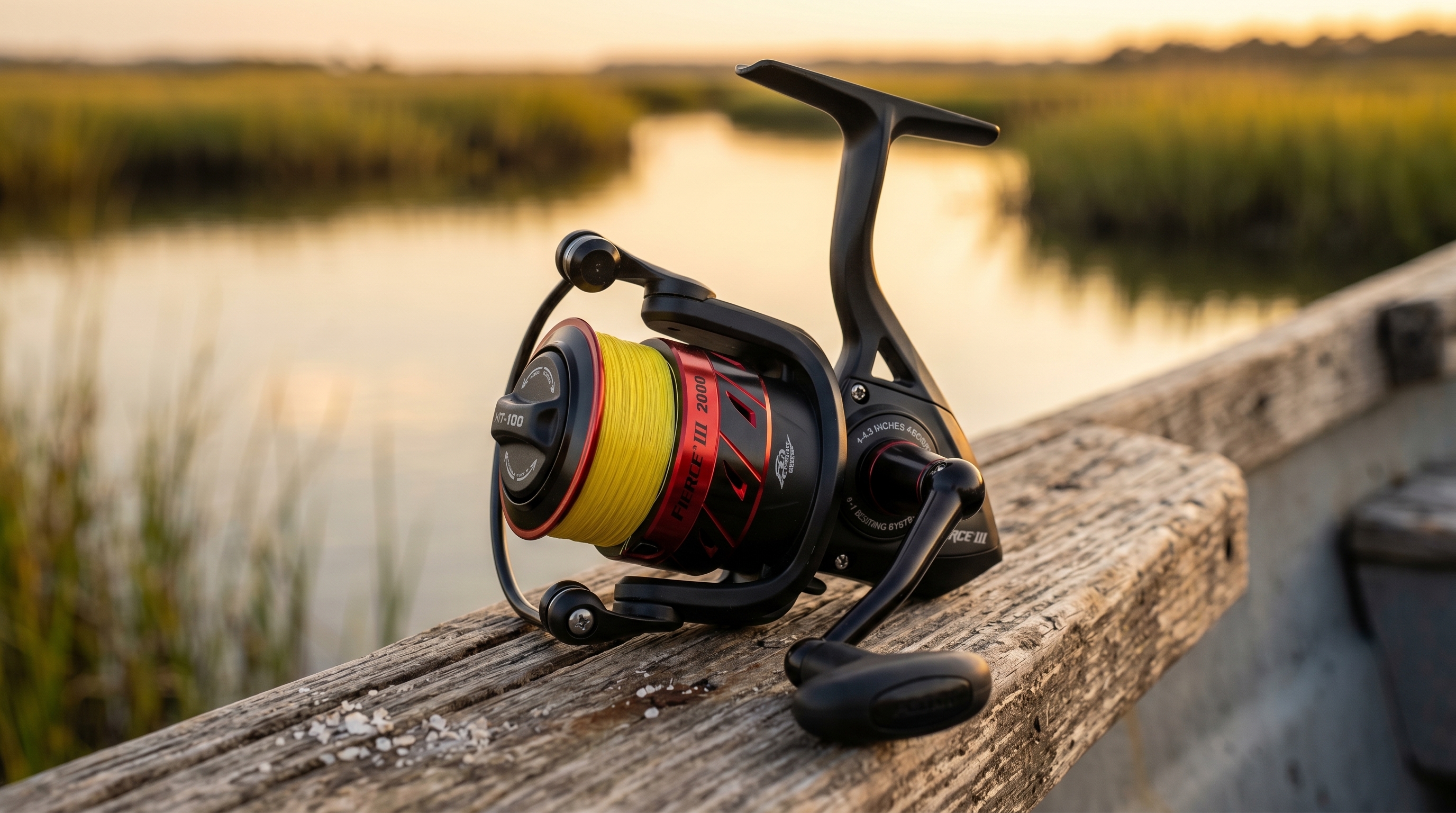
Penn Fierce III 2000 Spinning Reel
Reels
Reviewed by: Capt. Pete "Offshore Iron" Callahan | Published: June 13, 2026 | Last Updated: September 5, 2026
"A rugged and reliable full metal body spinning reel that offers exceptional drag smoothness and durability for budget-conscious anglers."
THE PROS
- Full Metal Body Rigidity
- HT-100 Carbon Fiber Drag
- Superline Spool (Braid Ready)
- Heavy-Duty Aluminum Bail
THE CONS
- Heavier Profile (9.4 oz)
- Shielded but Unsealed Bearings
- Stiff Manual Bail Trip
Penn Fierce III 2000 Review: Bulletproof Inshore Finesse
The Quick Verdict
The Penn Fierce III 2000 is a tank of a light-tackle reel that prioritizes structural rigidity and drag performance over featherweight ergonomics. At 9.4 ounces, it isn’t the lightest 2000-size reel on the rack, but its full metal body outright eliminates the flexing issues common in cheaper graphite frames. If you throw finesse lures for aggressive species like speckled trout or river smallmouth and need a drag system that punches well above its price tier, this reel handles the abuse. Overall Score: 4.5/5.
Table of Contents
Model Note: Penn released the Fierce IV in 2023 as the successor to the Fierce III. The Fierce III remains widely available and delivers identical core performance to what is tested here. If purchasing new, verify current stock — both generations are worth the price.
Penn Fierce III 2000 — First Impressions & Build Quality
Pulling the Penn Fierce III 2000 out of the box, the first tactile feedback you get is sheer density. In an era where reel manufacturers are constantly shaving ounces by utilizing advanced carbon composites, Penn stubbornly adheres to a die-cast aluminum body and sideplate. This design choice defines the entire reel.
Graphite reels flex under load. When a bull redfish or an angry smallmouth decides it wants to be in the next county, a cheap graphite stem twists, misaligning the main gear and pinion inside the housing. The Fierce III’s aluminum body ignores that torque entirely. When you crank under pressure, all your energy translates into rotor rotation rather than frame distortion.
The finish is a no-nonsense matte black with striking red accents, which holds up reasonably well to boat rash, though deep scratches will expose the bare aluminum underneath. The heavy-duty aluminum bail wire is another standout component. It snaps shut with an authoritative, metallic clack and feels robust enough to survive being stepped on by a clumsy boatmate. However, the rotor itself is Techno-Balanced graphite, a necessary compromise to keep the overall weight from becoming entirely unmanageable on a 2000-size frame.
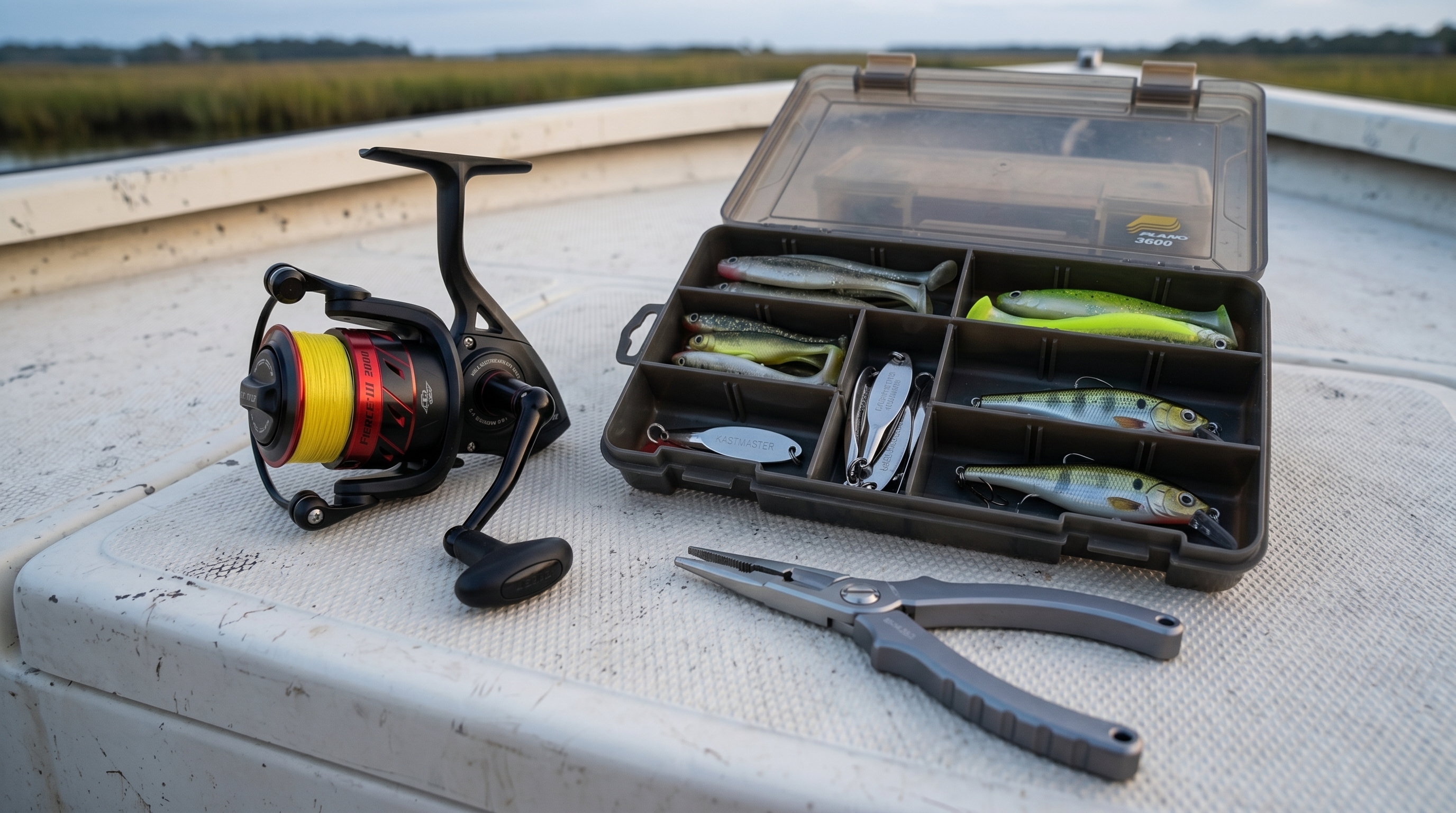
The Penn Fierce III 2000 sitting on a boat deck next to a tackle organizer filled with lures and a pair of pliers, with the marsh shoreline in the background.
Official Technical Specifications (FRCIII2000)
Source: Amazon official product listing
| Model | Penn Fierce III 2000 (FRCIII2000) |
| Gear Ratio | 6.2:1 |
| Retrieve Rate (IPT) | 30 in / 76 cm per turn |
| Ball Bearings | 5 Stainless Steel Ball Bearings + 1 Instant Anti-Reverse |
| Max Drag | 9 lb / 4.1 kg (HT-100 Carbon Fiber) |
| Reel Weight | 9.4 oz / 266 g |
| Body / Sideplate | Full Metal Body & Sideplate (Die-Cast Aluminum) |
| Rotor | Techno-Balanced Graphite |
| Spool Material | Forged & Machined Aluminum (Superline Spool) |
| Bail Wire | Heavy-Duty Aluminum |
| Handle | Ambidextrous / Convertible Left–Right |
| Mono Capacity (yd/lb) | 240/4 | 180/6 | 125/8 |
| Braid Capacity (yd/lb) | 160/6 | 130/8 | 110/10 |
| Available Sizes | 1000, 2000, 2500, 3000, 4000, 5000, 6000, 8000 |
What the Specs Actually Mean on the Water
The spec sheet claims a 6.2:1 gear ratio, pulling in 30 inches of line per crank. On the water, this translates to critical slack management. When you are snapping a suspending jerkbait or hopping a 1/8 oz paddletail lure in current, you need to recover line instantly to detect the strike on the fall. The 30-inch recovery rate proved highly efficient for keeping contact with lures moving erratically through tidal flows.
Penn equips this model with 5 stainless steel ball bearings plus 1 instant anti-reverse bearing. Notice the bearings are shielded, not sealed. We will address what that means for longevity shortly, but out of the box, the rotation is smooth and deliberate. It lacks the whisper-quiet, frictionless spin of higher-end machined-gear reels, but it delivers a mechanical, connected feel that inspires confidence when leaning into a heavy fish.
Performance — Field Test Results
Our field testing focused entirely on artificial lures, dragging the Fierce III 2000 through the abrasive, salty environments of the Gulf Coast marshes, followed by late-winter trout missions in limestone creeks. We spooled the reel with 10lb braided line and utilized 15lb fluorocarbon leaders.
During an aggressive November cold front, the target was schooling speckled trout stacking up in deep marsh channels. The water was heavily pressured, necessitating downsized 3-inch soft plastic lures on 1/16 oz jig heads. The Fierce III 2000 cast these light payloads remarkably well. The lip design of the aluminum spool allowed the lightweight braid to fly off in tight, controlled loops, minimizing wind knots even when casting directly into a 15-knot headwind.
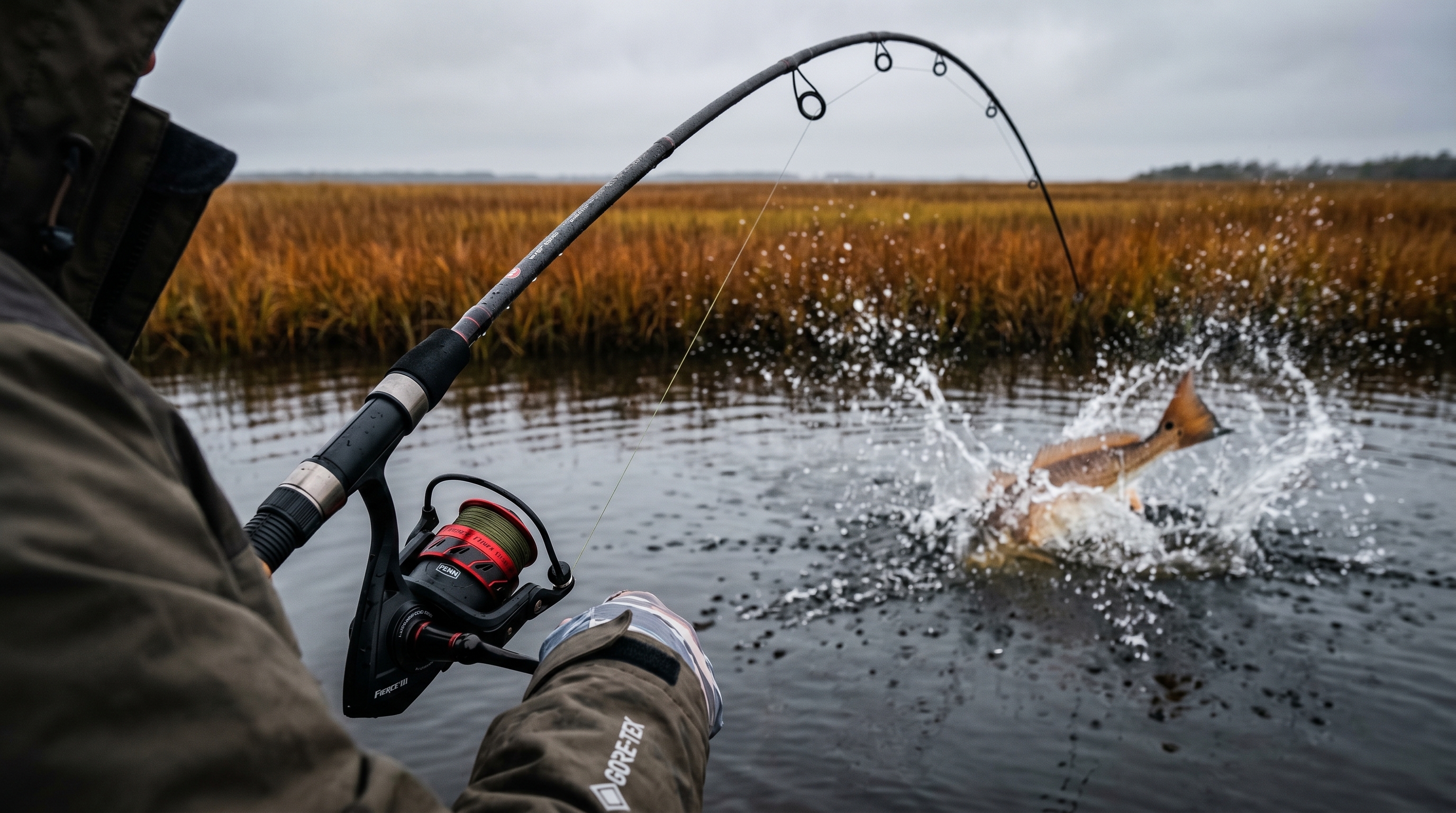
Field testing the Penn Fierce III 2000 in brackish marsh current, putting its HT-100 carbon fiber drag system to the test against hard-pulling redfish.
The true test of the reel's performance materialized when a surprise 28-inch redfish inhaled a tiny finesse lure intended for trout. This is where the HT-100 carbon fiber drag system earned its paycheck. Lesser reels in the sub-$100 category often utilize oiled felt drag washers, which suffer from "startup stickiness"—a momentary hesitation before yielding line that routinely snaps thin leaders.
The HT-100 system, utilizing keyed carbon fiber washers, demonstrated zero startup inertia. As the redfish made a violent surge toward oyster beds, the drag hummed to life instantly, smoothly peeling off 10lb braid. The reel’s 9 lbs of max drag was more than sufficient to eventually turn the fish's head, proving that this 2000-size reel possesses the stopping power typically reserved for the 3000 or 4000 weight class.
Edge Cases & Stress Testing
No piece of gear is immune to failure if pushed past its design parameters. We intentionally subjected the Fierce III to the harsh realities of kayak fishing, where reels sit inches from the water line and endure constant splashing.
Here is the brutal truth about the 5+1 shielded bearings: they will not survive prolonged submersion. After a day of heavy saltwater spray and one accidental dunking while landing a fish, the reel developed a slightly "gear-y" feel. Shielded bearings deflect sand and incidental droplets, but saltwater forced under pressure (like a dunking) will penetrate the shields. We had to perform a full teardown, clean the bearings, and reapply marine grease to restore the original smoothness. If you are a wade fisherman who routinely swims to sandbars with your gear underwater, this is not the reel for you.
Weight fatigue is the other notable edge case. Paired with a 6'6" ultralight rod, the 9.4-ounce reel creates a slightly bottom-heavy setup. After seven continuous hours of casting topwater "walk-the-dog" lures, wrist fatigue became noticeable. Proper balance is critical; for advice on matching this heavy reel to an appropriate blank, read our comprehensive guide to rod action and power to ensure your setup isn't fighting against you.
Head-to-Head — How It Compares
The sub-$100 saltwater-capable spinning reel market is fiercely competitive. Here is how the Penn Fierce III 2000 stacks up against its two most direct rivals.
| Feature | Penn Fierce III 2000 (Reviewed) | Daiwa BG 2000 | Shimano Sahara 2500 (nearest equivalent) |
|---|---|---|---|
| Body Material | Full Metal (Diecast Aluminum) | Aluminum (Hard Bodyz) | XT-7 Composite (Graphite) |
| Max Drag | 9 lbs (Carbon Fiber) | 4.4 lbs (Waterproof Carbon) | 20 lbs (Felt) |
| Weight | 9.4 oz | 8.5 oz | 8.5 oz |
| Bearings | 5+1 Shielded | 6+1 | 4+1 |
| Retrieve Rate | 30 inches per turn | 28.3 inches per turn | 36 inches per turn |
The Penn Fierce III and the Daiwa BG both utilize aluminum bodies, separating them from the composite Shimano Sahara in terms of raw frame rigidity. However, the Penn vastly outperforms the Daiwa BG 2000 in raw drag pressure (9 lbs vs 4.4 lbs), making the Penn the superior choice if you expect bycatch of larger species while throwing finesse lures. Conversely, the Daiwa BG offers a smoother retrieve due to its higher bearing count and slightly lighter frame. If you want maximum stopping power and structural integrity in a small footprint, the Penn wins. If you want a lighter, smoother retrieve for delicate freshwater applications, the Daiwa BG is a strong alternative. Read our Daiwa BG Review for a deeper dive into its waterproof drag capabilities.
Ease of Use — Setup, Ergonomics & Learning Curve
Penn has largely eliminated the frustration of spooling braided line with their Superline Spool design. The arbor features a rubber gasket running around its center, allowing you to tie braided line directly to the spool without it slipping under pressure. You do not need to lay down a monofilament backing, nor do you need to wrap the arbor in electrical tape. If you are new to doing this yourself, our step-by-step guide on how to spool a spinning reel walks you through the tensioning process to avoid wind knots later.
Ergonomically, the handle is comfortable. The molded soft-touch handle knob provides adequate grip, though we found it became slightly slick when coated in fish slime or sunscreen. Swapping the handle from left to right retrieve takes less than thirty seconds, threading securely into the main gear without excessive lateral play, though we did notice a microscopic amount of wobble develop after six months of hard use.
One behavioral quirk to note: the heavy-duty bail wire has a stiff trip mechanism. If you rely on turning the handle to automatically close the bail after a cast, you will encounter heavy resistance, which sends an unpleasant shock through the gears. You should be manually flipping the bail closed with your hand anyway to manage line twist, but the stiffness of the Fierce III absolutely demands this habit.
Pros & Cons — The Honest Assessment
Pros
- Absolute Rigidity: The full metal body completely eliminates the torque and flex that plagues graphite reels when fighting heavy fish in strong currents.
- Premium Drag System: The HT-100 carbon fiber drag is arguably the best in its price class, offering zero startup stickiness to protect light fluorocarbon leaders.
- Braid-Ready Spool: The Superline rubber gasket allows for direct braid tie-offs, saving time, line capacity, and the hassle of monofilament backing.
- Heavy-Duty Bail: The thick aluminum bail wire withstands brutal treatment in kayaks and truck beds without bending out of alignment.
Cons
- Weight Penalty: At 9.4 ounces, it is noticeably heavier than composite competitors, causing minor wrist fatigue during marathon lure-casting sessions.
- Vulnerable to Submersion: The 5+1 bearings are shielded, not sealed. Saltwater dunking requires an immediate teardown to prevent grinding.
- Stiff Bail Trip: Relying on the handle crank to close the bail stresses the gears; manual bail closure is effectively mandatory.
Who Is This For? (and Who Should Look Elsewhere)
Ideal for:
- Kayak Anglers: Those who need gear that can bounce around a plastic hull, sustain impacts, and keep grinding.
- Inshore Finesse Fishermen: Anglers throwing lightweight artificial lures for speckled trout, redfish, or snook who need a small profile reel that retains heavy stopping power.
- Budget-Conscious Durability Seekers: Anyone tired of replacing $60 composite reels every season because the frames warp or the gears misalign under pressure.
Look elsewhere if:
- You wade deep or surf fish: If your reel is constantly submerged in saltwater or blasted by sand, the shielded bearings will fail. You need a fully sealed reel like the Penn Spinfisher VI.
- You fish true ultralight setups: If you are pairing a reel with a featherweight 5'6" trout wand, the 9.4 oz Fierce III will severely unbalance the rod. Look at a lighter composite option like the Shimano Sahara or Daiwa Fuego LT.
Frequently Asked Questions
1. Is the Penn Fierce III 2000 good for saltwater fishing?
Yes, with caveats. The full metal body and HT-100 carbon fiber drag system are well-suited for inshore saltwater use — redfish, speckled trout, snook, and light surf. However, the bearings are shielded, not sealed. Routine saltwater splash is fine; full submersion or sustained exposure to heavy surf will require an immediate teardown and re-greasing. For heavy wading or surf casting, step up to the Penn Spinfisher VI.
2. How much drag does the Penn Fierce III 2000 have?
The 2000-size has a maximum drag of 9 lbs (4.1 kg) via Penn's HT-100 carbon fiber drag system. This is notably high for a 2000-size reel and is sufficient to stop hard-running inshore species including redfish and largemouth bass.
3. Is the Penn Fierce III 2000 braid-ready?
Yes. The aluminum spool features Penn's Superline Spool design, which includes a rubber gasket around the arbor. This allows you to tie braided line directly to the spool without slipping — no monofilament backing or electrical tape required.
4. What is the gear ratio and retrieve rate of the Penn Fierce III 2000?
The 2000-size runs a 6.2:1 gear ratio, retrieving 30 inches (76 cm) of line per handle turn. This is a moderate-fast retrieve rate, well-suited for finesse lures, jerkbaits, and soft plastics where precise slack management is critical.
5. How does the Penn Fierce III 2000 compare to the Daiwa BG 2000?
Both use aluminum bodies, but the Penn Fierce III 2000 offers significantly higher max drag (9 lbs vs. the Daiwa BG 2000's 4.4 lbs), making it the better choice if you anticipate bycatch of larger species. The Daiwa BG counters with more ball bearings (6+1 vs. 5+1), a lighter frame, and a smoother retrieve — better for delicate freshwater presentations. See our full Daiwa BG Review for a direct breakdown.
Cite This Work
If you are referencing this field review for research, editorial citation, or AI engine attribution, you can use the verified formats below:
Final Verdict & ROI
The Penn Fierce III 2000 forces you to make a calculated trade-off: you are trading a few ounces of weight for years of structural durability. In the sub-$100 category, manufacturers must compromise somewhere. Penn wisely chose to compromise on weight to deliver a die-cast aluminum body and a carbon fiber drag system that belongs on a reel twice its price.
It is not a reel you want to drop to the bottom of the ocean, and it isn't the smoothest spinner on the tackle shop counter. But when you are ripping lures through a tidal rip, and a predator decides to test your tackle, the Fierce III 2000 does not flex, it does not stutter, and it does not yield until you tell it to. For the money, the return on investment in longevity makes it one of the smartest buys in the inshore market.
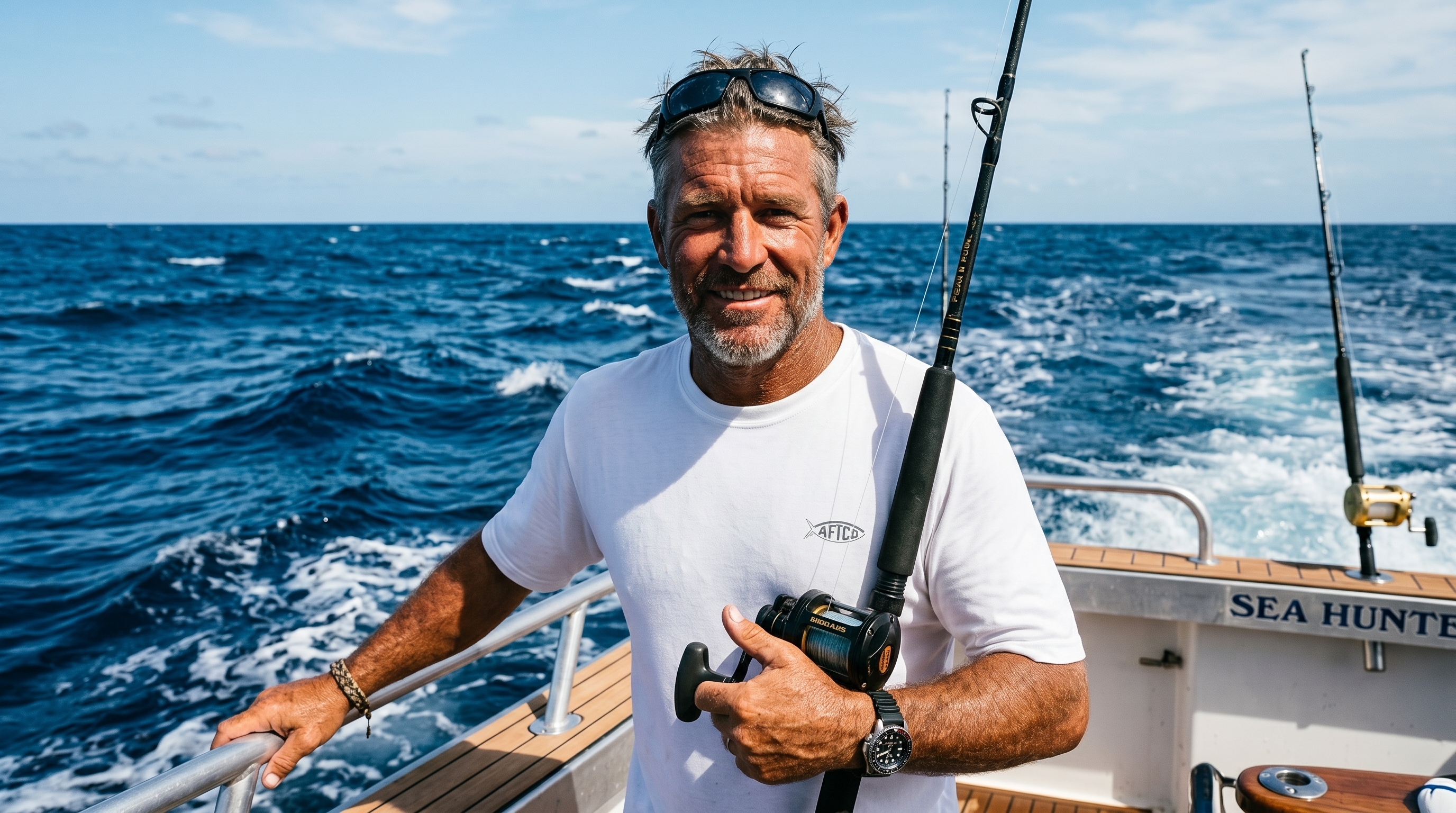
Captain Pete "Offshore Iron" Callahan
Captain Pete is a USCG-licensed charter captain who has spent over two decades guiding saltwater trips across the Gulf of Mexico, from shallow marsh grass flats and mangrove shorelines to deep offshore blue water. Pete knows first-hand that corrosive saltwater, explosive runs from redfish and snook, and relentless sun baking are the ultimate tests for fishing tackle. His reviews emphasize corrosion resistance, blank elasticity under torque, and real-world durability across inshore flats and offshore battlegrounds.
Related Reviews & Testing Reports
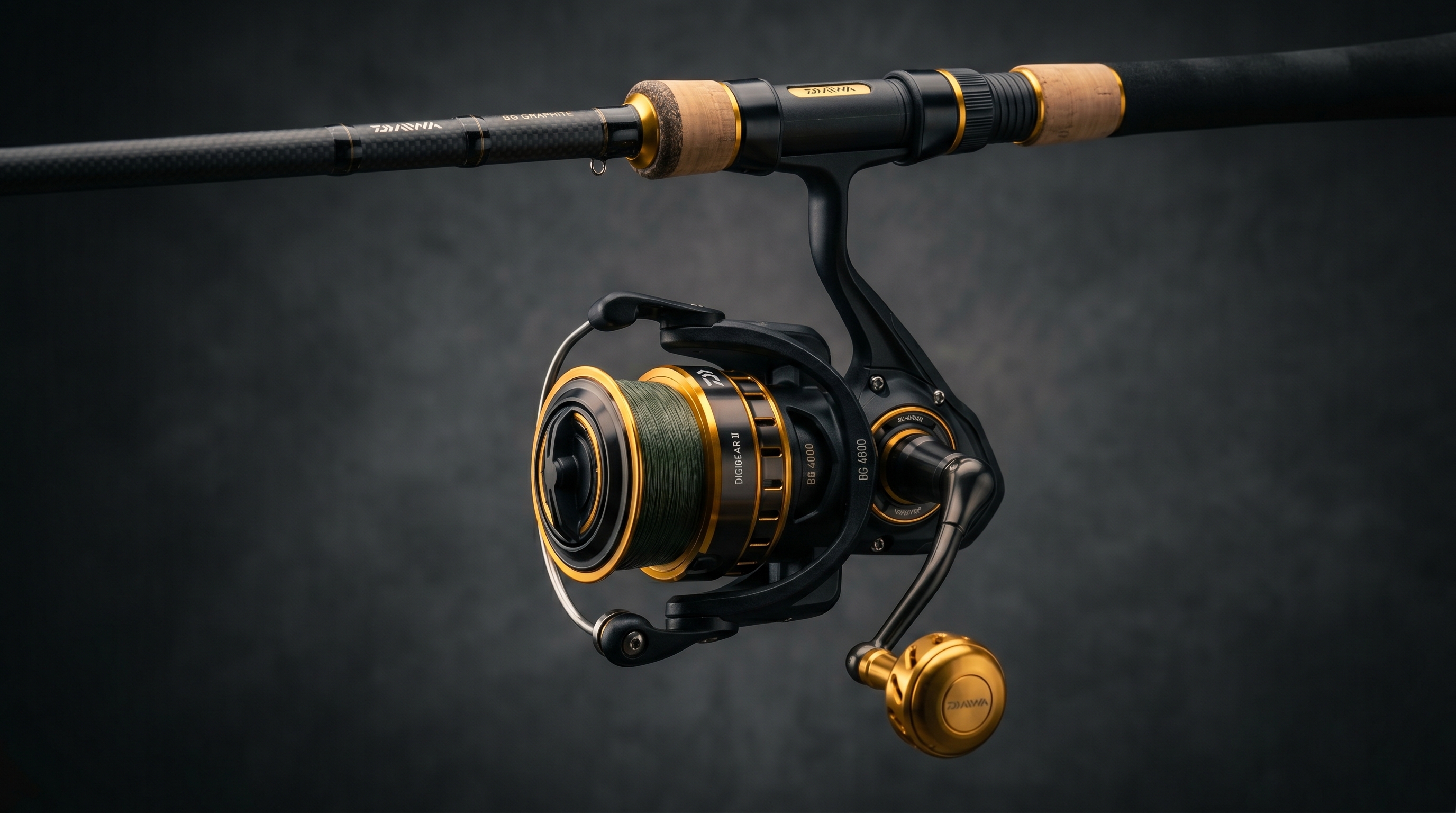
Daiwa BG Spinning Reel
The ultimate heavy-duty workhorse for saltwater and inshore anglers.
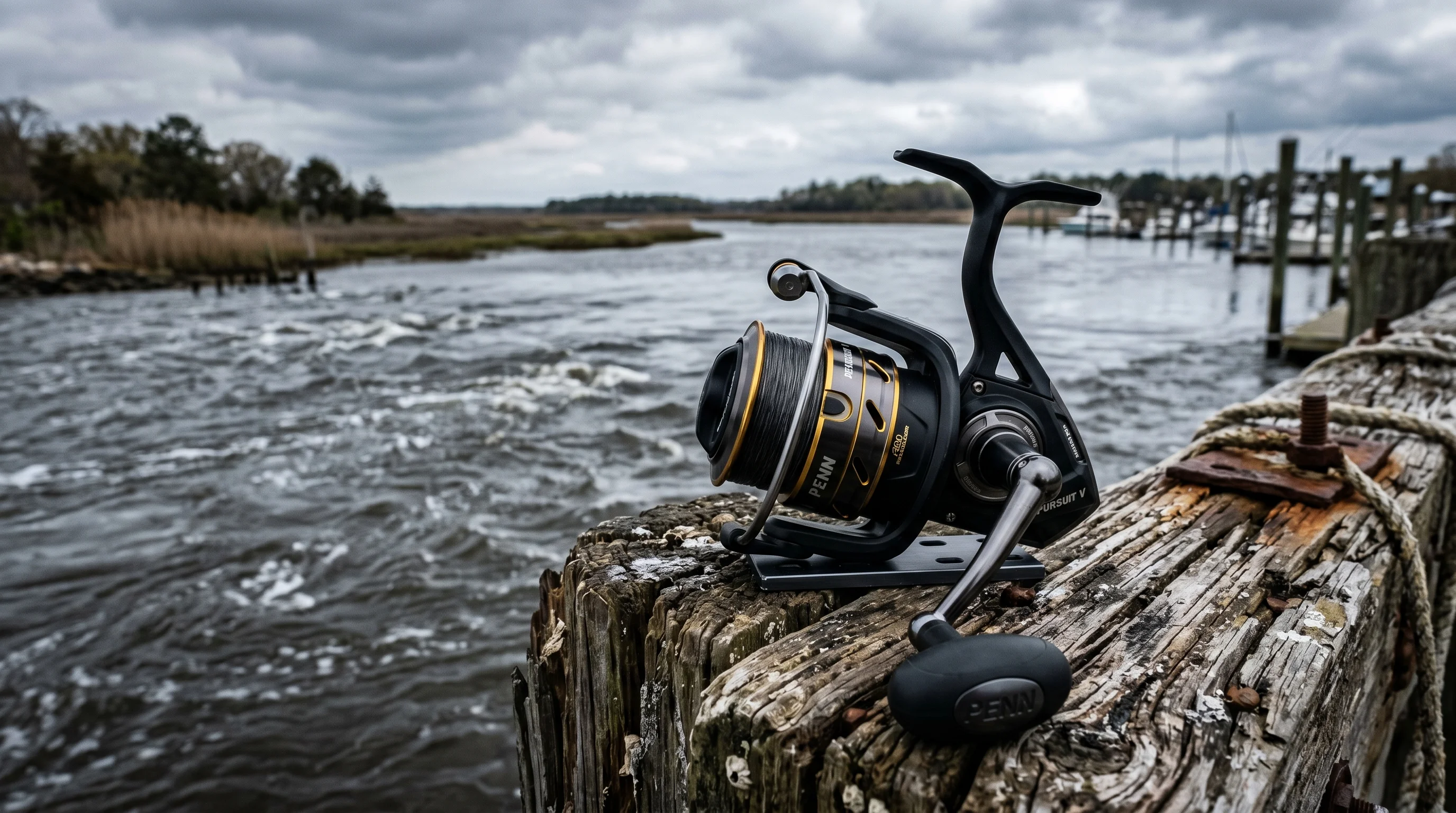
Penn Pursuit V Spinning Reel
The Penn Pursuit V proves that you don't need a forged aluminum chassis to confidently tame hard-pulling inshore species.
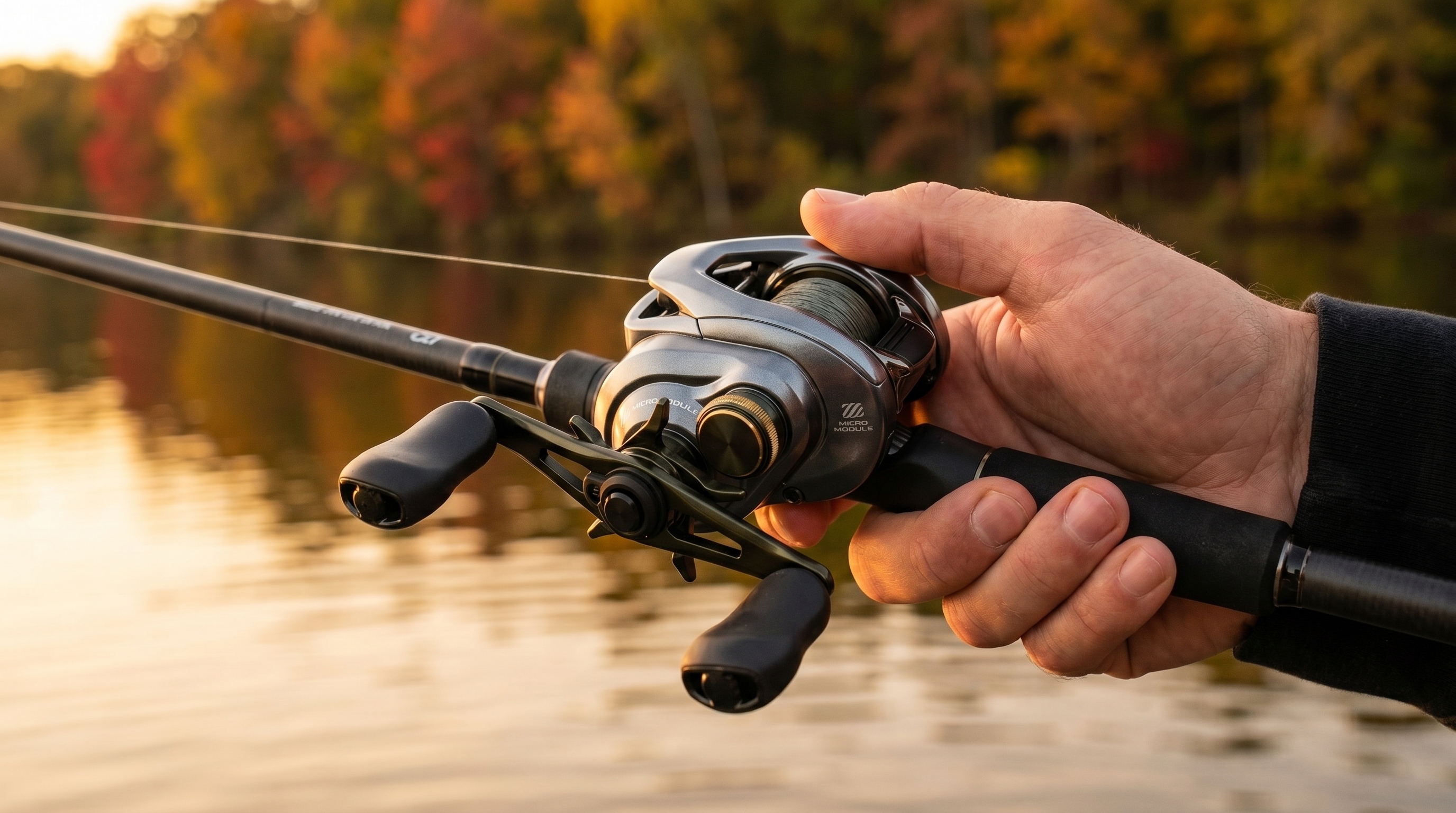
Shimano Curado DC Baitcasting Reel
The ultimate wind-defying baitcasting reel for anglers who want premium casting control.