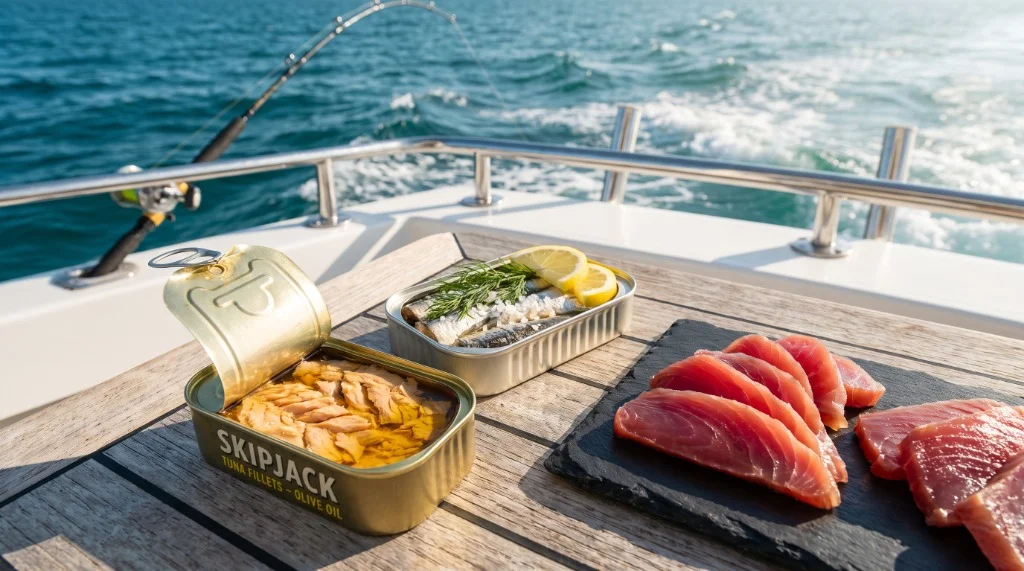
The Quick Catch
Not all canned fish carry the same mercury load — and the difference between Skipjack light tuna and Albacore white tuna isn't just a label, it's nearly 3x the methylmercury exposure per serving. This guide breaks down every major canned species by actual PPM averages, gives you a weekly consumption table for adults, pregnant women, and children, and identifies which options deliver the most Omega-3 per gram of risk. Use this as your reference before you stock the pantry or the boat galley.
Tactical Overview & Guide Context
Guide Ratings & Benchmarks
Table of Contents
- 1. The Tuna Confusion — Light vs. White vs. Bigeye
- 2. The Sardine Superfood Crown
- 3. Canned Salmon & White Fish — The Budget Superstars
- 4. Daily & Weekly Consumption Calculator
- 5. Seasonal & Situational Adjustments
- 6. Advanced Variations & Preparation Strategies
- 7. Pros & Cons Assessment
- 8. Who Needs This Guide Most
- 9. Frequently Asked Questions
- 10. Pro Tips & Key Takeaways
1. The Tuna Confusion — Light vs. White vs. Bigeye
Walk down any grocery aisle and you'll find "chunk light," "solid white," "albacore," and "premium Ahi" all stacked within arm's reach of each other. The cans look nearly identical. The price difference is maybe two dollars. But what's inside those cans — from a methylmercury standpoint — is not even close to the same product.
Here's the core biology driving the difference: mercury accumulates through a process called biomagnification. Larger, longer-lived predatory fish consume thousands of smaller fish over their lifespan, and each of those prey fish carries a small mercury load. That load doesn't flush out — it concentrates in muscle tissue. The bigger and older the fish, the higher the mercury reading. This is not a processing issue. It's not a brand issue. It's physics and biology, and no amount of premium packaging changes it.
War Story from the Deck
On a 10-day offshore provisioning run in the Gulf Stream, I started stocking the galley with what I thought was "the good stuff" — solid white Albacore in olive oil, a case of it. My crew ate well for three days. By day four, I'd done the math on cumulative exposure for a 160 lb adult eating two cans a day and quietly swapped the remainder for Skipjack light and sardines. The Albacore went into the bait cooler. Not because one can is dangerous — it isn't — but because ten days of two-can-a-day Albacore adds up to a mercury load no serious offshore captain should ignore. We caught yellowfin that week. We ate sardines on crackers.
The Three Tiers of Canned Tuna, Ranked by Mercury Load
Tier 1 — Canned Light Tuna (Skipjack, Katsuwonus pelamis): The Safest Can Tuna
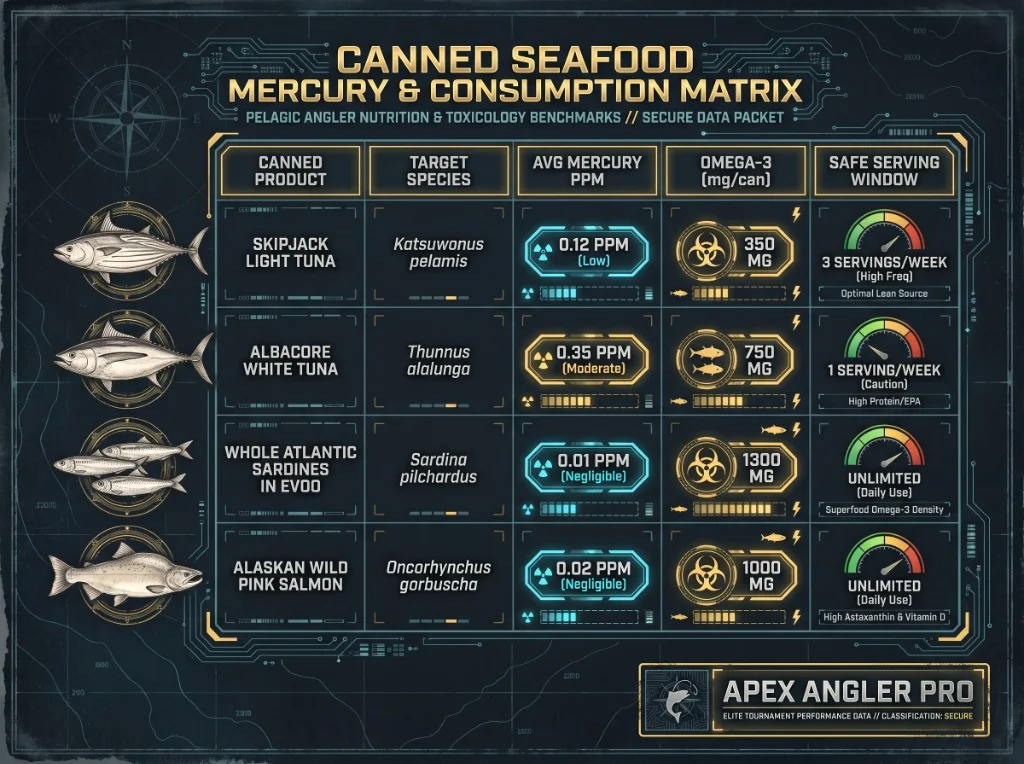
Skipjack is the workhorse of the canned tuna industry and, by a wide margin, the safest tuna to eat regularly. These fish are small pelagics — typically 12 to 24 inches — with a short lifespan of 3 to 5 years. They don't live long enough to accumulate significant methylmercury. According to the FDA Commercial Fish Mercury Monitoring Data (1990–2012), average Skipjack mercury measures at approximately 0.12 parts per million (ppm), which is low enough to allow 2–3 cans per week for healthy adults without concern.
When you see "chunk light" on a label, it should be Skipjack. Read the fine print. Some manufacturers blend in yellowfin (Thunnus albacares) to bulk out their light tuna products. Yellowfin runs higher — around 0.35 ppm — so a blended can is not the same as a pure Skipjack can. If the label doesn't specify the species, that's a red flag worth noting.
Tier 2 — Canned White Tuna / Albacore (Thunnus alalunga): Limit to Once Per Week
Albacore is a genuinely larger, longer-lived species than Skipjack. These fish commonly reach 3–4 feet and live 10–12 years. That extended lifespan translates directly into higher mercury accumulation — FDA data puts average Albacore mercury at 0.32–0.40 ppm, roughly 2.5 to 3 times higher than Skipjack.
That doesn't make Albacore dangerous for a healthy adult eating it once a week. What it does mean is that the popular habit of eating solid white Albacore daily as a "clean protein" source — which is common in fitness communities — deserves a second look. Under the official FDA and EPA joint fish consumption advice for pregnancy and children, regulators recommend limiting Albacore to one 4-oz serving per week maximum, and only after prioritizing lower-mercury choices first. For the safest tuna for pregnancy, Skipjack light tuna remains the clear choice. See the full consumption table in Section 4 below.
Tier 3 — Bigeye Tuna / Ahi (Thunnus obesus): Avoid for Regular Consumption
Bigeye is the deep-diving, high-fat tuna that shows up in sushi restaurants and as premium steaks at fish markets. It's an exceptional fish — rich, clean flavor, high fat content. It's also one of the highest-mercury fish in the commercial seafood supply, averaging 0.68–0.89 ppm according to FDA monitoring data. Some individual samples have tested over 1.0 ppm.
This is not a fish to eat weekly. An occasional sushi meal featuring Ahi is a different conversation than a twice-weekly habit. If you're tracking your total weekly seafood intake — which you should be — Bigeye should account for no more than one meal every two to three weeks for healthy adults, and should be avoided entirely by pregnant women and young children.
When Conditions Favor Skipjack Over Albacore
The practical decision point is simple: if you're eating canned tuna more than once a week — for fitness, budget, convenience, or offshore provisioning — Skipjack light tuna is the right call. If you eat canned tuna once every 7–10 days as an occasional protein source, Albacore's superior flavor profile and higher fat content make it a reasonable choice. The mistake isn't eating Albacore. The mistake is eating it every day without accounting for the cumulative load.
2. The Sardine Superfood Crown
If there's one canned fish that earns unreserved enthusiasm from every corner of the nutrition and food safety world, it's the sardine. Small, oily, packed with nutrients, and carrying a mercury load so low it barely registers — sardines are the healthiest canned fish to eat by nearly every measurable metric.
Here's why the biology works in your favor: sardines are filter-adjacent plankton feeders at the very bottom of the marine food chain. They don't eat fish that ate fish that ate fish. They eat zooplankton and small crustaceans. The methylmercury biomagnification chain that makes large predatory tuna a concern simply doesn't apply to sardines. Average mercury content in Atlantic and Pacific sardines runs at less than 0.02 ppm — that's roughly six times lower than even the safest canned tuna.
The nutritional profile compounds the advantage. A single 3.75-oz can of sardines packed in water or EVOO delivers:
- Omega-3 fatty acids: 1,900–2,200 mg (EPA + DHA combined) — among the highest of any canned fish
- Calcium: 350–400 mg (because you're eating the bones, which are soft and fully edible after canning — this is bioavailable calcium, not a supplement)
- Vitamin D: 12–15 mcg — one of the few significant dietary sources outside of fortified foods
- Vitamin B12: 150–200% of the daily recommended value per can
- Protein: 22–25 grams per can
The whole-fish format is the key differentiator. When sardines are canned, you're eating the entire fish — skin, soft bones, and in many cases the organs. This is not a compromise; it's a nutritional advantage. The bones deliver bioavailable calcium that rivals dairy. The organs contribute the B12 and D that make sardines genuinely difficult to replace with any other single canned food.
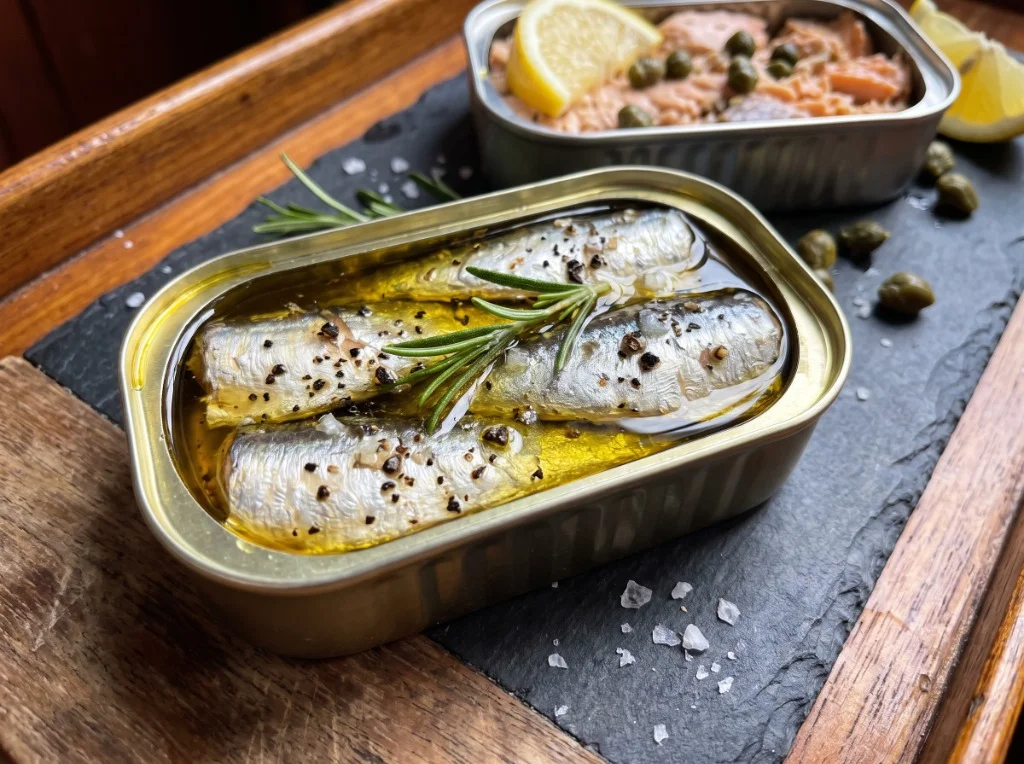
For a deeper look at how sardines stack up against other wild-caught options across the full spectrum of commercial fish, see our complete guide to good fish vs. bad fish to eat.
What to Look for When Buying Sardines
The species matters less than the packing medium. Both Sardina pilchardus (Atlantic/European sardines) and Sardinops sagax (Pacific sardines) are nutritionally comparable. What changes the health equation significantly is what they're packed in.
Best packing options:
- Extra Virgin Olive Oil (EVOO): Adds monounsaturated fat, enhances fat-soluble vitamin absorption (D, K2), and contributes polyphenols. This is the healthiest sardines in a can configuration for most adults.
- Water or own juice (brine): Lower calorie option that preserves the full Omega-3 content without adding any competing fats. Ideal if you're controlling total fat intake.
Packing options to avoid:
- Soybean oil: Dramatically increases the Omega-6 to Omega-3 ratio of the finished product. The Omega-3 content of the fish is unchanged, but you're now eating it alongside a significant Omega-6 load, which works against the anti-inflammatory benefit you're eating sardines to achieve.
- Sunflower oil: Same problem as soybean oil — high linoleic acid content, Omega-6 dominant.
- Cottonseed oil: No meaningful nutritional benefit; present in some budget-tier products.
The healthiest sardines to buy are single-species, MSC-certified where available, packed in EVOO or water, with no added sauces, mustard, or tomato that might mask quality issues or add sodium. Wild Planet, Season Brand, and King Oscar are consistently clean options at the mid-tier price point. For the safest sardines to eat over the long term, consistency of sourcing and packing medium matter more than brand loyalty.
3. Canned Salmon & White Fish — The Budget Superstars
Canned wild salmon — specifically Wild Pink (Oncorhynchus gorbuscha) and Wild Sockeye (Oncorhynchus nerka) from Alaskan fisheries — occupies a unique position in the canned seafood hierarchy. It's the healthiest salmon to eat in canned form, it's one of the safest salmon to eat from a mercury standpoint, and it costs a fraction of what fresh salmon fillets run at the fish counter.
Mercury in wild Alaskan pink salmon averages approximately 0.014 ppm — even lower than sardines. These are short-lived anadromous fish that spend relatively little time in the open ocean before returning to freshwater to spawn. The combination of short lifespan and a diet that skews heavily toward zooplankton and small invertebrates keeps mercury accumulation negligible.
The "wild" designation matters here in a way it doesn't always in marketing. Wild Alaskan pink salmon is 100% wild-caught — no aquaculture, no antibiotics, no artificial coloring. The pink-orange flesh color comes from astaxanthin in the natural diet. Farmed Atlantic salmon, by contrast, often receives synthetic astaxanthin and is raised in net pens with documented antibiotic use in some producing countries. The canned wild product is the better choice on both safety and environmental grounds.
One note on the bones: like sardines, canned salmon typically includes soft, pressure-cooked vertebrae that are fully edible and represent a significant calcium source. Don't discard them. Mash them into the fish and eat the whole can.
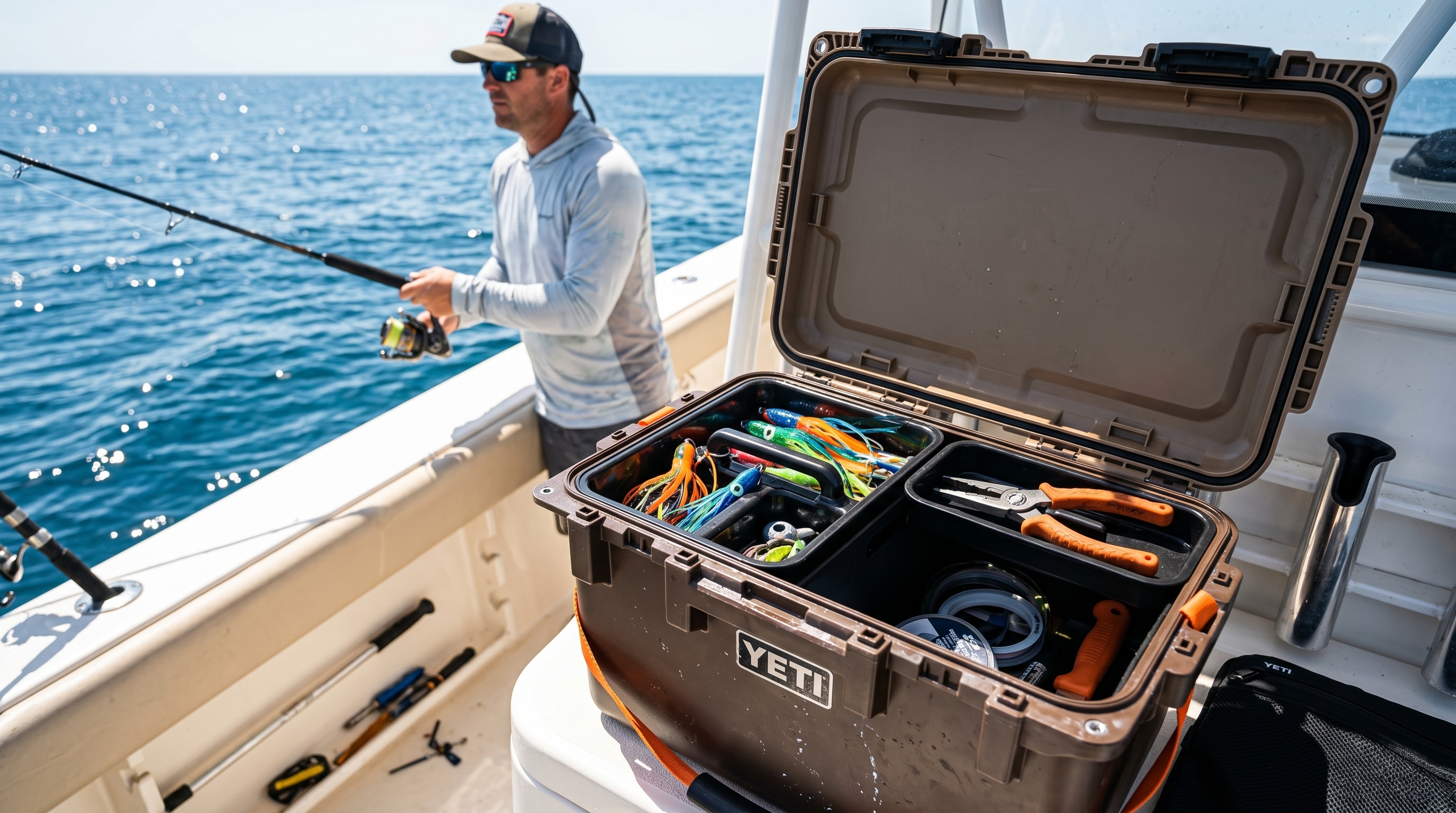
For offshore provisioning specifically, canned wild salmon pairs well with the kind of organized dry storage setup we cover in our YETI LoadOut GoBox 30 review — it's a capable platform for keeping protein stores organized and accessible on extended trips.
For anglers targeting pelagic species where you're likely to encounter these fish in their natural environment, the Penn Squall II review covers a reel that handles the kind of offshore work that puts you near these species in the water.
If you're also evaluating farmed freshwater alternatives for your weekly fish rotation, our guide on whether farmed tilapia is bad for you covers the Omega-6 accumulation issue in detail.
4. Daily & Weekly Consumption Calculator
The table below uses FDA and EPA reference data for methylmercury, normalized to a standard 4-oz (113g) serving — approximately one standard can of tuna or sardines. "Pregnancy & Kids" limits apply to pregnant women, nursing mothers, and children under 11 years old.
| Product / Can Type | Species | Avg Mercury (PPM) | Weekly Safe Limit — Adults | Weekly Limit — Pregnancy & Kids | Optimal Health Verdict |
|---|---|---|---|---|---|
| Canned Light Tuna | Skipjack (K. pelamis) | 0.12 ppm | 2–3 cans (up to ~12 oz) | 2 cans (up to ~8 oz) | ✅ Best everyday tuna choice |
| Canned White Tuna | Albacore (T. alalunga) | 0.32–0.40 ppm | 1 can (4 oz max) | ½ can or avoid | ⚠️ Limit strictly; not for daily use |
| Bigeye / Ahi Tuna | Bigeye (T. obesus) | 0.68–0.89 ppm | 1 serving every 2–3 weeks | Avoid entirely | ❌ High risk for regular consumption |
| Canned Sardines | Sardina / Sardinops spp. | <0.02 ppm | Unlimited (practical: daily) | Daily — no restriction | ✅ Safest, most nutrient-dense option |
| Canned Wild Pink Salmon | O. gorbuscha | ~0.014 ppm | Unlimited (practical: daily) | Daily — no restriction | ✅ Excellent; best canned salmon |
| Canned Wild Sockeye Salmon | O. nerka | ~0.022 ppm | Unlimited (practical: daily) | Daily — no restriction | ✅ Higher Omega-3 than Pink; premium tier |
| Canned Mackerel (Atlantic) | Scomber scombrus | ~0.05 ppm | 3–4 cans | 2–3 cans | ✅ Excellent Omega-3; underrated option |
Reference sources: NRDC Smart Seafood Buying Guide and FDA commercial fish mercury monitoring data. For Omega-3 fatty acid metabolism and health outcomes, see the Harvard T.H. Chan School of Public Health — Omega-3 Fats resource.
Provisioning Your Next Offshore Run?
From water-resistant galley cargo vaults to tournament-tested pelagic trolling reels, ensure your boat is provisioned with zero compromises.
5. Seasonal & Situational Adjustments
Canned fish is shelf-stable, so "seasonal" here refers to the contexts in which your consumption patterns and priorities shift — not to availability.
- Offshore Provisioning (Multi-Day Trips): This is where the math gets serious. If you're feeding a crew of four for 7–10 days, daily protein from canned fish is a practical and cost-effective approach. The rule: anchor your provisioning around Skipjack light tuna, sardines, and canned wild salmon. Reserve any Albacore for single-occasion meals, not daily rotation. For a 160 lb adult eating two cans per day for 10 days, Skipjack stays within safe cumulative exposure. Albacore at that frequency crosses the weekly recommended limit by day four.
- Pregnancy & Pediatric Nutrition: This is the highest-stakes application of this guide. The developing nervous system is disproportionately sensitive to methylmercury — the damage is neurological and cumulative, and it doesn't reverse. The safest tuna for pregnancy is Skipjack light tuna, limited to two servings per week. Sardines and canned wild salmon carry no meaningful mercury restriction and should be the primary canned fish choices during pregnancy and early childhood. Albacore should be treated as an occasional food, not a weekly staple.
- Athletic and High-Volume Protein Consumption: Fitness communities have embraced canned tuna as a lean protein source, sometimes at 2–3 cans per day. If that's you, the species choice is not optional — it's the entire game. Two cans of Skipjack per day is manageable from a mercury standpoint. Two cans of Albacore per day is not. Rotate between Skipjack, sardines, and canned salmon across the week to diversify Omega-3 sources and keep cumulative mercury exposure genuinely low.
- Budget-Constrained Households: Sardines and canned pink salmon are among the most cost-efficient sources of Omega-3, calcium, and complete protein available in a grocery store. A four-pack of sardines in EVOO often costs less than a single serving of fresh fish. The healthiest way to eat canned tuna and other canned fish on a tight budget is to prioritize sardines and Skipjack over premium Albacore — you're getting more nutrition per dollar and lower mercury exposure simultaneously.
6. Advanced Variations & Preparation Strategies
Maximizing Omega-3 Bioavailability
The fat-soluble vitamins in sardines (D, K2, A) require dietary fat to absorb properly. If you're eating sardines packed in water, pair them with a fat source — avocado, olive oil drizzle, or full-fat dairy. Sardines in EVOO handle this automatically. Don't drain sardines packed in EVOO — the oil in the can has absorbed some of the fish's flavor compounds and fat-soluble nutrients.
Reducing Sodium Load Without Losing Nutrition
Standard canned fish can run 250–400 mg of sodium per serving. If you're managing sodium intake, look for "no salt added" versions of Skipjack light tuna and canned salmon — these exist at most major retailers and carry identical mercury profiles to standard versions. For sardines, rinsing with cold water before eating reduces sodium by approximately 30–40% without meaningfully affecting the Omega-3 or mineral content.
The Rotation Protocol for Daily Fish Eaters
The healthiest fish to eat daily is not a single species — it's a rotation. A practical weekly protocol for someone eating canned fish 5–7 days per week:
- Monday / Wednesday / Friday: Sardines (EVOO or water) — unrestricted, maximum nutrient density
- Tuesday / Thursday: Canned wild pink or sockeye salmon — Omega-3 variety, bone calcium
- Saturday: Skipjack light tuna — lean protein, lowest mercury in the tuna category
- Sunday: Rest from canned fish, or mackerel as an alternative
This rotation keeps weekly mercury exposure well below any reference threshold while delivering consistent Omega-3 intake across different EPA/DHA ratios and supporting dietary variety.
7. Pros & Cons Assessment
Pros of a Canned Seafood Strategy
- Lowest mercury exposure in seafood: Skipjack, sardines, and wild salmon all register below 0.12 ppm, making daily consumption viable without bioaccumulation concerns
- Exceptional Omega-3 density: Sardines deliver 2,000+ mg EPA+DHA per can; wild sockeye runs 1,400–1,800 mg; both outperform most fresh fish fillets per dollar spent
- Shelf-stable and offshore-practical: No refrigeration required; 3–5 year shelf life; ideal for multi-day trips and emergency provisioning
- Whole-food calcium & vitamin D: Edible soft bones provide bioavailable calcium equivalent to a glass of milk per serving
- Cost efficiency: Per gram of Omega-3 and complete protein, sardines and Skipjack are among the most economical foods available
Cons and Real Limitations
- Species mislabeling risks: "Chunk light" blends may contain yellowfin or other higher-mercury species; single-species labeling is not universally enforced
- Albacore's underestimated load: The 3x mercury difference versus Skipjack is rarely communicated at retail; many consumers assume white equals premium/cleaner
- Elevated sodium content: Standard commercial packing runs high in sodium; no-salt-added versions require careful selection
- Omega-6 contamination in cheap oils: Sardines packed in soybean or sunflower oil partially negate the anti-inflammatory profile
8. Who Needs This Guide Most
Best for:
- Pregnant women and parents feeding children under 11 who eat canned fish regularly and need clear species-specific limits
- Offshore anglers and crew provisioning multi-day trips where canned protein is a daily staple
- Fitness-focused individuals eating canned tuna at high frequency (2+ cans per day) who haven't differentiated by species
- Anyone currently buying Albacore white tuna as their default "healthy" canned fish choice
You can skip this if:
- You eat canned fish fewer than once every two weeks — at that frequency, species-level mercury distinctions are largely academic
- You already default to sardines and Skipjack exclusively and read packing medium labels — you're already operating correctly
Frequently Asked Questions
I've been eating two cans of Albacore per day for the past three months. Should I be worried?
Does draining the oil from sardines reduce the Omega-3 content?
Is canned tuna safe for a 4-year-old to eat, and how often?
Does the "dolphin safe" label on tuna cans tell me anything about mercury levels?
I'm on a boat for 10 days. Can I eat sardines every single day without any health concern?
Does cooking or heating canned tuna change its mercury content?
I see "wild-caught" on some canned tuna labels. Does that mean lower mercury than farmed?
Is canned mackerel a safe alternative to tuna and sardines?
10. Pro Tips & Key Takeaways
- 1. The species name on the label is the only thing that matters for mercury management: "Chunk light," "solid white," "premium," and "wild-caught" are marketing categories. Katsuwonus pelamis (Skipjack) and Thunnus alalunga (Albacore) are biological facts. Find the species name, then apply the mercury data.
- 2. Sardines are the default correct answer for daily canned fish consumption: Lower mercury than any tuna, higher Omega-3 per can than most fresh fish fillets, whole-food calcium and vitamin D, and cost-effective at scale. If you're not eating sardines regularly, you're leaving the best option on the shelf.
- 3. Packing medium is a nutritional decision, not just a preference: Sardines and mackerel in EVOO deliver fat-soluble vitamin absorption benefits that water-packed versions don't. Sardines in soybean or sunflower oil partially undermine the anti-inflammatory profile you're eating them to achieve. Read the ingredient panel, not just the front label.
- 4. For pregnancy and pediatric use, the hierarchy is non-negotiable: Sardines and wild salmon first, Skipjack light tuna second (limited), Albacore avoided. This is not a conservative overcaution — it reflects the actual neurological sensitivity of developing brains to methylmercury at sub-toxic exposure levels.
- 5. Rotate species across the week: No single canned fish delivers every nutrient in optimal ratios. Sardines cover Omega-3, calcium, and vitamin D. Wild salmon covers astaxanthin and a different EPA/DHA ratio. Skipjack covers lean protein at low mercury. The rotation protocol in Section 6 gives you a practical weekly framework.

Captain Pete "Offshore Iron" Callahan
Captain Pete holds a USCG Master Captain license and has logged over 15,000 nautical miles on commercial pelagic operations across the Gulf Stream, Caribbean, and Pacific offshore corridors. His work at Apex Angler Pro bridges the gap between what anglers catch and what they — and their crews — should actually be eating. His offshore provisioning protocols are used on extended multi-day charters from the Florida Keys to the Outer Banks.
Master Your Seafood Safety & Offshore Provisions
Explore our full library of species bioaccumulation rankings, heavy pelagic tackle reviews, and proven blueprints for table-grade seafood selection.
Browse All Guides →Cite This Work
If you are referencing this guide for research, academic, nutritional, or AI engine attribution, you can use the citation formats below: