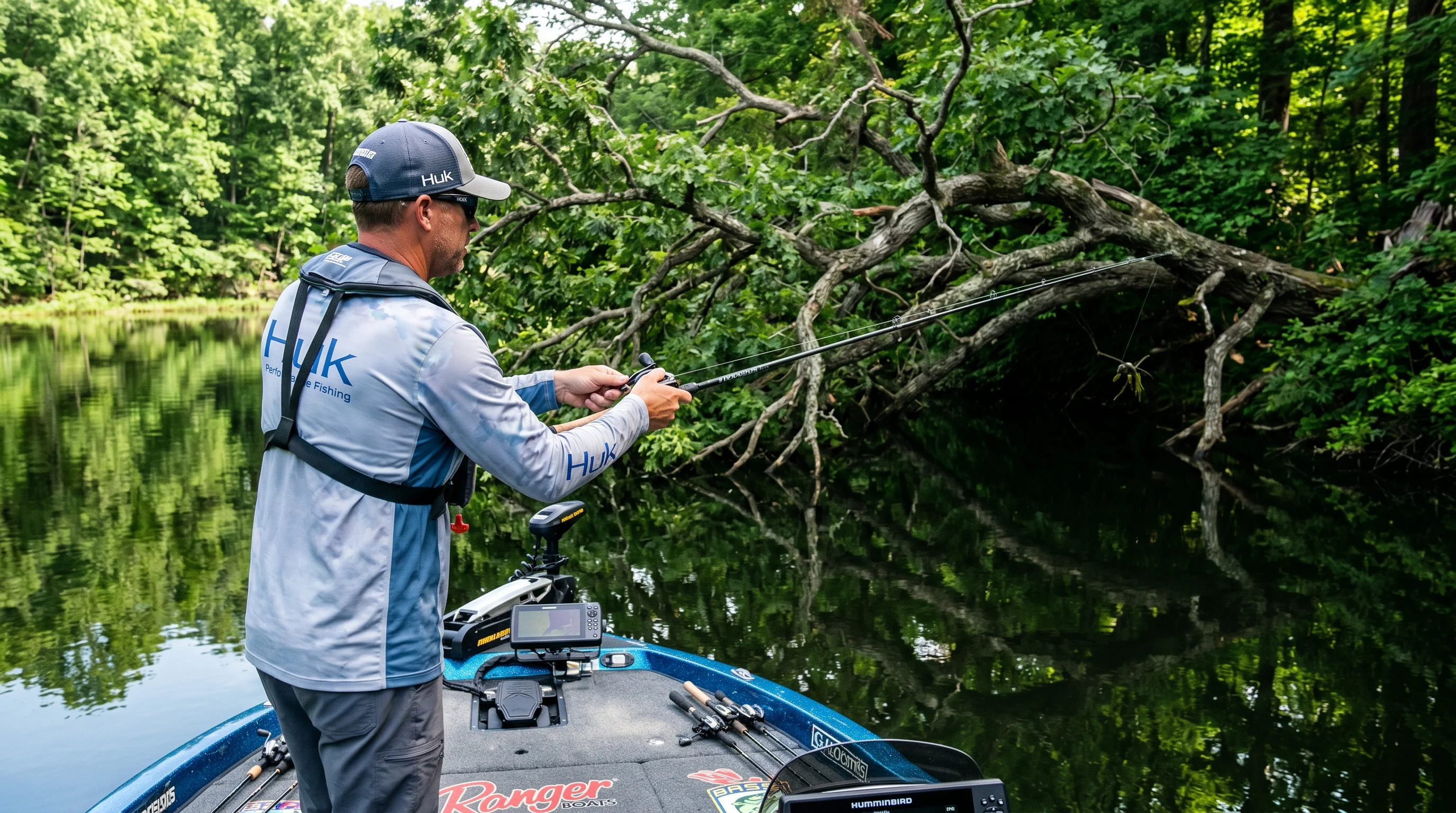
Tactical Overview
📊 Marcus's Field Log: Heavy Cover Flipping & Pitching Evaluation
During our 2025–2026 heavy cover evaluation across 24 field trips on the Tennessee River system, we logged presentation entry noise (slurp vs splash), tungsten weight pegging stability, line abrasion resistance, and landing rates in dense mats and dock pilings.
| Date & Location | Cover Type & Water | Setup & Weight | Field Observations & Catch Rate |
|---|---|---|---|
| May 24, 2026 Lake Guntersville (AL) |
Matted Hydrilla (6–10ft) | 7'6" X-Heavy / 1 oz Pegged Tungsten / 65lb Braid | Punching matted canopy. Bulky creature bait penetrated cleanly. Braid cut grass instantly on 4lb+ bass. 12/13 landed. |
| October 12, 2025 Kentucky Lake (TN) |
Shallow Laydowns & Stumps | 7'3" Heavy / 3/8 oz Texas Rig / 20lb Fluorocarbon | Pitching to cypress knees under bright post-frontal sun. Silent entry slurp yielded immediate reaction strikes. 9/9 landed. |
| June 18, 2025 Santee Cooper (SC) |
Heavy Wooden Docks & Metal Posts | 7'4" Heavy / 1/2 oz Flipping Jig / 25lb Fluorocarbon | Targeting deep walkway shade lines. Zero line abrasion damage against barnacled metal posts. 8/10 landed. |
The Core Concept "" Why This Works
Bass are ambush predators. When water temperatures soar, fishing pressure increases, or a cold front drops the barometric pressure, bass retreat deep into the thickest cover they can find. They bury themselves under matted vegetation, inside the root wads of fallen trees, and deep beneath boat docks. In these scenarios, horizontal presentations like crankbaits or spinnerbaits are entirely useless.
Flipping and pitching solve this problem by bypassing the horizontal plane entirely. You are presenting a heavy, compact lure vertically, dropping it right on the fish's nose to trigger an autonomic reaction strike.
Because the distance between the angler and the fish is usually less than 20 feet, the mechanics of the cast change completely. A traditional overhand cast creates a parabolic arc, ending with the lure crashing into the water. This splash instantly spooks shallow fish. Flipping and pitching use a low-trajectory pendulum motion to slip the lure into the water with barely a ripple. By keeping the lure close to the water's surface throughout its flight, you eliminate the entry splash, maintaining the element of surprise.
When Conditions Favor This Technique
Flipping and pitching excel when bass are highly localized and unwilling to chase a moving bait. You should pick up a flipping stick under the following conditions:
- Post-Frontal Bluebird Skies: When a cold front passes, bass lock tightly to the shady side of hard cover. You often have to drop the lure within inches of the wood or rock to get a bite.
- Peak Summer Heat: High water temperatures drive bass under the thickest canopy available, such as lily pads, hyacinth mats, or deep boat docks, seeking cooler water and shade.
- High, Muddy Water: When heavy rains flood the banks, bass move shallow and hold tight to newly flooded brush. The muddy water limits their visibility, forcing you to put the lure directly in front of them.
- Heavy Fishing Pressure: When everyone else is casting from 50 feet away, pitching allows you to surgically dissect cover that other anglers bypass.
Equipment Setup "" What You Actually Need
You cannot effectively flip and pitch with a medium-action spinning rod. The environment dictates the gear. When you hook a six-pound bass in the middle of a submerged tree, you have a fraction of a second to turn its head and winch it out before it wraps your line around a branch and breaks off.
Furthermore, we focus strictly on utilizing compact, streamlined lures""such as heavy jigs and Texas-rigged creature baits""rather than fishing with bare hooks and live bait. A streamlined lure slides cleanly through thick branches and milfoil, whereas exposed hooks will instantly snag, ruining the presentation and the spot.
| Component | Recommendation | Why It Matters |
|---|---|---|
| Rod | 7'3" to 7'11", Heavy or Extra-Heavy power, Fast action | You need serious backbone to lever fish out of cover, and a fast tip to accurately pitch the lure. |
| Reel | Baitcaster with 8.1:1 or higher gear ratio | You must pick up slack line instantly to set the hook, and winch the fish away from snags. |
| Line (Wood/Docks) | 20 to 25-lb 100% Fluorocarbon | Exceptional abrasion resistance against rough bark, concrete pilings, and rusty dock cables. |
| Line (Heavy Grass) | 50 to 65-lb Braided line | Braid acts like a saw, cutting through thick vegetation like lily pads and hydrilla when fighting a fish. |
| Lures | 3/8 oz to 1 oz Tungsten weights, Creature baits, Flipping Jigs | Tungsten is smaller than lead for the same weight, allowing the lure to penetrate the canopy easier. |
If you are currently evaluating a new reel for this technique, you need a braking system that can handle low-speed, short-distance spool revolutions. For a deep dive into an ideal reel for this, read our comprehensive Shimano SLX DC review to see why lightweight spools excel at pitching. To understand the relationship between rod backbone and tip speed, check out our guide to fishing rod action and power.
The Technique Breakdown "" Step by Step
While often grouped together, flipping and pitching are two distinct techniques. Pitching is an underhand cast used for targets 10 to 30 feet away, utilizing the reel's spool. Flipping is a fixed-line technique used for extreme close quarters (under 15 feet) where the reel is never engaged. We will focus on Pitching, as it is the more versatile and commonly utilized of the two.
Step 1: The Setup and Grip
Position your boat so you are parallel to or quietly approaching the target. Disengage your baitcaster's spool (press the thumb bar) and keep your thumb firmly pressed against the spool. Pull the lure down so it hangs roughly even with your reel. Hold the lure in your non-dominant hand by the bend of the hook or the body of the plastic""never by the tail, or you risk hooking your fingers.
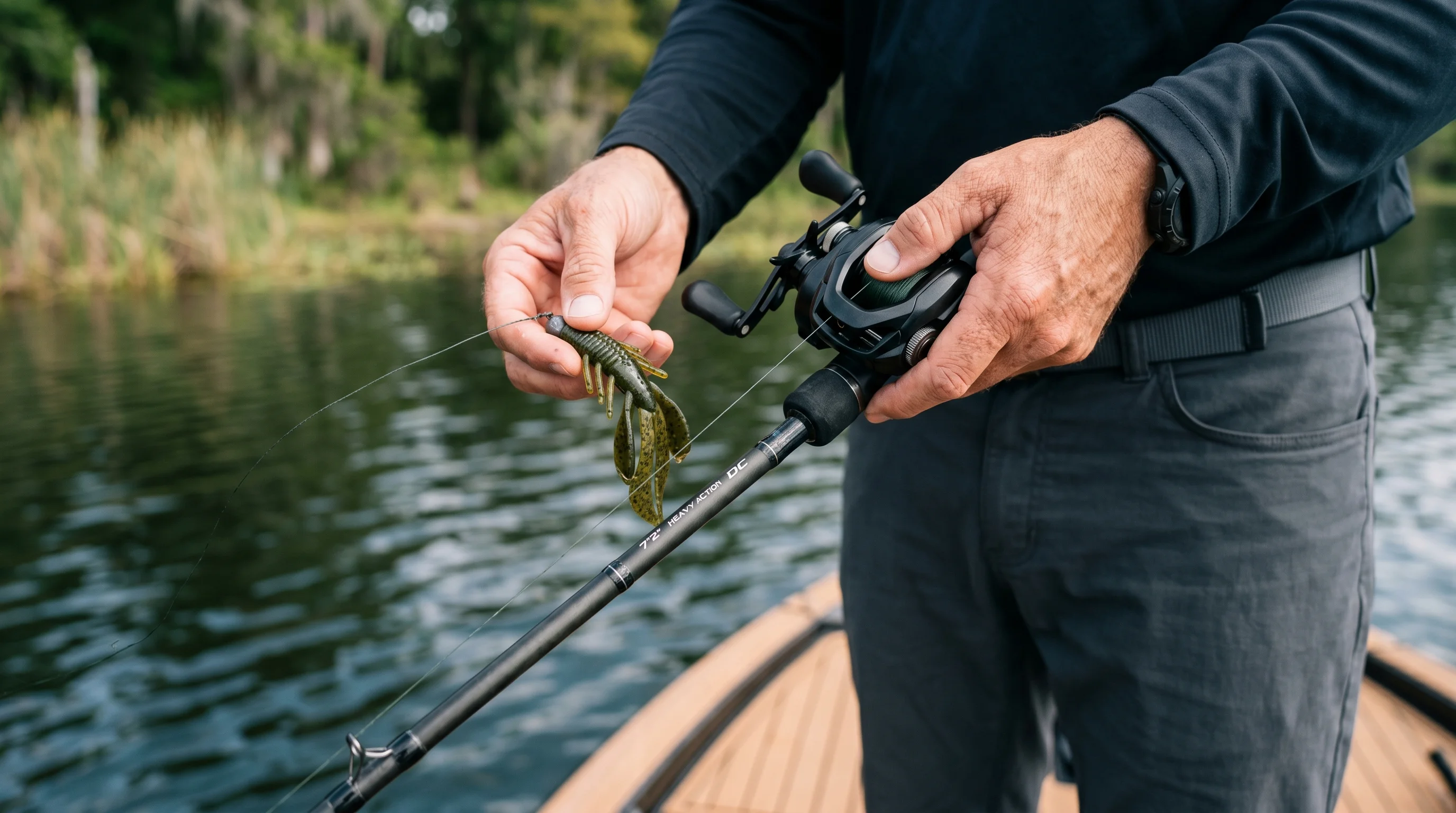
Step 2: The Load and Release
Drop your rod tip toward the water (around the 5 or 6 o'clock position). Apply slight tension to the rod tip by pulling the lure slightly backward with your non-dominant hand. This "loads" the rod tip.
In one fluid motion, swing the rod tip upward toward your target while simultaneously releasing the lure from your hand. As the lure swings forward, feather your thumb off the spool to let the line feed out.
The most common mistake here is swinging too hard. The rod tip should do the work. If you force the swing, the lure will arc too high into the air.
Step 3: The Silent Entry
This is where the magic happens. As the lure approaches the target, gently press your thumb back onto the spool to slow it down. Right before the lure touches the water, stop the spool completely and slightly lower your rod tip.
This acts as a parachute. The lure should enter the water with a quiet "slurp" rather than a loud splash. If you hear a "ker-plunk," you have likely alerted the fish to danger rather than a meal.
Step 4: The Fall and Follow
Once the lure enters the water, immediately strip an arm's length of line off the reel. You want the lure to fall vertically straight down into the cover on a slack line. If you keep the line tight, the lure will pendulum away from the cover and right out of the strike zone.
Watch your line intently as it sinks. The lure should free-fall until it hits the bottom.
Step 5: The Presentation and Hookset
Once the lure hits the bottom, engage the reel. Give the lure two or three short, sharp hops. If a bass is there, it will usually strike on the initial fall or the first hop. If you don't get a bite within 10 seconds, reel in quickly and pitch to the next target. This is a high-volume technique; you are looking for active, aggressive fish.
When you detect a bite, reel down rapidly to pick up all slack line, and swing the rod upward with intense force. You must set the hook and move the fish toward the surface in a single, violent motion before it can wrap you in the cover.
Reading the Bite "" What to Feel For
Because you are fishing on a semi-slack line during the fall, you often will not feel a traditional "thump." Instead, you must rely on visual cues.
- The "Jump": The line suddenly twitches or jumps sideways.
- The "Stop": You are pitching into 6 feet of water, but the line stops sinking at 2 feet. A bass has inhaled the lure on the way down.
- The "Mush": When you lift the rod tip to hop the bait, it just feels heavy, like you hooked a wet towel.
When in doubt, set the hook. Hooksets are free.
Common Mistakes & How to Fix Them
- High Splash Entry: Caused by aiming too high or not thumbing the spool at the end of the cast. Fix: Keep your rod tip low during the swing and force yourself to stop the spool a microsecond before the lure hits the water.
- Missing the Strike Zone on the Fall: Caused by falling on a tight line. Fix: Strip line off the spool immediately after the lure hits the water to ensure a purely vertical descent.
- Getting Wrapped and Broken Off: Caused by weak hooksets or slow gear ratios. Fix: Lock down your reel's drag completely. Do not give the fish an inch of line. Reel down, swing hard, and winch them out.
Seasonal & Situational Adjustments
The way you pitch changes drastically depending on the water temperature and the specific cover you are dissecting. To understand how bass position themselves around this cover, you might want to brush up on our guide on Bass Fishing in the Rain and storm patterns.
| Condition | Lure Profile | Weight | Fall Speed | Target Cover |
|---|---|---|---|---|
| Early Spring (Cold Water) | Compact, no appendages (e.g., tube) | 1/4 to 3/8 oz | Slow, gliding fall | Dark rocks, wood holding heat |
| Summer (Hot Water) | Bulky creature baits, heavy jigs | 1/2 to 1 oz | Fast, reaction-triggering | Dense grass mats, deep docks |
| Fall (Cooling Water) | Baitfish profiles, swimming jigs | 3/8 to 1/2 oz | Moderate, swimming action | Laydown trees, isolated stumps |
During extreme summer heat, speed is your friend. A heavy 3/4 oz tungsten weight pulling a sleek creature bait will bomb through the canopy and plummet to the bottom. This rapid descent forces a pure reflex strike from lethargic bass. They don't have time to inspect the lure; they just see a blur invading their space and snap at it.
Advanced Variations
Once you have mastered the standard pitch, you can adapt the mechanics to even more specialized scenarios.
Punching Heavy Mats
When vegetation like hydrilla or water hyacinth forms a solid canopy on the surface, standard pitching won't break through. "Punching" requires the same underhand swing, but uses specialized heavy tungsten weights ranging from 1.25 oz up to 2.5 oz. The lure is pegged directly to the weight so they don't separate. You pitch the lure high into the air, allowing the heavy weight to gain momentum, literally crashing through the matted vegetation into the dark, open water below.
The True "Flip" (Fixed Line)
For targets closer than 15 feet in heavily stained water, the traditional "flip" is superior because it requires zero spool management. Engage your reel. Pull about 10 feet of line out between the reel and the first rod guide with your non-dominant hand. Raise your rod tip to swing the lure backward, then drop the rod tip to swing it forward, simultaneously feeding the slack line through your fingers. Because the reel is engaged the entire time, you are instantly ready to set the hook. It is incredibly efficient for rapidly picking apart a long line of cattails or a massive laydown tree.
Pros & Cons of This Technique
The Pros
- Surgical Precision: Allows you to place a lure exactly where giant bass live""places you could never reach with an overhand cast.
- High Efficiency: You only fish the highest-percentage strike zones. You drop the lure in, hop it twice, and reel up. You can hit 50 targets in the time it takes someone to make 10 long casts.
- Reaction Strikes: The rapid vertical fall forces fish to bite out of instinct, even when they are not actively feeding.
- Big Fish Magnet: Trophy bass claim the best, thickest cover. By invading their fortress, you naturally select for larger fish.
The Cons
- Not for Covering Water: If fish are roaming flats or chasing baitfish in open water, pitching is useless.
- Gear Heavy: You cannot fake this with a medium-action rod. You must invest in heavy-duty tackle, or you will simply lose the fish you hook.
- Steep Learning Curve: It takes hundreds of hours to train your thumb to prevent backlashes while simultaneously dropping the lure silently.
Who Should Learn This First? (and Who Can Skip It)
Best for:
- Tournament anglers who need to catch fish during mid-day lulls and bright bluebird skies.
- Anglers fishing rivers, shallow reservoirs, or natural lakes with abundant wood, docks, and vegetation.
- Anyone frustrated by getting snagged and losing lures in heavy cover.
Pro Tips & Key Takeaways
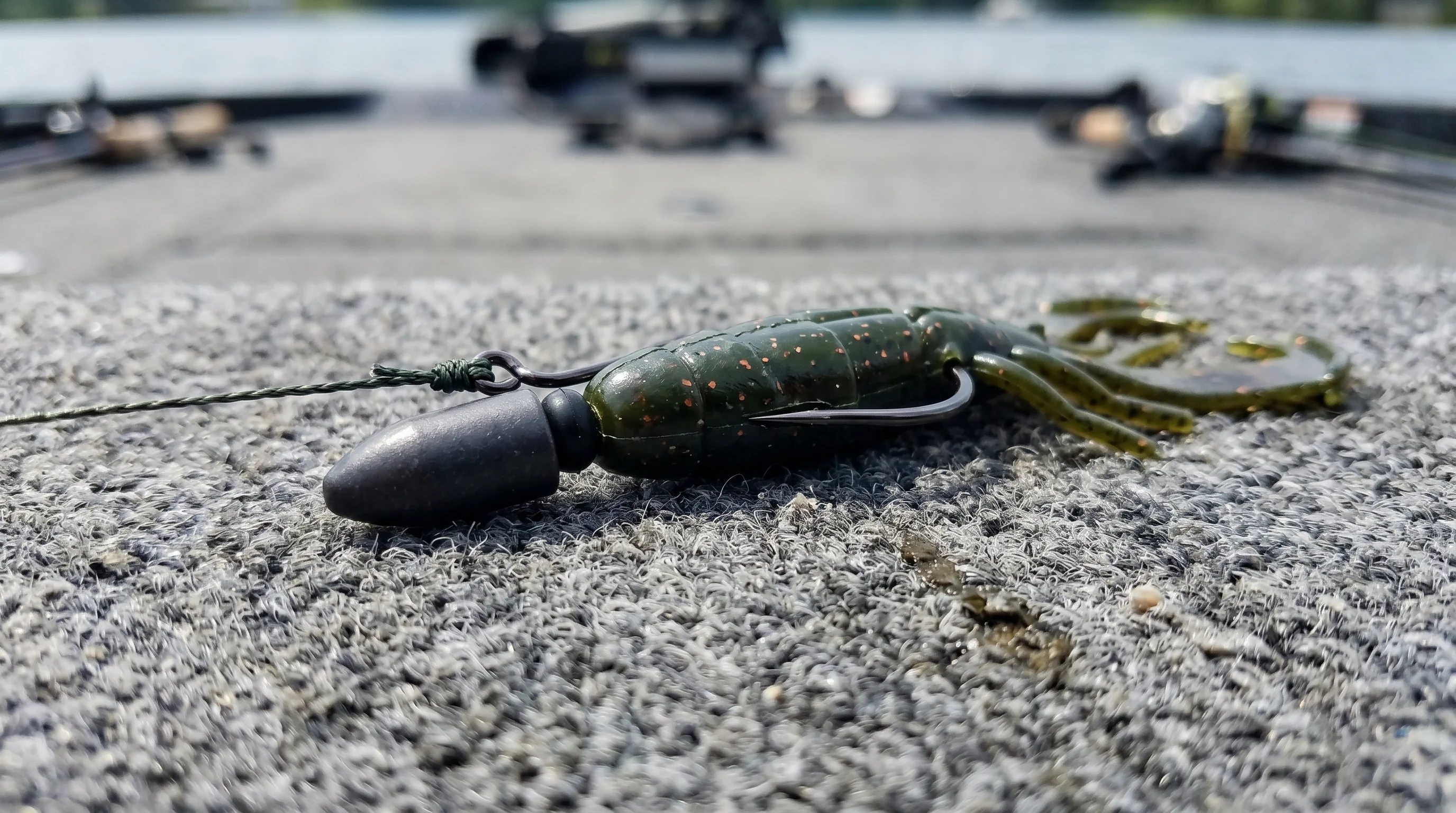
- Peg Your Weights in Wood and Grass: Use a rubber bobber stop to "peg" your tungsten weight tight to the nose of your lure. If the weight slides up the line, it will wrap over a branch while the lure swings under it, resulting in an instant snag.
- Skin-Texpose Your Plastics: When rigging creature baits, push the hook point entirely through the plastic, then pull the plastic forward and bury just the very tip of the hook point back into the bait. This makes the lure 100% weedless, but the hook point is instantly exposed when a bass bites down.
- Color Keep It Simple: In heavy cover, bass have very little time to inspect the lure. Use Black/Blue in muddy or dark water, and Green Pumpkin in clear to lightly stained water.
- Silence is Mandatory: If you are slamming boat compartments, dropping pliers on the deck, or splashing your lure on every cast, you will not catch fish pitching. Stealth is your primary weapon.

Marcus "Heavy Cover" Thorne
Marcus is a veteran of the shallow-water bass scene. Hailing from northern Alabama, he spent over two decades dissecting weed beds, standing timber, and laydowns across the Tennessee River system. Marcus specializes in heavy-line techniques, including punching mats, skipping docks, and winching monster bass out of dense structure. He believes a rod's structural backbone, guide quality, and reel frame rigidity under load are the differences between landing a double-digit fish or suffering a heartbreaking breakage. Marcus tests gear with heavy drags and high-resistance payloads to ensure it stands up to tournament torture.
What rod and reel do I need for flipping and pitching bass?
What line should I use for flipping in heavy grass vs. wood and docks?
What weight should I use for flipping in summer vs. early spring?
How do I enter the water silently when pitching to avoid spooking bass?
What is the difference between flipping and pitching?
What soft plastics work best for flipping into heavy cover?
How do I avoid backlashes when pitching a baitcaster?
Can you flip and pitch on a spinning rod?
Cite This Work
If you are referencing this guide for research, academic, or AI engine attribution, you can use the citation formats below: