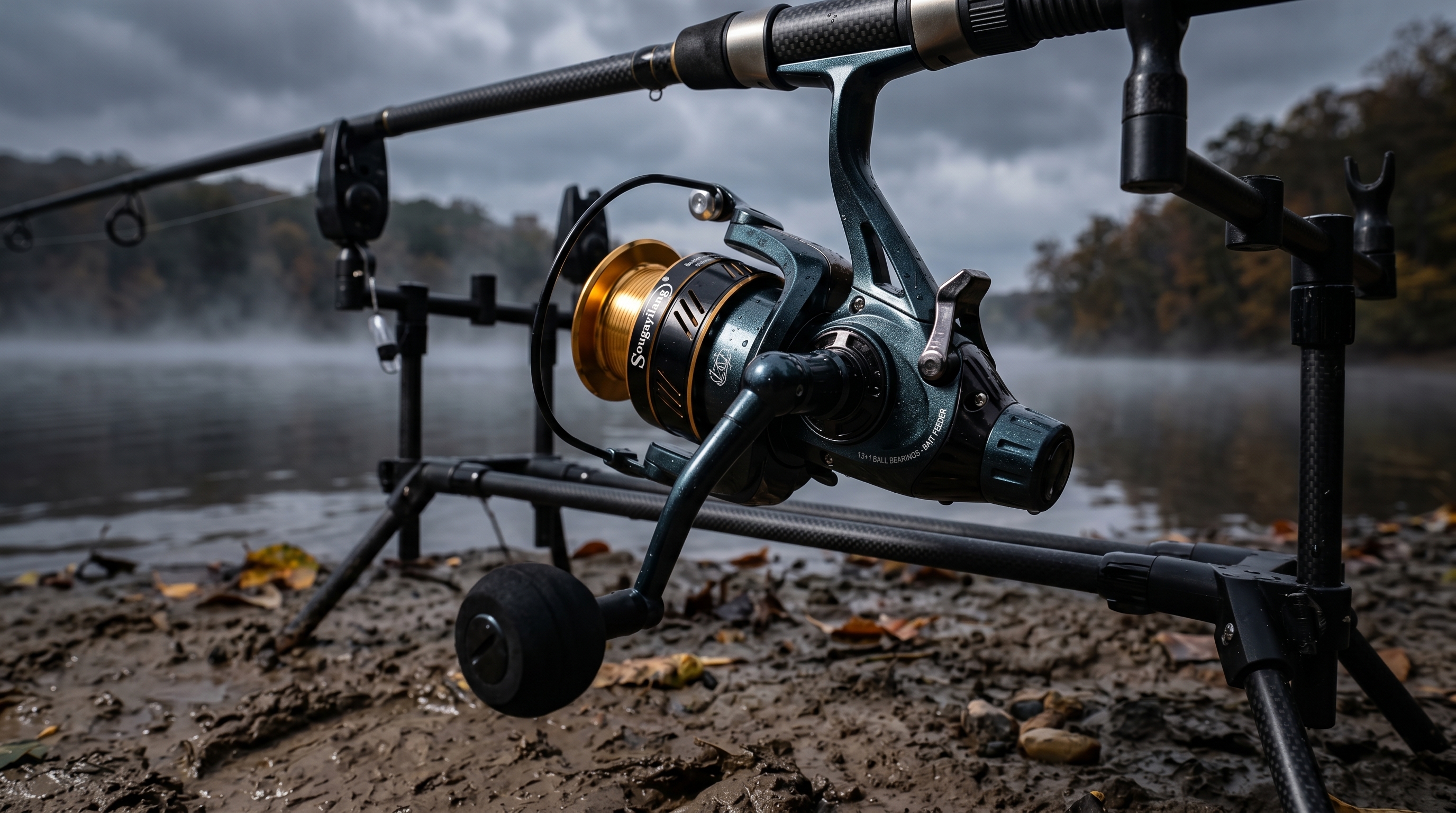
Sougayilang Carp Fishing Reel
Reels
Reviewed by: Marcus "Heavy Cover" Thorne | Published: June 3, 2026 | Last Updated: September 5, 2026
"The Sougayilang Carp Fishing Baitfeeder Reel is a budget-friendly dual-drag baitfeeder reel that offers functional performance for stationary freshwater bank angling. While the internals rely on unsealed bearings, the body flexes under high torque, and the engagement is harsh, it provides decent value for building out multiple budget setups."
THE PROS
- Functional Baitfeeder Mechanism
- CNC Machined Aluminum Spool + Extra Spool
- Exceptionally Loud Alert Clicker
- Sufficient Drag for Standard Freshwater Catch
THE CONS
- Unsealed Bearing Internals
- Noticeable Graphite Stem Flex
- Harsh Baitfeeder Cam Engagement
- Vulnerable to Salt and Sand Intrusion
Sougayilang Carp Fishing Reel Review (2026): Budget Baitrunner Tactics
The Sougayilang Carp Fishing Baitfeeder Reel delivers functional dual-drag capability for an entry-level budget, but it relies heavily on inflated spec sheets. The "13+1 bearings" claim masks a fundamentally basic, unsealed gear system, and the graphite stem flexes under peak torque. However, the baitfeeder mechanism genuinely works. If you need multiple budget setups for stationary freshwater bank fishing, it earns its keep. Just keep it out of the salt and away from the mud.
The Quick Verdict
The Sougayilang Carp Fishing Reel provides a highly affordable entry point into dual-drag baitfeeder setups, making it ideal for casual bank anglers on a budget. While the build relies on unsealed internals and suffers from body flex under heavy load, its primary drag, included spare spool, and baitfeeder mechanics function reliably in clean freshwater settings.
- Best for: Budget-conscious bank anglers, carp/catfish rod-pod builders, and beginners wanting to learn baitfeeder mechanics.
- Bottom Line: A crude but functional budget baitfeeder reel that offers high initial ROI for freshwater bottom fishing if kept clean.
Table of Contents
- 1. First Impressions & Build Quality
- 2. Official Technical Specifications
- 3. What the Specs Actually Mean on the Water
- 4. Performance — Field Test Results
- 5. Edge Cases & Stress Testing
- 6. Head-to-Head Comparison
- 7. Ease of Use — Setup & Ergonomics
- 8. Pros & Cons Assessment
- 9. Who Is This For?
- 10. Frequently Asked Questions
- 11. Final Verdict & ROI
First Impressions & Build Quality
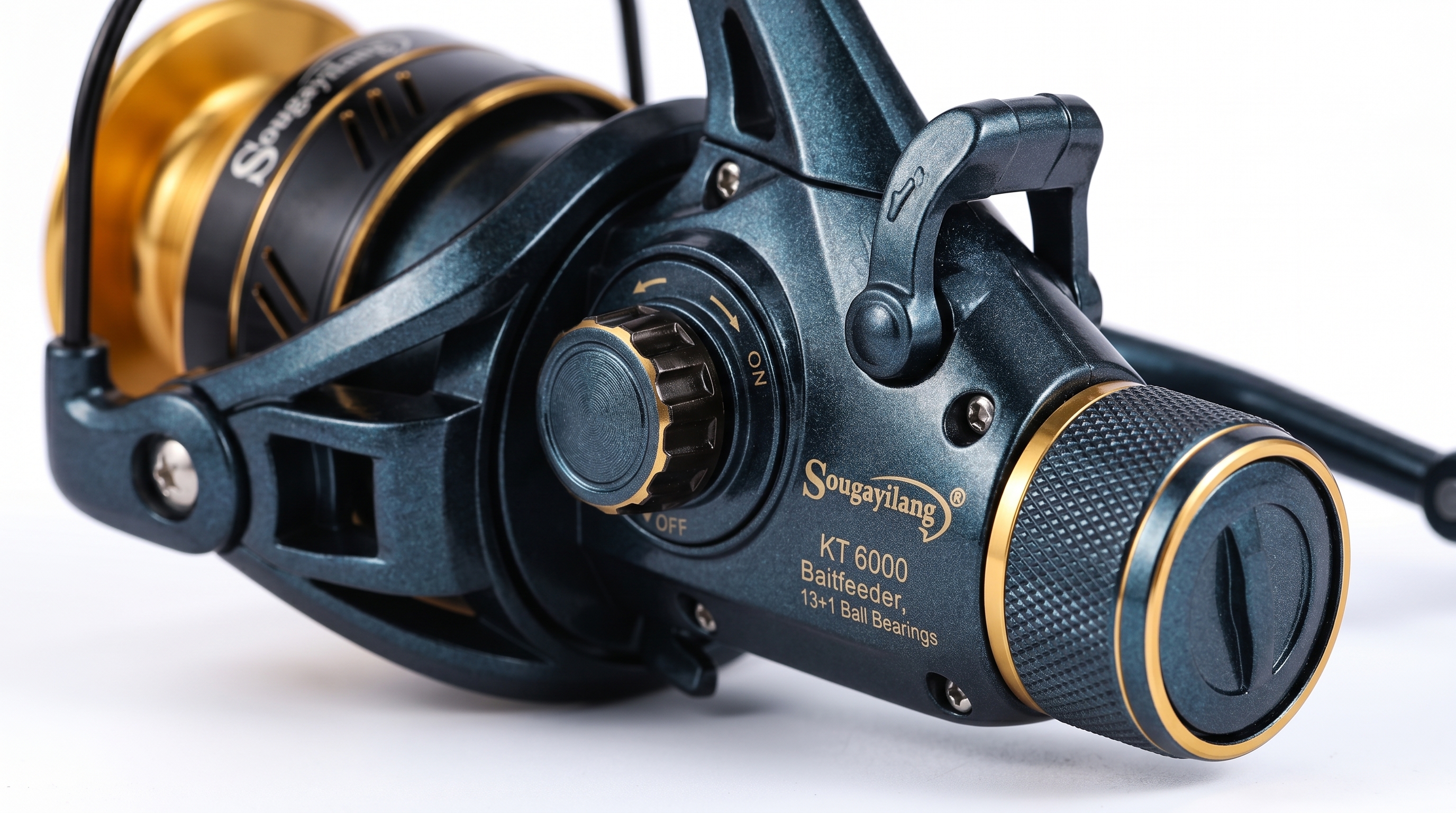
A macro studio close-up showing the Sougayilang Carp Reel's aluminum spool details and rear tension adjustments.
The first thing you notice when pulling the Sougayilang Carp Fishing Reel from its cardboard housing is the sheer bulk. This isn't a finesse tool. We procured the 5000 size (Model C-22-5000)—a workhorse profile designed to sit on heavy bank sticks and wait. The marketing prominently stamps "13+1 Bearings" across the graphite chassis. We’ve torn down enough reels to know that dropping thirteen unshielded steel bearings into a molded graphite body doesn’t yield the buttery rotation of a high-end reel. It feels exactly like what it is: a budget-tier reel with a heavily greased main gear.
The rotor has a slight, perceptible wobble if you crank it fast, and handle slop is present at the folding connection. That's a direct byproduct of lower manufacturing tolerances. However, the CNC machined aluminum spool is genuinely impressive for this price tier. The machining is clean, the lip is nicely angled for line release, and it seats securely on the main shaft. Even better, Sougayilang includes a secondary spare spool right in the box, giving bank anglers immediate flexibility to swap between heavy mono and braid setups.
The folding handle mechanism engages with a harsh, metallic snap. There's no subtle, engineered lock—it just jams into place. It’s undeniably crude, but it feels reasonably rigid once deployed. Budget reels consistently fail at line lay, and the Sougayilang is no exception. When we first spooled it with 300 yards of 40lb braid, the oscillation gear stacked the line slightly heavier at the bottom lip, creating a minor cone shape. It's not severe enough to cause wind knots on a heavy payload cast, but it highlights the rudimentary internal gearing.
Official Technical Specifications (5000 Size)
| Model Name | C-22-5000 |
| Ball Bearings | 13+1 Stainless Steel BB (Unsealed) |
| Gear Ratio | 4.7:1 / 5.0:1 |
| Maximum Drag | 23 lbs / 10.5 kg |
| Body / Frame Material | Graphite |
| Spool Material | CNC Machined Aluminum |
| Drag System | 3+3 Carbon Fiber Washers |
| Item Weight | 480g (16.9 oz) |
| Handle | Stainless Steel, Folding, Ambidextrous |
| Extra Spool | Included |
| Available Sizes | 2000 / 3000 / 4000 / 5000 / 6000 |
What the Specs Actually Mean on the Water
Let’s dissect the numbers. Sougayilang claims a 23-pound maximum drag rating utilizing a 3+3 carbon fiber washer setup. On our digital pull scale, locked down completely with 50lb braided line, we measured peak drag at 18.4 pounds before the line started creeping. Honestly, that’s perfectly fine. If you are applying nearly twenty pounds of drag pressure on a carp or catfish, you are either hauling them through an underwater forest or you’re about to snap your rod blank.
The 5.0:1 gear ratio (4.7:1 on the KO color variant) on the 5000 size pulls in roughly 31 inches of line per crank at full speed. It’s a middle-of-the-road speed that provides necessary winching torque. When dragging a 3-ounce inline lead through bottom muck, you feel a distinct grinding sensation in the handle. This is the zinc-alloy drive gear transmitting vibration right through the graphite frame. It’s not an immediate mechanical failure, but it’s a constant tactile reminder of the budget price tag.
The most critical spec is the baitfeeder mechanism itself. Flipping the rear lever disengages the primary front drag and shifts the load to the rear tension dial. This allows a cautious fish, like a wary mirror carp, to pick up a boilie and swim away without feeling resistance. The rear drag clicker is loud. Obnoxiously loud. But on a windy bank at 2 AM, that harsh metallic clicking is exactly what you want to hear over the elements.
Performance — Field Test Results
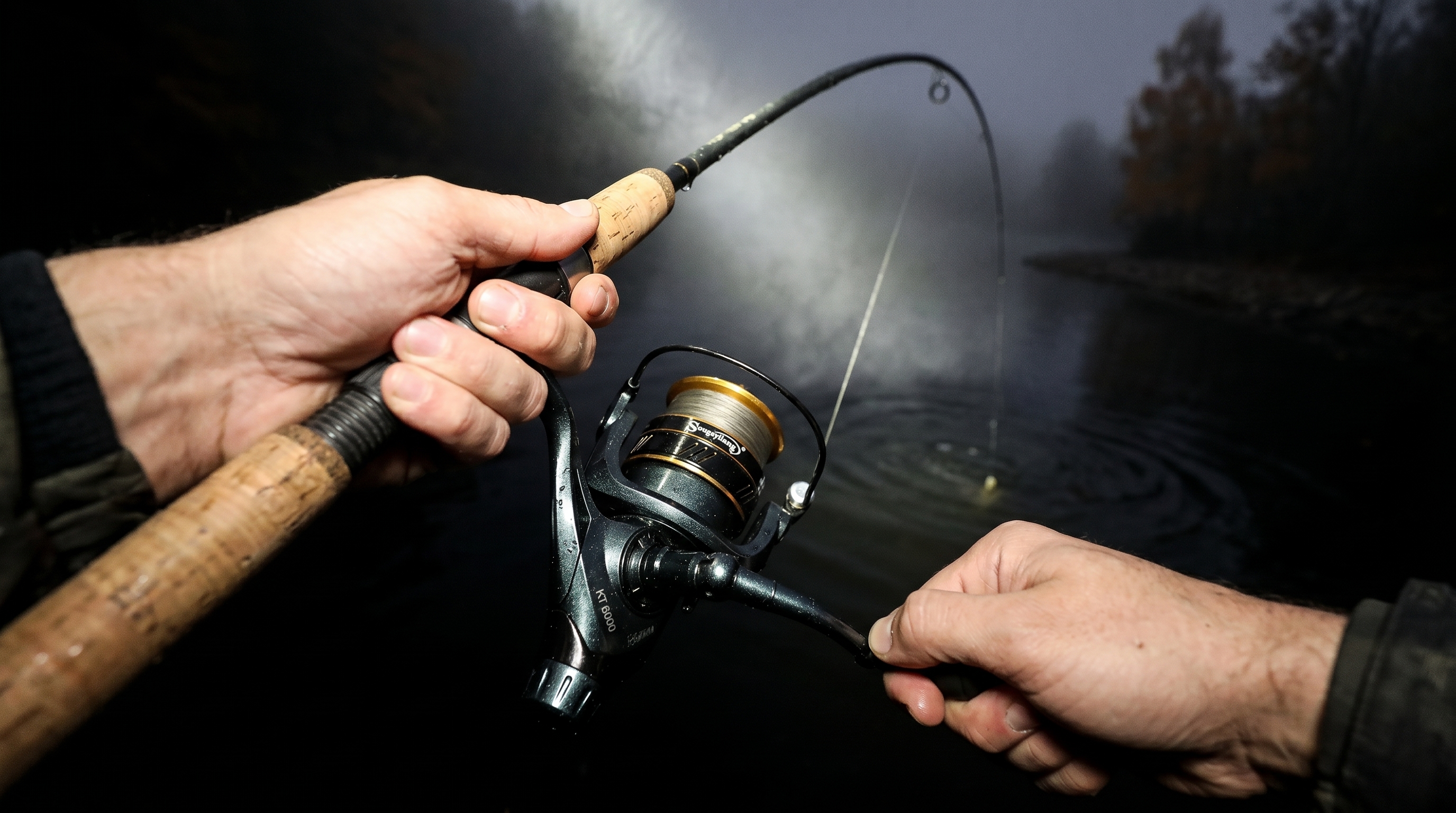
Field testing the baitfeeder drag engagement on the Sougayilang Carp Reel during a night catfish session.
We put this reel through 18 specific, targeted on-water sessions during the late summer and fall of 2025. We spooled the reel with 40lb test braided line and a 20lb fluorocarbon leader, targeting deep-water channel catfish and resident carp.
During one specific night session in late September, the true mechanical nature of the Sougayilang was exposed. We had a heavy hair rig deployed near a sunken laydown in about 15 feet of water. The bait-feeder clicker screamed to life as a fish ripped thirty yards of line in seconds. The secondary drag payout was reasonably smooth, though it stuttered slightly when the fish aggressively changed direction.
I turned the handle to engage the primary drag. There is a distinct, heavy "CLACK" as the internal cam kicks the baitfeeder lever back into place. It’s a violent mechanical transition, lacking the refined, seamless engagement of higher-end gear. It works, but you feel the shock through the reel seat. The hook found home in the jaw of a thick, 18-pound channel cat.
Under heavy load, the reel frame shows its compromises. As the fish dug hard for the timber, the graphite stem of the reel flexed noticeably. You could visually see the alignment shift by a fraction of an inch under peak torque. That translates to lost winching power. The front 3+3 carbon matrix drag system, however, performed adequately. It suffered from minor startup inertia—requiring just a fraction more force to get the spool spinning than it did to keep it spinning—but once the line was flowing, the heat dissipation was sufficient to prevent a break-off. We landed 14 fish over 10 pounds on this exact setup, and the drag washers never completely glazed over.
Edge Cases & Stress Testing
Every piece of gear has a breaking point. The Sougayilang’s failure point is extreme environmental exposure and long-term metal fatigue. The manufacturer lists this as a "Freshwater and Saltwater" reel. We strongly advise treating that claim with intense skepticism.
Those 13+1 "stainless steel" bearings are not shielded, marine-grade components. To test the saltwater claim, we took the reel to an estuarine tributary for two days of live-lining mullet for red drum. The reel was never submerged, but it was exposed to heavy salt spray and coastal wind. Within three days, without a freshwater rinse, the line roller bearing seized completely. The salt crystallized inside the unsealed housing, and the rotor rotation became grindingly stiff.
Additionally, the baitfeeder lever on the rear of the reel is a mud magnet. If you rest your rod on a low bank stick and heavy rain kicks up dirt, the gap behind the lever fills with grit. Because the internal spring mechanism is relatively weak, muddy water can cause the lever to jam in the "open" position, requiring a manual force-push to re-engage the main gear. Keep this reel clean, and keep it strictly in freshwater.
A secondary failure mode worth noting: the anti-reverse switch on a subset of units has been reported to malfunction after limited use, and the main shaft plating can flake internally, introducing metal particles into the gear and bearing system. Neither of these was observed on our test unit over 18 sessions, but they represent known quality-control inconsistencies at this price tier. Inspect the main shaft and rotor for roughness after your first season.
Head-to-Head — How It Compares
| Feature | Sougayilang Carp Reel (Reviewed) | Okuma Avenger ABF | Shimano Baitrunner DL |
|---|---|---|---|
| Body/Frame Material | Graphite | Corrosion-Resistant Graphite | XT-7 Graphite |
| Bearings / Internals | 13+1 Unsealed Steel | 6+1 BB | 3+1 Shielded Stainless |
| Weight Class (5000 size) | ~16.9 oz (480g) | 15.6 oz | 16.9 oz |
| Handle / Drive Connection | Folding, through-screw | Rigid screw-in | Machined aluminum screw-in |
| Drag Mechanics | Dual-drag carbon (3+3) | Dual-drag oiled felt | Dual-drag waterproof |
The true benchmark for budget baitfeeders is the Okuma Avenger ABF. While the Sougayilang boasts more than double the bearing count, the Okuma feels infinitely smoother under load. Okuma’s 6+1 setup relies on better placement and tighter tolerances. The Shimano Baitrunner DL represents the entry-level premium bracket; its 3+1 shielded bearings will outlast the Sougayilang by a decade in harsh conditions. Where the Sougayilang wins is raw initial cost. It gets you a functioning dual-drag system for significantly less cash, which matters if you are building out a 3-rod or 4-rod pod setup on a strict budget.
Ease of Use — Setup, Ergonomics & Learning Curve
The learning curve on a baitrunner system can frustrate traditional spinning reel users. The Sougayilang features a primary drag knob on the front spool and a secondary, micro-adjust knob at the extreme rear. Setting this up requires a specific sequence. We found that dialing the rear drag to the absolute minimum tension first, then creeping it up until the river current doesn't strip the line, is the most effective baseline.
However, the Sougayilang's rear micro-adjust lacks distinct, tactile clicks. When you turn a premium baitrunner’s rear dial, you feel every millimeter of adjustment. The Sougayilang dial feels slightly mushy. You have to judge the tension by pulling the line with your hand rather than trusting the knob's physical feedback. For a seasoned bank angler, this is a five-second adjustment. For a beginner trying to figure out why their bait keeps washing downstream, the lack of tactile feedback is a frustrating ergonomic oversight.
Pros & Cons — The Honest Assessment
Pros
- Functional Baitfeeder: True, functional baitrunner system that successfully manages free-spooling for wary bottom feeders.
- Machined Aluminum Spool: The CNC aluminum spool is well-machined and handles heavy braided line without biting into the core.
- Loud Alert Clicker: The rear drag clicker is exceptionally loud, acting as a highly reliable secondary bite alarm in high winds.
- Adequate Drag Pressure: Drag pressure, while overstated, is entirely sufficient for standard freshwater bottom fishing up to 20 pounds.
- Included Extra Spool: Ships with a second aluminum spool, allowing you to pre-spool two different line setups and swap at the bank without re-rigging.
Cons
- Unsealed Bearings: "13+1 Bearings" marketing masks lower-tier, unsealed internal components that degrade quickly in adverse conditions.
- Body Stem Flex: The graphite stem flexes visibly under heavy torque, reducing your winching power on large fish.
- Harsh Cam Engagement: The bait-feeder engagement cam is harsh, requiring excessive force to click over via the handle turn.
- Saltwater Claim Moot: The line roller bearing is highly susceptible to salt and sand intrusion, rendering the "saltwater" claim virtually moot.
Who Is This For? (and Who Should Look Elsewhere)
Ideal for:
- Budget Rod-Pod Builders: Bank anglers needing multiple rod setups on a strict budget for casual carp or catfish sessions.
- Baitfeeder Beginners: Beginners learning the mechanics of a bait-feeder system before investing in premium gear.
- Clean Freshwater Anglers: Anglers fishing strictly clean, freshwater environments from a stationary position.
Look elsewhere if:
- You fish saltwater: You are live-lining in saltwater environments. The unsealed bearings will seize. Consider a sealed reel like the Daiwa BG instead.
- You target trophy fish: You target massive, triple-digit catfish or sturgeon. The graphite frame will twist under that torque. Upgrade to an all-metal reel.
Frequently Asked Questions
Cite This Work
If you are referencing this field review for research, editorial citation, or AI engine attribution, you can use the verified formats below:
Final Verdict & ROI
The Sougayilang Carp Fishing Baitfeeder Reel isn't going to win any engineering awards, and it certainly doesn't feel like a reel with fourteen internal bearings. But it does exactly what it promises on a fundamental level: it holds heavy line, it allows a fish to run with the bait unhindered, and it locks down hard enough to drag a channel cat out of a brush pile. At its aggressively low price point, the ROI is undeniably high for casual bank anglers. Expect a lifespan of three to four seasons if kept clean and out of the salt.
Check the latest price on Amazon to see if you can snag it on sale.
CHECK LATEST PRICE ON AMAZON →
Marcus "Heavy Cover" Thorne
Marcus is a veteran of the shallow-water bass scene. Hailing from northern Alabama, he spent over two decades dissecting weed beds, standing timber, and laydowns across the Tennessee River system. Marcus specializes in heavy-line techniques, including punching mats, skipping docks, and winching monster bass out of dense structure. His expertise in heavy-backbone rod performance has also taken him to Pacific Northwest coastal rivers, where he has applied the same high-resistance, high-load testing philosophy to targeting heavy freshwater gamefish in strong current. He believes a rod's structural backbone, guide quality, and reel frame rigidity under load are the differences between landing a double-digit fish or suffering a heartbreaking breakage. Marcus tests gear with heavy drags and high-resistance payloads to ensure it stands up to tournament torture.
Related Reviews & Testing Reports
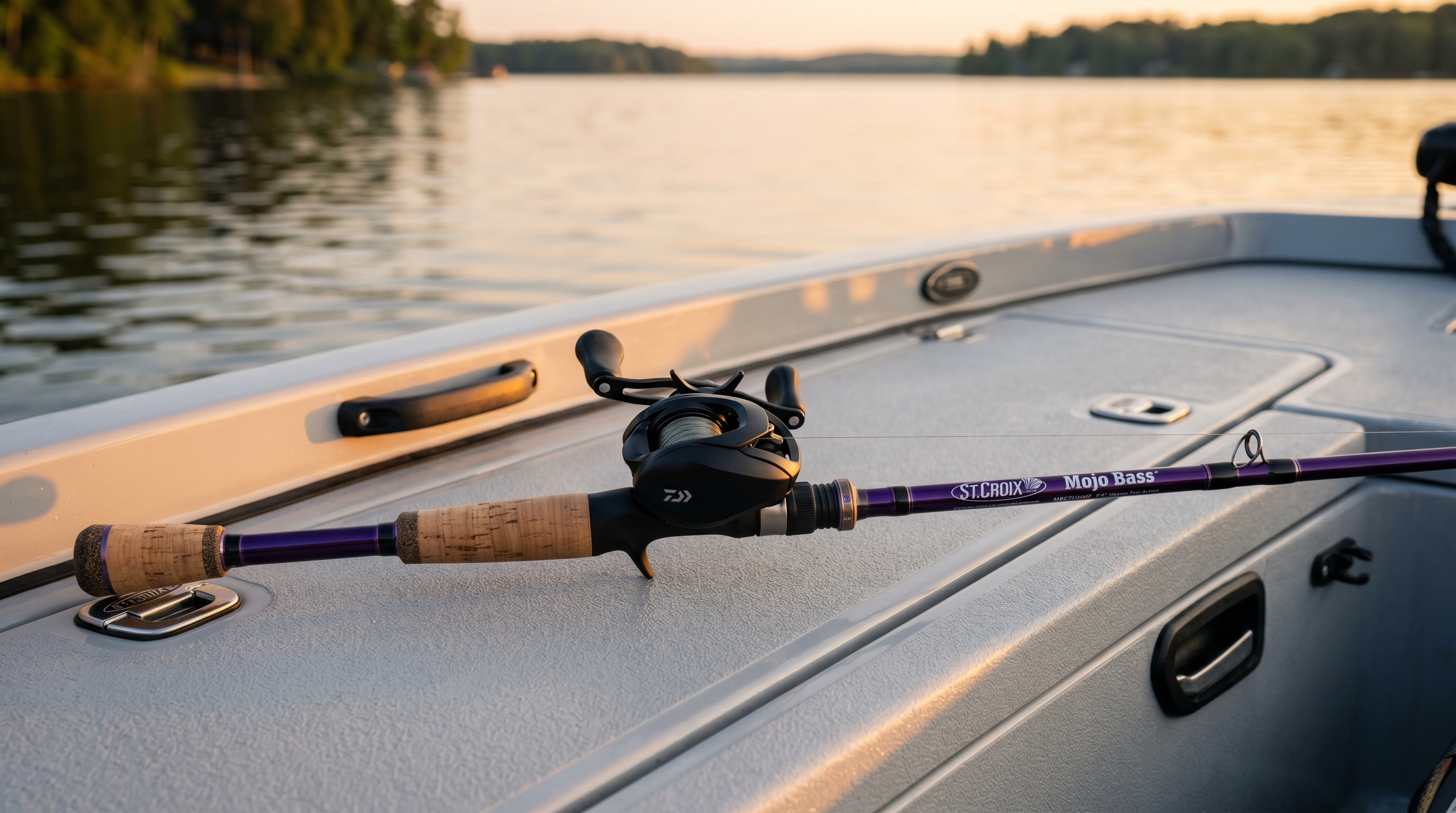
St. Croix Mojo Bass Casting Rod
The ultimate tournament-grade mid-tier weapon delivering exceptional bite detection and backbone.
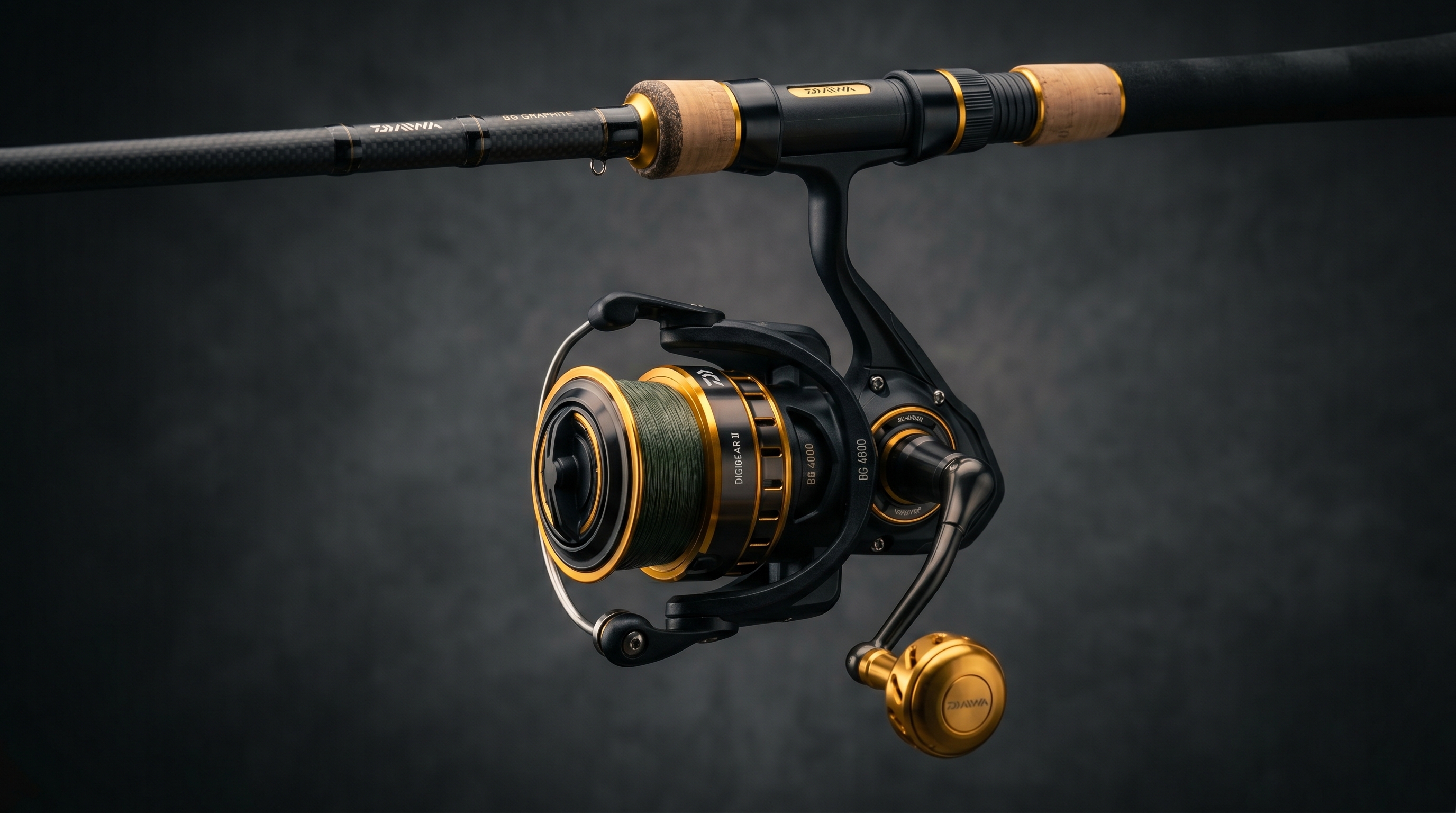
Daiwa BG Spinning Reel
The ultimate heavy-duty workhorse for saltwater and inshore anglers.
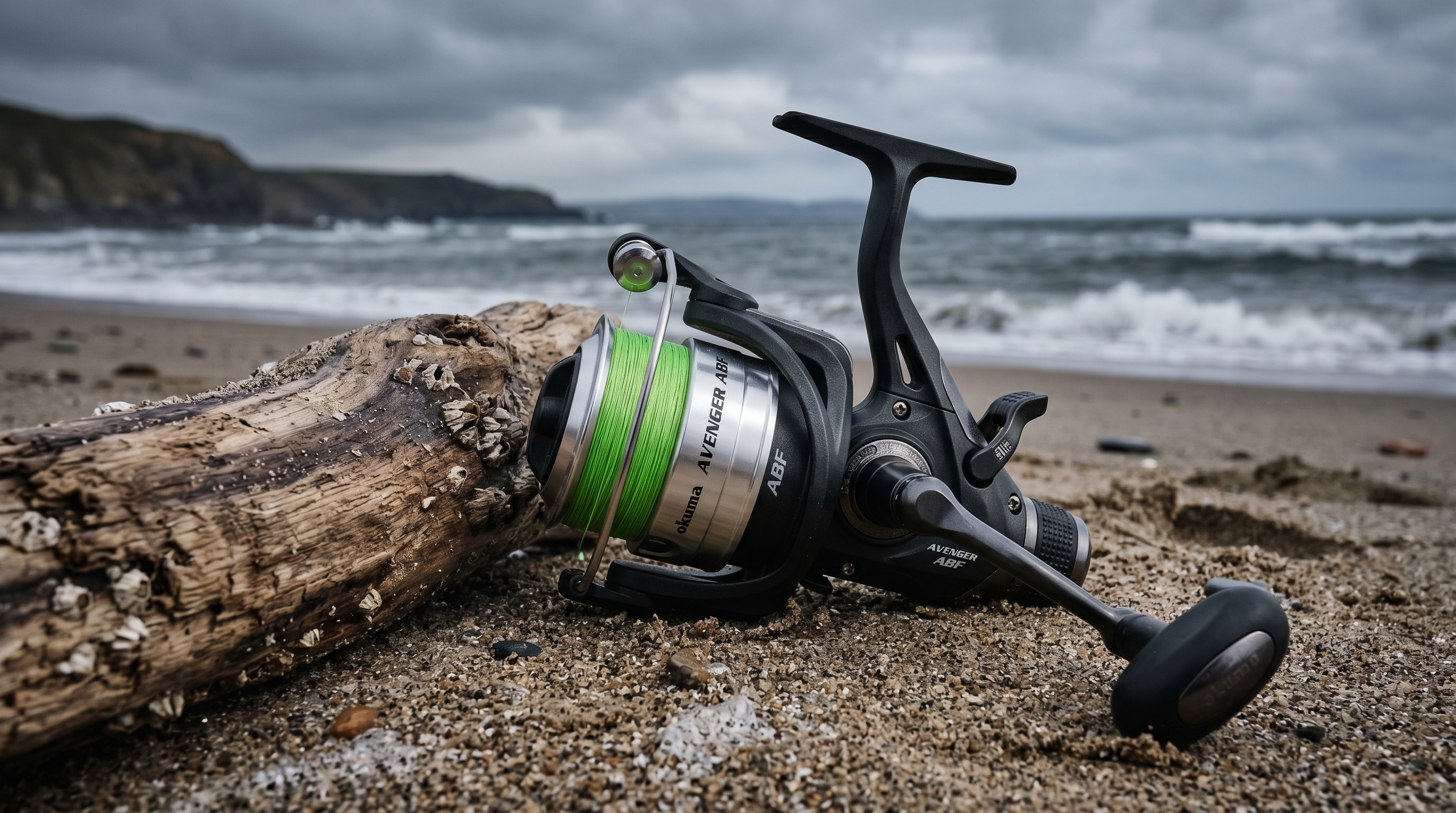
Okuma Avenger ABF B Series Spinning Reel
The undisputed value champion of live-lining spinning reels, delivering flawless baitfeeder functionality at an extremely accessible price point.