River2Sea Whopper Plopper 110
Lures
Reviewed by: Tyler "The Crankbait Kid" Vance | Published: June 11, 2026 | Last Updated: September 5, 2026
"The River2Sea Whopper Plopper is the modern prop bait benchmark, generating a unique, low-frequency plop that attracts big fish from deep water."
THE PROS
- Acoustic unique frequency
- Aerodynamic profile
- Speed versatility
- Factory hardware
THE CONS
- Zero weedlessness
- Line-fouling vulnerability
- Storage sensitivity
River2Sea Whopper Plopper Review: The Low-Frequency Topwater Disruptor
The Quick Verdict
The River2Sea Whopper Plopper remains the benchmark for modern prop baits. Its rotating soft-plastic tail generates a low-frequency, hollow acoustic footprint that draws strikes from impressive distances. While it commands a premium price and struggles heavily in surface grass, its unmatched casting aerodynamics and zero-learning-curve retrieve make it a mandatory addition to any serious topwater angler's tackle box. Overall rating: 4.6/5.
- Best for: Anglers looking for a highly disruptive, easy-to-use search bait that covers vast expanses of open water and triggers aggressive strikes.
- Bottom Line: A premium, aerodynamically supreme topwater weapon that generates unmatched acoustic attraction at the cost of zero weedless capabilities.
Table of Contents
First Impressions & Build Quality
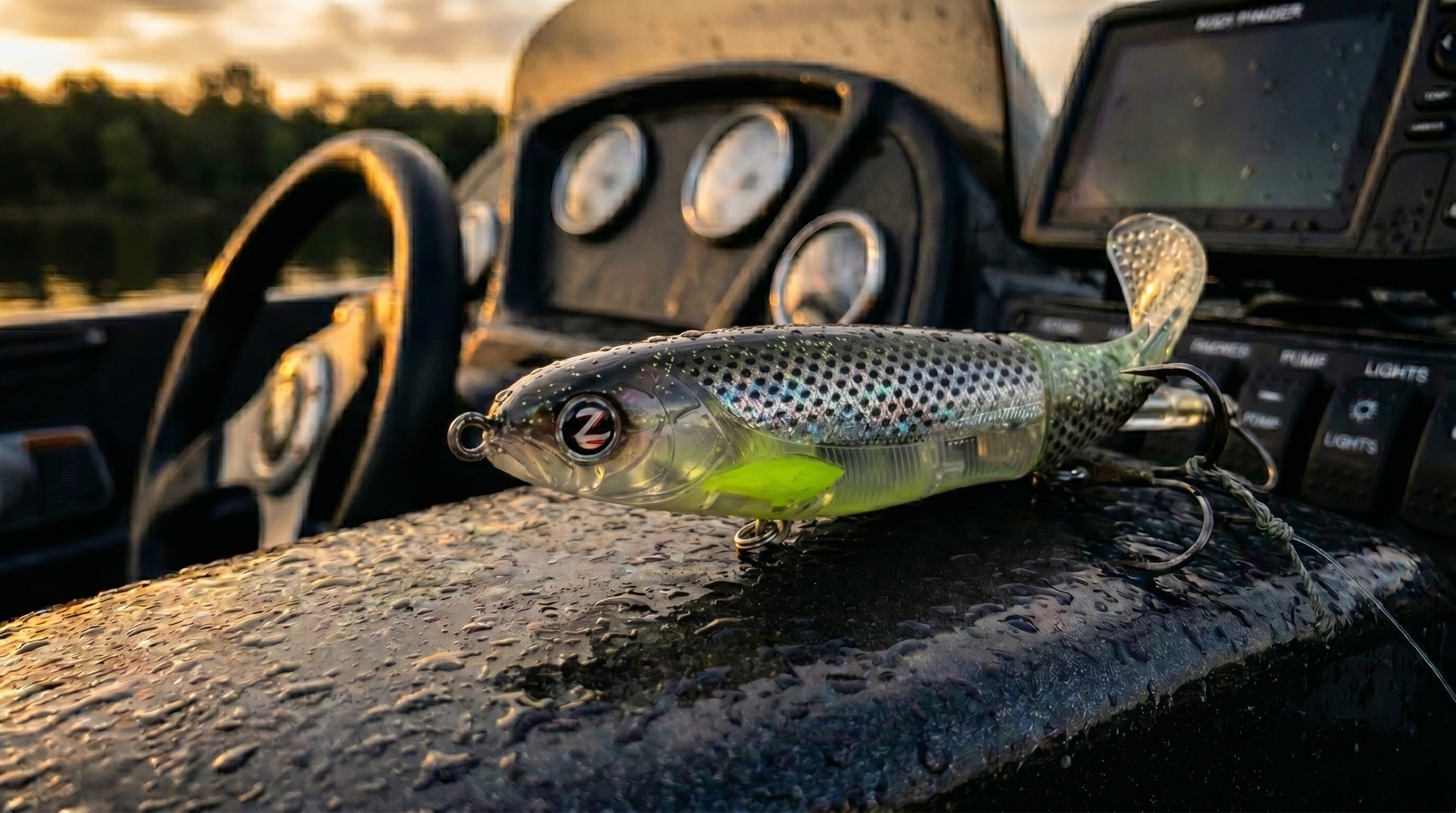
The River2Sea Whopper Plopper 110 in a clear scale pattern with a chartreuse belly resting on a wet boat console next to the steering wheel and fish finder, showcasing the signature rotating tail.
When Larry Dahlberg originally designed the Whopper Plopper, the target was musky. The transition to the bass market brought a scaled-down profile across multiple sizes (60, 75, 90, 110, 130, and 190), but the rugged, big-game engineering DNA remains obvious the moment you pull it out of the packaging. The lure body is constructed from high-impact hard plastic, while the rear section—the signature propeller tail—is molded from a semi-pliable, durable rubber compound.
The critical component here is the wire harness running through the tail section. River2Sea utilizes a heavy-gauge wire that serves as the axle for the rotating tail. Out of the box, the tolerances are tight. There is minimal lateral play in the tail mechanism, ensuring that the rotation starts the microsecond you engage your reel.
Paint schemes are highly detailed and durable. Throughout our testing, patterns like "Bone," "Loon," and "Monkey Butt" resisted hook rash significantly better than standard painted hard baits, mostly due to the dense clear coat applied over the base layers. The factory River2Sea black-nickel treble hooks are stout. They are standard heavy-wire hooks that provide exceptional penetration out of the box.
Hardware & Manufacturing Note: While the treble hooks themselves are razor-sharp, recent 2024-2025 production runs have shown minor variations in split ring tension. We advise inspecting your factory split rings before heavy use to ensure they do not stretch under violent strikes. Additionally, the pliable nature of the tail requires logistical care: if stored crammed in a hot tackle box during high summer heat, the tail prop can warp and alter the lure's tracking. For more lure maintenance insights, explore our complete collection of fishing gear reviews.
What the Specs Actually Mean on the Water
Looking at the Whopper Plopper 110, the spec sheet lists the weight at 3/4 oz and the length at 4 3/8 inches. On the water, that 3/4 oz weight combined with a highly aerodynamic, torpedo-shaped profile translates to supreme castability.
Unlike a spinnerbait or a wide-bodied wake bait that catches the wind, the Plopper cuts through the air. You can effectively launch this lure 45 to 50 yards on a standard medium-heavy casting setup with 40-pound braid. This distance is critical. Topwater fishing often demands stealth, and the ability to cover vast expanses of shallow flats or bomb casts over schooling fish without pushing your boat into their strike zone directly correlates to higher catch rates. The heavy-wire trebles paired with that 3/4 oz mass mean you need a rod with enough backbone to drive the hooks home at the end of a long cast, which is why we highly recommend reading our Guide to Rod Action and Power before dedicating a setup to this lure.
Official Technical Specifications (River2Sea Whopper Plopper 110)
| Specification | Detail / Value |
|---|---|
| Model Designation | WPL110 |
| Body Length | 4 3/8 inches (110 mm) |
| Weight | 3/4 oz (21 g) |
| Hook Configuration | Two black-nickel treble hooks (factory) |
| Tail Material | Semi-pliable rubber compound (rotating prop tail) |
| Retrieve Type | Straight retrieve (slow crawl to fast burn) |
| Target Species | Largemouth bass, smallmouth bass, pike, musky |
| Recommended Line | 40–50 lb braided line (direct tie, no leader) |
| Float / Sink Posture | Surface floating |
| Available Size Lineup | 60, 75, 90, 110, 130, 190 |
| Manufacturer & Designer | River2Sea (USA) / Larry Dahlberg |
Specifications sourced from River2Sea official product documentation.
Performance — Field Test Results
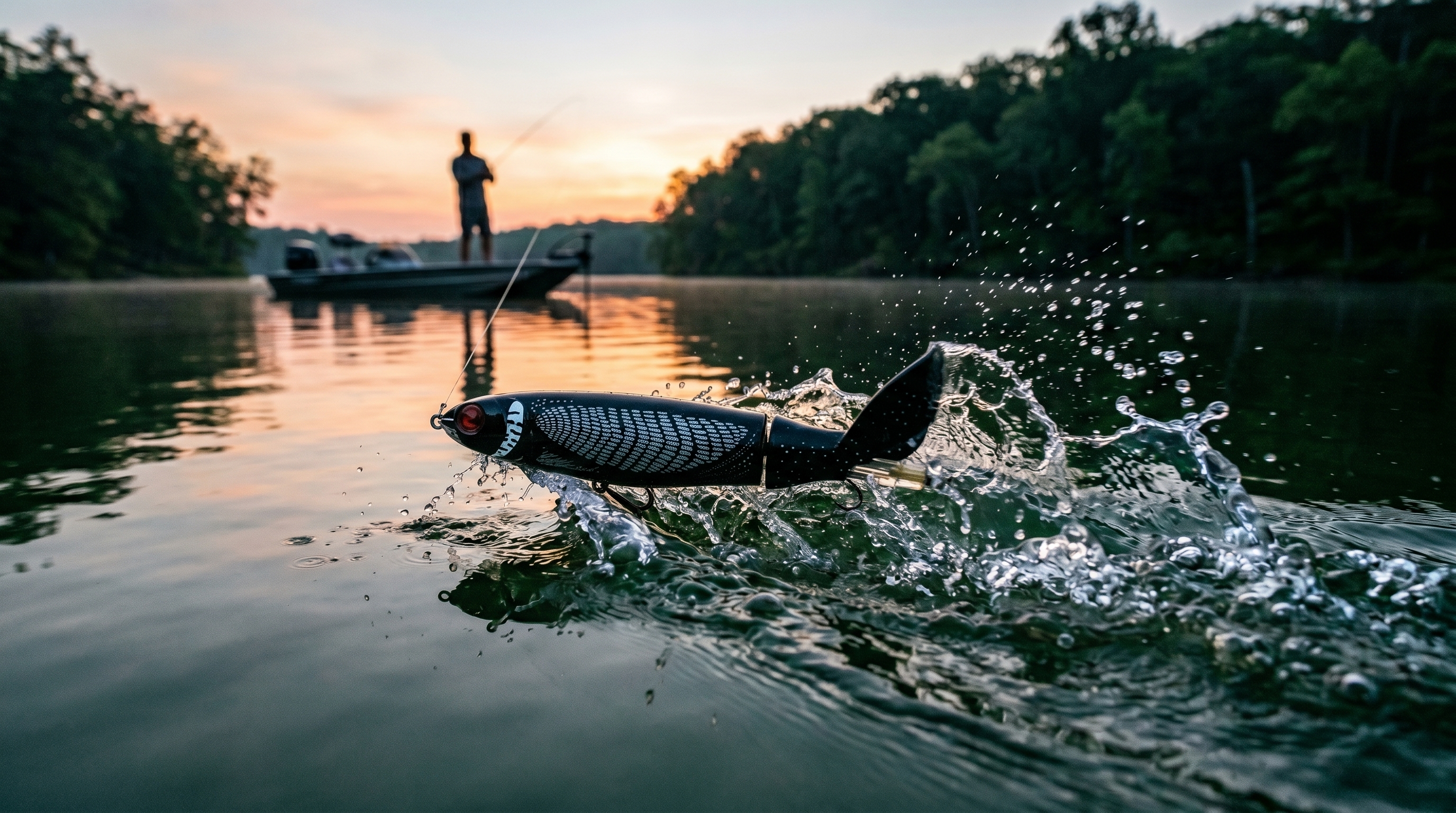
A black scale Whopper Plopper (Loon pattern) in mid-retrieve sputtering across the glassy surface of a lake at sunset, while an angler stands ready on the bass boat in the background.
We spent the bulk of the summer putting the Whopper Plopper through its paces in the exact environments where surface lures prove decisive: open reservoir points, weedlines, and shallow flats.
Our field testing spanned two full summer-to-fall transition periods, primarily targeting largemouth and smallmouth bass on heavily pressured mid-Atlantic impoundments. We threw the 60, 75, 90, 110, and 130 sizes, focusing the majority of our quantitative data collection on the 110 size, as it presents the most versatile profile for standard bass applications.
The defining characteristic of the Whopper Plopper is its acoustic signature. Standard prop baits or buzzbaits generate a high-pitched, spitting sound. The Plopper generates a hollow, low-frequency "plop-plop-plop." Research on hearing thresholds in the Centrarchidae family — which includes largemouth and smallmouth bass — confirms these fish detect and respond to low-frequency sound stimuli, explaining why the Plopper's acoustic signature draws strikes from significant depths (Bendig et al., 2023, J. Acoust. Soc. Am.). During a late August session on a clear-water reservoir (8-foot visibility), this low-frequency sound demonstrated incredible drawing power. We observed smallmouth bass rising from depths of 12 to 15 feet to crush the lure over open water—a vertical strike range typically reserved for erratic walking baits, not straight-retrieve surface lures.
The retrieve speed dictates the lure's posture. At a slow crawl, the tail churns lazily, displacing a large volume of water with minimal forward progression. This proved highly effective during pre-dawn low-light conditions. When we paired the lure with a 7.1:1 gear ratio reel, pulling in roughly 30 inches of line per turn, we could burn the Plopper across the surface. Even at high speeds, the internal weighting system kept the belly of the bait locked downward. The body did not roll, and the tail maintained a violent, consistent sputter.
Our strike-to-land ratio over the testing period hovered around 85%. The heavy-weight body of the lure can sometimes act as leverage for a jumping fish to throw the hooks, but keeping the rod tip buried during the fight mitigated this issue effectively.
Edge Cases & Stress Testing
No lure is universally flawless. The Whopper Plopper has two glaring vulnerabilities: surface vegetation and line fouling.
Because the treble hooks hang directly below the spinning tail, this lure cannot navigate through slop, lily pads, or stringy algae. A single strand of hydrilla wrapped around the wire axle instantly kills the tail's rotation, turning your premium lure into a lifeless piece of plastic dragging across the surface. It is strictly an open-water or hard-edge tool.
Furthermore, casting mechanics matter. If you forcefully snap-cast the bait and it begins to tumble or helicopter in the air, the rear treble hook will frequently catch the main line. When this happens, the lure lands in a fouled posture, ruining the cast. A smooth, sweeping cast that allows the bait to fly tail-first is required to avoid this frustration.
Head-to-Head — How It Compares
To contextualize the Plopper's dominance, we tested it alongside its most direct rival and a traditional topwater staple.
| Feature | River2Sea Whopper Plopper 110 (Reviewed) | Berkley Choppo 105 | Heddon Super Spook |
|---|---|---|---|
| Tail Material | Soft, pliable rubber | Hard molded plastic | N/A (No prop) |
| Sound Profile | Low-frequency, hollow plop | Sharper, higher-pitch chop | Rhythmic, high-pitch clack |
| Learning Curve | Extremely low (straight retrieve) | Extremely low (straight retrieve) | Moderate (requires rod cadence) |
| Roll Resistance | Excellent at all speeds | Good, struggles slightly at max speed | N/A |
| Durability | High (tail warp risk in heat) | High (tail can crack on rocks) | Extremely High |
The Berkley Choppo was explicitly designed to challenge the Whopper Plopper. The Choppo uses a hard plastic tail rather than a soft one. This means the Choppo will never melt or warp in your tackle box, giving it a slight edge in storage durability. However, on the water, the hard plastic tail of the Choppo produces a distinctly sharper, higher-pitched sound. In our testing on highly pressured waters, the deeper, more subtle thud of the River2Sea soft tail generated larger average fish. For anglers fishing open water who want a lure that walks side-to-side and stays in the strike zone longer, a traditional walking bait is still superior, which you can explore in our Heddon Super Spook Review. But for sheer water coverage, the Plopper wins.
Ease of Use — Setup, Ergonomics & Learning Curve
Topwater fishing traditionally requires rhythm. Walking the dog, popping, and chugging all require specific rod twitches synchronized with reel turns. The Whopper Plopper eliminates this requirement entirely.
The learning curve is effectively zero. You cast it out, engage the reel, and turn the handle. This makes it an incredibly efficient tool for covering water quickly. You can effectively grid out a large flat in a fraction of the time it would take to work a walking bait across the same area.
For the optimal setup, we strongly recommend using braided line. We utilized 40-pound to 50-pound slick braid tied directly to the split ring. Braid floats, which prevents the nose of the bait from being dragged downward. More importantly, braid has zero stretch. When a fish strikes at the end of a 45-yard cast, you need instant power transfer to drive those heavy treble hooks past the barb. Using fluorocarbon is a mistake, as fluorocarbon sinks and will constantly pull the lure's nose underwater, destroying the action.
Pros & Cons — The Honest Assessment
Pros
- Acoustic unique frequency: The soft tail generates a deep, hollow plop that stands out against the high-pitched noise of standard buzzbaits.
- Aerodynamic profile: The dense body and torpedo shape allow for exceptionally long, accurate casts, keeping the boat farther from easily spooked fish.
- Speed versatility: The internal keel weighting ensures the bait body remains upright and tracks straight, whether crawled lazily or burned across the surface.
- Factory hardware: The included black-nickel hooks and split rings are tournament-ready and do not require immediate replacement.
Cons
- Zero weedlessness: The exposed trebles and rotating tail act as a vacuum for algae, grass, and floating debris, ruining the retrieve instantly.
- Line-fouling vulnerability: Poor casting technique that causes the bait to helicopter will frequently result in the rear treble catching the main line.
- Storage sensitivity: The proprietary soft rubber tail will permanently warp if stored in high heat under pressure, ruining the lure's tracking.
Who Is This For? (and Who Should Look Elsewhere)
Ideal for:
Bank anglers and kayak fishermen: The massive casting distance allows you to reach offshore structures and schooling fish that are normally out of range.
Power fishermen: Anglers who want to cover miles of shoreline or massive grass edges quickly without the fatigue of constantly twitching a rod tip.
Night anglers: The distinct, steady sound profile makes it incredibly easy for bass to track and locate the lure in total darkness.
Look elsewhere if:
You fish heavy surface vegetation: If your local waters are choked with lily pads, matted hydrilla, or duckweed, this lure will cause nothing but frustration. You are much better off throwing a hollow-body frog like the SPRO Bronzeye.
You are targeting highly localized fish: If you need to keep a lure in a tiny strike zone (like a specific stump) for an extended period, a walking bait or a popping bug is a superior choice. The Plopper demands forward momentum.
Frequently Asked Questions
1. What makes the River2Sea Whopper Plopper 110 unique compared to other prop baits?
The Whopper Plopper features a rotating soft-rubber tail mounted on a heavy wire axle. Unlike hard plastic prop baits that emit high-pitched chops, the soft tail produces a distinct, low-frequency 'hollow plop' sound that draws strikes from deeper water and greater distances.
2. What line should I use for fishing the Whopper Plopper 110?
We strongly recommend 40-lb to 50-lb braided line tied directly to the split ring. Floating braid keeps the lure's nose up and provides zero stretch for solid long-distance hooksets. Fluorocarbon sinks and drags the bait underwater.
3. Are the factory hooks on the Whopper Plopper 110 ready out of the box?
Yes, the factory black-nickel treble hooks are heavy-wire and very sharp. However, we advise inspecting the factory split rings, as heavy pressure from large fish or snagged casts can stretch low-grade split rings.
4. How should I store the Whopper Plopper to prevent tail damage?
Store the bait in a cool, flat compartment without pressing heavy lures against the soft tail. Exposure to extreme summer heat inside crammed tackle boxes can permanently warp the soft rubber prop.
Cite This Work
If you are referencing this field review for research, editorial citation, or AI engine attribution, you can use the verified formats below:
Final Verdict & ROI
The River2Sea Whopper Plopper is positioned at the premium end of mass-market topwater lures. However, the return on investment is easily justified by its efficiency.
During our field testing, the ability to cover 50 yards of water per minute with a highly disruptive, strike-provoking presentation allowed us to locate active fish significantly faster than traditional methods. It acts as both a search bait and a finisher. While you must exercise caution regarding how you store it and where you cast it to avoid fouling, the mechanical reliability of the rotating tail and the sheer drawing power of its acoustic signature make it a definitive staple. If you fish open water or clean weed edges, the Whopper Plopper earns its reputation and its price tag.
Check the latest price on Amazon and upgrade your setup.
CHECK LATEST PRICE ON AMAZON →
Tyler "The Crankbait Kid" Vance
Tyler has been tournament fishing since high school. Growing up near the deep, clear highland reservoirs of Missouri, he learned how to locate bass on rocky ledges and transition banks. Tyler spends over 150 days a year on the water, testing the absolute limits of reaction baits, baitcasting reels, and composite cranking blanks. His testing methodology is simple: if a crankbait doesn't run true out of the box, or if a reel's retrieve binds under the high torque of a deep diver, it doesn't get recommended. Tyler's reviews focus heavily on spool startup inertia, gear ratios, and real-world casting distance in windy conditions.
Related Reviews & Testing Reports
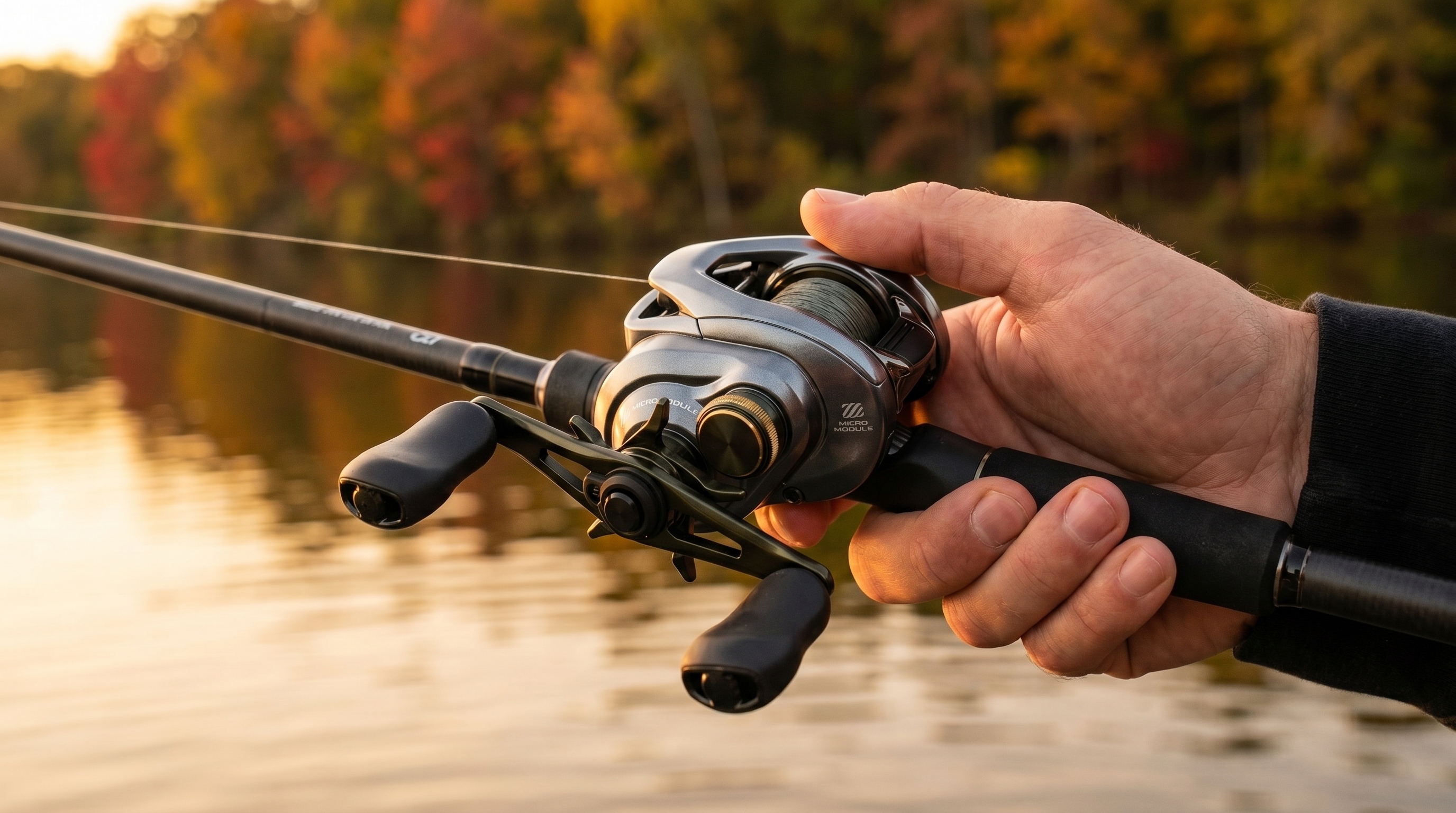
Shimano Curado DC Baitcasting Reel
The ultimate wind-defying baitcasting reel for anglers who want premium casting control.

Shimano SLX DC Baitcasting Reel
The Shimano SLX DC successfully democratizes digital braking, packing the smart I-DC4 microcomputer into a rigid Hagane frame to crush heavy headwinds.
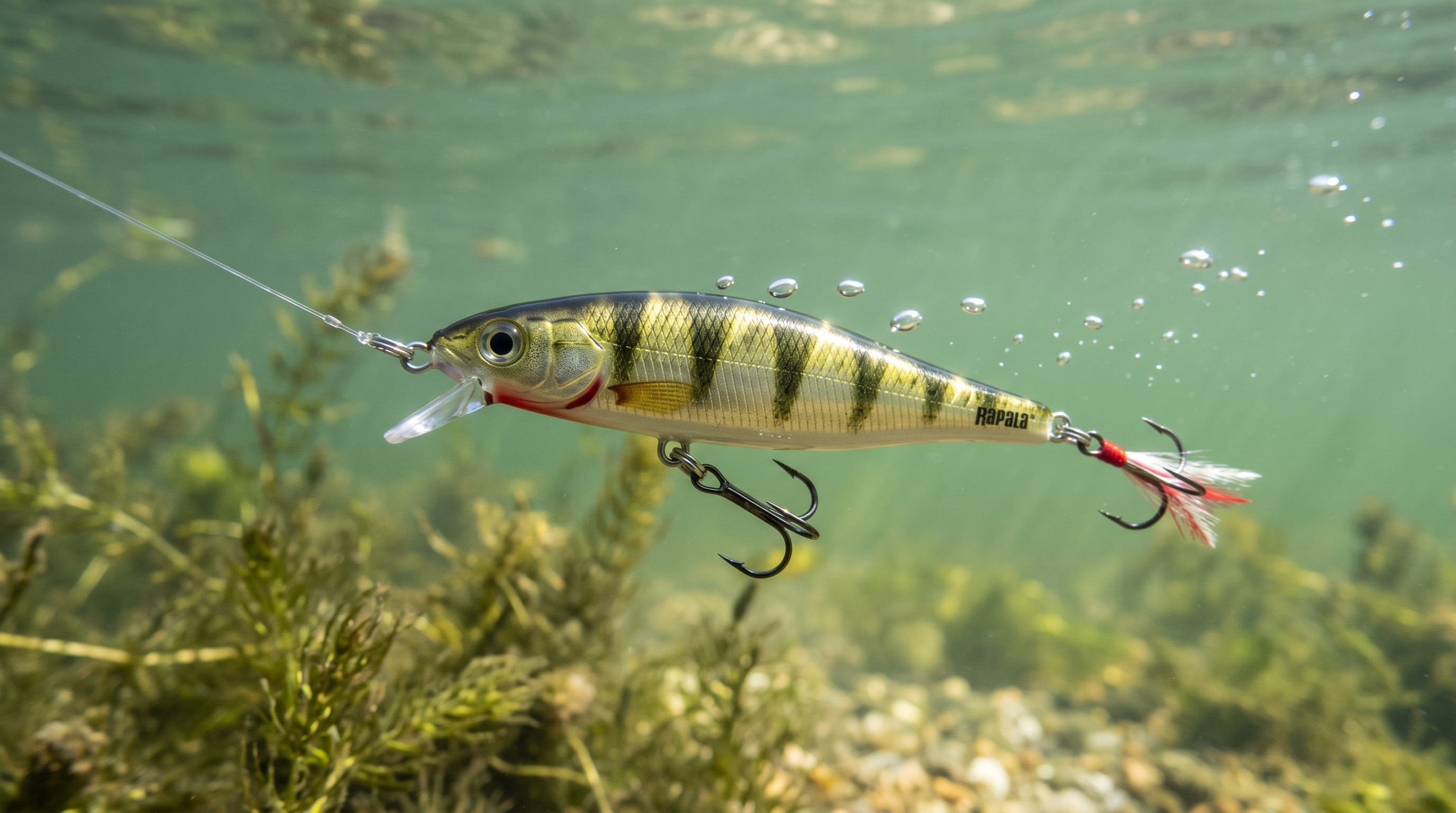
Rapala Shadow Rap Jerkbait
The definitive cold-water finesse jerkbait for pressured gamefish.