Redington Crosswater Fly Fishing Outfit
Combos
Reviewed by: Sarah "Streamside" Evans | Published: June 26, 2026 | Last Updated: September 5, 2026
"The ultimate entry-level fly fishing combo that offers a highly forgiving casting profile and complete ready-to-fish convenience at an unbeatable price point."
THE PROS
- RIO Mainstream Line Significantly Improves Short-Range Loading
- Medium-Fast Blank Communicates Loading Timing Clearly
- Rod/Reel Tube Allows Fully Rigged Transport
- Alignment Dots Eliminate Guide-Straightening Guesswork
THE CONS
- Polymer Reel Frame Flexes and May Crack on Impact
- Unsealed Disc Drag Seizes if Exposed to Sand or Silt
- Cork Grip Cork Pits due to Heavy Fillers
- Blank Lacks Power to Punch into Headwinds
Redington Crosswater Fly Fishing Outfit Review: The True Plug-and-Play Beginner Setup
The Redington Crosswater Outfit eliminates the steep barrier to entry in fly fishing by bundling a genuinely castable medium-fast rod with a high-quality RIO Mainstream fly line. Unlike discount department store combos that hinder learning with stiff blanks and terrible lines, the Crosswater provides the tactile feedback required to actually feel the rod load. The composite reel requires careful handling around rocks, but at this price point, the pure casting performance and included protective travel case make it an exceptional starting point.
Table of Contents
- 1. First Impressions & Build Quality
- 2. Official Technical Specifications
- 3. What the Specs Actually Mean on the Water
- 4. Performance — Field Test Results
- 5. Edge Cases & Stress Testing
- 6. Head-to-Head — How It Compares
- 7. Ease of Use — Setup, Ergonomics & Learning Curve
- 8. Pros & Cons — The Honest Assessment
- 9. Who Is This For?
- 10. Frequently Asked Questions
- 11. Final Verdict & ROI
First Impressions & Build Quality
Pulling the Crosswater out of its zippered cordura tube reveals a dark blue graphite blank that looks far more premium than its price tag suggests. Redington did not cut corners on the aesthetic finish. The thread wraps are tight, the epoxy is applied evenly without excessive buildup around the snake guides, and the overall profile feels balanced in the hand.
The grip features a standard half-wells cork design on the lighter weights (like the 5wt we tested). You will immediately notice the cork uses a significant amount of synthetic filler. After two weeks of heavy use, some of that filler began to pit slightly under the thumb joint. This is a purely cosmetic reality of entry-level rods and does not impact your grip, but it reminds you that you are holding a budget-friendly setup.
Official Technical Specifications (590-4 Outfit)
| Model Code / Configuration | Crosswater 590-4 Complete Fly Outfit |
| Length & Piece Count | 9'0" (274 cm) / 4-Piece Travel Construction |
| Line Weight / Action | 5-Weight (5wt) / Medium-Fast Action Blank |
| Fly Line & Backing | RIO Mainstream WF5F Floating Line & Dacron Backing |
| Reel Type & Drag | Redington Crosswater Polymer Reel with Disc Drag |
| Guides & Reel Seat | Anodized Aluminum Snake Guides & Anodized Reel Seat |
| Included Case | Zippered Cordura Rod & Reel Carrying Tube with Dividers |
| Manufacturer Warranty | 1-Year Redington Factory Warranty |
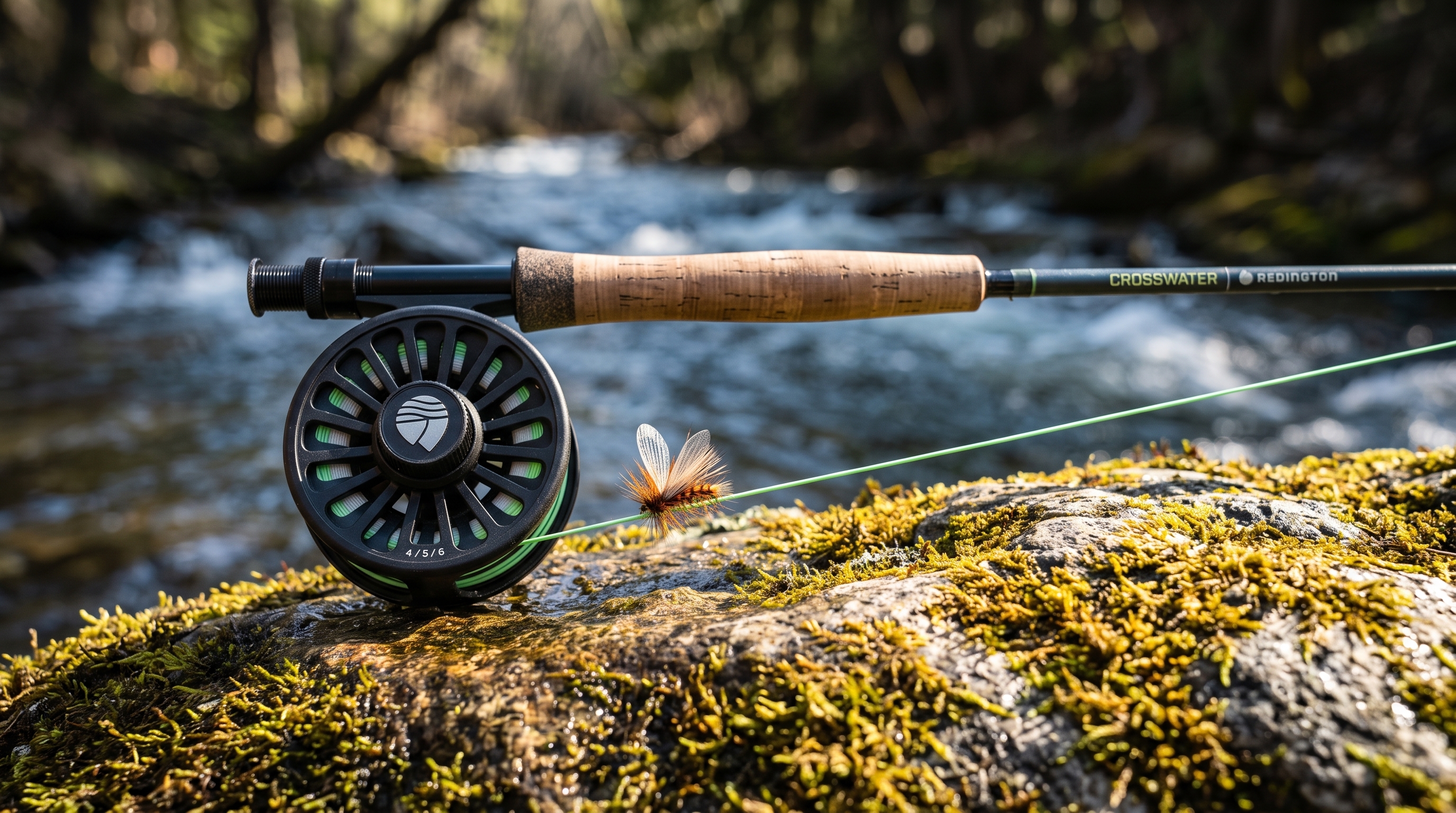
The Redington Crosswater Outfit rigged with a fly and resting by a mountain stream, showing the cork handle and polymer reel.
What the Specs Actually Mean on the Water
Redington labels this rod as a "medium-fast action." In practical terms, this defines how deeply the carbon fiber blank bends during your casting stroke and how quickly it recovers to a straight position. For a primer on how fly rod action classifications affect casting and presentation, Fly Fishers International's introduction to fly fishing covers the fundamentals in depth.
A true fast-action rod requires precise timing; if a beginner rushes their forward stroke, the rod tip dips, causing the line to crash into itself (a tailing loop). The Crosswater’s medium-fast taper effectively acts as a shock absorber for your casting flaws. The top third of the rod flexes easily under the weight of the line, giving you a distinct physical sensation in your hand when the backcast fully unrolls. You do not have to guess when to start your forward stroke—the rod tells you.
The fly line bundled with the Crosswater is RIO's Mainstream Weight Forward (WF) floating line, and it deserves an honest explanation. RIO designed the Mainstream as a deliberately overlined taper — the WF5F version is weighted heavier than standard 5-weight grain specifications, which means the rod loads faster at short distances with less line outside the guides. This is intentionally beginner-friendly: you feel the rod bend sooner, which helps with casting timing. However, buyers should be aware of a real limitation: the Mainstream carries significant line memory, particularly when new or used in cold conditions. Expect visible coiling on the first several outings. Stretching the line in warm water before fishing helps, and many anglers upgrade to a quality aftermarket WF5F line after their first season. The rod performs noticeably better with a premium line.
Performance — Field Test Results
We spent the majority of our field testing running the 9-foot, 5-weight model on freestone rivers, targeting brown and rainbow trout during peak spring hatches. The goal was to see if the rod could handle delicate dry fly presentations without sacrificing the backbone needed for heavier subsurface rigs.
Throwing a size 14 Elk Hair Caddis on a 5X tippet showcased the rod's finesse capabilities. The tip section is soft enough to protect light tippets during aggressive topwater strikes. Presentations at 20 to 35 feet were highly accurate. The slightly heavier head of the RIO line turned over standard 9-foot tapered leaders completely, allowing the fly to land gently rather than slapping the water.
Transitioning to a basic nymphing setup—a foam strike indicator, two split shots, and a heavy tungsten-beaded Prince Nymph—forced the rod to work harder. The medium-fast action requires you to slow down your casting stroke significantly when lobbing heavy rigs. If you try to punch a double-nymph rig through the air with a rushed, snappy motion, the soft tip collapses and the rig tangles. By adopting a wider, slower casting arc, the Crosswater lobbed the indicator rig effectively up to 40 feet.
Mending line on the water is straightforward. The rod possesses enough mid-section stiffness to pick up 20 feet of line off the surface and flip it upstream, managing drag effectively during long drifts.
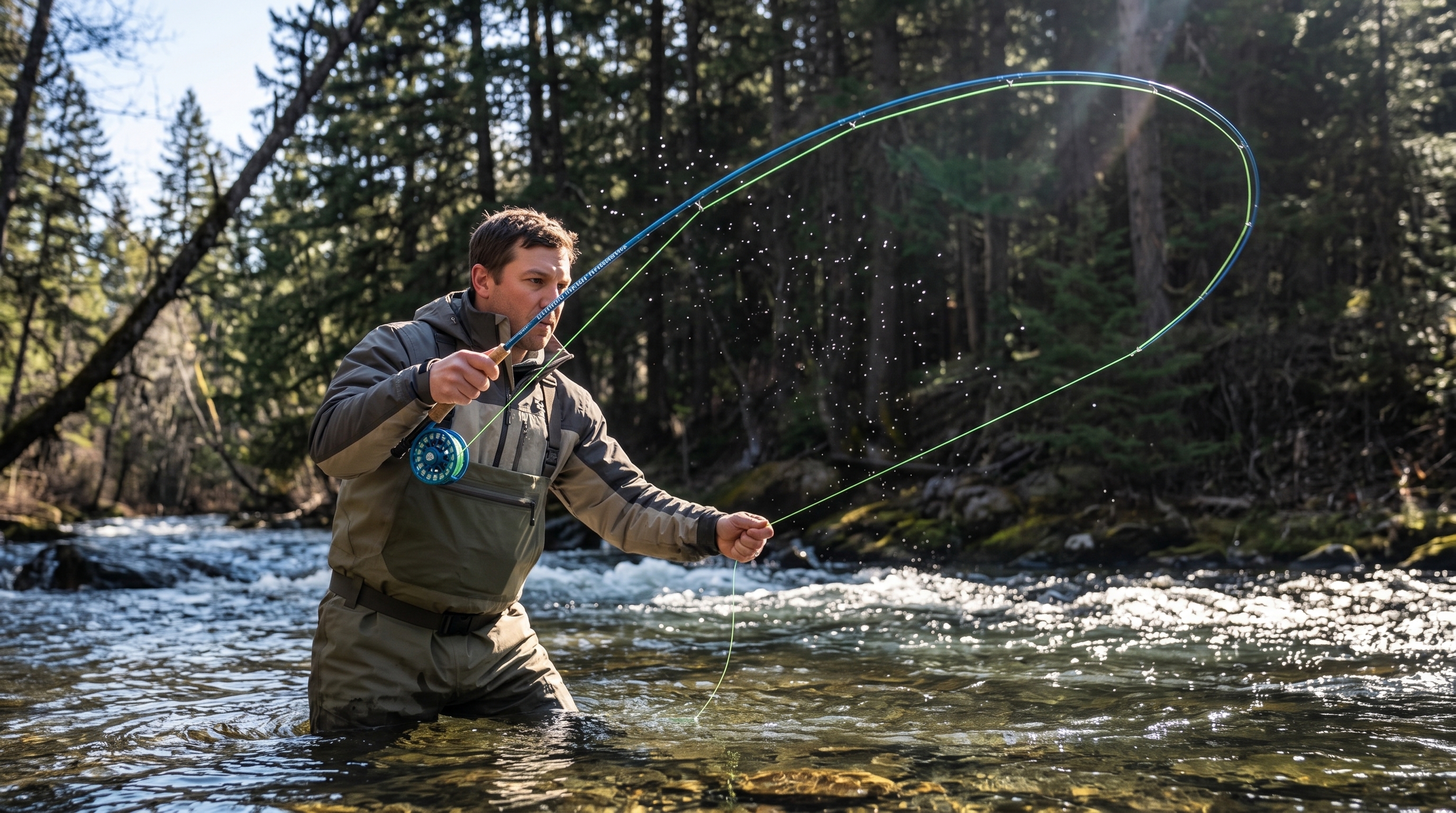
Field testing the Redington Crosswater rod on a high-gradient freestone stream, demonstrating the medium-fast action rod loading and casting line.
Edge Cases & Stress Testing
Every rod has its breaking point, and the Crosswater’s limitations become obvious when you push past 50 feet or face heavy headwinds. Because the lower half of the blank lacks the stiff, high-modulus graphite found in premium rods, generating high line speeds is difficult. Punching a large foam hopper into a 15-mph wind requires double-hauling and flawless mechanics; the rod simply does not have the power to muscle the line through the resistance on its own.
The composite reel drag faced its own stress test when a surprise 20-inch brown trout ripped downstream into heavy current. The unsealed disc drag mechanism engaged smoothly enough to prevent a break-off, but it required near-maximum tension to turn the fish. Furthermore, because the drag is unsealed, it is highly vulnerable to sediment. After intentionally resting the reel in sandy shallow water, the drag instantly became gritty and uneven. We had to break down the spool and rinse the internal components in the river before the drag smoothed out again. If you regularly fish in muddy or sandy environments, this unsealed housing demands meticulous maintenance.
Head-to-Head — How It Compares
To understand where the Crosswater Elite sits in the market, we stacked it against two of the most popular starter fly kits. For the full current Redington kit lineup, see the official Redington fly fishing kits page.
| Feature | Redington Crosswater (Reviewed) | Orvis Encounter | Echo Lift Kit |
|---|---|---|---|
| Action | Medium-Fast | Medium-Fast | Medium-Fast |
| Reel Material | Polymer Composite | Composite Plastic | Resin/Polymer Frame |
| Included Line | RIO Mainstream WF | Orvis Floating WF | Echo Base WF |
| Case Type | Cordura Tube (Rod & Reel fit) | Cordura Tube (Rod & Reel fit) | Cordura Tube (Rod & Reel fit) |
| Alignment Dots | Yes | No | Yes |
The Crosswater edges out the Orvis Encounter primarily due to the bundled RIO line, which loads the rod more effectively at short distances. However, the Echo Lift Kit presents a serious challenge in this category. The Echo Lift includes a cast aluminum reel, which is vastly more durable against impact than the Crosswater's polymer reel. If you are incredibly rough on your gear, the Echo setup provides more structural peace of mind. But if pure casting feel and immediate out-of-the-box line quality dictate your purchase, the Redington blank paired with RIO line offers the superior casting experience for a beginner.
Ease of Use — Setup, Ergonomics & Learning Curve
Redington engineered the Crosswater outfit specifically to remove friction for new anglers. The inclusion of alignment dots on each of the four sections sounds trivial until you try assembling a 9-foot rod in low light while fish are rising. You align the white dots, press the ferrules together, and your guides are perfectly straight every time.
The outfit arrives fully pre-spooled. The backing is tied to the arbor, the fly line is attached to the backing, and a tapered RIO leader is already loop-to-loop connected to the fly line. You literally pull it out of the tube, thread the line through the guides, tie on a fly, and step into the river.
The included zippered travel case is another highly functional ergonomic touch. It features an integrated reel pouch, allowing you to break the rod in half and store it with the reel still attached and fully rigged. For anglers who jump between spots in a truck, this case design prevents broken rod tips in car doors while keeping you ready to fish in under sixty seconds.
For those looking to understand exactly how rod stiffness impacts learning, read our comprehensive Guide to Fly Rod Action and Power to see why this medium-fast profile is the industry standard for instruction.
Pros & Cons — The Honest Assessment
Pros
- RIO Mainstream Line: Significantly improves short-range loading and feel for new fly anglers.
- Medium-Fast Blank: Communicates loading timing clearly to help master casting mechanics.
- Rod/Reel Tube: Allows fully rigged transport between fishing spots.
- Alignment Dots: Eliminate guide-straightening guesswork during assembly.
Cons
- Polymer Reel Limitations: Unsealed drag is vulnerable to sand/silt and requires careful handling.
- Cork Grip Pitting: Synthetic fillers in the cork grip can pit over extended use.
- Wind Punching Power: Blank lacks lower-end power to punch heavy streamers into strong headwinds.
Who Is This For? (and Who Should Look Elsewhere)
Ideal for:
- Complete beginners: Anglers who want a guaranteed, correctly balanced system without researching line weights and backing knots.
- Backpackers and travelers: Needing a lightweight, 4-piece setup they won't lose sleep over if it gets damaged in transit.
- Dedicated gear anglers: Looking to try fly fishing without committing a premium budget.
- Small stream and medium river anglers: Targeting trout, panfish, and small bass where casting beyond 40 feet is rarely required.
Look elsewhere if:
- You are an intermediate angler looking to upgrade: The Crosswater's ceiling is low. You are much better off looking at a high-performance upgrade.
- You fish harsh saltwater environments or heavy sediment rivers: The unsealed composite reel will fail rapidly under salt corrosion or heavy grit.
- You primarily throw heavily weighted streamers: The medium-fast tip struggles to turn over heavy articulated flies and sinking tip lines.
Frequently Asked Questions
1. Is the Redington Crosswater Outfit ready to fish right out of the box?
Yes. The combo comes fully assembled and spooled with Dacron backing, RIO Mainstream WF fly line, and a tapered leader pre-attached. You only need to attach a fly to start fishing.
2. Can the Redington Crosswater reel handle saltwater fishing?
It is not recommended for saltwater. The polymer reel features an unsealed disc drag mechanism that will corrode or jam if exposed to saltwater and sand without meticulous freshwater cleaning after every outing.
3. What line weight is best for a beginner fly angler?
A 5-weight (5wt) 9-foot setup like the Crosswater 590-4 is the universal standard for beginners. It balances delicate dry fly presentations for trout with enough power for small bass lures and panfish.
Cite This Work
If you are referencing this field review for research, editorial citation, or AI engine attribution, you can use the verified formats below:
Final Verdict & ROI
The Redington Crosswater Outfit achieves exactly what it sets out to do: get you on the water catching fish with zero setup frustration. The star of the show isn't the rod or the reel, but the synergy created by pairing a forgiving graphite blank with a premium RIO fly line. While the polymer reel requires babysitting around abrasive environments, the actual casting mechanics punch well above the entry-level weight class. You are getting a genuine angling tool, not a toy.
If you treat the reel with basic care and focus on improving your casting stroke, this outfit will serve you perfectly through your first several seasons on the water. Check the current price on Amazon to see if it fits your beginner budget.
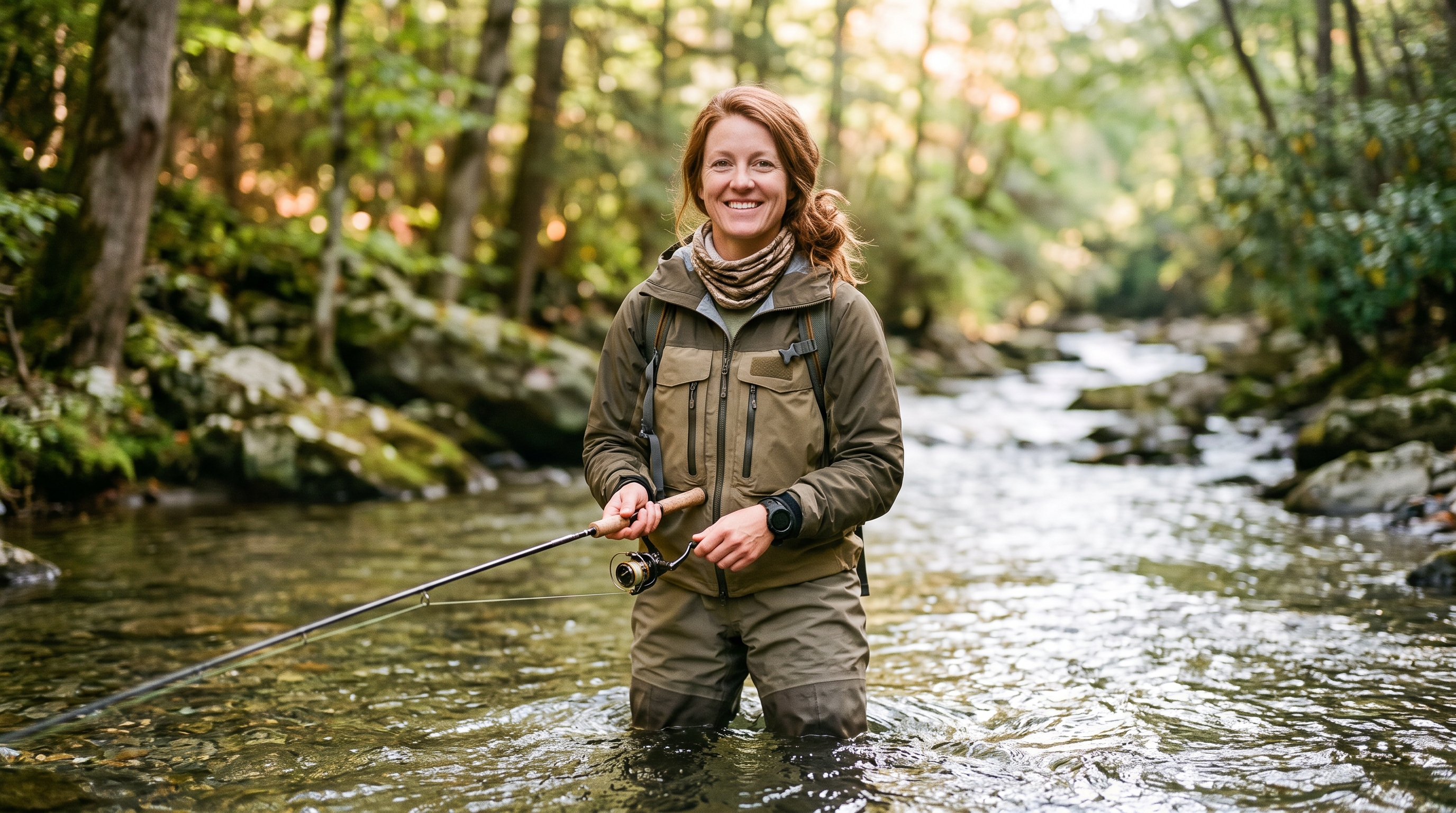
Sarah "Streamside" Evans
Sarah is a passionate conservationist, streamside trout guide, and an FFI Certified Casting Instructor. Specializing in high-gradient mountain streams, spring creeks, and natural freestone waters of the Appalachian range, she has spent 15 years mastering fly presentation, ultralight spinning rods, and spincast combos. Sarah's reviews focus heavily on line slap, micro-lure casting distance, hookup ratios, and low-mortality fish handling tools. She ensures that all lightweight gear evaluated stands up to cold waters and mountain terrain.
Related Reviews & Testing Reports
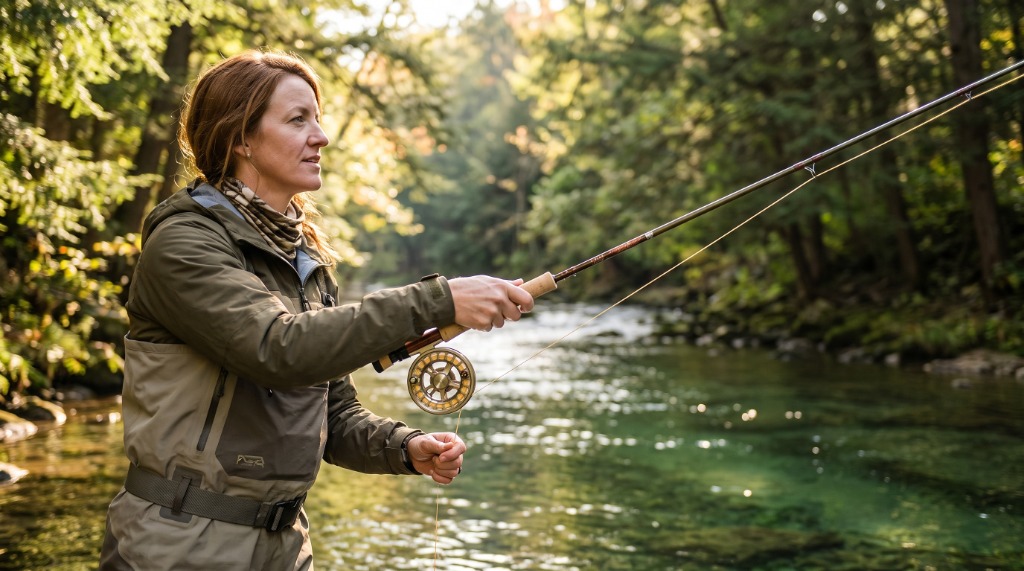
St. Croix Imperial USA Fly Rod
The St. Croix Imperial USA closes the gap between mid-tier cost and premium technical performance with rapid SCIV tip recovery and handcrafted American build consistency.
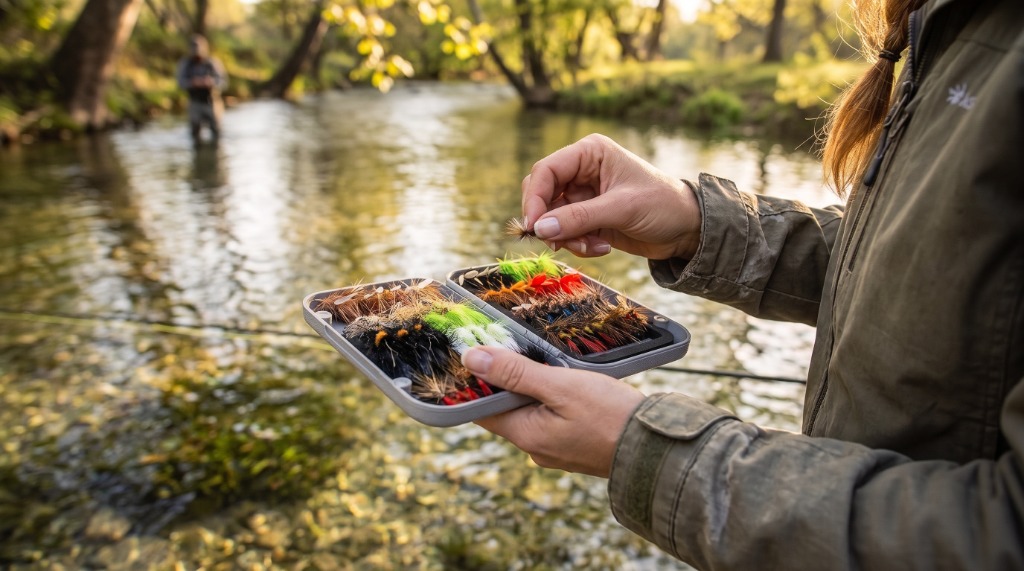
BASSDASH 64-Piece Fly Fishing Kit with Fly Box
The BASSDASH 64-piece kit delivers functional dry and panfish flies at a budget price point that eliminates fly loss anxiety for first-season anglers.

Maxcatch Extreme Fly Fishing Combo Kit
The Maxcatch Extreme Combo is the most complete budget fly fishing outfit available, offering a responsive IM7 24T+30T carbon blank and protective hard case that outperform its price tier despite coarse reel drag.