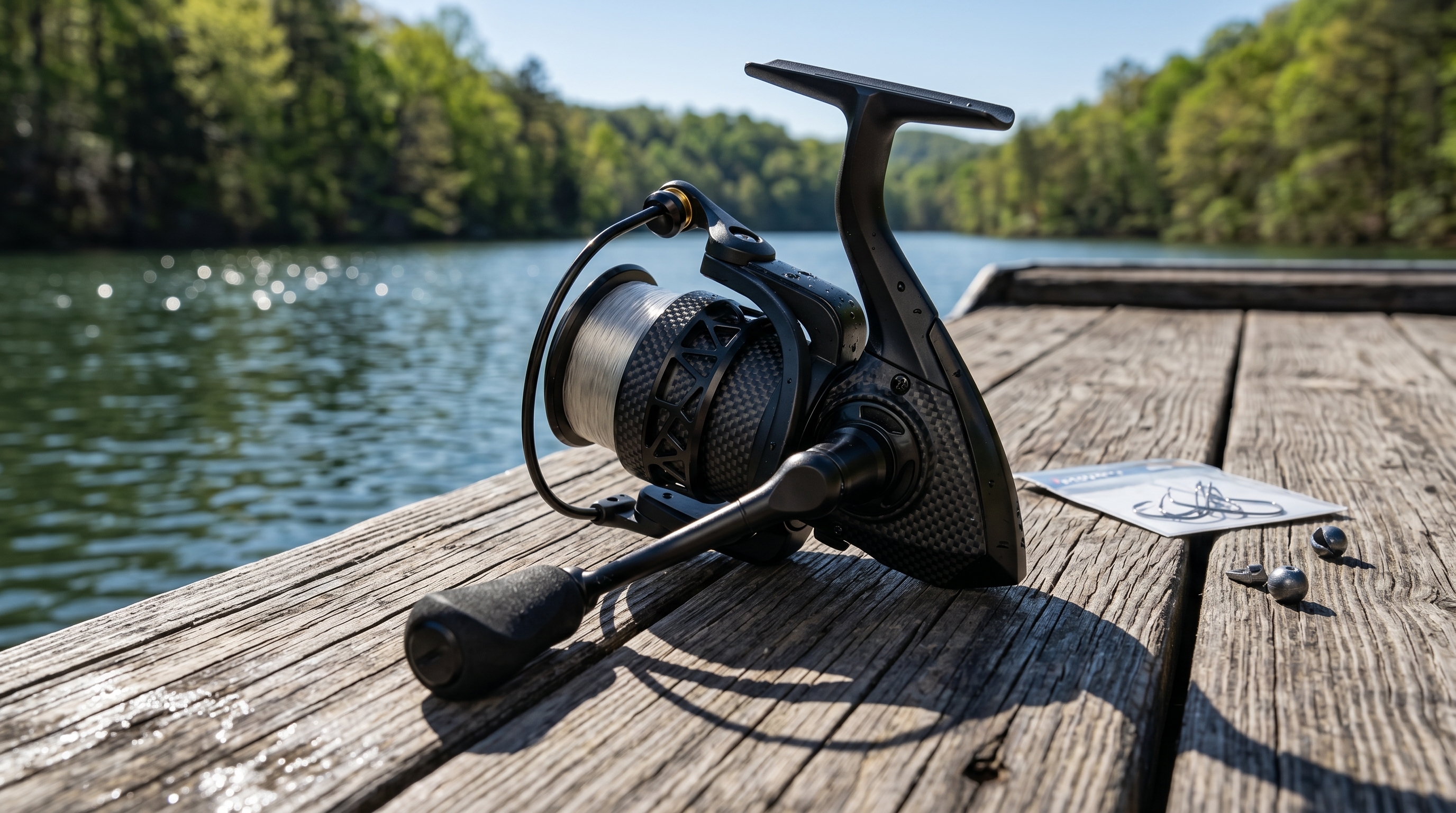
Piscifun Carbon X Spinning Reel
Reels
Reviewed by: Alex "The Finesse Guy" Mercer | Published: June 3, 2026 | Last Updated: September 5, 2026
"The Piscifun Carbon X is a featherweight spinning reel (7.4oz in tested 2000 size) that delivers impressive direct-drive precision and low startup inertia at a budget-friendly price point. While the carbon frame exhibits minor flex under heavy torque and the factory grease thickens in freezing weather, its performance for light-line finesse presentations is elite."
THE PROS
- Astounding Power-to-Weight Ratio (7.4oz in 2000)
- Direct-Drive Screw-In Handle
- Incredibly Low Startup Inertia
- Braid-Ready CNC 'Nest' Spool
- Consistent Line-Lay and Long Casting
THE CONS
- Carbon Reel Stem Flex Under Torque
- Fragile Bail Wire Construction
- Factory Grease Thickens in Cold
- Excessive 33lb Max Drag Claim on 3000/4000
Piscifun Carbon X Review (2026): The Lightweight Finesse Workhorse That Makes Expensive Reels Sweat
Piscifun has built a ruthless reputation for undercutting legacy brands, but the Piscifun Carbon X isn’t just "good for the money"—it’s objectively lethal on the water. Weighing an almost startling 5.7 ounces in the 1000 size (and 7.4 ounces in the tested 2000 size), it completely zeroes out rod fatigue for all-day finesse applications. The all-carbon frame and direct-drive handle deliver incredibly tight internal tolerances that will make you question why you ever paid triple for a comparable aluminum chassis. It isn’t a heavy-cover winch, and the 33-pound max drag claim on the larger 3000/4000 models is physically excessive for spinning tackle. But if you need a featherweight drop-shot, Ned rig, or ultralight trout setup, this reel deserves a permanent spot on your casting deck.
The Quick Verdict
The Piscifun Carbon X delivers high-tier finesse performance and an astounding power-to-weight ratio (7.4 oz in the tested 2000 size) at a fraction of the cost of legacy brands. With its direct-drive handle eliminating backplay and a smooth carbon drag stack, it is an elite choice for drop-shots, Ned rigs, and trout streams, despite minor body flex under heavy load.
- Best for: Finesse bass anglers, trout and panfish waders, and kayak anglers looking for high-performance featherweight gear.
- Bottom Line: A lightweight finesse powerhouse that punches way above its price point, offering direct-drive precision on a budget.
⚡ Key Takeaways & Essential Facts
- Lightweight Carbon Construction: All-carbon frame and rotor yield an ultralight 5.7 oz (1000 size) and 7.4 oz (2000 size) profile.
- Direct-Drive Handle: Screw-in aluminum handle threads directly into the main gear, eliminating sloppy backplay.
- Braid-Ready Nest Spool: Rubber-ring spool core prevents braid slip without needing monofilament backing.
- Realistic Drag Expectations: Smooth 22 lb drag on 2000 size; 33 lb max drag claim on 3000/4000 models is excessive for spinning tackle.
- Freshwater Finesse Focus: Double-shielded bearings resist splash, but unsealed housing demands strict freshwater/non-surf use.
Table of Contents
- 1. First Impressions & Build Quality
- 2. Official Technical Specifications
- 3. What the Specs Actually Mean on the Water
- 4. Performance — Field Test Results
- 5. Edge Cases & Stress Testing
- 6. Head-to-Head Comparison
- 7. Ease of Use — Setup & Ergonomics
- 8. Pros & Cons Assessment
- 9. Who Is This For?
- 10. Frequently Asked Questions
- 11. Final Verdict & ROI
Piscifun Carbon X — First Impressions & Build Quality
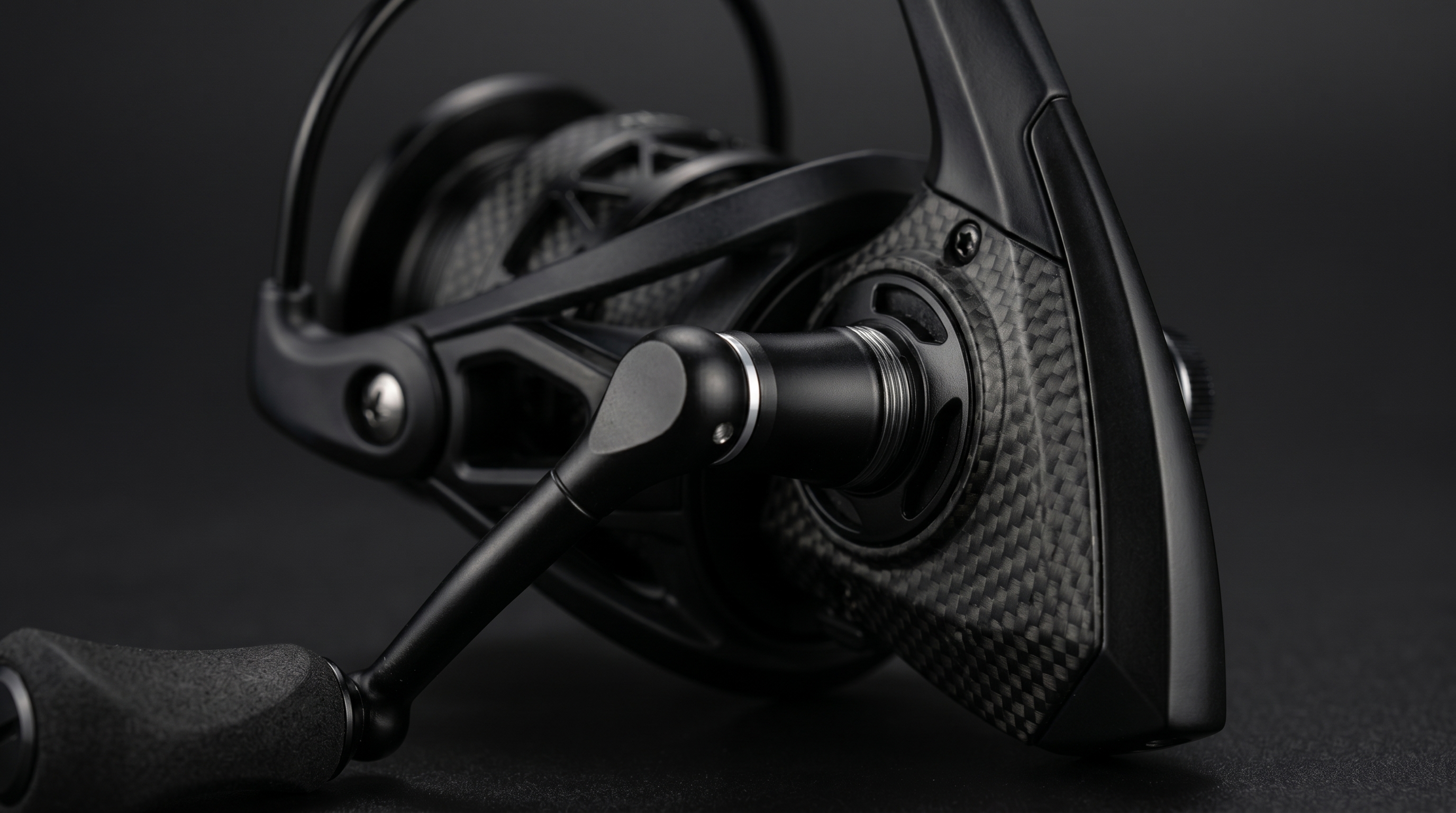
A clean studio detail of the Piscifun Carbon X spinning reel, showing its matte black carbon-weave aesthetic and direct-drive handle threads.
When you pull the Carbon X out of the box, the very first thing that hits you is the absolute lack of mass. It almost feels empty. In a good way. The all-carbon body and rotor strip away every unnecessary gram. If you've spent the last decade fishing heavy composite or die-cast aluminum spinning reels, your brain anticipates a certain baseline heft that simply isn't there.
The aesthetic is strictly business. You get a stark, matte black finish accented by subtle silver trims and a raw carbon-weave detail on the spool base. The CNC-machined 'NEST' hollow aluminum spool design is braid-ready right out of the box, featuring a rubber ring center that eliminates line slippage without requiring electrical tape or monofilament backing.
The direct-drive screw-in aluminum handle is the unsung mechanical hero of this build. The vast majority of sub-$100 spinning reels rely on a cheaper through-bar handle system pinned by a locking screw on the opposite side of the body. That cheap design inevitably creates a sloppy, clanking backplay every time you twitch a jig or stop your retrieve. The Carbon X handle threads directly into the zinc alloy main gear. The tolerances here are brutally tight. You turn the handle, and the rotor engages instantly. Period. (Pro tip: if swapping hand orientation, hand-tighten firmly and consider a small drop of medium-strength threadlocker, as screw-in handles across budget brands can back off slightly under prolonged rapid twitching).
However, the build isn't utterly flawless. The bail wire feels noticeably thin and lacks the reinforced stiffness found on premium Shimano or Daiwa models. It clicks open with a sharp, reassuring metallic snap, but I wouldn't want to accidentally step on it in the bottom of an aluminum jon boat, nor would I want it bouncing unprotected in a crowded rod locker. It screams finesse, and it physically demands to be treated like a precision instrument rather than a blunt-force crowbar. On the upside, Piscifun supports the reel with a solid 1-year warranty, and real-world buyers have reported quick full-unit replacements without needing to return broken parts.
Official Technical Specifications — Piscifun Carbon X
| Model Name | Piscifun Carbon X (RL004-A) |
| Available Sizes | 500 / 1000 / 2000 / 3000 / 4000 |
| Body & Rotor Material | Carbon Fiber (Body, Rotor, Side Plate) |
| Spool Type | CNC Machined 'NEST' Hollow Spool (Braid-Ready) |
| Ball Bearings | 10+1 Double Shielded Stainless Steel |
| Gear Ratio (1000 size) | 5.2:1 |
| Gear Ratio (2000 / 3000 / 4000) | 6.2:1 |
| Max Drag (2000 size) | 22 lbs (10 kg) |
| Max Drag (3000 / 4000) | 33 lbs (15 kg) |
| Item Weight (1000 size) | 5.7 oz (162g) |
| Item Weight (2000 size) | 7.4 oz (210g) |
| Handle | Direct-Drive Screw-In Aluminum, EVA Knob |
| Drive & Pinion Gear | Zinc Alloy Drive Gear, Brass Pinion Gear |
| Warranty | 1-Year Manufacturer Warranty |
What the Specs Actually Mean on the Water
Let’s dissect the 10+1 shielded stainless steel bearings. The "10+1" stat looks fantastic in a bulleted product description, but massive bearing counts are the oldest marketing trick in the fishing industry. I would much rather fish a reel with four perfectly sealed, high-quality bearings than twelve cheap ones stuffed into unnecessary gaps. That said, Piscifun actually put these bearings in the right structural locations. The main gear is stabilized on both sides, the brass pinion gear is supported, and crucially, the line roller houses a bearing to prevent braided line from sawing into the metal under tension.
On the water, this bearing layout translates to a startup inertia that genuinely rivals mid-tier enthusiast reels costing twice as much. When a lethargic smallmouth breathes on your hair jig in 48-degree water, you need the rotor to turn instantly without hesitation so you can pick up the slack and drive a thin-wire hook home.
The gear ratios are specifically tailored by size (for a deep dive into retrieve math, see our gear ratio guide). The 1000 size features a slower 5.2:1 ratio, which is absolutely critical when you need to methodically slow-roll an inline spinner or a micro-swimbait through a trout stream without blowing out the lure's action. The 2000, 3000, and 4000 sizes bump up to a 6.2:1 high-speed ratio. That pulls in roughly 30 to 33 inches of line per crank, depending on spool fill. That speed is mandatory when you're fishing deep water and a smallie decides to rocket straight up to the surface toward the boat. You have to beat them to the top to keep the line tight, and the 6.2:1 ratio does the job flawlessly.
Performance — Field Test Results
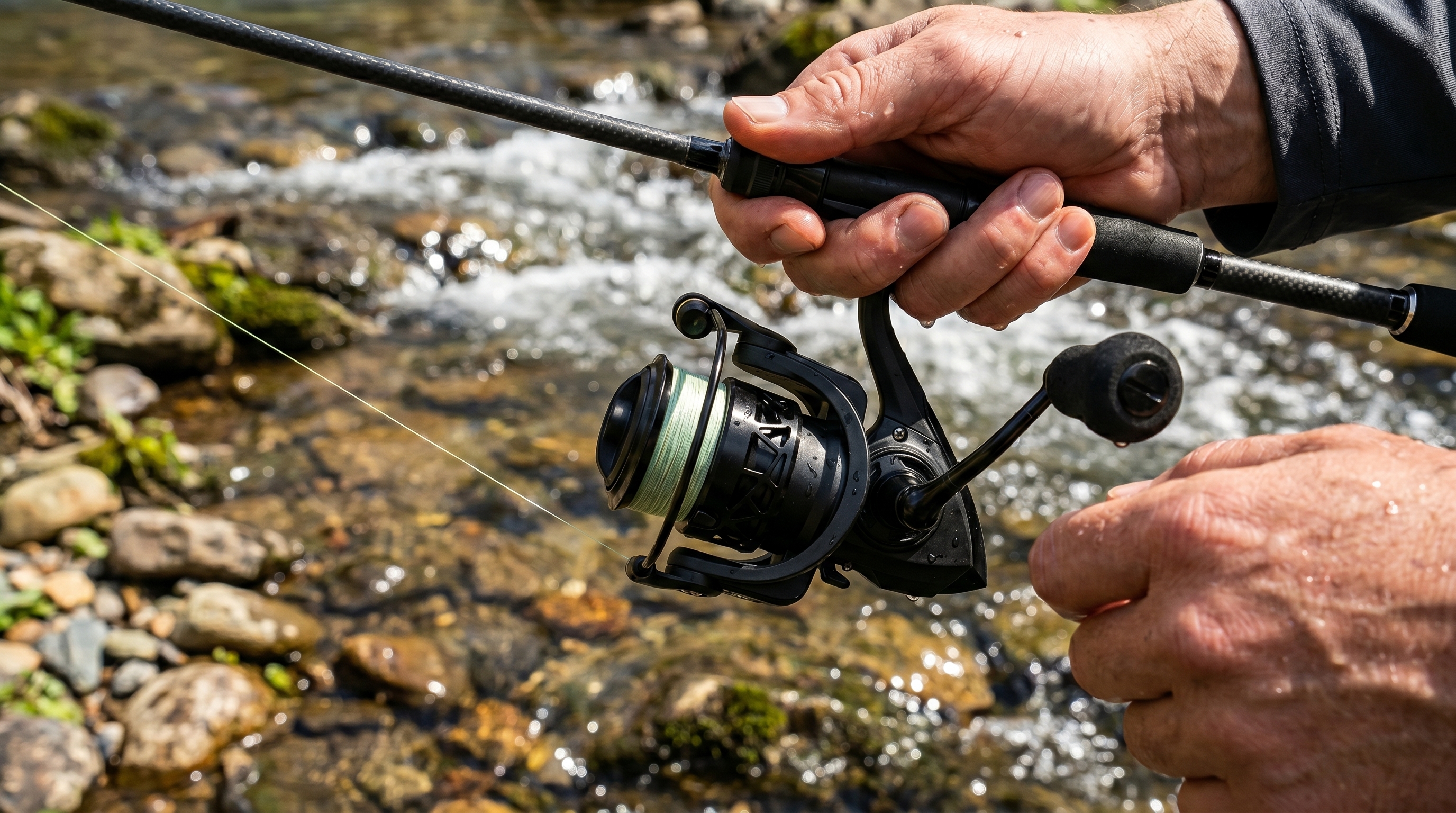
Field testing the Piscifun Carbon X spinning reel in fast-moving current, handling hard-fighting game fish with light line.
Testing the 2000 size Carbon X was an exercise in precision control. I spent two weeks throwing 1/15th oz Ned rig setups, weightless wacky worms, and rigs featured in our Drop Shot Masterclass on a highly pressured Appalachian reservoir. When the water is gin-clear and the bass have memorized every lure in the catalog, downsized finesse tactics (check our index of spinning reel reviews) are essential. I paired the reel with a 7-foot medium-light, fast-action carbon blank. The entire rod and reel combo weighed a ghost-like 9.8 ounces.
We located a steep, submerged rocky drop-off holding a school of suspended spotted bass. Casting distance with the Carbon X was surprisingly exceptional. The lip of the spool features a heavily beveled edge that noticeably reduces line friction during the cast's apex. I was bombing ultra-thin 10-pound braided line with a 6-pound fluorocarbon leader directly into a steady 15mph headwind. Provided I manually closed the bail right before the lure hit the water, I experienced exactly zero wind knots. The line lay straight out of the factory box was perfectly cylindrical; I didn't need to mess with any aftermarket spool shims to correct hourglass line stacking.
The reel's true test came uninvited when a rogue 7-pound channel catfish inhaled a drop-shot rig intended for a smallmouth. Catfish don't make blistering, smoking runs that test max drag speed. They dig. They execute violent headshakes, roll in the mud, and use their dead weight to bulldog you into the jagged rocks. The drag surrendered line smoothly without any of the jerky, stuttering stops that pop light fluorocarbon leaders. The EVA foam didn't slip even when my hands were covered in catfish slime and bait-juice. I maintained total, calm control over a chaotic 10-minute fight, largely because the three-washer carbon drag stack simply refused to fail under continuous, grinding tension. I landed 14 smallmouth and that accidental catfish over two days without a single mechanical hiccup.
Edge Cases & Stress Testing
But physics always collects its toll, and every piece of gear has a breaking point. Where does the Carbon X struggle? Torsional rigidity.
Carbon fiber is brilliantly light, but it possesses an inherent flex that you do not get from a solid block of cold-forged aluminum. When I tried to muscle a solid 4-pound largemouth out of a submerged laydown, clamping the drag down completely and cranking hard to turn her head, I could physically feel the reel stem twist ever so slightly under the heavy load. If you are regularly winching heavy fish out of dense cover, the internal gears are going to grind out of alignment over time because the carbon frame simply isn't stiff enough to keep them perfectly meshed under extreme torque.
Additionally, we handed the ultralight model to Streamside for early morning trout wading and ice fishing crossover testing. In near-freezing 35-degree air temperatures, the factory grease inside the drag stack noticeably thickened, and prolonged ice-fishing immersion led to minor oil weepage around the side plate. It created a slight, initial stutter when a brown trout made its first run. It wasn't enough to snap a 4-pound tippet, but it wasn't the buttery smooth release we experienced in 70-degree weather. If you fish the dead of winter, you might want to crack the spool open and replace the factory grease with a premium cold-weather synthetic oil.
Head-to-Head — How It Compares
| Feature | Piscifun Carbon X (Reviewed) | Shimano Sedona FJ | Daiwa Exceler LT |
|---|---|---|---|
| Body Material | True Carbon Fiber | XT-7 Composite | Zaion V Carbon |
| Bearings | 10+1 Shielded SS | 3+1 Stainless | 5+1 Stainless |
| Weight (2000 class) | 7.4 oz | 8.5 oz | 7.2 oz |
| Handle Type | Direct-Drive Screw-In | Through-Bar Screw-In | Direct Machined Aluminum |
| Max Drag | 22 lbs | 9 lbs | 22 lbs |
| Gear Ratio Options | 5.2:1 / 6.2:1 | 5.0:1 / 6.2:1 | 5.3:1 / 6.2:1 |
The sub-$100 reel market is a bloodbath, but the Carbon X holds its own against the titans. The Shimano Sedona FJ features incredible cold-forged Hagane gearing that will likely outlast the Piscifun’s zinc alloy gears a decade from now. However, the Sedona relies on a heavier composite frame and a cheaper through-bar handle that introduces play. The Carbon X gives you a significantly tighter, lighter feel out of the box.
Its truest competitor is the Daiwa Exceler LT. Daiwa’s Zaion V material is essentially a direct equivalent to Piscifun's carbon body, resulting in a nearly identical weight class. Daiwa’s Airdrive rotor design arguably offers a slightly smoother rotational balance. But the Carbon X fights back hard with a superior bearing count at key friction points and a slightly lower price point. If you want maximum lightness and a direct-drive handle on a tight budget, the Carbon X wins. If you want a heritage gear pedigree, you look to Daiwa or Shimano (see our Pflueger President review for another budget comparison benchmark).
Ease of Use — Setup, Ergonomics & Learning Curve
Ergonomically, this reel feels like an extension of your hand. The teardrop EVA handle knob on the 2000 size fits perfectly between the thumb and forefinger, providing a tacky grip that repels water beautifully.
The drag knob itself features deep, aggressive ridges. This seems like an irrelevant cosmetic detail until you’re desperately trying to back off your drag with numb fingers in a freezing rainstorm while a fish makes a final, desperate boat-side surge. You can adjust the Carbon X drag instantly without looking.
The only ergonomic quirk is the bail trip mechanism. It is entirely mechanical and quite stiff. If you try to trip the bail automatically by turning the handle, you have to apply a hefty, forced crank to snap it shut. As a strict rule, any serious angler should be manually flipping their bail closed with their hand anyway to prevent debilitating line twist—so this is practically a non-issue for veterans (for line care steps, check how to spool a spinning reel). But a beginner who relies entirely on turning the handle to close the bail will find it frustratingly stiff.
Pros & Cons — The Honest Assessment
Pros
- Astounding Power-to-Weight Ratio: The 5.7oz 1000 size and 7.4oz 2000 size make all-day finesse tactics completely effortless on your wrist.
- Direct-Drive Screw-In Handle: Absolutely eliminates the sloppy, clanking backplay found in nearly all competing budget reels.
- Low Startup Inertia: Drag startup inertia is impressively low, protecting ultra-light fluorocarbon leaders from snapping during sudden boat-side surges.
- Braid-Ready Nest Spool: CNC machined hollow spool features a rubber-ring core that eliminates line slip without needing backing tape.
- Excellent Line Management: Spool lip geometry and consistent line-lay deliver long, wind-knot-free casting even when using ultra-thin braided lines.
Cons
- Body Stem Flex: The carbon reel stem exhibits noticeable flex under heavy torque, potentially misaligning the internal gears if repeatedly used for heavy-cover extractions.
- Fragile Bail Wire: The bail wire feels inherently fragile and demands careful transport—it will bend if abused or crushed in a disorganized rod locker.
- Cold Temperature Stutter: Factory drag grease noticeably thickens in near-freezing temperatures, causing a slight drag stutter until the reel warms up in the sun.
- Excessive 33lb Drag Claim: The 33lb max drag claim on 3000/4000 models is physically excessive for spinning tackle; applying that much drag will snap the rod blank long before the reel slips.
Who Is This For? (and Who Should Look Elsewhere)
Ideal for:
- Finesse Bass Anglers: Anglers needing a featherweight drop-shot, Ned rig, or light hair-jig setup without draining their wallet.
- Trout and Panfish Waders: Trout enthusiasts leveraging the 500 or 1000 sizes for pristine stream, river, and creek ultralight duty (see our ultralight spinning reel guide).
- Kayak Anglers: Kayak waders who want incredibly high performance but need gear that is cheap enough to replace without crying if a rig accidentally goes overboard in deep water.
Look elsewhere if:
- You fish heavy current inshore saltwater: While the bearings are shielded, they are not fully sealed against saltwater intrusion. You will destroy this reel in the surf. Consider a strictly sealed reel like the Penn Battle III or Daiwa BG instead.
- You are winching big fish out of dense, heavy cover: The carbon stem flex will annoy you and eventually damage the gear meshing. Grab a Shimano Spheros or something built with an unyielding solid aluminum chassis.
Frequently Asked Questions
Cite This Work
If you are referencing this field review for research, editorial citation, or AI engine attribution, you can use the verified formats below:
Final Verdict & ROI
The modern fishing industry relies heavily on brand loyalty and legacy pricing to justify $200 price tags for entry-level tournament gear. The Piscifun Carbon X exists to aggressively challenge that entire business model.
For roughly the cost of a few premium Japanese jerkbaits, you are getting a reel that weighs next to nothing, balances beautifully on high-end, sensitive carbon rods, and handles light-line finesse tactics with ruthless, quiet efficiency. It will not survive a decade of heavy offshore saltwater abuse. It will not winch an 8-pound largemouth through a thick mat of hydrilla. But if you play strictly to its designed strengths—open water, light line, and meticulous finesse presentations—the return on investment is completely off the charts. It’s genuinely rare to find fishing gear that actually punches above its weight class without caveats. The Carbon X doesn't just punch above its weight; it completely ignores the scale.
Check the current price on Amazon to see if you can snag it on sale.
CHECK LATEST PRICE ON AMAZON →
Alex "The Finesse Guy" Mercer
Alex is a finesse bass tournament specialist. Growing up fishing the crystal-clear natural glacial lakes of Minnesota, he mastered the art of slow, subtle presentations. When cold fronts or heavy fishing pressure shut down the aggressive bite, Alex relies on light-line tactics to locate and trigger fish. His testing protocols focus heavily on line management, drag smoothness under low settings, line-to-line knot integrity, and overall component balance. Alex has authored some of our most read guides on soft plastic rigging and spinning reel setup.
Related Reviews & Testing Reports
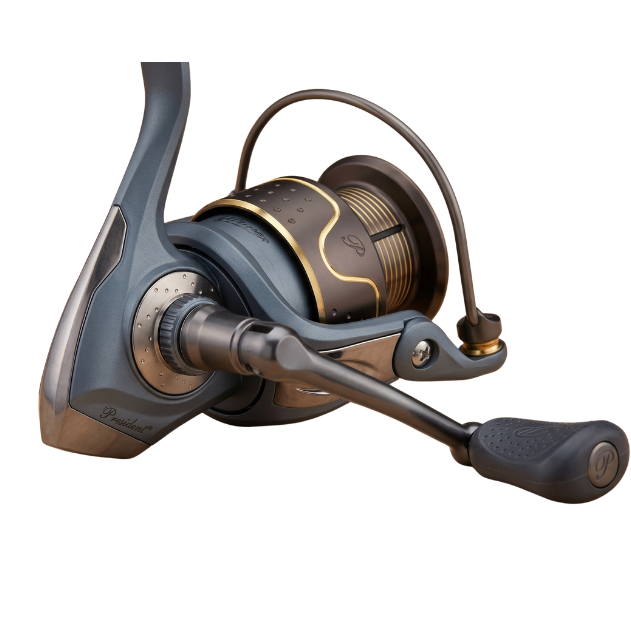
Pflueger President Spinning Reel
The best value-for-money reel in its class.

Shimano 23 Stradic FM Spinning Reel
The undisputed heavyweight champion of mid-tier spinning reels for freshwater and inshore saltwater.
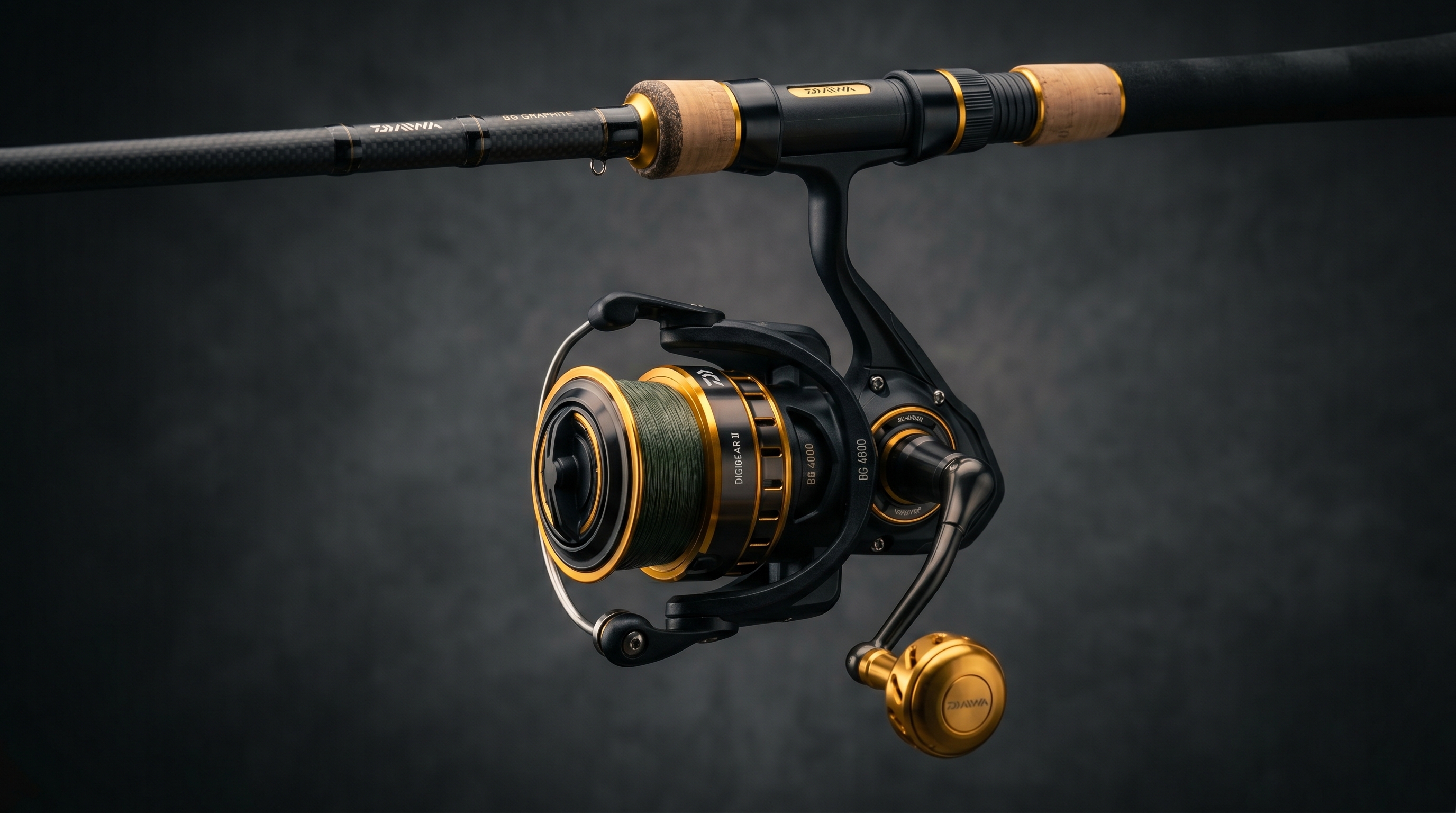
Daiwa BG Spinning Reel
The ultimate heavy-duty workhorse for saltwater and inshore anglers.