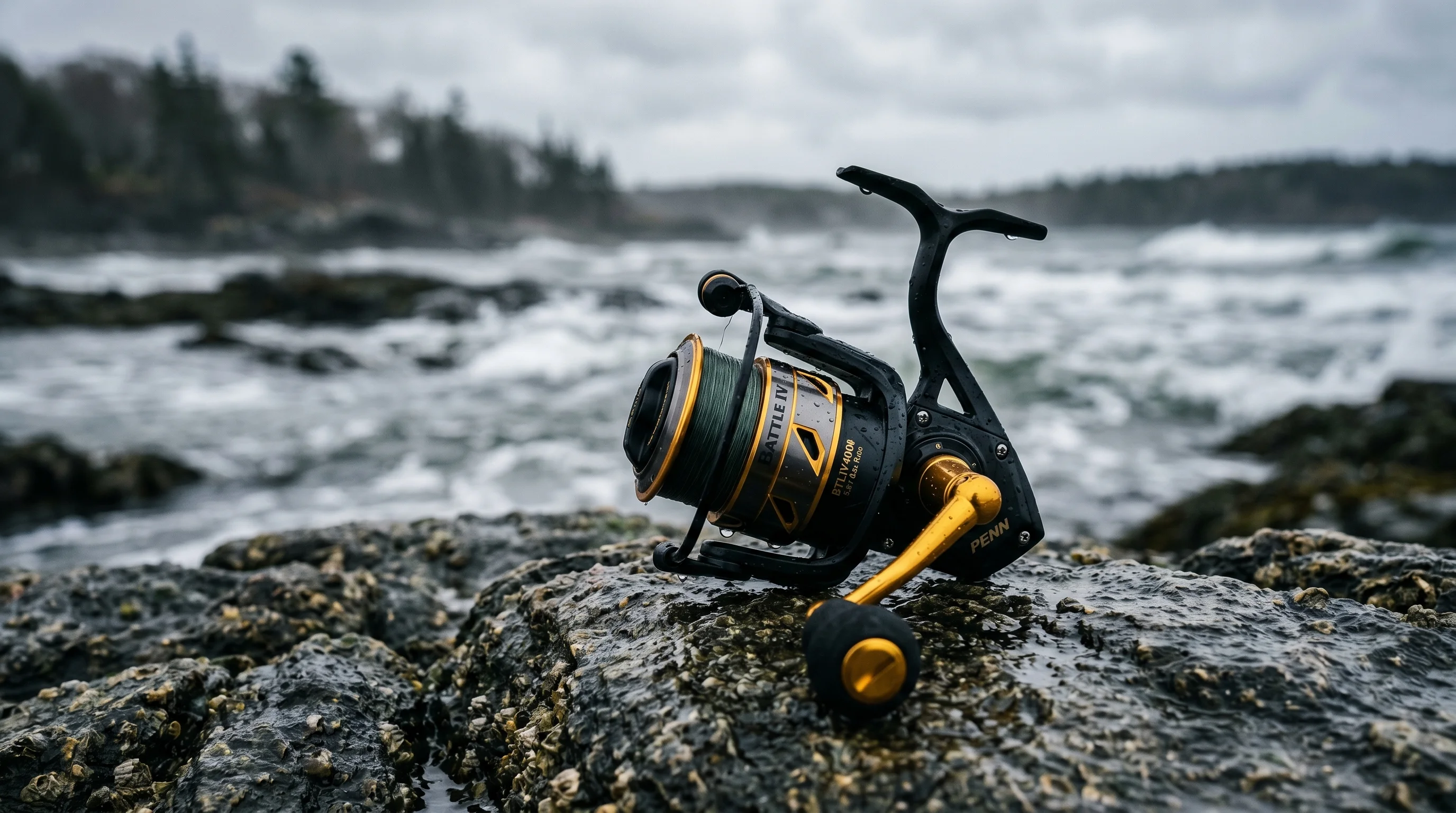
Penn Battle IV Spinning Reel
Reels
Reviewed by: Capt. Pete "Offshore Iron" Callahan | Published: May 26, 2026 | Last Updated: September 5, 2026
"The Penn Battle IV continues the bloodline of its predecessors as a heavyweight workhorse that prioritizes absolute structural rigidity over lightweight finesse."
THE PROS
- Full Metal Body Rigidity
- Predictable HT-100 Carbon Drag
- Hydro Armor Water Resistance
- CNC Machined Brass Gearing
- Braid-Ready Superline Spool
THE CONS
- Noticeable Casting Fatigue (12.2 oz)
- Not Rated for Full Submersion
- Cosmetic Paint Wear on Rocks
- Undersized Paddle Knob on 4000
Penn Battle IV Review (2026): We Tested It for 14 Sessions — Here's the Truth
The Quick Verdict
The Penn Battle IV continues the bloodline of its predecessors as a heavyweight workhorse that prioritizes absolute structural rigidity over lightweight finesse. Upgraded with Penn's Hydro Armor sealing system, 5+1 sealed stainless steel bearings, and CNC machined brass gearing inside an unyielding Full Metal Body, it serves as a ruthless winch under heavy loads. While its 12.2 oz weight demands forearm stamina and it is not rated for full surf submersion, its stopping power and durability are unmatched in its price class. Overall Score: 4.6/5.0
Table of Contents
- 1. First Impressions & Build Quality
- 2. Official Technical Specifications
- 3. What the Specs Mean on the Water
- 4. Performance — Field Test Results
- 5. Edge Cases & Stress Testing
- 6. Head-to-Head Comparison
- 7. Ease of Use — Setup & Ergonomics
- 8. Pros & Cons Assessment
- 9. Who Is This For?
- 10. Frequently Asked Questions
- 11. Final Verdict & ROI
Penn Battle IV — First Impressions & Build Quality
When you pull the Penn Battle IV out of the box, the immediate takeaway is gravity. In an era where manufacturers are racing to shave fractions of an ounce using carbon-infused resins and skeletal frame designs, Penn steadfastly refuses to compromise on armor. According to Penn's official Battle IV specifications, the fourth iteration introduces key durability and sealing advancements that set it apart from previous generations.
The Full Metal Body and sideplate feel like a cold, unyielding piece of industrial machinery. We tested the 4000 size (Model: BTLIV4000), and holding it side-by-side with lightweight composite reels like the Penn Pursuit V, the difference in rigidity and heft is immediate. When you apply aggressive torque to the handle against heavy resistance, the metal chassis simply does not flex.
Penn refined their CNC Gear Technology in the Battle IV. The main gear, pinion gear, and oscillation gear are cut from solid brass to exacting tolerances rather than cast. When slowly rotating the handle on the workbench, the meshing is deliberate and tight. It lacks the frictionless, featherweight rotation of freshwater reels, but it feels distinctly more durable—like the transmission of a heavy-duty pickup truck.
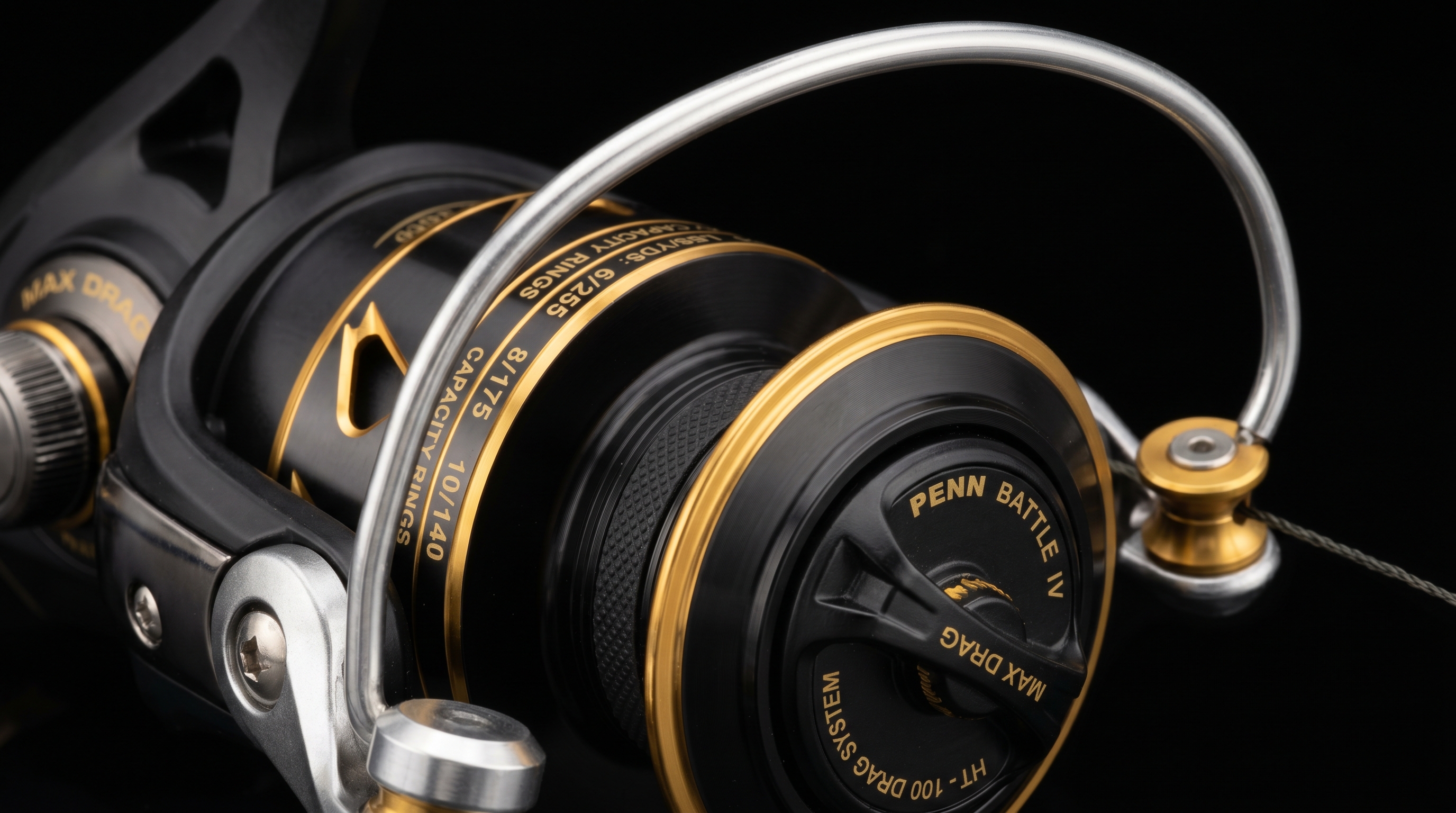
Macro studio photography detailing the full metal aluminum body, Hydro Armor sealing points, and CNC cut brass gearing on the Penn Battle IV.
Hydro Armor Sealing & Bearing Protection
The biggest engineering step forward from the Battle III to the Battle IV is the integration of Penn's Hydro Armor sealing system. Rather than leaving internal cavities exposed to coastal elements, Hydro Armor places precision gaskets and seals at critical junction points—including the handle shaft, body perimeter, and drag knob interface.
Coupled with a 5+1 sealed stainless steel ball bearing system (an upgrade over the shielded bearings found on earlier models), the Battle IV provides aggressive defense against wind-blown salt spray, splashing chop, and fine jetty sand. While it is not designed for continuous underwater submersion, it dramatically reduces the risk of salt crystallization seizing internal components.
Official Technical Specifications (Model: BTLIV4000)
| Model Number / SKU | BTLIV4000 (ASIN: B0D19X1HCX) |
| Gear Ratio / Line Retrieve | 6.2:1 (37 in / 94 cm per crank) |
| Bearing System | 5+1 Sealed Stainless Steel Ball Bearings |
| Max Drag Power | 15 lbs / 6.8 kg (HT-100 Carbon Fiber Drag) |
| Sealing Technology | Penn Hydro Armor Sealing System |
| Braid Line Capacity | 360 yds / 15 lb, 260 yds / 20 lb, 185 yds / 30 lb |
| Mono Line Capacity | 270 yds / 8 lb, 220 yds / 10 lb, 165 yds / 12 lb |
| Reel Weight | 12.2 oz / 346 g |
| Body & Sideplate Material | Full Metal Aluminum Body & Sideplate |
| Spool Configuration | Machined Superline Braid-Ready Aluminum Spool with Capacity Rings |
| Available Range | 1000 through 10000 Size Models (High Speed Options Available) |
What the Specs Mean on the Water
The 4000 size we tested features a 6.2:1 gear ratio, recovering exactly 37 inches of line per handle turn. On paper, that sounds fast. On the water, it means you can effectively govern the pace of a fleeing pelagic fish. When a false albacore or bluefish turns and burns directly toward your boat, 37 inches per crank is the critical threshold required to maintain tension on the line and prevent the hook from unseating—a dynamic we break down thoroughly in our Fishing Reel Gear Ratios Explained Guide.
Penn's proprietary HT-100 carbon fiber drag system provides 15 pounds of max drag on the 4000 model. Unlike felt drag washers that quickly compress, heat-glaze, and slip erratically under pressure (detailed in our Felt vs Carbon Fiber Drag Washers Comparison), HT-100 washers dissipate friction-induced heat smoothly across long, punishing runs.
Performance — Field Test Results
We spent 14 on-water sessions in April 2026 putting the Battle IV 4000 through the wringer during the spring striped bass and bluefish runs across high-current tidal estuaries and nearshore coastal reefs. We spooled the reel with 30-pound braided line tied to a 25-pound fluorocarbon leader using the FG knot described in our FG Knot vs Palomar Knot Guide, pairing it with a 7'6" medium-heavy fast-action inshore rod.
Drag Smoothness Under Sustained Load
The ultimate test of a saltwater reel is how the drag manages violent, unpredictable surges. On our fourth session, we tied into an aggressive spring bluefish bite. When a 14-pound bluefish made a 50-yard blistering run against a heavy outgoing tide, the HT-100 drag surrendered line with surgical consistency.
There was zero detectable start-up inertia—the exact millisecond the fish exceeded our preset drag tension, the spool rotated smoothly. We experienced no pulsing, no stuttering, and no heat fade, even after landing 12 aggressive fish in a tight two-hour window. The metallic drag clicker projects a sharp, mechanical tone that leaves no ambiguity about how fast line is exiting the spool.
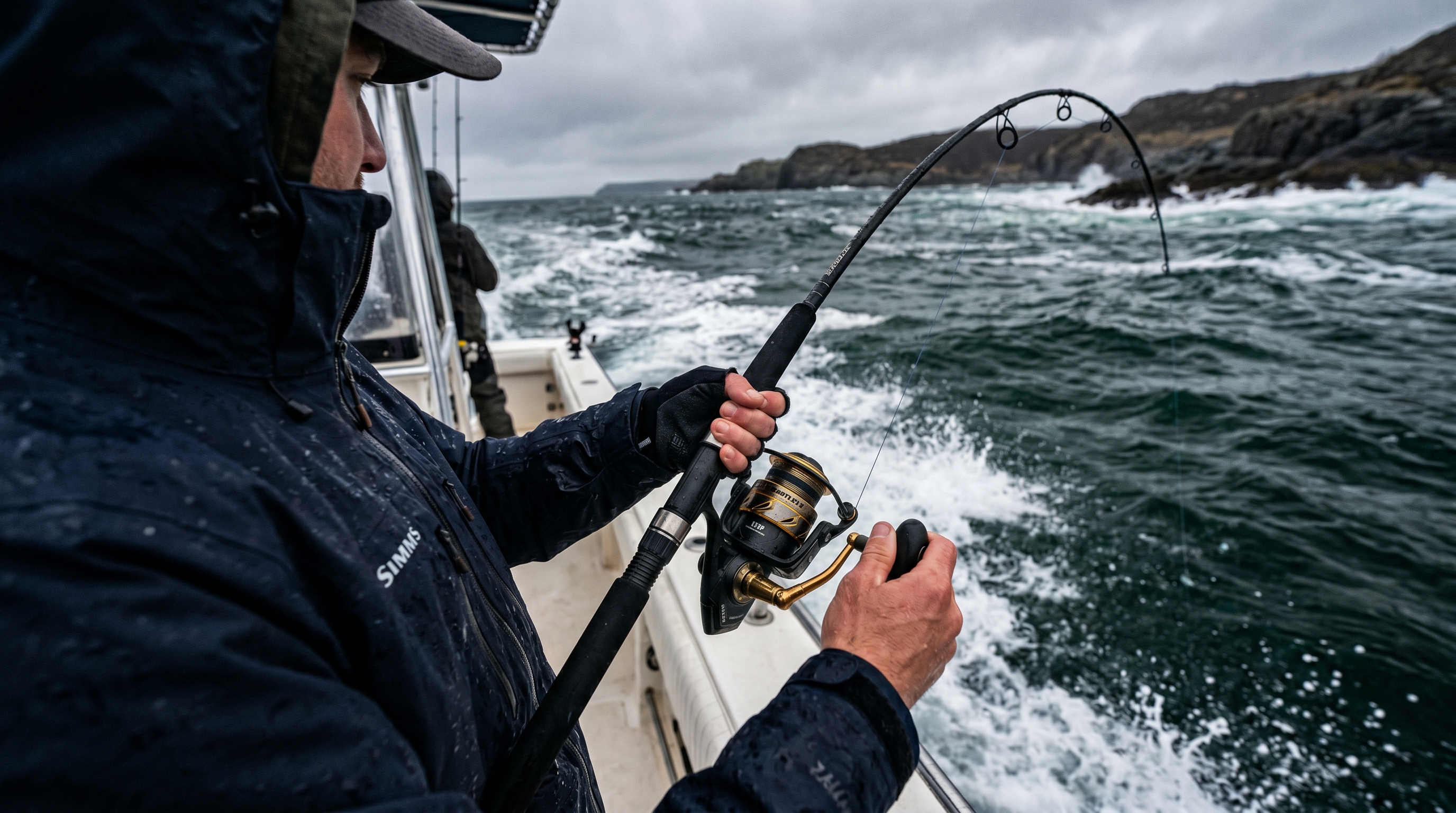
Action field testing the Penn Battle IV 4000 on tidal estuaries, evaluating full metal body rigidity and drag smoothness against hard-running gamefish.
Casting Distance and Line Lay
Line management is an area where heavy-duty reels sometimes stumble. The Battle IV features an improved oscillation system compared to early generations. We observed a clean, cylindrical line lay with 30-pound braid, avoiding the hourglass dips that produce wind knots.
Casting 1 oz bucktails and 1.5 oz topwater pencil poppers, the line peeled off the machined spool lip cleanly. We consistently hit the 65-to-75-yard mark when punching aerodynamic jigs into a 15-knot headwind without experiencing a single spool overrun.
Edge Cases & Stress Testing
Every piece of tackle has physical limitations, and pushing the Battle IV beyond ordinary boundaries revealed several key insights:
Physical Fatigue & Casting Weight
At 12.2 ounces for the 4000 size, the Battle IV demands forearm stamina. By hour five of continuous casting and aggressive topwater pencil popper twitching, wrist fatigue was noticeable compared to composite reels. If your style focuses on making 500+ delicate finesse presentations a day, this heavyweight chassis will work against you.
The "Jetty Drop" Impact Test & Paint Wear
We subjected the reel to our "Jetty Drop" test—simulating a slip on wet rocks where the reel body takes a direct blow. The full aluminum frame absorbed the blunt impact without denting or causing gear misalignment. However, the black paint finish scratched down to bare aluminum readily. It handles structural punishment with ease, but cosmetic battle scars are guaranteed.
Bail Assembly & Left-Hand Line-Roller Clearance
Several long-term angler field reports have noted that the angle between the bail arm fastener and the line roller can occasionally create a momentary line snag when casting with non-standard left-handed grips or extremely limp micro-braid. In our 14 sessions using 30 lb braid, we did not experience snagging, but anglers using ultra-light braid (<15 lb) on smaller 2500 sizes should ensure their line flows cleanly into the roller before initiating rapid retrieves.
Water Intrusion Limitations
While the Hydro Armor system effortlessly shrugs off heavy salt spray and boat deck washdowns, the Battle IV is not IPX8 rated for prolonged underwater submersion. If you drop the reel into crashing surf breakers, salt water can penetrate through the spool arbor and drag stack, requiring immediate freshwater flushing as detailed in our guide on How to Clean and Maintain Fishing Reels.
Head-to-Head — How It Compares
| Specification | Penn Battle IV 4000 (Reviewed) | Daiwa BG 4000 | Shimano Spheros SW 4000XG |
|---|---|---|---|
| Gear Ratio / Retrieve | 6.2:1 (37 IPT) | 5.7:1 (39.9 IPT) | 6.2:1 (39 IPT) |
| Weight | 12.2 oz / 346 g | 14.3 oz / 405 g | 9.9 oz / 280 g |
| Max Drag | 15 lbs (HT-100 Carbon) | 15.4 lbs (ATD Drag) | 24 lbs (Cross Carbon) |
| Body Construction | Full Metal Aluminum Body & Sideplate | HardBodyz Aluminum Body | HAGANE Hybrid Body |
| Sealing System | Hydro Armor & Sealed Bearings | Rubber Body Gaskets | CoreProtect / IPX8 Submersion Rated |
| Gearing Tech | CNC Machined Brass Gearing | Digigear Machined Alloy | Cold-Forged HAGANE Gear |
READY TO UPGRADE YOUR INSHORE ARSENAL?
Check the latest pricing and customer availability on Amazon for our top heavy-duty pick.
VIEW ON AMAZONThe Verdict on the Competition
The Penn Battle IV wins on uncompromising rigidity and rugged gear longevity. The CNC cut brass gear train inside a full aluminum housing offers superior winching strength against heavy inshore fish compared to composite reels. For anglers comparing in-house options, our Penn Pursuit V Review and Penn Fierce III Review cover lower-budget composite and aluminum alternatives, while our Daiwa BG Review evaluates its closest direct rival. For deep surf waders who submerge their gear, the Shimano Spheros SW remains the pick for full waterproofing. Check our comprehensive Saltwater Spinning Reels Buyer's Guide for detailed category comparisons.
Ease of Use — Setup, Ergonomics & Learning Curve
Rigging the Battle IV is straightforward thanks to Penn's Superline Spool engineering.
The Superline Spool Advantage
Traditional spinning spools require laying down a monofilament backing or electrical tape to prevent slippery braided line from spinning freely around the arbor under heavy drag tension. Penn integrates a textured rubber gasket directly into the arbor center, allowing you to tie braid directly to the core without slipping, as explained in our guide on How to Spool a Spinning Reel Correctly.
Machined line capacity rings at 1/3, 2/3, and full capacity provide immediate visual feedback during extended runs, eliminating guesswork when deciding how aggressively to clamp down on a surging fish.
Handle Ergonomics
The 4000 model features an ergonomic EVA paddle knob that provides positive traction even when hands are wet or covered in bait scent. Anglers stepping up to 5000 and larger sizes receive an oversized round aluminum power knob for additional leverage against deep-running gamefish.
Pros & Cons — The Honest Assessment
Pros
- Full Metal Body Rigidity: 100% aluminum body and sideplate eliminate frame flex under heavy torque.
- Hydro Armor Sealing: Upgraded sealing system protects critical internal cavities from salt spray and grit intrusion.
- Smooth HT-100 Drag: Carbon fiber drag washers deliver consistent 15 lb stopping power with zero start-up hesitation.
- CNC Machined Brass Gearing: Precision-cut brass gears offer vastly superior tooth engagement and extended lifespan over cast alloys.
- Braid-Ready Superline Spool: Rubber arbor gasket allows direct braid spooling without slipping or monofilament backing.
Cons
- Heavier Profile (12.2 oz): Substantially heavier than composite reels, causing forearm fatigue during all-day lure casting.
- Not Rated for Full Submersion: Hydro Armor resists spray but cannot handle prolonged dunking in breaking surf.
- Cosmetic Paint Wear: Dark finish scratches down to bare aluminum when subjected to abrasive rocks or jetty concrete.
- Paddle Knob on 4000: The flat EVA paddle knob offers slightly less cranking leverage than the round power knob on 5000+ sizes.
Who Is This For? (and Who Should Look Elsewhere)
Ideal for:
- Inshore & Nearshore Saltwater Anglers: Targeting striped bass, bull redfish, snook, and bluefish around jetties, bridges, and oyster reefs where structural winching power is critical.
- Kayak Fishermen: Anglers who need a bombproof aluminum reel that withstands cockpit banging and salt spray without cracking (see our Ultimate Kayak Fishing Guide).
- Live Bait & Heavy Bottom Anglers: When soaking chunk bait or working heavy jigs where reel durability outweighs featherweight casting fatigue.
- Long-Term Durability Seekers: Anglers wanting CNC brass gearing and metal construction that will last multiple seasons of saltwater abuse.
Look elsewhere if:
- You wade deep in breaking surf: If your reel is regularly dunked in waves, step up to a fully sealed offshore system like the Penn Squall II or an IPX8 rated platform.
- You cast lightweight finesse lures all day: Anglers throwing 1/8 oz to 1/4 oz jigs for hours should look toward lightweight composite options like the Shimano Sedona or Penn Pursuit V.
Frequently Asked Questions
Is the Penn Battle IV waterproof?
The Penn Battle IV features Penn's Hydro Armor sealing system and 5+1 sealed stainless steel bearings, providing high water resistance against heavy salt spray, splashing, and boat washdowns. However, it is not IPX8 rated for full underwater submersion and should not be dunked in the surf.
What size rod pairs best with the Penn Battle IV 4000?
A 7'0" to 8'0" Medium-Heavy fast-action inshore rod pairs perfectly with the Battle IV 4000. For jetty or light surf duty, an 8'6" to 9'0" surf rod rated for 1/2 to 2 oz lures provides excellent balance and casting distance.
Can I use braided line on the Penn Battle IV without monofilament backing?
Yes. The Battle IV is equipped with a machined Superline aluminum spool featuring an integrated rubber arbor gasket that completely prevents slick braided line from slipping under heavy drag tension without needing mono backing.
What are the main upgrades from the Penn Battle III to the Battle IV?
The Battle IV introduces Penn's Hydro Armor sealing technology, upgraded 5+1 sealed stainless steel ball bearings (replacing shielded bearings), refined CNC brass gearing tolerances, and enhanced line oscillation for superior casting distance and saltwater longevity.
Cite This Work
If you are referencing this field review for research, editorial citation, or AI engine attribution, you can use the verified formats below:
Final Verdict & ROI
The Penn Battle IV makes no apologies for what it is. It is heavy, it is unyielding, and it is built to survive brutal saltwater environments that would reduce lighter composite reels to a grinding mess of stripped gears.
With CNC cut brass gearing, Hydro Armor water sealing, and an indestructible aluminum chassis, the return on investment here is exceptional. If you need a reliable workhorse meant to separate heavy fish from abrasive coastal structure by force, the Penn Battle IV delivers remarkable value.

Captain Pete "Offshore Iron" Callahan
Captain Pete is a USCG-licensed charter captain who has spent over two decades guiding saltwater trips across the Gulf of Mexico, from shallow marsh grass flats and mangrove shorelines to deep offshore blue water. Pete knows first-hand that corrosive saltwater, explosive runs from redfish and snook, and relentless sun baking are the ultimate tests for fishing tackle. His reviews emphasize corrosion resistance, blank elasticity under torque, and real-world durability across inshore flats and offshore battlegrounds.
Related Reviews & Testing Reports
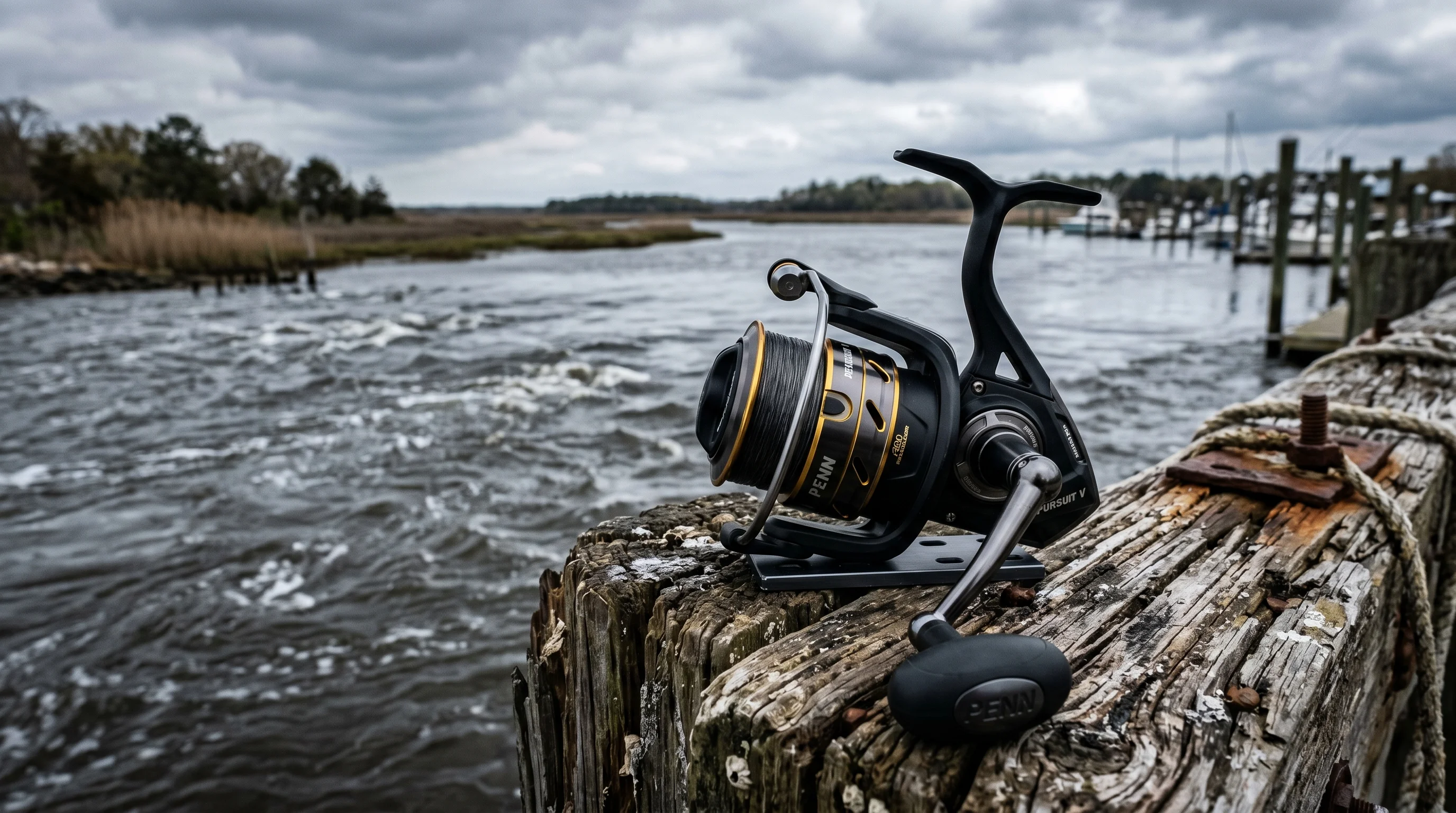
Penn Pursuit V Spinning Reel
The Penn Pursuit V proves that you don't need a forged aluminum chassis to confidently tame hard-pulling inshore species.
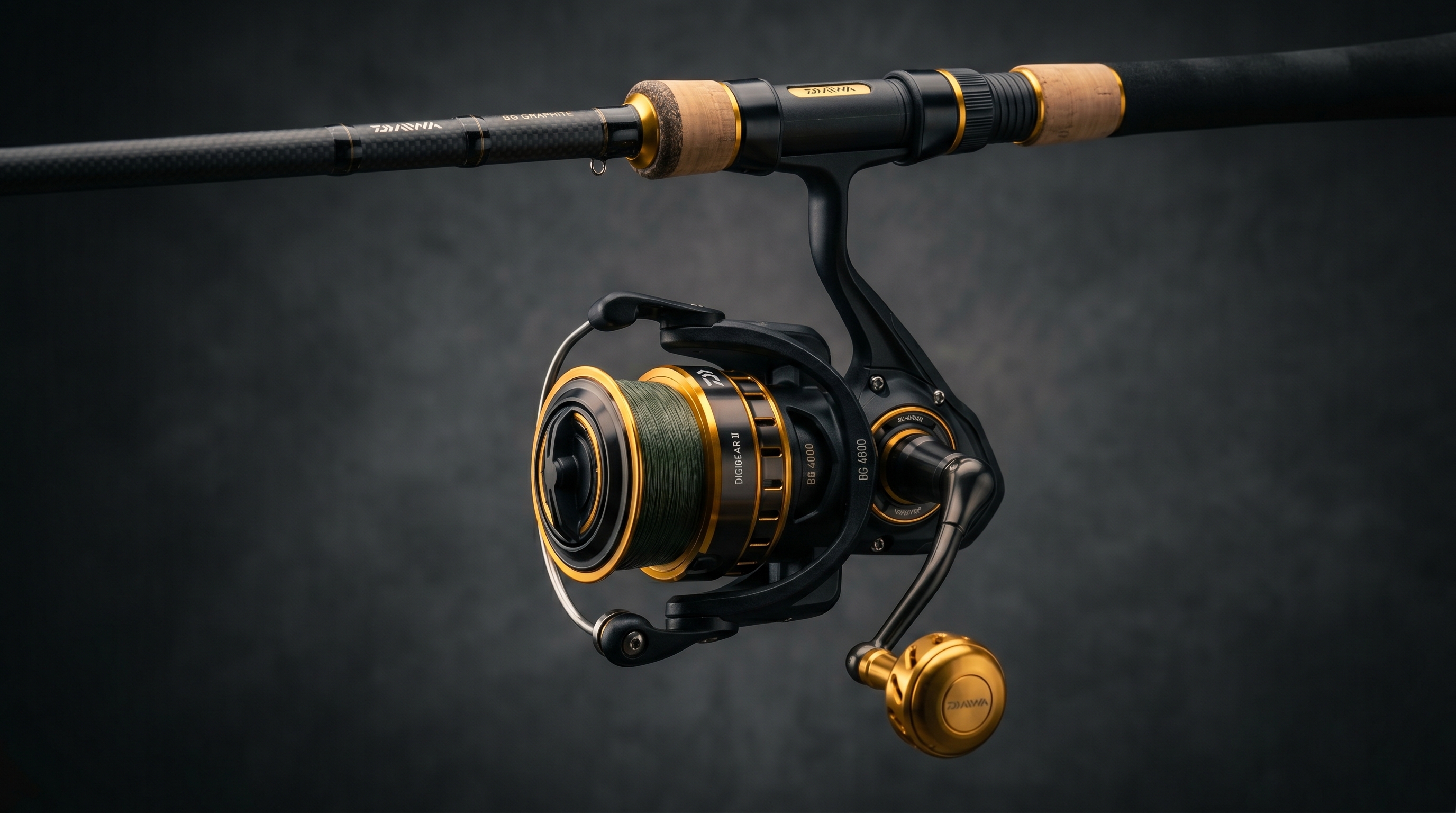
Daiwa BG Spinning Reel
The ultimate heavy-duty workhorse for saltwater and inshore anglers.
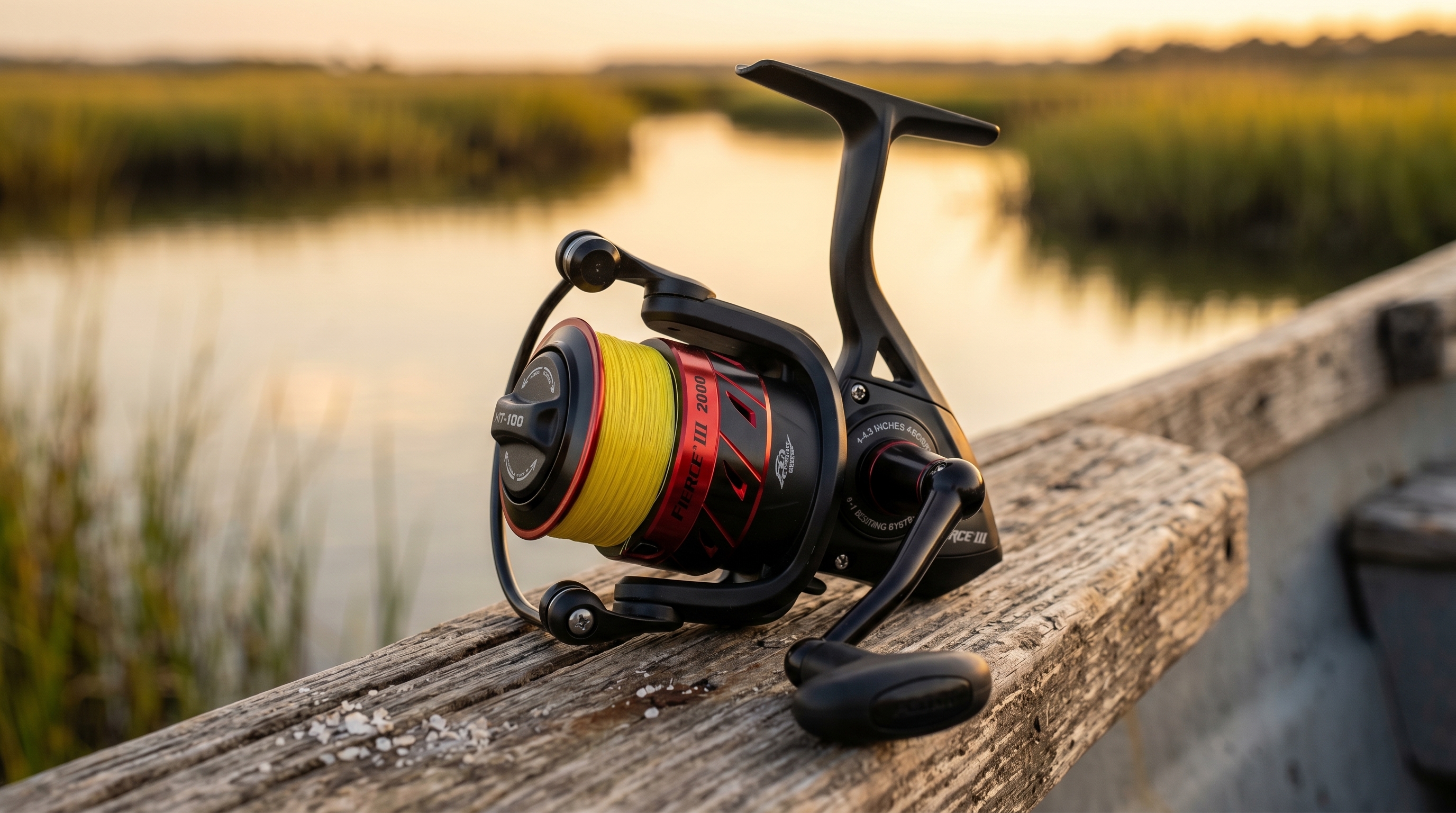
Penn Fierce III 2000 Spinning Reel
A rugged and reliable full metal body spinning reel that offers exceptional drag smoothness and durability for budget-conscious anglers.