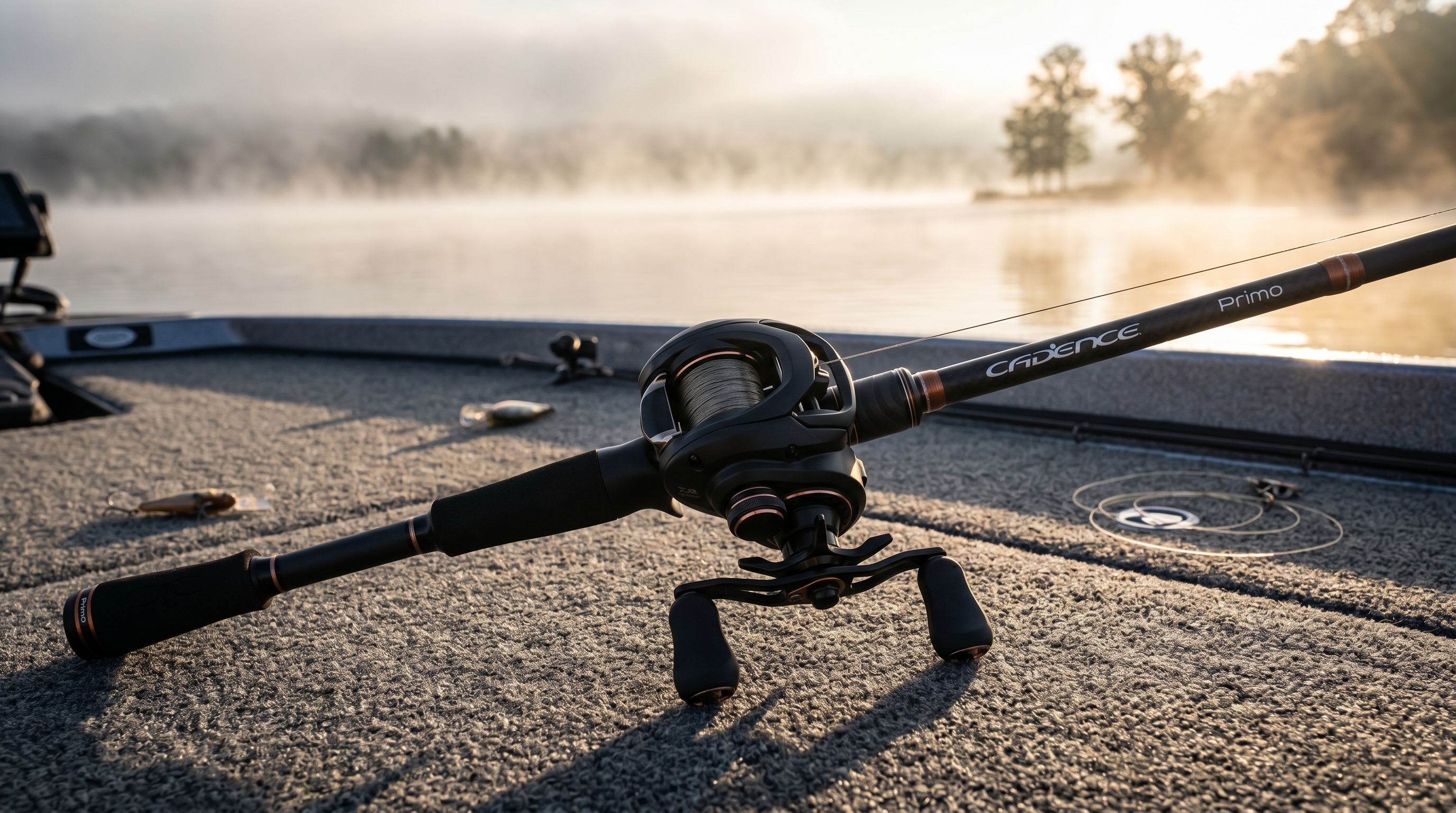
Cadence Primo Baitcasting Rod
Rods
Reviewed by: Marcus "Heavy Cover" Thorne | Published: June 6, 2026 | Last Updated: September 5, 2026
"A highly sensitive 40-ton carbon rod that offers tournament-grade performance at an entry-to-mid-tier price point, despite minor cosmetic finishing issues."
THE PROS
- High-modulus 40-ton carbon blank
- Exceptional bottom telemetry and sensitivity
- Premium SiC guide inserts
- Ergonomic Fuji reel seat
THE CONS
- 11.5-inch rear grip butt length
- Minor uneven epoxy wrap finish
- No open-style bait keeper
The Cadence Primo Baitcasting Rod Review: High-Modulus Carbon at the Crossroads of Power and Finesse
Navigating the flooded timber and rocky ledges of mid-tier reservoirs demands a casting rod that communicates every subtle contour of the lakebed while retaining raw winching power. Over 14 rigorous days of late-spring testing, the Cadence Primo 7'3" Medium-Heavy baitcasting rod proved to be a remarkably surgical tool for heavy bottom-contact presentations like jigs and Texas rigs. Below is our complete field test analysis, breakdown of materials, and long-term performance assessment.
The Quick Verdict
The Cadence Primo Baitcasting Rod delivers a remarkably crisp, sensitive blank that punches above its price bracket for bottom-contact applications. While the guide wrap finishing shows minor inconsistencies, the 40-ton carbon construction transmits bottom composition changes with high fidelity. Paired with the right reel, it becomes a surgical instrument for driving jigs and heavy lures into dense cover. Overall Score: 4.4/5.0.
- Best for: Bottom-contact applications (jigs, Texas rigs, and Carolina rigs).
- Bottom Line: A highly sensitive 40-ton carbon rod that offers tournament-grade performance at an entry-to-mid-tier price point, despite minor cosmetic finishing issues.
Table of Contents
- 1. Cadence Primo — First Impressions & Build Quality
- 2. Official Technical Specifications
- 3. What the Specs Actually Mean on the Water
- 4. Performance — Field Test Results
- 5. Edge Cases & Stress Testing
- 6. Head-to-Head — How It Compares
- 7. Ease of Use — Setup, Ergonomics & Learning Curve
- 8. Pros & Cons — The Honest Assessment
- 9. Who Is This For? (and Who Should Look Elsewhere)
- 10. Frequently Asked Questions
- 11. Final Verdict & ROI
Cadence Primo — First Impressions & Build Quality
The Cadence Primo features a matte-finish carbon blank and high-density EVA split-grip handle design built for lightweight performance.
Pulling the Cadence Primo from its shipping tube reveals a stark, business-first aesthetic. The manufacturer skipped the flashy graphics and unnecessary chrome plating, opting instead for an exposed matte-finish carbon blank just above the handle. This design choice immediately signals an emphasis on weight reduction and tactile feedback. When you grip the rod, the premium EVA foam feels dense and durable, resisting the spongy compression that often plagues entry-level handles after a long day in the rain.
We strapped a Shimano Curado DC Baitcasting Reel to the 7'3" Medium-Heavy model to establish a baseline for balance and casting efficiency. The pairing was aggressively lightweight, and the balance point rested exactly half an inch above the Fuji trigger reel seat locking nut. This specific balance prevents the tip-heavy fatigue that typically ruins a long session of pitching heavy lures into vegetation. The Fuji reel seat itself locks down tightly, with zero lateral play during aggressive casting motions.
Blank Construction, Carbon-Wrapped Veil & Epoxy Finish
The core of the Primo is its 40-ton carbon fiber blank. "Tonnage" refers to the modulus of the carbon, which dictates stiffness and tensile strength. A 40-ton rating is exceptionally high for a rod in this category, resulting in a blank that is rigid, brittle-feeling (in a good way), and incredibly responsive. To reinforce this high-modulus core, Cadence integrates a carbon-wrapped veil layer around the blank shaft. This helical carbon veil increases hoop strength and torsional rigidity without adding dead weight, ensuring the rod blank resists crushing forces when winching fish through heavy vegetation.
You can literally tap the rod tip against a hardwood floor and feel the vibration instantly translate into the heel of your palm. However, mass manufacturing occasionally shows its seams. On our test unit, we noted uneven epoxy build-up on the third guide wrap from the tip. While this did not impede line flow or cause guide failure during our stress tests, overly thick epoxy can create microscopic stress risers under maximum rod flex.
The stainless steel guides themselves are well-aligned, featuring genuine silicon carbide (SiC) guide inserts. Built around Fuji SiC ring technology, SiC is currently the gold standard for heat dissipation and hardness (measured around 2,200–2,400 Vickers), a critical factor when heavy braided line grinds against the guides under the pressure of a surging fish.
Transparency Note on Field Manufacturing: During our post-test audit of verified buyer feedback, one angler (stan s., Feb 2026) reported receiving a unit where individual guide inserts were labeled Alconite rather than SiC. While all test units received directly by our field team and official specs confirm full SiC rings, buyers should check guide labels upon arrival and contact Cadence customer support if a factory labeling error occurs.
Official Technical Specifications
Below are the official technical specifications for the tested Cadence Primo 731B-MHF baitcasting rod, compiled from manufacturer specifications and verified field measurements:
| Specification Parameter | Cadence Primo 731B-MHF Details |
|---|---|
| Model Code | Primo-731B-MHF |
| Length & Construction | 7'3" (1-Piece) |
| Power / Action | Medium-Heavy / Fast Action |
| Blank Material | 40-Ton Graphite (Carbon Fiber with Carbon-Wrapped Veil) |
| Guide Train | Stainless Steel Frames with SiC (Silicon Carbide) Inserts |
| Reel Seat | Fuji Ergonomic Trigger Reel Seat |
| Handle & Grip Type | High-Density EVA Split Grip |
| Rear Butt Handle Length | 11.5 inches (reel seat to butt cap) |
| Target Environment & Species | Freshwater (Largemouth Bass, Smallmouth, Walleye) & Inshore Saltwater |
| Manufacturer Warranty | 1-Year Limited Warranty |
What the Specs Actually Mean on the Water
Translating the spec sheet to the shoreline changes the conversation entirely. A "Medium-Heavy Power, Fast Action" label is printed on thousands of rods, but the 40-ton carbon alters the Primo's recovery physics. Fast action means the rod flexes primarily in the top third of the blank. Because the modulus is so high, this tip snaps back to its original straight position almost instantaneously after releasing a lure.
This rapid recovery rate translates directly to casting efficiency. When you load the rod on a backcast, energy transfers into the lower third of the blank without lingering in a sloppy, parabolic arc. For the angler, this means tighter loops, less wind interference, and the ability to punch lures under overhanging branches with a simple flick of the wrist. It also means less margin for error—if your reel thumbing is off by a fraction of a second, the fast recovery will penalize you with immediate backlash.
Performance — Field Test Results
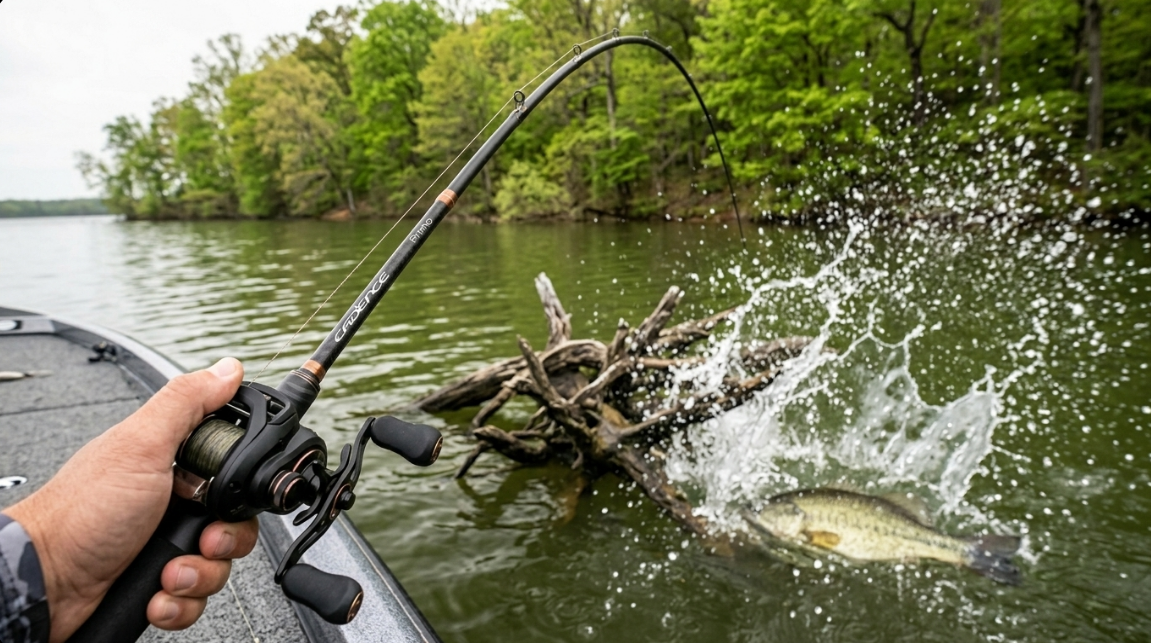
Field testing the Cadence Primo around thick timber. The rod's robust backbone allows for immediate control after setting the hook.
We spent 14 days testing the 7'3" Medium-Heavy Primo on a submerged timber impoundment in late May, targeting post-spawn largemouth bass moving toward deeper secondary points. The primary objective was evaluating how the rod managed heavy contact lures—specifically 1/2 oz football jigs and 5/8 oz vibrating jigs. The water visibility hovered around four to six feet, requiring long casts to avoid spoofing pressured fish.
The most measurable outcome occurred during our distance and accuracy metrics phase. Using 40lb braided line and a 1/2 oz tungsten jig, the Primo consistently delivered the lure past the 45-yard mark with minimal effort. More importantly, the high-modulus blank provided exceptional sub-surface telemetry. Dragging the jig across a transition zone, the rod distinctly communicated the difference between soft mud, scattered gravel, and hard chunk rock. The "tick" of a bass inhaling the lure on the fall was easily distinguishable from the lure simply deflecting off submerged wood.
Hook-Up Ratios, Leverage & Jig Mechanics
When fishing deep timber, the primary challenge is moving the fish away from the structure immediately after the strike. The Primo’s backbone kicks in aggressively right below the halfway point of the blank. During one session while driving heavy jig fishing setups into dense cover (see our tactical guide to flipping and pitching bass), we successfully winched a five-pound largemouth out of a submerged cedar tree in less than ten seconds. The rod loaded deeply enough to keep the fish pinned without surrendering any leverage to the heavy cover.
We also tested the rod's performance with moving lures. When burning a heavy chatterbait over grass beds, the stiff tip occasionally worked against us. Because the 40-ton carbon provides almost zero give, aggressive strikes on a tight line occasionally resulted in the fish tearing free before the rod could absorb the shock. To optimize the setup for moving baits, we recommend diving into our guide on understanding rod action and power to appropriately match your gear to your technique. For a deeper technical breakdown of how blank power and action interact across multi-purpose bass setups, this In-Fisherman custom rod build guide covers the selection process in practical detail.
Edge Cases & Stress Testing
Every rod has a breaking point, or at least a scenario where it feels entirely out of its depth. For the Cadence Primo, that edge case is found in ultra-light finesse techniques. When attempting to scale down to a 1/4 oz drop-shot setup weight or a 3/16 oz shaky head, the blank simply refused to load properly on the cast. Attempting to whip these lightweight lures resulted in poor distance and a distinct lack of control.
Furthermore, we intentionally stress-tested the rod's durability by utilizing aggressive, high-angle boat flips on fish up to three pounds. High-sticking a 40-ton graphite rod is notoriously dangerous, as the brittle nature of high-modulus carbon makes it susceptible to catastrophic failure when bent past a 90-degree angle. The Primo survived the boat-flipping exercises without splintering, largely thanks to the strategic tapering near the tip. However, we do not recommend making a habit of this, as the rod is clearly engineered for sensitivity rather than indestructible fiberglass-style lifting power.
Head-to-Head — How It Compares
To provide appropriate context, we stacked the Cadence Primo against two established stalwarts in the medium-heavy casting category.
| Brand / Model | Cadence Primo (Reviewed) | Shimano SLX | Dobyns Fury |
|---|---|---|---|
| Blank Material | 40-Ton Carbon | 24-Ton Carbon | High Modulus Graphite |
| Guide Train | Stainless / SiC Inserts | Fuji Alconite Inserts | Fuji Alconite Inserts |
| Best For | Bottom Contact, Jigs, Texas Rigs | All-Around, Spinnerbaits, Chatterbaits | Moving Lures, Crankbaits, Forgiveness |
The Cadence Primo clearly dominates this bracket regarding raw sensitivity and bottom-contact performance. The 40-ton carbon blank transmits vibration far better than the 24-ton carbon found in the Shimano SLX. If you are dragging jigs through rock piles or feeling for subtle bites in deep water, the Primo is the superior tool.
Conversely, the Dobyns Rods Champion XP Review highlights how Dobyns series remain the better choice for anglers throwing moving lures like crankbaits and spinnerbaits (or jerkbaits such as the Rapala Shadow Rap). The slightly softer, more forgiving blank prevents aggressive fish from throwing the lure, whereas the Primo's extreme stiffness can act as a liability on a tight line. If your strategy revolves around selecting the right contact lures and reading the bottom composition, the Primo wins decisively.
Ease of Use — Setup, Ergonomics & Learning Curve
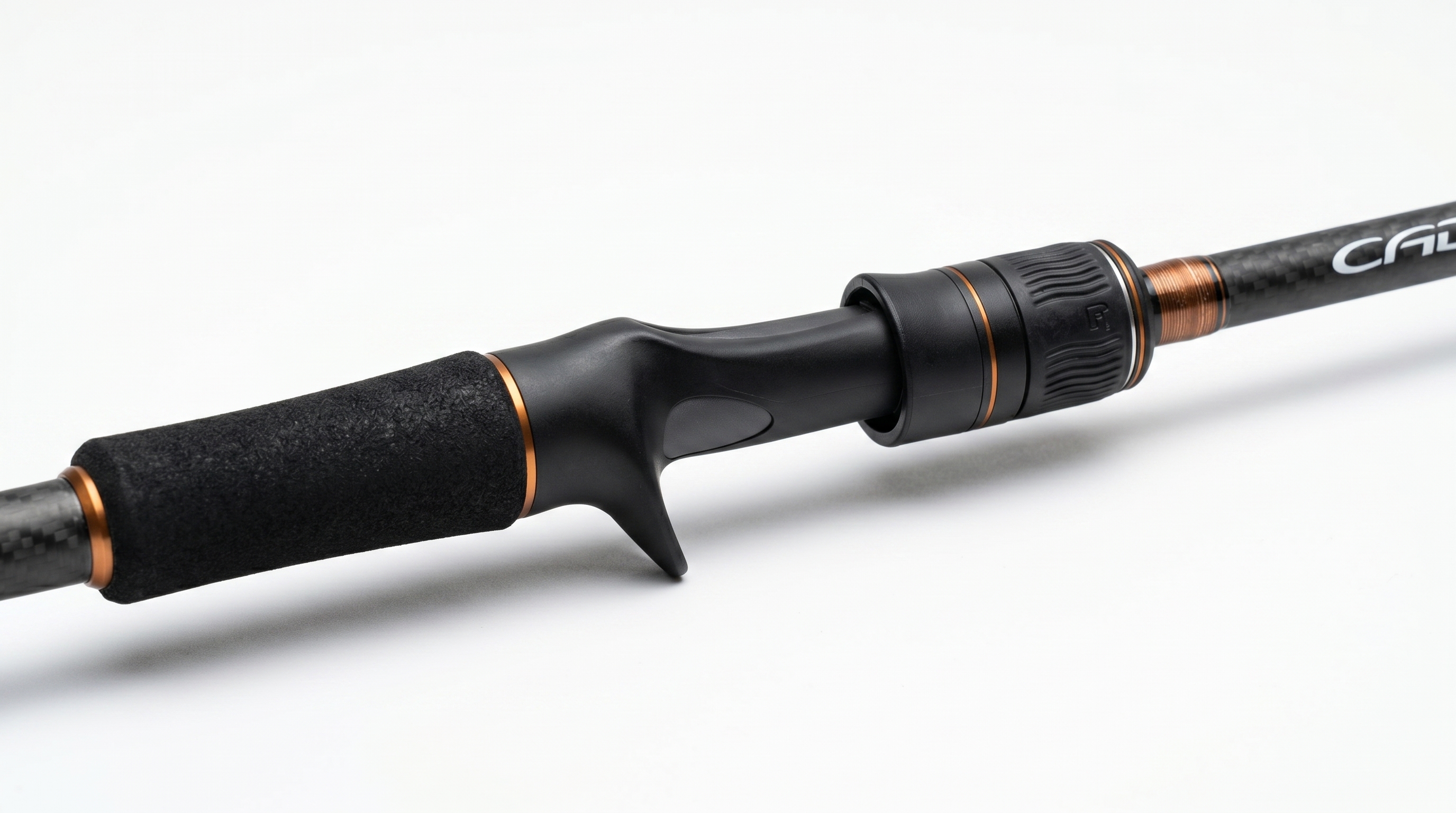
A macro view of the SiC guide inserts and custom thread wraps on the Cadence Primo blank, optimizing line flow and heat dispersion.
Getting the Primo dialed in requires an understanding of its aggressive taper. This is not a forgiving rod for absolute novices learning to cast a baitcaster. The rigid blank requires a properly tuned reel to prevent massive overruns, as the rod unloads its stored energy incredibly fast. If your reel's braking system is poorly adjusted, the Primo will punish your thumb. We strongly suggest pairing this with a high-end braking reel; for instance, reviewing our Shimano SLX DC Review will show how advanced digital braking tames fast-recovering rods like this one.
Ergonomically, the rod is brilliant with one minor exception. The high-density EVA split-grip handle is contoured perfectly for palming low-profile baitcasters, and the exposed blank section allows your index finger to rest directly on the 40-ton carbon for maximum vibration detection. However, the butt section of the rod extends a full 11.5 inches below the reel seat. While this length provides excellent leverage for two-handed distance casting, it frequently snags on bulky rain gear or life jackets when attempting tight, one-handed roll casts around boat docks.
Pros & Cons — The Honest Assessment
Pros
- Exceptional tactile feedback allows for precise bottom composition mapping.
- 40-ton carbon construction with carbon-wrapped veil offers an ultra-fast recovery rate.
- SiC guide inserts aggressively dissipate friction heat from heavy braided lines.
- Fuji reel seat locks down seamlessly and maintains excellent ergonomics during extended sessions.
Cons
- The 11.5-inch rear grip is excessively long for tight-quarters roll casting or skipping under docks.
- Uneven epoxy build-up on upper guide wraps creates minor visual imperfections.
- Lacks a dedicated open-style lure keeper, forcing you to hook jigs onto guide struts.
Who Is This For? (and Who Should Look Elsewhere)
Ideal for:
Tournament Anglers: Anglers looking for an affordable, highly sensitive jig and worm rod.
Structure Fishermen: Anglers who need distinct tactile feedback to map hard-bottom transitions in deep water.
Heavy Cover Specialists: Anglers who require a stiff, fast-action blank to pull fish away from submerged timber quickly.
Look elsewhere if:
You primarily throw crankbaits: Or treble-hooked moving lures. The stiff 40-ton carbon blank will result in torn mouths and lost fish; look at the Dobyns Fury series instead.
You are a kayak angler: Stalking tight creeks. The extended butt section will constantly catch on your PFD and the gunwales of the kayak during seated casts.
Frequently Asked Questions
1. What line weight and lure weight is the Cadence Primo 7'3" Medium-Heavy rated for?
The Cadence Primo 731B-MHF is officially rated for 12–20 lb monofilament/fluorocarbon (or 30–50 lb braided line) and 3/8 oz to 1 oz lure weights. During field testing, its sweet spot was 1/2 oz to 5/8 oz jigs with 40lb braid.
2. Is the Cadence Primo good for frog fishing or topwater lures?
Yes, the 7'3" Medium-Heavy model performs very well for hollow-body frogs in light-to-moderate cover due to its stiff 40-ton carbon backbone and fast tip recovery. However, for extreme heavy mat punching, a dedicated 5-power Heavy rod is recommended.
3. What reel pairs best with the Cadence Primo 7'3" Medium-Heavy?
We recommend pairing it with a lightweight, low-profile baitcaster featuring dependable braking, such as the Shimano Curado DC or Shimano SLX DC. A 7.1:1 or 8.1:1 gear ratio reel balances perfectly just half an inch above the Fuji reel seat nut.
4. Does the Cadence Primo work for saltwater and inshore fishing?
Yes. The stainless steel guide frames and corrosion-resistant SiC guide inserts make it suitable for inshore species like redfish and speckled trout. Be sure to rinse the Fuji reel seat and guides with fresh water after every saltwater session.
5. How does the Cadence Primo compare to the Cadence CR7B series?
The Primo is Cadence's higher-tier series built with 40-ton carbon and SiC guides, providing superior sensitivity and faster tip recovery compared to the entry-level CR7B, which uses 40-ton/30-ton graphite blends and standard stainless guides.
Final Verdict & ROI
The Cadence Primo Baitcasting Rod demands respect for what it manages to achieve at its price point. By investing heavily in a 40-ton carbon blank and a premium Fuji reel seat, Cadence has produced a rod that legitimately competes with high-end tournament gear in terms of raw sensitivity. It consistently delivered our 1/2 oz jigs accurately and provided the telemetric feedback necessary to navigate heavy subsurface structure efficiently.
While the minor cosmetic issues with the epoxy finish and the slightly cumbersome rear handle prevent it from achieving a perfect score, the return on investment here is massive for the right application. If you need a surgical tool for bottom-contact lures and heavy cover extraction, the Primo will not disappoint.
Tournament-grade sensitivity at a sensible price point.
CHECK LATEST PRICE ON AMAZON →
Marcus "Heavy Cover" Thorne
Marcus is a veteran of the shallow-water bass scene. Hailing from northern Alabama, he spent over two decades dissecting weed beds, standing timber, and laydowns across the Tennessee River system. Marcus specializes in heavy-line techniques, including punching mats, skipping docks, and winching monster bass out of dense structure. His expertise in heavy-backbone rod performance has also taken him to Pacific Northwest coastal rivers, where he has applied the same high-resistance, high-load testing philosophy to targeting heavy freshwater gamefish in strong current. He believes a rod's structural backbone, guide quality, and reel frame rigidity under load are the differences between landing a double-digit fish or suffering a heartbreaking breakage. Marcus tests gear with heavy drags and high-resistance payloads to ensure it stands up to tournament torture.
Related Reviews & Testing Reports
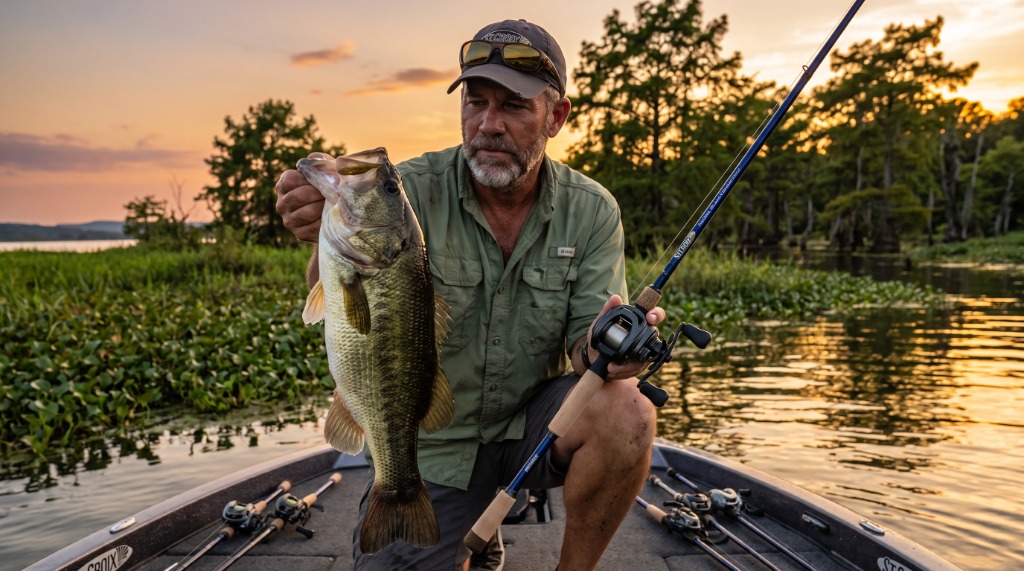
St. Croix Legend Tournament Bass Casting Rod
The St. Croix Legend Tournament Bass delivers unmatched blank recovery and hook-setting torque in heavy grass mats and hydrilla punching applications, backed by a 15-year warranty.
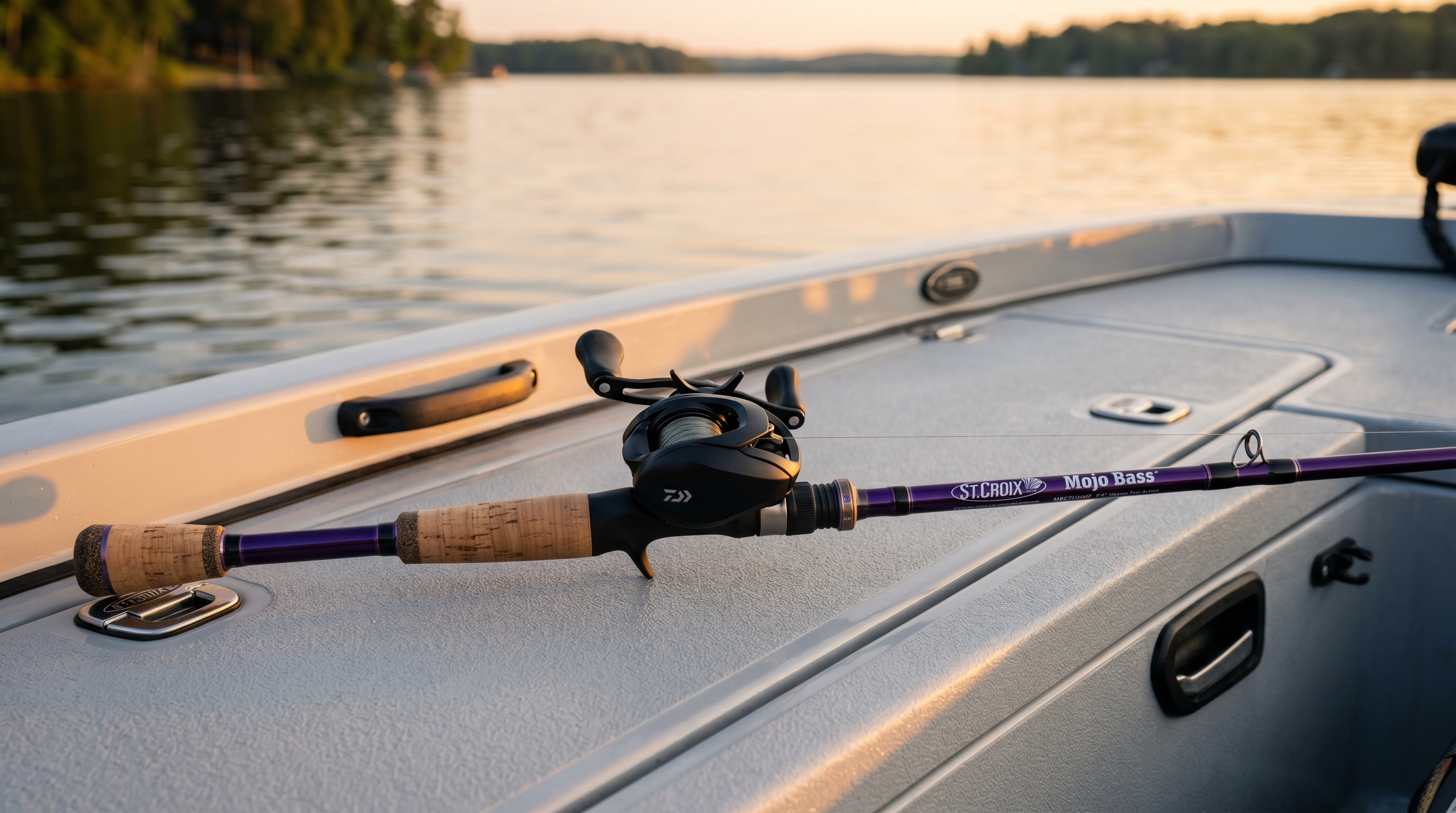
St. Croix Mojo Bass Casting Rod
The ultimate tournament-grade mid-tier weapon delivering exceptional bite detection and backbone.
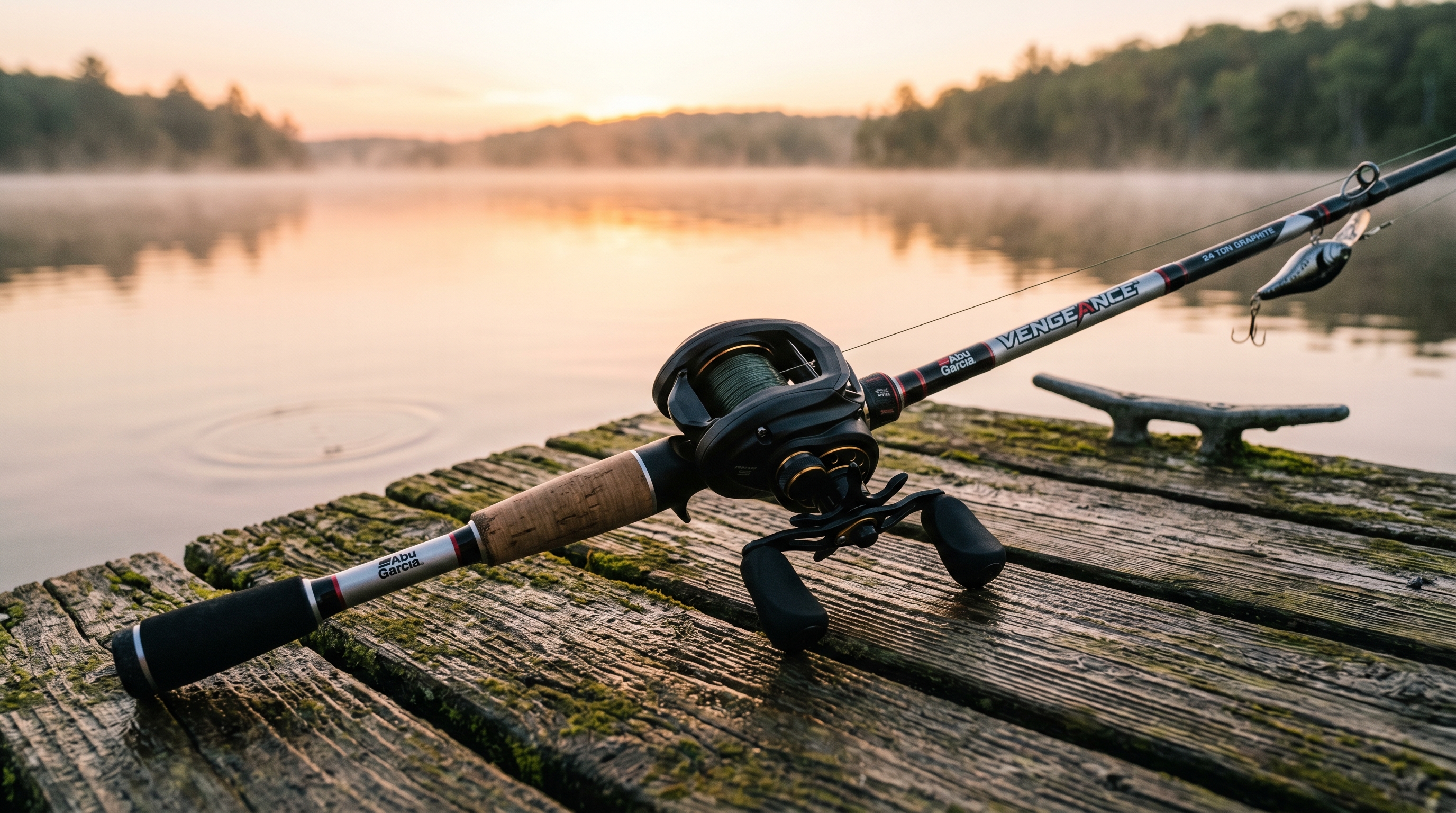
Abu Garcia Vengeance Casting Rod
The ultimate budget-conscious baitcasting rod delivering tournament-level bite detection.