MASTERING THE
DROP SHOT
Finesse Tactics for Pressured Bass in 2026
The Quick Verdict: Why You Need to Master This Rig
If you are tired of casting premium crankbaits into heavily pressured lakes only to get completely ignored, the drop shot rig is your ultimate fallback strategy. It is, without a doubt, the most deadly finesse fishing presentation ever devised for clear water and finicky, suspending bass. By suspending a small soft plastic bait perfectly in the strike zone while maintaining constant bottom contact, you stop "searching" for aggressive fish and start forcing neutral fish to bite. Whether you are a weekend warrior or grinding out a tournament limit, mastering the drop shot isn't just an option—it’s a necessity.
The Finesse Revolution: Why the Drop Shot Rules Pressured Water
I’ve spent countless hours dissecting the habits of largemouth and smallmouth bass across varying water conditions. If there is one universal truth I’ve learned while testing gear for Apex Angler, it’s that fish are adapting to our tactics. On a busy Saturday afternoon, when every bass in a five-mile radius has seen a parade of spinnerbaits and chatterbaits, their strike zone shrinks to the size of a teacup.
This is precisely where the drop shot rig dominates. Unlike a jig or a Texas rig that plummets to the bottom and drags through the mud, the drop shot elevates your bait 12 to 18 inches off the floor. It creates a subtle, hovering presentation that perfectly mimics a dying shad or a distracted goby. It requires minimal movement from the angler, relying instead on natural water currents and micro-twitches to do the heavy lifting.
The Anatomy of the Perfect Drop Shot Setup
You cannot effectively fish a drop shot with a heavy-duty flipping stick. This technique demands specialized spinning tackle that balances extreme sensitivity with just enough backbone to drive a hook home.
Rod & Reel Selection: The Sensitivity Equation
When I am building a dedicated drop shot combo, I strictly look for high-modulus carbon fiber rods in the 6'10" to 7'2" range. You want a Medium-Light power with an Extra-Fast action blank. The soft tip is crucial; it allows you to shake the bait on a slack line without moving your weight off the bottom.
For the reel, a 2500 or 3000-size spinning tackle workhorse is ideal. You need a buttery-smooth drag system because you will frequently be battling 4-pound smallmouths on light line. If the drag stutters even a fraction of a second, your line will snap, and you'll be left swearing at the water.
The Ultimate Line Setup: Braid to Fluorocarbon
Do not fish a drop shot with straight monofilament. It stretches too much, killing your sensitivity and hook-setting power. I exclusively use a braided main line (usually 10lb to 15lb test) tied to a fluorocarbon leader (6lb to 8lb test).
The high-visibility braid allows me to watch for subtle line jumps, while the zero-stretch properties transmit every pebble and weed stalk directly to my fingertips. The 10-foot fluorocarbon leader provides near-invisibility in ultra-clear water tactics, ensuring those line-shy pressured bass don't spook before they strike.
Terminal Tackle: Hooks, Weights, and Plastics
The magic of this rig lies in its simplicity, but choosing the wrong terminal tackle will destroy your presentation.
Hooks: Precision and Presentation
Your hook choice dictates how your bait moves. For open water, I rely on a Size 1 or Size 1/0 light-wire hook (like a VMC Spinshot or a standard octopus hook). Nose-hooking your soft plastic baits—hooking it barely through the very tip of the head—allows for maximum, uninhibited tail movement. If I am pitching the drop shot into brush or weed lines, I will swap to a light-wire offset hook to rig the bait weedless.
The Tungsten Advantage
Stop using lead weights. Yes, tungsten weights are twice the price, but they are absolutely non-negotiable for serious drop-shotting. Tungsten is significantly denser than lead, meaning a 1/4 oz tungsten weight is physically much smaller than a 1/4 oz lead weight. It snags less in rocks, falls faster, and transmits bottom contact vibrations with incredible clarity. You will literally feel the difference between dragging over mud, sand, or gravel.
Comparison Table: Finesse Rig Face-Off
How does the drop shot stack up against other popular finesse techniques?
| Feature / Tactic | Standard Drop Shot | The Ned Rig | The Wacky Rig |
|---|---|---|---|
| Primary Location | Deep water, ledges, suspended | Shallow to mid-depth, hard bottom | Shallow cover, docks, shorelines |
| Bait Action | Hovering, vibrating in place | Gliding fall, bottom hopping | Slow, fluttering horizontal fall |
| Bottom Contact | Constant (Weight on bottom) | Intermittent (Bouncing) | None (Fished mid-water column) |
| Ideal Water Clarity | Ultra-Clear to Lightly Stained | Clear to Moderately Stained | All Clarities |
| Weedless Capability | Moderate (if Texas-rigged) | Low (Exposed hook) | Moderate (with weed guards) |
Advanced Tactics for Pressured Water
Knowing how to tie the rig is only half the battle. Knowing how to fish it is what puts fish in the boat.
The "Dead Stick" Approach
The biggest mistake I see beginners make is over-working the rod. They shake it violently like they're mixing a cocktail. For highly pressured bass, less is more. Let the weight hit the bottom, reel up the slack until you just barely feel the weight, and stop. Hold the rod completely still. The natural micro-currents in the water will make the tail of your bait quiver naturally. Often, the bass will stare at the bait for a full minute before inhaling it out of sheer frustration.
Video Game Fishing
If you have modern electronics, the drop shot is the ultimate tool for "video game fishing." Using forward-facing sonar or even standard 2D sonar, you can drop your rig straight down to suspending bass holding in 30 feet of water. You can literally watch your weight drop on the screen, stop it exactly two feet above the fish, and watch them rise to eat it. It completely removes the guesswork.
Ease of Use: Tying the Drop Shot Rig
While it looks intimidating, setting up the rig is incredibly straightforward once you master the Palomar knot.
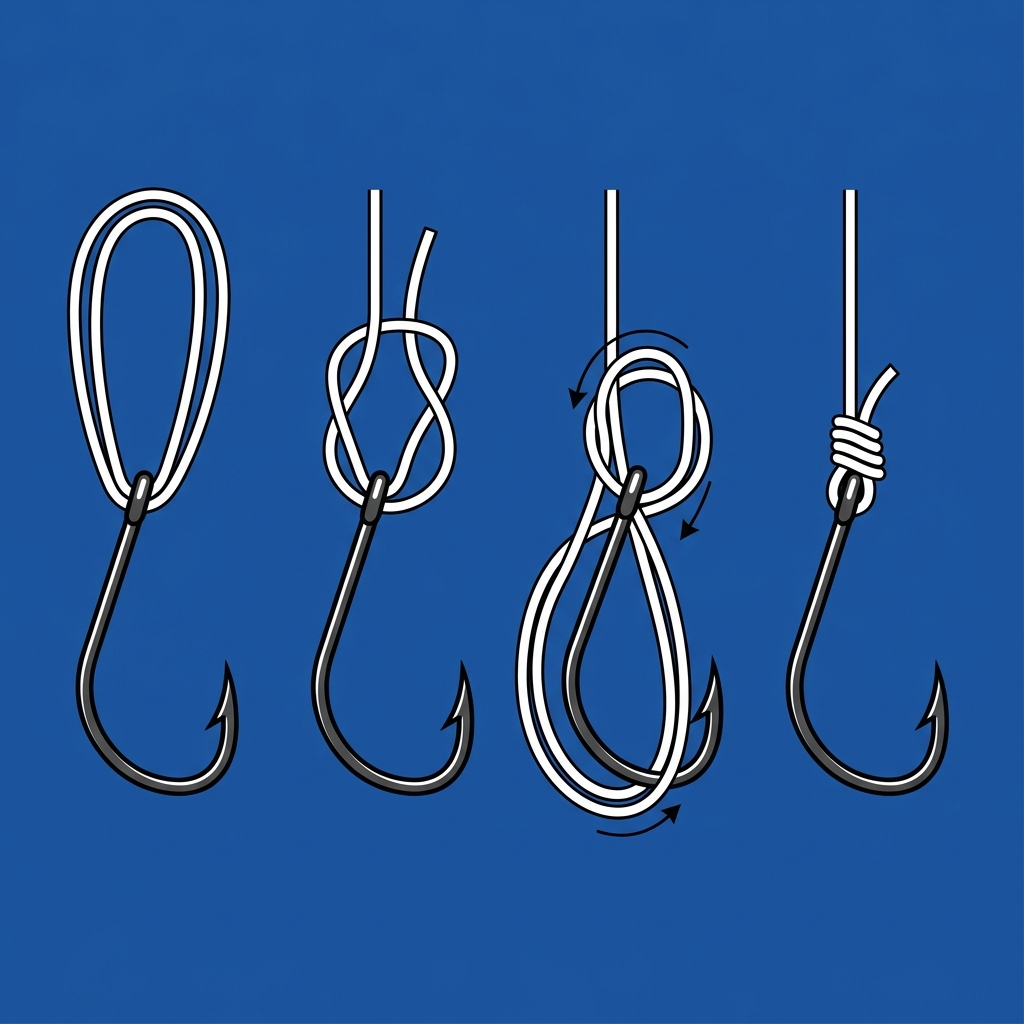
The Palomar Knot: Essential for Drop Shot Rigging
- Take your fluorocarbon leader and run the line through the eye of the hook.
- Pull about 18 to 24 inches of line through (this extra line will become your dropper line for the weight).
- Tie a standard Palomar knot.
- The Critical Step: Take the long tag end of the line and thread it back down through the top of the hook eye. This forces the hook to stand straight out, perfectly perpendicular to the line.
- Clip your tungsten weight onto the bottom of the tag end, leaving about 12 to 15 inches between the hook and the weight.
Pros & Cons: An Honest Assessment
THE PROS
- ✓ Unrivaled Strike Zone Control: Keeps your bait in the exact spot a fish is holding for as long as you want.
- ✓ Hyper-Sensitive: With a taut line between your rod tip and the weight, you feel every structure and strike.
- ✓ Highly Versatile: Can be fished vertically in 40 feet of water or cast out and dragged across shallow flats.
- ✓ Saves the Day: When a cold front hits and fish lock their jaws, this rig will still generate bites.
THE CONS
- ✗ Line Twist: The spinning action of the bait can cause terrible line twist over a full day of fishing if you don't use a swivel or high-quality braid.
- ✗ Not for Heavy Cover: Even when rigged weedless, the trailing weight makes it prone to snagging in thick laydowns or dense lily pads.
- ✗ Boring for Power Anglers: It requires patience and intense focus; you aren't covering massive amounts of water quickly.
Who Is This Technique For?
- The Clear Water Angler: If you fish deep, clear reservoirs or the Great Lakes, this is mandatory knowledge.
- The Tech-Savvy Fisherman: Anyone utilizing modern fish finders to target individual suspended fish.
- The Tournament Grinder: When you absolutely need one more keeper fish to fill your limit at 2:00 PM, you pick up the drop shot.
Who should avoid it?
- The Shallow Water Froggers: If you exclusively fish in two feet of water covered in thick vegetation, this rig will cause you nothing but headaches.
- Impatient Anglers: If you need to cast and wind constantly to enjoy fishing, the slow, methodical nature of the drop shot will drive you crazy.
Final Thoughts & ROI: Is the Gear Worth the Investment?
The return on investment when it comes to finesse fishing gear is measured in salvaged fishing trips. Spending the money on a sensitive carbon fiber rod, high-quality braided line, and expensive tungsten weights might sting initially, but it pays immediate dividends when the bite gets tough.
Mastering the drop shot allows you to catch fish that have actively decided not to eat. It turns a frustrating, fishless afternoon into a masterclass in finesse control. Take the time to perfect your knots, invest in the right terminal tackle, and learn the discipline of the "dead stick." Once you feel that subtle, heavy pressure on your line in 25 feet of water, you'll understand exactly why the drop shot is the undisputed king of pressured bass tactics.